




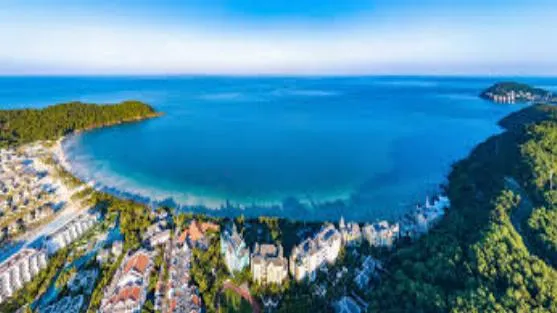
Phu Quoc: General. Audience: B2C. Will Phu Quoc become the new Phuket?
Phu Quoc is skyrocketing in tourism rankings, but urbanization is a concern. We tell you where to see the preserved island before the APEC 2027 works.

Barely out of the shadows, Phu Quoc island is racking up accolades: most beautiful island in Asia, fastest-growing destination in Southeast Asia, top 4 trends for 2026. But behind the rankings, cranes and concrete are also advancing rapidly.
Our on-the-ground team in Hanoi follows the evolution of Phu Quoc year after year. What we observe is contrasted: an island still magnificent, but changing at full speed. We share this unfiltered observation with you, and especially how to enjoy it before the postcard changes for good.
Table of Contents
1. Phu Quoc in numbers: growth that surpasses everyone
Vietnam crossed the threshold of 21 million international visitors for the first time in 2025, and Phu Quoc captures a good part of this dynamic. In early 2026, international arrivals on the island climbed by more than 86% in just a few months. A hotel industry report even goes further: in the first two months of 2026, Phu Quoc reportedly surpassed Bali and Phuket in terms of tourist growth (source).
The rankings are following suit: DestinAsian ranks it as the 2nd most beautiful island in Asia in 2026, Condé Nast Traveler elected it the most beautiful island in Asia in 2025, and Travel Off Path makes it the fastest-growing destination in all of Southeast Asia.
Phu Quoc island's tourism growth in 2026
2. 2027, the year that changes everything
Why so many construction sites right now? Because Phu Quoc will host the APEC Economic Leaders' Week in 2027. And to be ready on time, the island has launched 21 strategic infrastructure projects between 2026 and 2027: convention center, luxury hotels, interconnected transport networks, public spaces, and urban landscaping.
In short: Phu Quoc is transforming at full speed to become an international showcase. This is good news for infrastructure, but it also means that the version of the island we know today will not look like much in two or three years.
|
Want to see Phu Quoc before the major works of 2027? Request your tailor-made quote and we will build a trip that fits your dates, not a construction schedule. |
3. The signals that recall Phuket and Bali
Travelers returning to the island in recent years do not all tell the same postcard story. Four signals often come up in the feedback we collect.
The concretization of the south of the island
In the south, around Duong Dong and Long Beach, concretization is already clearly visible: large hotel complexes emerging from the ground, public beaches not always well maintained. Some even mention projects to model the island's development on that of Phuket in Thailand.
Prices that rise quickly
Almost everything is imported to the island: a meal or a hotel night often costs more there than elsewhere in Vietnam. For the same budget, you sometimes get less for your money than in Da Nang or Nha Trang.
A government looking towards Thailand
The comparison with Phuket is not just anecdotal: several local observers point to a similar ambition — to multiply luxury resorts and hotel capacity to attract high-end international clientele, even if it means accelerating pressure on the coastline.
What the international press says
|
Did you know? The British newspaper The Independent recently highlighted that Phu Quoc still retains much of its natural beauty despite the rise of mass tourism around it. So it's not yet Phuket — but the trajectory is similar. |
concretization and mass tourism in Phu Quoc
4. What still resists: the preserved areas
The good news is that Phu Quoc remains a large island, with approximately 150 km of coastline. Everyone focuses on the west coast. In the north and east, it still breathes.
Ganh Dau and Bai Thom, the still quiet north
These two areas in the north of the island remain very calm: few hotel complexes, almost empty beaches during the week, and very dense vegetation still reaching the shore.
Ham Ninh, the forgotten fishing village
The small village of Ham Ninh maintains its tranquil pace, amidst colorful boats and lush vegetation. It is one of our favorite stops to show another facet of the island to our travelers.
The UNESCO biosphere reserve
The interior of the island also hosts a UNESCO-recognized biosphere reserve, with humid tropical forest and waterfalls. Enough to escape the tourist area in less than an hour's drive. This is exactly the kind of place we like to integrate into our off-the-beaten-path tours.
Phu Quoc off the beaten path, preserved north of the island
5. Practical guide: see the real Phu Quoc before 2027
When to go to avoid the crowds
Avoid high season (December to March) if you want to avoid the crowds in the south of the island. The rainy season (June to October) remains a good option to enjoy lower prices and calmer beaches, with generally short showers.
How to organize your stay
|
Our advice: Travel with a local guide who knows the quiet roads, not just the tourist strip. This is often the only way to get out of the Long Beach / Duong Dong area without getting lost. |
North or South? Where to look
-
South (Duong Dong, Long Beach): comfort, resorts, cable car, night market — ideal for 2 to 3 days of relaxation.
-
North and East (Ganh Dau, Bai Thom, Ham Ninh): calm, nature, fishing village — ideal for a day trip.
-
Island interior: biosphere reserve, forest and waterfalls — ideal for a half-day hike.
Combine with the Mekong Delta
For a real contrast between river life and beaches, combine the island with a trip through the Mekong Delta. Take a look at our article on the Mekong Delta, which can be visited very well just before or after Phu Quoc.
6. Our opinion at Typic Travel
Phu Quoc is not lost, far from it. But the version sold in most brochures (resort, cable car, night market) is not the only one. We can very well let you enjoy the comfort of the south for two or three days of relaxation, while slipping in an excursion to the wilder north, at the right time of year, with a guide who knows the difference between the two. This is the whole point of a tailor-made trip rather than a pre-packaged stay.
In summary
Phu Quoc is climbing in all rankings, and the works preparing for APEC 2027 will further accelerate its development. The concretization of the south is real, but the north and the interior of the island still retain their authenticity. The window to see both faces of the island — comfort and preserved nature — is open, but it is slowly closing.
Ready to experience your own version of Phu Quoc, postcard version or still wild version?
Contact the Typic Travel team now. Together, we will build a tour that shows both sides of the island, respecting people and the environment.
Contact us:
Email: lybautiec@gmail.com
|
Phu Quoc postcard version or still wild version? We can show you both. Tell us about your project — or request a personalized quote |
Also read
• Hoi An off the beaten path: what guides don't tell you


