




Sapa: Complete Guide to the Roof of Indochina – Rice Terraces, Ethnic Groups and Peaks
Discover Sapa, the pearl of the Vietnamese Northwest, through this expert guide updated in May 2026. Explore the terraced rice fields classified as national heritage, meet five ancient ethnic groups, and conquer Mount Fansipan. Whether you are a hiking enthusiast or a photography lover, take advantage of our practical tips and tailor-made tours for an authentic immersion in the heart of Vietnam's mountains.

VIETNAM TRAVEL GUIDE
Sapa: The Roof of Indochina
Landscapes · Ethnicities · Tours
By the Typic Travel team · Local expert in Vietnam for +20 years · Updated: May 2026
| → Plan your trip to Sapa now Free and personalized quote in 24h · All-inclusive private tours · Local expert for +20 years |
Sapa is one of the most moving destinations in Southeast Asia. At an altitude of 1,600 meters, in the mountains of Northwest Vietnam, it combines landscapes of terraced rice fields classified as national heritage, encounters with ancient ethnic groups in flamboyant costumes, and an otherworldly atmosphere that never leaves travelers indifferent. This guide, written by our Hanoi-based team, gives you a complete and honest overview to prepare your stay in the best conditions.
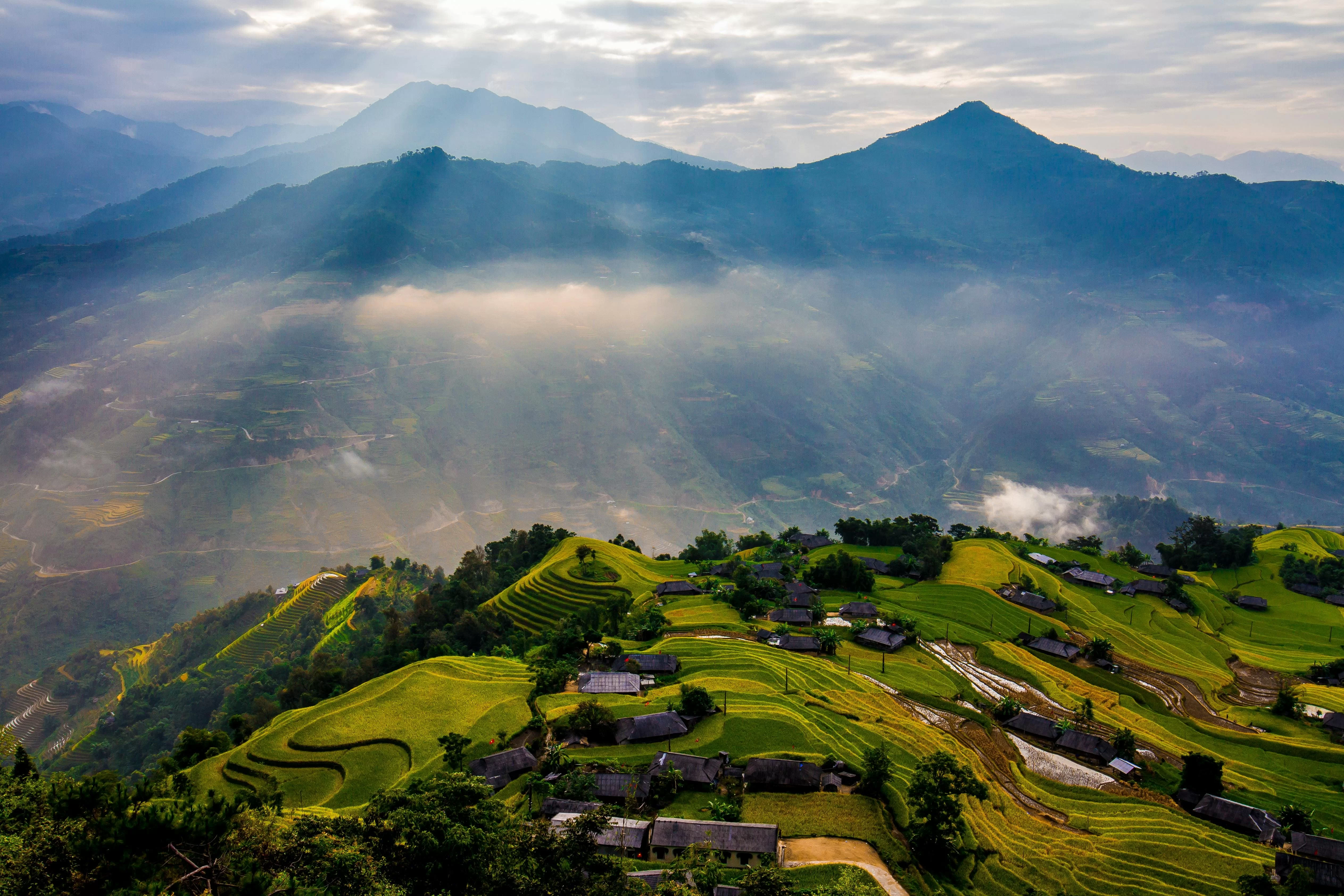
Table of Contents
-
Portrait of the region: Sapa, pearl of Northwest Vietnam
-
Mount Fansipan: the Roof of Indochina
-
The Photographers' Route: Nghia Lo, Tu Le, Mu Cang Chai
-
Bac Ha: the market of a thousand colors
-
Thac Ba Lake: the "Halong Bay in the mountains"
-
Typic Travel tours: your gateways to Sapa
-
When to go? The seasonal calendar
-
Our practical tips for a peaceful trip
1. Portrait of the region: Sapa, pearl of Northwest Vietnam
Imagine yourself standing at sunrise, at an altitude of 1,600 meters, enveloped in a cloud of mist that slowly unravels to reveal, layer by layer, a panorama of impossibly green terraced rice fields — hand-carved into the mountain for centuries. In the distance, a Hmong woman in indigo costume descends a dirt path, her back laden with a woven basket. A rooster crows somewhere in the Muong Hoa valley. That is Sapa.
Nestled in Lao Cai province, on the Sino-Vietnamese border, Sapa is a high-altitude town founded by French colonists in 1903 as a resting and holiday resort. At 1,600 meters above sea level, it enjoys a cool climate that contrasts sharply with the stifling heat of the delta. The French, captivated by its landscapes reminiscent of the Alps, built villas and hotels there — some remnants of which still exist today.
A crossroads of extraordinary peoples
The Sapa region is home to five major ethnic minorities, each with its own language, costumes, and rituals:
-
The Black Hmong — the most numerous around Sapa, recognizable by their dark indigo-dyed clothes and elaborate silver jewelry.
-
The Red Dao — women with scarlet headdresses adorned with pompoms, guardians of ancestral knowledge in phytotherapy.
-
The Tay — farmers of the lower valleys, masters of stilt houses and silk weaving.
-
The Giay — a discreet and warm community from the village of Ta Van.
-
The Xa Pho — the least known, still little touched by mass tourism.
Landscapes classified as national heritage
The terraced rice fields of the region — notably those of Mu Cang Chai, La Pan Tan, and Che Cu Nha — are classified as national natural heritage of Vietnam. Carved into the mountainside on dizzying slopes, they are the result of centuries of manual labor and an intimate relationship with the land. In October, when the rice ripens, they are adorned with gold and amber: it is one of the most beautiful images in all of Southeast Asia.
| ✅ Want to discover these ethnic groups in immersion? Our "Sapa & Bac Ha" tour includes homestays and French-speaking guides specializing in mountain ethnic groups. |
2. Mount Fansipan: the Roof of Indochina
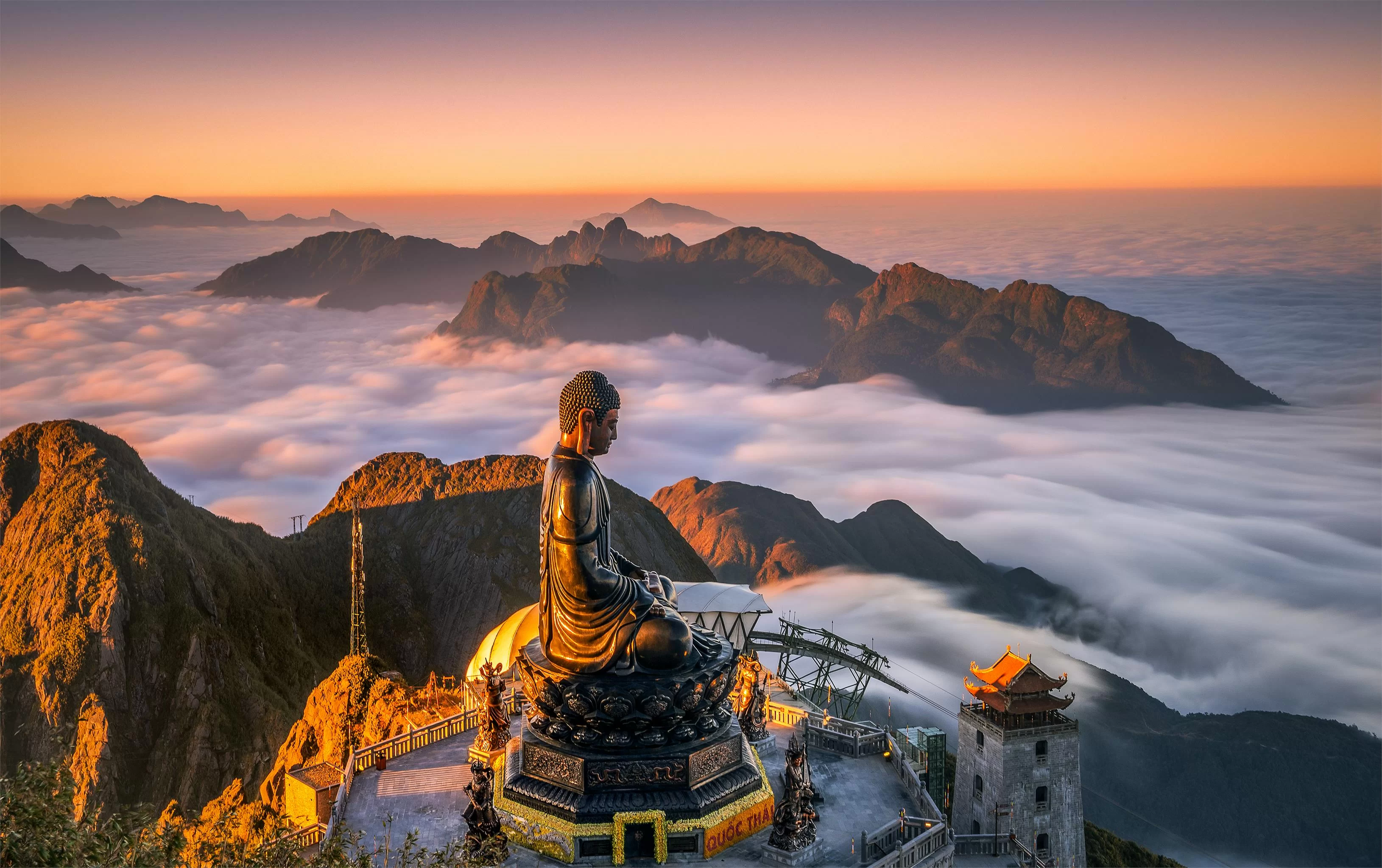
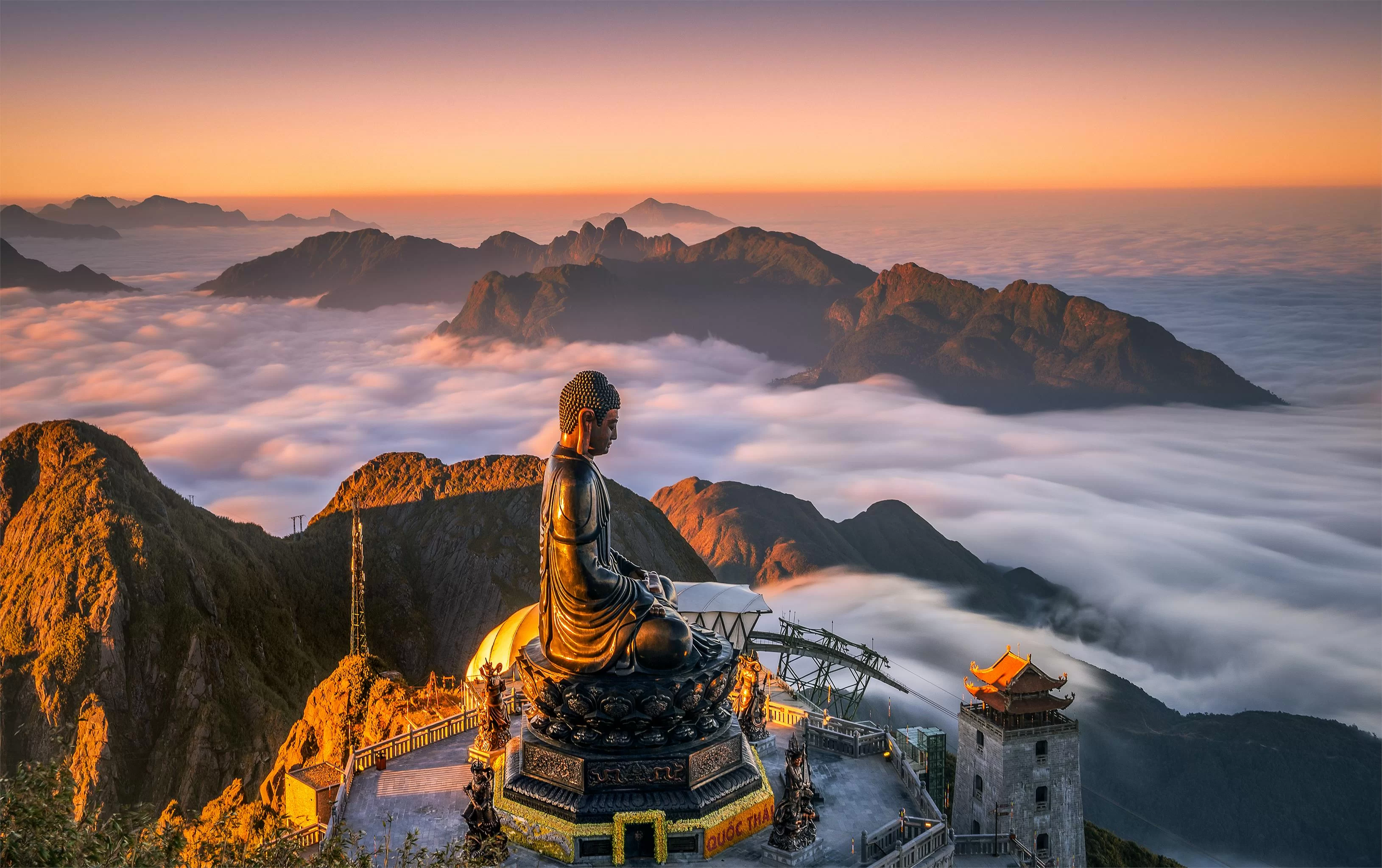
At 3,143 meters above sea level, Mount Fansipan is the highest peak in Indochina, dominating Vietnam, Laos, and Cambodia. Visible from Sapa on a clear day, it is the ultimate goal for many hikers. Two ways to approach it:
| ?️ By funicular | ?️ By hiking |
| The Muong Hoa cable car (2018), built to European standards by the Swiss group Garaventa, is the longest and highest in Vietnam. It connects Sapa to the summit in a few minutes. At the summit: Kim Son Bao Thang pagoda, Buddha statues, 360° views of the mountains. | For experienced hikers, the ascent of Fansipan is a 2 to 3-day adventure through bamboo forests, tropical undergrowth, and alpine areas. Physically demanding, unforgettable for those who are capable. |
| → Include Fansipan in your itinerary Funicular or hiking, our private tours adapt to your desires — we manage the logistics. |
3. The Photographers' Route: Nghia Lo – Mu Cang Chai
While Sapa is famous, the Photographers' Route leading from Nghia Lo to Mu Cang Chai via Tu Le and Khau Pha Pass remains relatively unknown — and that's exactly what makes it beautiful.
Nghia Lo — The Thai Valley
Capital of the Thai people in the Muong Lo valley, it is the starting point for a total immersion with locals. Nights in stilt houses, evenings by the fire with village elders, bike rides through the rice fields.
Khau Pha Pass — The Gods' Belvedere
At 1,700 meters, this natural viewpoint offers one of the greatest panoramas of terraced rice fields in all of Southeast Asia. Every autumn, photographers from around the world gather here to capture the golden light of the harvest season.
Mu Cang Chai — The Hidden Gem
Its villages of La Pan Tan, Che Cu Nha, and De Xu Phinh are home to the most spectacular terraced rice fields in Vietnam. The terraced rice fields of Mu Cang Chai are classified as national natural heritage. Time seems to have stopped here.
| 1,700 m Altitude of Khau Pha Pass | Oct – Nov Ideal season for rice fields | 3 sites Rice fields classified as national heritage |
| ✅ The Photographers' Route is at the heart of our flagship tour "Vietnam in Depth" — 21 days to cross Vietnam in all its splendor, from the Northwest to Phu Quoc. |
4. Bac Ha: the market of a thousand colors
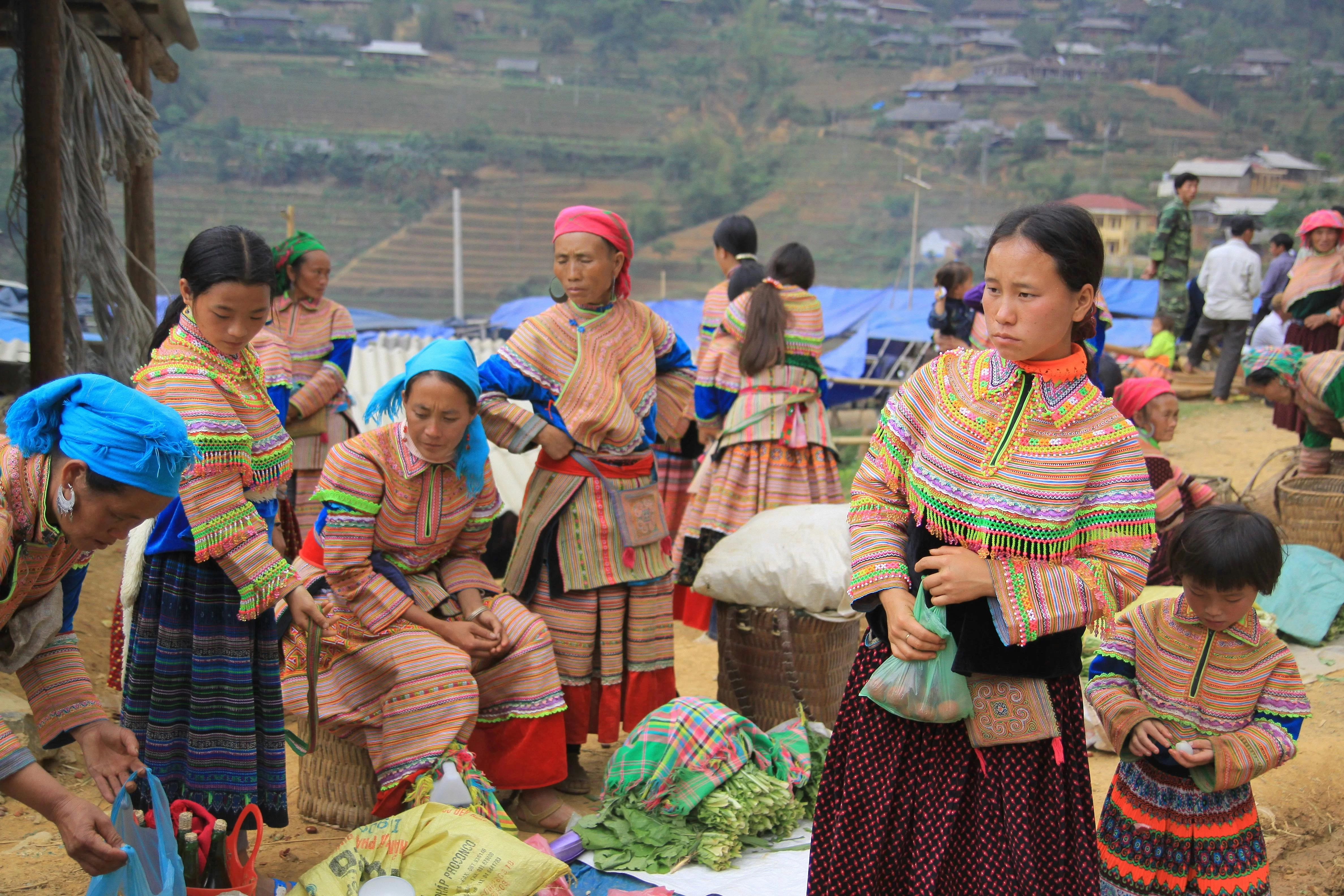
100 kilometers from Sapa, perched in the mountains at an altitude of 900 meters, Bac Ha is a name that makes everyone who has met travelers returning from Vietnam with sparkling eyes dream. The reason: its weekly ethnic market, one of the most authentic and colorful in Southeast Asia.
It is held on Sunday mornings and brings together dozens of ethnic minorities — the Hmong Barilés in fuchsia and turquoise costumes, the Dao, the Tay, the Nung — who descend from the mountains since dawn to sell, buy, and above all, to meet each other. On the stalls are piled hand-embroidered clothes, spices, ancestral crafts, medicinal plants.
? Other markets nearby depending on your visit date:
-
Saturday morning: Can Cau market (buffalo and horse market)
-
Tuesday morning: Coc Ly market
-
Wednesday morning: Sin Cheng market
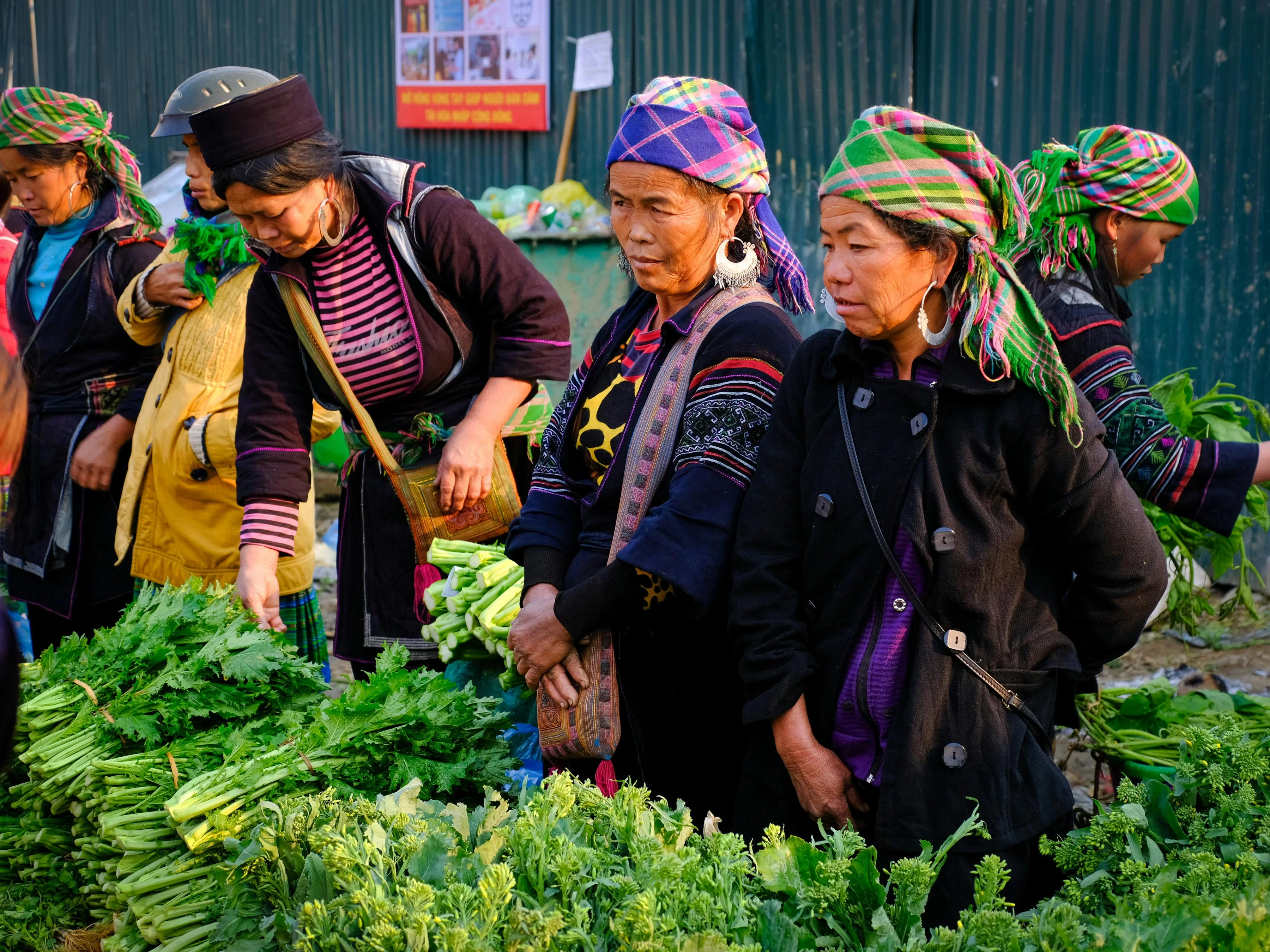
| "After their exchanges, the locals gather in small groups to taste Thang Co — a traditional Hmong soup made from horse meat — and drink homemade corn alcohol. You are welcome." — Typic Travel Team, Local Vietnam Expert |
| → Don't miss Bac Ha market We plan your departure according to the market day for a guaranteed experience — including the secondary markets of Can Cau and Coc Ly. |
5. Thac Ba Lake: the "Halong Bay in the mountains"
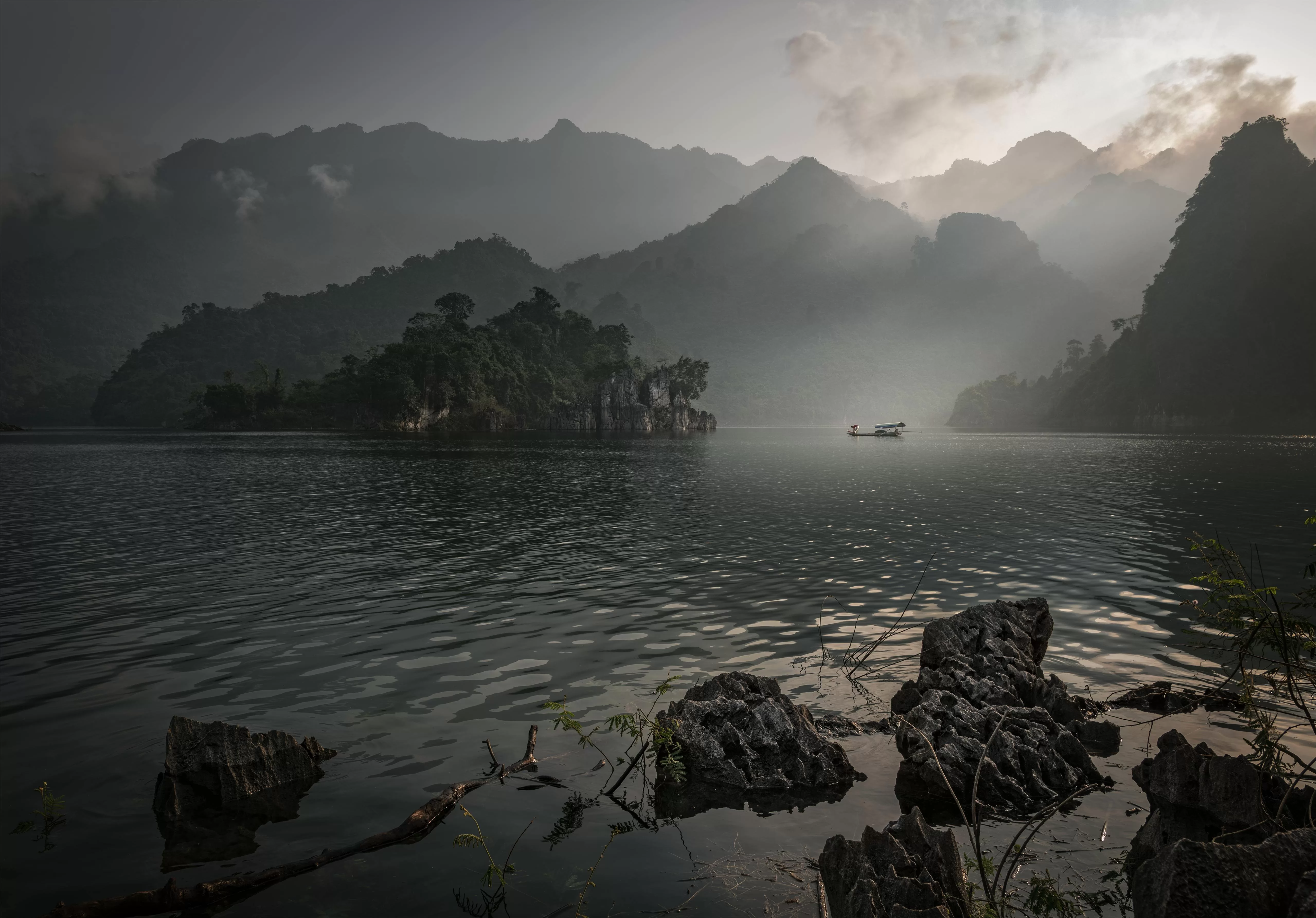
Less known on classic tourist routes, Thac Ba reservoir is one of the most beautiful surprises in the Northwest. With its 80 kilometers in length, it is the largest artificial lake in northern Vietnam. Its turquoise waters reflecting hundreds of verdant islets, its White Pants Dao villages on stilts by the water, its private boat excursions into the heart of the caves — this is why Typic Travel has integrated this place into its most popular tours.
| ✅ Thac Ba Lake: an exclusive stop on our tours Very few tour operators offer this detour. Overnight stay with the White Pants Dao and private boat excursion included. |
6. Typic Travel tours: your gateways to Sapa
With over 20 years of field expertise in Vietnam, Typic Travel has designed several private tours that make Sapa much more than just a tourist stop — an authentic encounter with the peoples and landscapes of the North.
| ? Tour 1 — "Sapa & Bac Ha: Treks and Traditions of the Northern Ethnic Groups" 9 days / 8 nights · Private tour · From 611 € / person Ideal for: hiking enthusiasts, human encounters and ethnic markets
|
| ? Tour 2 — "Vietnam in Depth" 21 days / 20 nights · Private tour · From 1,765 € / person The complete crossing of Vietnam from north to south, with a full week in the Northwest.
|
| ✨ Tour 3 — « Vietnam in the World's Dream » Private off-the-beaten-path tour This tour integrates Sapa into an itinerary that takes roads few tour operators offer: Mai Chau, Pu Luong Nature Park, Mu Cang Chai — before reaching the terrestrial Ha Long Bay of Ninh Binh and the major cities of the Center and South.
|
| → Don't know which tour to choose? Speak to a Typic Travel expert: we create your tailor-made itinerary according to your dates, your budget and your desires. |
7. When to visit Sapa? The seasons calendar
Sapa benefits from a mountainous microclimate with four distinct seasons — a rarity in Vietnam. The choice of period influences both your climatic comfort and the quality of the landscapes.
| Season | Period | Note | Temp. | Tips |
| ? Autumn | Sep–Nov | ★ IDEAL | 15–22°C | Golden rice paddies, best photo light, recommended by Typic Travel |
| ? Spring | Feb–Apr | ◆ VERY GOOD | 15–20°C | Peach blossom, Tet festival, festive atmosphere |
| ❄️ Winter | Dec–Feb | ⚠️ COLD | 5–15°C | It can snow on Fansipan, magical atmosphere, warm clothing |
| ☔ Summer | May–August | — MEDIUM | 20–25°C | Frequent rains, green rice paddies, less visibility |
? Our recommendation: October and November are Sapa's two golden months. The terraced rice fields reach their full maturity, the light is magnificent for photos, and the temperatures are perfect for hiking. It's also the ideal season to combine Sapa with Mu Cang Chai and Bac Ha in a memorable Northwest loop.
| ✅ Go in October or November — spots fill up fast Autumn is our most requested season: book now to guarantee your dates. |
8. Our practical tips for a peaceful trip
✅ Sapa travel checklist
-
Hiking shoes with non-slip soles (muddy trails possible)
-
Warm and windproof clothing even in summer (evenings get cold quickly)
-
Essential sunscreen (altitude amplifies UV rays)
-
A few Hmong words: "Khob cha" (thank you) — two syllables that make eyes light up
-
Hydrate: at least 2 liters of water per day during hikes
-
IQAir app: to monitor air quality in Hanoi before departure
How to get to Sapa from Hanoi?
-
Overnight train Hanoi → Lao Cai (8h) then bus to Sapa (1h) — romantic option
-
Direct sleeper bus Hanoi → Sapa (6h30) — the fastest and most economical
-
Private car with your Typic Travel driver — comfortable, with photo stops
| → Travel comfortably in a private car Your Typic Travel driver awaits you in Hanoi and stops at the best photo spots along the way. |
Ready to go to Sapa with Typic Travel?
Discover all our tailor-made tours and get a free quote in minutes.
typictravel.com · contact@typictravel.com · +84 9 79 37 46 58
Tags : Sapa · Vietnam · Hiking · Ethnic groups · Fansipan · Mu Cang Chai · Bac Ha · Responsible tourism · Southeast Asia
© 2026 Typic Travel Co., Ltd. · All rights reserved · typictravel.com


