




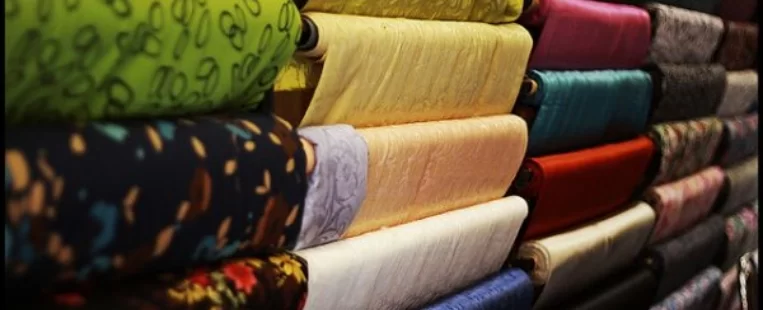
Traditional craft villages in Vietnam
Vietnam has many different administrative units such as: City, province, district, commune, village, and hamlet, among which the word "village" appears frequently in the lives of Vietnamese people. And so there are so many villages where villagers have created different crafts.

Nowadays, when modern life gradually replaces old and outdated things, the traditional cultural characteristics of Vietnamese people are never lost. Over a period of history, Vietnamese traditional craft villages have persisted and developed over time, creating a cultural beauty that is not confused with any nation or country.
Table of Contents
- 1. Bat Trang Ceramic and Pottery Village, outside Hanoi
- 2. Bau Truc Pottery Village in Ninh Thuan
- 3. Non Nuoc Stone Carving Village in Da Nang
- 4. Doi Tam Drum Village in Ha Nam
- 5. My Nghiep Brocade Weaving Village in Ninh Thuan
- 6. Basketry Craft Village in Phu Yen
- 7. Chuon Ngo Mother-of-Pearl Inlay Craft Village in Hanoi
- 8. Van Phuc Silk Village in Ha Dong District, Hanoi
- 9. Dong Ky Wood Craft Village in Bac Ninh
- 10. Dong Ho Folk Painting Village in Bac Ninh
- 11. Chu Dau Pottery Village in Hai Duong
- 12. Ke Mon Jewelry Village in Thua Thien Hue
- 13. Kim Bong Carpentry Village outside Hoi An City, Quang Nam Province
- 14. Tuong Binh Hiep Lacquerware Village in Binh Duong
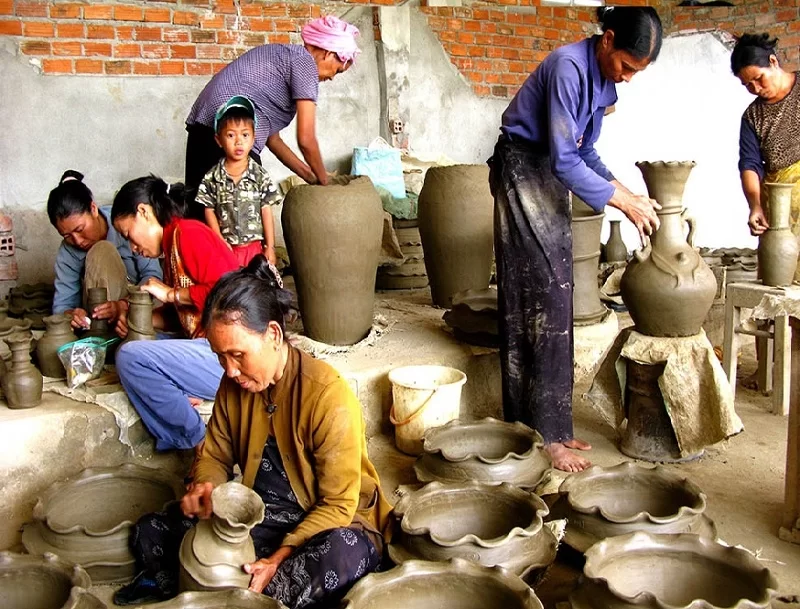
1. Bat Trang Ceramic and Pottery Village, outside Hanoi
Bat Trang Pottery Village has long been famous, not only within the territory but also known by many countries and peoples around the world. This name is associated with its place name, Bat Trang commune (now belonging to Gia Lam district, Hanoi). Bat Trang means a large workshop, dedicated to expertise. Thanks to the precise glazing technique and kiln technique, artisans here have created a special type of ceramic product, in harmony with the elegant layout, color, and human sophistication - Bat Trang ceramics.
To date, Bat Trang ceramic products have been highly appreciated for their quality, with many designs, patterns, and types, divided into functional groups such as household ceramics, worship items, fine art ceramics, construction ceramics, and decorative ceramics. Bat Trang pottery circulates throughout the country, even abroad. Bat Trang Pottery Village is not only the ideal place to create a national product brand, contributing to preserving the cultural value of the capital, but also one of the tourist destinations in Hanoi that are popular with many people.

Half a day or a full day to visit this village from Hanoi city center is enough! Would you like to discover it? Contact Typic Travel for clear information!
2. Bau Truc Pottery Village in Ninh Thuan
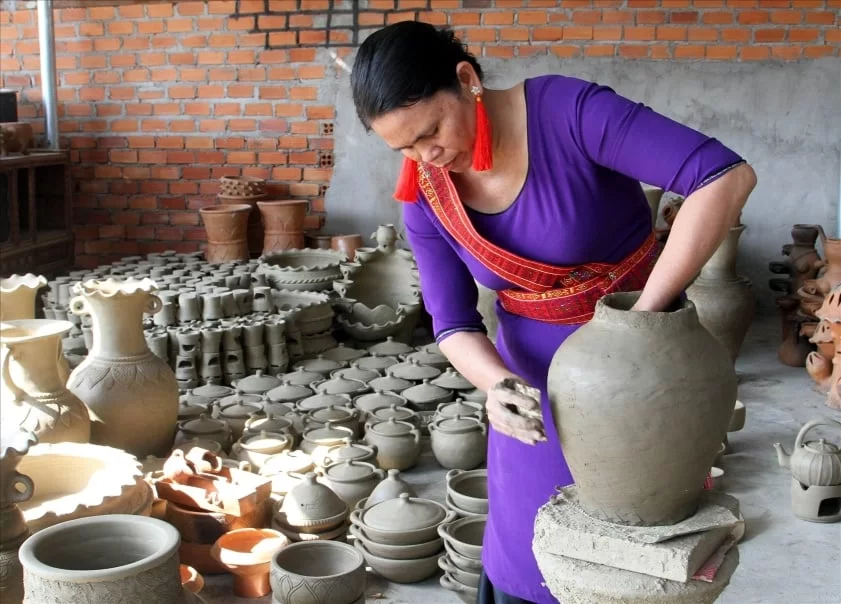
Another traditional craft village specializing in pottery making is the "Bau Truc" pottery of the Cham people, Ninh Thuan province. The village is located along National Highway 1A, in Phuoc Dan town, Ninh Phuoc district, south of Phan Rang - Thap Cham city. Besides Bat Trang Pottery Village, Bau Truc pottery is also one of the two oldest pottery villages in Vietnam.
Different from the sophistication of Bat Trang pottery, Bau Truc pottery is created by artisans without a turntable, the lines are not smooth, flexible, and the patterns are shaped from objects such as a spoon, the bottle cap... is very simple, but characterized by the ethnicity and people in each product. After molding, the ceramics are openly exposed to a temperature of about 500 to 600 degrees C for 6 hours, then removed to spray color, then fired again for 2 hours. Therefore, Bau Truc pottery has typical colors of red gold, red pink, black gray, and brown streaks.
It's also worth half a day to discover it if you are in Ninh Thuan city, so to be clear, send an email for free information from Typic Travel!
3. Non Nuoc Stone Carving Village in Da Nang
Non Nuoc Stone Carving Craft Village, Hoa Hai ward, Ngu Hanh Son district, Da Nang city, is the place where famous marble crafts are produced nationally and internationally. Perhaps no one comes to Ngu Hanh Son without visiting this craft village. The village was formed in the 18th century by an artist from Thanh Hoa named Huynh Ba Quat. This craft village is a crossroad between ancient Vietnamese and Champa cultures, bringing diversity and richness to the products of this craft village.
Later, when the country had an exchange with world culture, artisans from all over the world came here to learn and exchange experiences, from which the art statue flourished until now, with their creativity. and their industriousness, the artisans have created extremely delicate, sharp, elaborate, and varied spiritual children that make many visitors come here to admire and praise.

4. Doi Tam Drum Village in Ha Nam
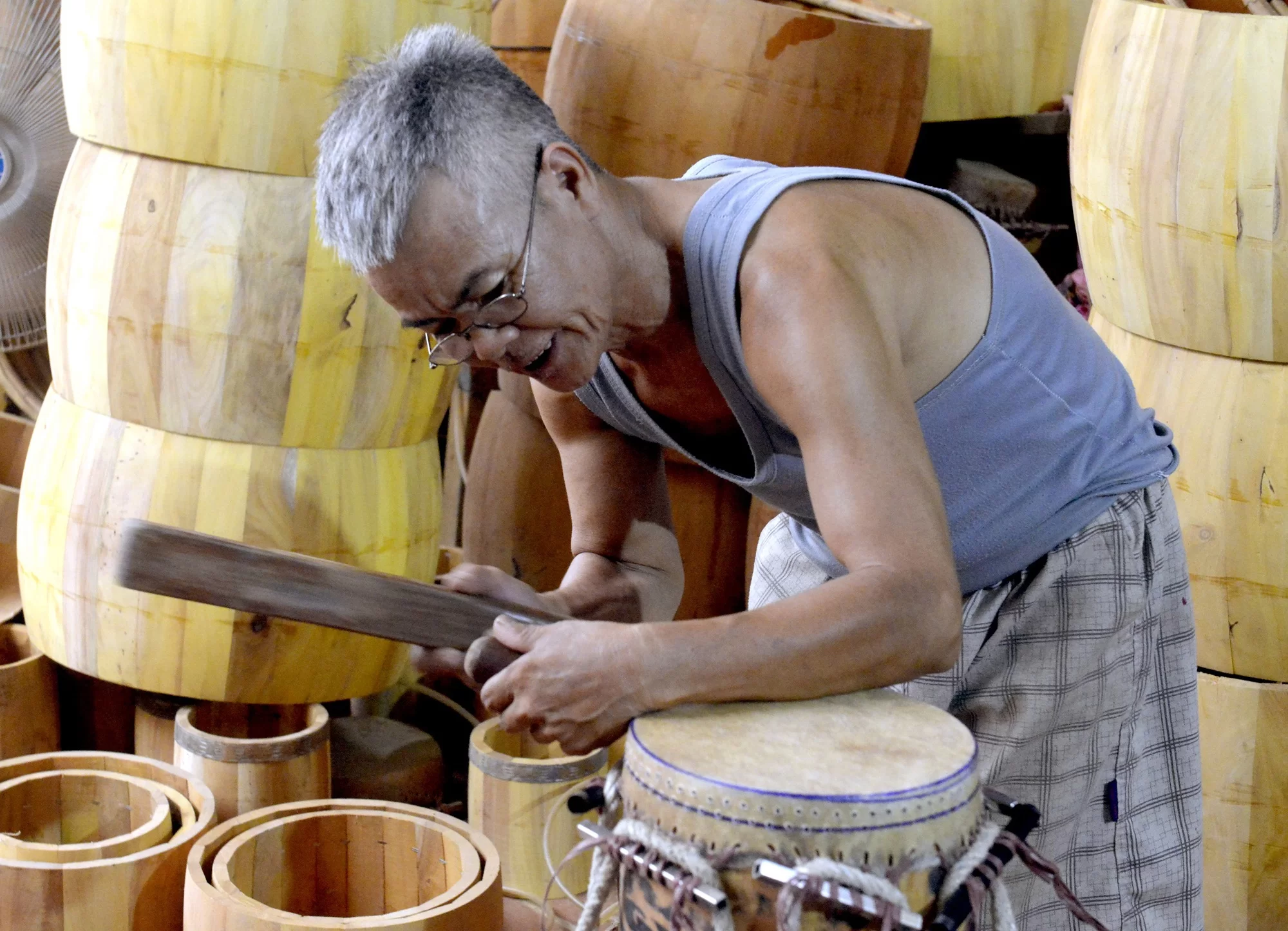
Doi Tam Drum Craft Village in Duy Tien district, Ha Nam province, is one of the only drum villages in Vietnam, with a 1000-year history of drumming, the products here are made by famous and professional staff. The drumming profession in Doi Tam is a hereditary profession, making all kinds of drums. Doi Tam drums are renowned for their durability, beauty, fullness, and roundness... thanks to the village's secret and the drummer's enthusiasm. The two main materials used to make the drum are jackfruit wood and buffalo hide, which is why the Doi Tam drum has its own sound that is different from other drums.
The people here mainly practice the drumming profession from old to young, due to the growth of this craft village, there is a Doi Tam drum team. After 10 years of creation, the village drum team has now grown to 60 people. The number of drummers has remained at 48 women, 12 additional men and women beat bronze (gong, command, bar la, scraping...). The Doi Tam girls' drum team not only serves local festivals but also participates in performances in all regions of the country.
Would you like to include this village in your travel itinerary? Tell Typic Travel what you want, and they will adapt to your wishes!
5. My Nghiep Brocade Weaving Village in Ninh Thuan
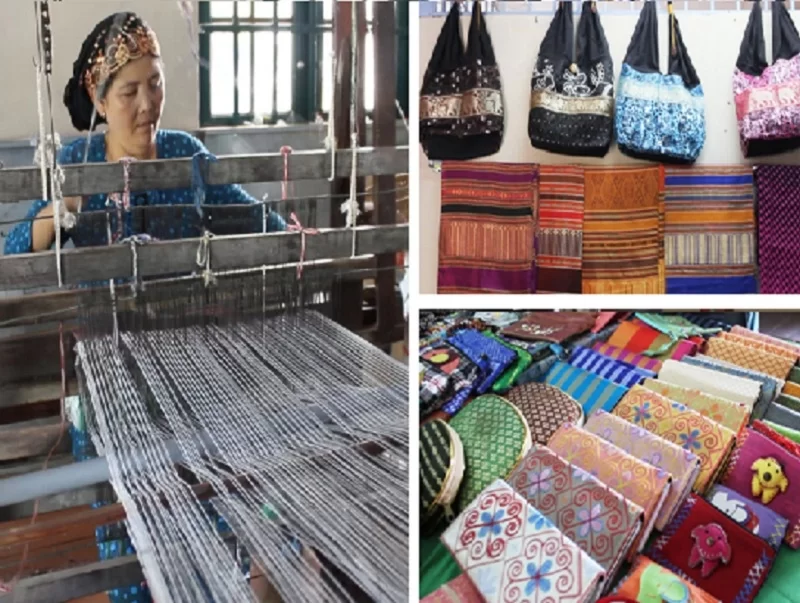
Besides Bau Truc Pottery Village in Ninh Thuan is also known for My Nghiep Brocade Weaving Village, Ninh Phuoc district, 10 km south of Phan Rang - Thap Cham city. According to legend, in the 17th century, seeing this land suitable for weaving, Mrs. Pơnaga passed on the profession to the couple living in the ancient village of Chaleng (present-day My Nghiep village), Mr. Xa and Mrs. Chaleng. She was the first artisan to create the weaving craft.
The products made by artists are very diverse such as bags, wallets, shawls, pillows... are embroidered with unique and fancy patterns and motifs illustrating the Cham culture here. Coming to My Nghiep Brocade Weaving Village, you will visit the process of rolling seeds to get cotton, yarn, hear the click of the weaving machine or realize that patterns are gradually forming under the weaving hands.
This village is highly recommended for your stay in Ninh Thuan, contact Typic Travel for more information!
6. The Basket Boat Craft Village in Phu Yen
The basket boat village is located in Tuy An district, Phu Yen. The basket boat has long been dubbed the intelligence of the Vietnamese. Craft villages are mainly concentrated on the central southern coast and still produce regularly. Recently, people are excited when the bottle basket suddenly traveled abroad from Asia to Europe.
The Phu Yen bottle basket has the particularity of using only local ingredients. According to the villagers, the bamboos grown on the lands of Phu Yen are characterized by good water resistance, good tenacity, and a source of very good quality rai oil when the baskets are coated, so the baskets are durable for a long time.
For more information about this village, call Typic Travel for free at Typic Travel
7. Chuon Ngo Mother-of-Pearl Inlay Village in Hanoi
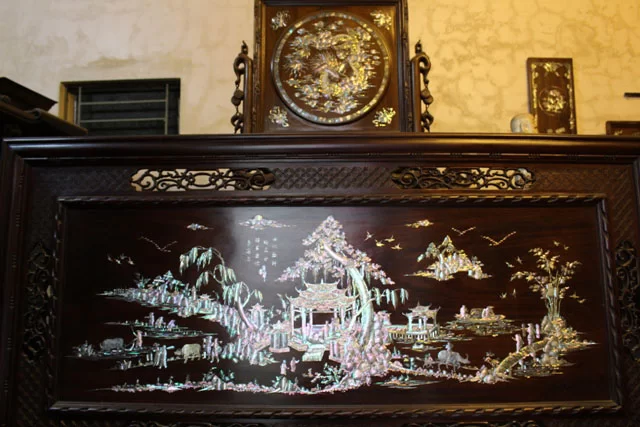
Chuon Ngo mother-of-pearl inlay village in Chuyen Ma commune, Phu Xuyen district, Hanoi city is a traditional craft village dating back to the Ly Dynasty. The ancestor of this profession was Mr. Truong Cong Thanh, a former general who participated in Ly Thuong Kiet's army. After defeating the Song army, he returned to the village to open a pearl mosaic workshop. Currently, there is still a temple in the village.
The highlight of Chuon Ngo mother-of-pearl inlay is intact clam fragments, always flat, attached to tight and beautiful wood. The main products of Chuon Ngo are: mosaic cabinets, mosaic beds ... and simple products such as chess tables, murals, chopsticks, trays ... Recently, due to market demand, mother-of-pearl inlay craftsmanship here has flourished to deliver goods nationwide and for export abroad.
Not many people know this village, and out of curiosity, if you wish to visit it, it is highly recommended despite the Covid-19 period, so ask Typic Travel before you go!
8. Van Phuc Silk Village in Ha Dong District, Hanoi
Although about 10 km from the center of Hanoi city, this village on the Nhue River still retains the characteristics of a traditional craft village such as the image of ancient banyan trees, water wells, communal courtyards, and in the afternoon, the market was still held under the communal house in front of the communal house. From the steps at the village gate, one could hear every "clack" sound of looms coming from the weaving workshops.
The ancestor of silk weaving in Van Phuc is named Le Thi Nga, and now there is a shrine for her in the village. Van Phuc silk is renowned for its "smooth face, cool hands". Various silk products: Silk, Extreme Silk, Cinnamon Silk, Gam ... Van Phuc silk is not only consumed domestically but also exported to many countries around the world.
=> To visit one of these craft villages, you can take a tailor-made trip with a local travel agency in Vietnam like Typic Travel to help you organize your tour.
9. Dong Ky Wood Craft Village in Bac Ninh
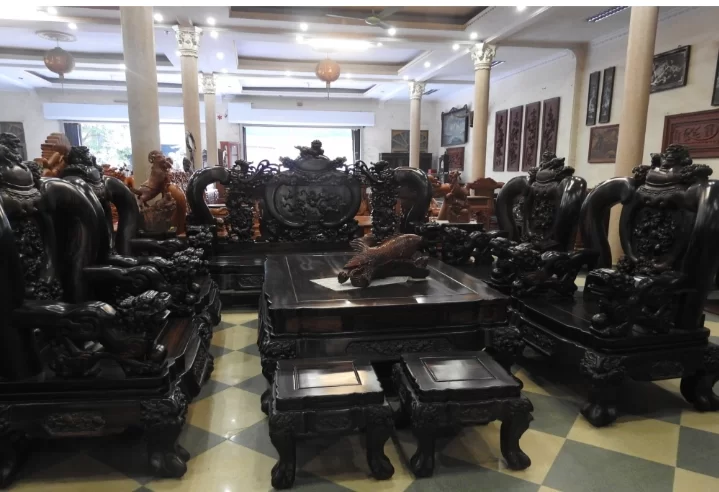
Dong Ky Wood Craft Village is a famous craft village since ancient times. Dong Ky now belongs to Dong Quang commune, Tien Son district, Bac Ninh province, about 20 km northeast of the capital Hanoi. Dong Ky craft village offers almost a full range of high-quality wood crafts for life, interior decoration or worship ...
Dong Ky products are made from precious woods such as mahogany, rosewood, incense, ebony, nuclear wood and milk wood ... With revenues of hundreds of billions of VND / year, Dong Ky wood craft production has created jobs for thousands of workers not only in the village, but also attracts workers from other places.
If this village interests you for a visit, do not hesitate to send us an email!
10. Dong Ho Folk Painting Village in Bac Ninh
Dong Ho is a famous folk painting village in Vietnam, Dong Ho belongs to Thuan Thanh district, Bac Ninh province. Folk painting has existed here for a long time. In the past, the village only painted pictures to sell during the Lunar New Year, but nowadays, Dong Ho folk paintings are painted on weekdays to serve tourists. The materials for painting are paper and the colors are: young bricks, leaves, tree roots burned into charcoal. To give a shine to the painting, people use seashells and clams to burn into lime, make them small, mixed with tree sap, spread evenly on the paper and then start drawing.
Dong Ho folk paintings have many pictures such as animals: dogs, cats, buffaloes, cows, chickens, pigs ... the picture "catching the coconut; mouse weddings; jealousy" seems very interesting. It expresses the desire for peace, happiness and well-being ... so it is often hung indoors during spring holidays.
This village is also interesting to suggest to you in your Vietnam travel program, and if you are alone, you can go on the trip and Typic Travel will give you free information!
11. Chu Dau Pottery Village in Hai Duong
Chu Dau Pottery Village in Thai Tan commune, Nam Sach district has been famous worldwide for over 500 years. Chu Dau ceramic products are preserved in many national museums around the world such as Turkey, France, Belgium, Japan, the Netherlands... and in personal collections in many countries worldwide. One of the highlights of Chu Dau ceramics is its patterned lines. Ancient Chu Dau motifs are mainly lotus, chrysanthemum, in many different forms and dozens of other stylized motifs.
Experts appreciate Chu Dau pottery for its appearance, glaze, patterns, decorative motifs... all are perfectly beautiful. Chu Dau pottery is presented in many forms such as drawing, carving, painting, embossing, all freely, lyrically, harmoniously and sophisticatedly. The motifs and patterns on the pottery strongly represent the cultural identity of the Vietnamese nation. This is the natural landscape and life of the people of the Red River Delta such as the scene of pastoralism with buffaloes, birds perched on flower branches, fish swimming underwater, thatched roofs along rivers... This involves polishing, shaping on the potter's wheel, cutting the products in several stages, then reassembling and processing. The products are presented on blue-white glaze, celadon or Tam Thai glaze.
Have you heard of this village? If not, contact Typic Travel agency for more lively and free information!
12. Ke Mon Jewelry Village in Thua Thien Hue
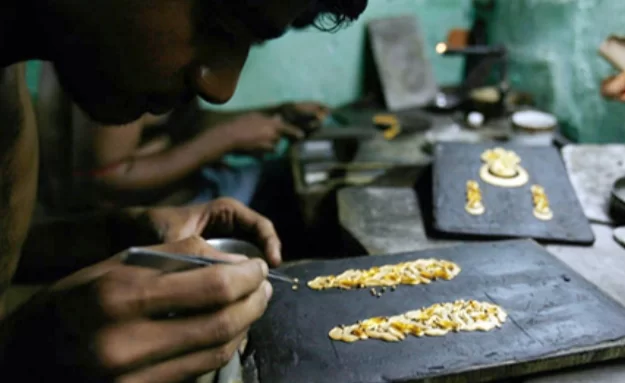
Ke Mon village in Phong Dien district, Thua Thien - Hue province is a famous gold village for over 300 years. The ancestor of this craft village is Mr. Cao Dinh Do, originally from Cam Tu village, Cam Thuy district, Thanh Hoa province, who immigrated to Ke Mon village at the end of Lord Nguyen Phuc Khoat's life. During the reign of King Quang Trung, Mr. Do was summoned to the palace to establish the royal palace of the royal family, specializing in making jewelry for the royal family. Until the reign of King Gia Long, Cao Dinh Do and Cao Dinh Huong (his son), they were always kept as statues until their death (1810; 1821).
Ke Mon jewelry is renowned for its good quality compared to many other places with sophisticated craftsmanship and elaborate carvings made by experienced, skillful and creative artisans. This is more evident on jewelry such as bracelets, bangles, rings, bracelets, necklaces and earrings made of gold or silver.
Over the past hundred years, thousands of Ke Mon villagers have left the village and have been present, first in the imperial city of Hue (to work in the royal guard of the royal court), then in most cities, towns, large markets in the country and later in the world. The jewelry profession has become a livelihood for the people of Ke Mon, who made gold throughout the country. Not only that, Ke Mon villagers have also spread their traditional craft around the world to promote their homeland. Currently, the state of Texas in the United States has 40 gold holding establishments of Ke Mon people.
In Hue, jewelry is exhibited at "Tinh Tam Kim Co", as part of the traditional craft festivals of the people of Hue from Ke Mon village. Ke Mon village has many churches with 16 churches, these are the people who have the merit of opening the village and developing the jewelry profession. And every year, on the 27th of February of the lunar calendar, they all organize the death anniversary and meet and exchange to improve their skills.
A village truly worth recommending for a visit during your stay in this beautiful city! And for more information, ask the tailor-made travel agency Typic Travel !
13. Kim Bong Carpentry Village outside Hoi An city, Quang Nam province
Kim Bong is the village of famous wood carving (carpentry) from ancient times. Kim Bong is located in Cam Kim ward, Hoi An city. The carpentry here originated from the North, was learned by the carpenters of Kim Bong village, coordinated with Cham, Chinese and Japanese carvings to create wood carvings of high aesthetics and philosophy. Kim Bong wood carvings have been present in many families, many localities in the country and many countries on 5 continents.
Nowadays, in the territory of Kim Bong, there is an artist title for a number of skilled carpenters. In the alleys of nearly 1000 roofs of this famous carpentry village, there are still wood carving activities, civil furniture construction, house construction... Especially here, boat building of 10 tons up to 20 tons for customers from Quang Nam - Da Nang to Binh Thuan is quite developed. In addition, Kim Bong workers also actively contribute to the protection, restoration and beautification of the ancient urban relic of Hoi An. In general, like many traditional craft villages in the country, Kim Bong carpentry village is preserved, passed down technology and continues to produce but still in a state of supplying products in the locality. It has not found a large consumer market, so it is not possible to fully exploit the available potential and valuable capital.
Typic Travel advises you to visit this village once you are in Hoi An city!
14. Tuong Binh Hiep Lacquer Village in Binh Duong
The most famous lacquer painting village in Binh Duong is Tuong Binh Hiep painting village, located 7 km north of Thu Dau Mot city. Here, visitors will witness every step of the traditional lacquer craft unique to Vietnam. With hundreds of households making lacquer paintings, some households only do one or two steps of the painting and then give it to other households for the next steps.
It can be said that in Tuong Binh Hiep, the lacquer profession has been industrialized with clear production lines, but completely family-owned, with a delicate and gentle Asian style. Binh Duong lacquer painting products are appreciated by Vietnamese and international painting enthusiasts and are solemnly displayed indoors.
A suburb of Saigon to visit, this is what Typic Travel travel agency offers you in its off-the-beaten-path tours!
| * If this article is interesting and useful please share it with your friends and people around you * And if you have the desire to travel to Vietnam and visit one of the traditional craft villages during your tour, we suggest you take a tailor-made trip according to your wishes, please click our button "Free quote" or "Tailor-made trip" or send an email to Typic Travel * If you are simply looking for an idea for trips to Vietnam or Indochinese Countries Typic Travel offers you some main ideas according to the category of our trips on "idea of our trips" or follow us on one of your social networks for more permanent information: |
| Follow us on: | TripAdvisor | Facebook | Petit Futé | Youtube | Twitter | Instagram |


