


Authentic Vietnam: Saying Hello Like a Local
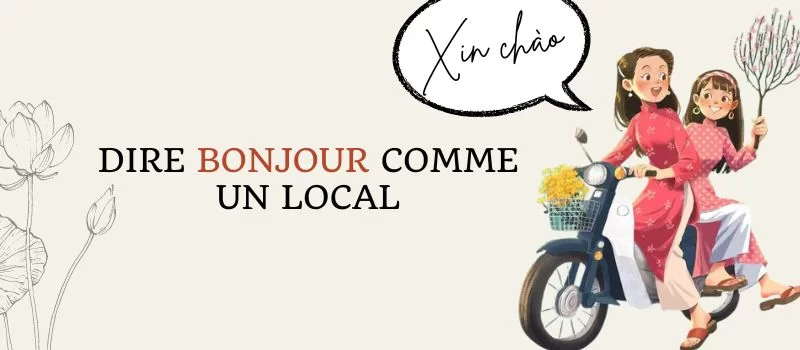
Immerse yourself in Vietnamese culture by mastering the art of greetings. Typic Travel guides you off the beaten path for a unique experience and authentic encounters.

Do you dream of discovering Vietnam, its breathtaking landscapes, and its ancient culture? Before embarking on your adventure, learn how to say hello in Vietnamese to create unique connections with the locals. At Typic Travel, we believe that mastering greetings is the key to an authentic and respectful travel experience.
Table of Contents
1. Why learn to say hello in Vietnamese?
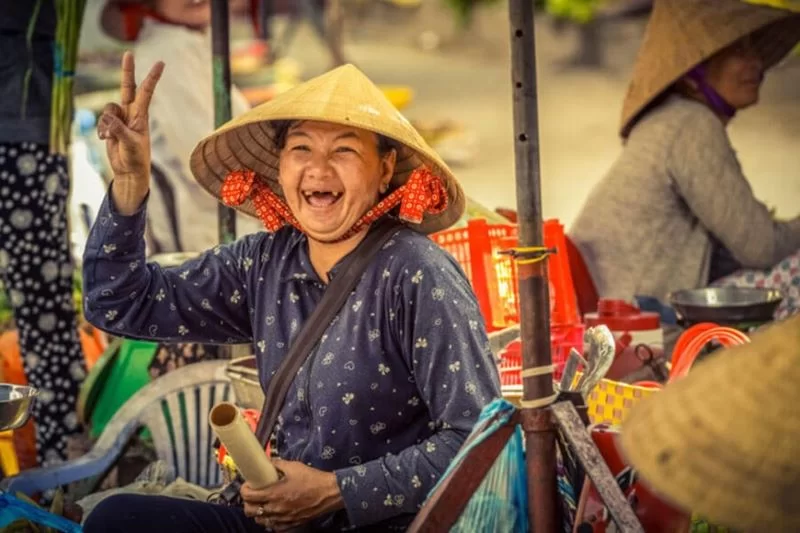
In Vietnam, greetings go far beyond a simple "hello". There is a Vietnamese proverb that perfectly illustrates the importance of greetings in local culture: "Lời chào cao hơn mâm cỗ". This saying literally translates to "A greeting is worth more than a banquet", and its English equivalent would be "Politeness costs nothing and buys everything".
This proverb highlights how powerful and important a simple greeting can be in social interactions in Vietnam. By mastering the art of saying hello in Vietnamese, you:
- Show your respect for the local culture
- Create deeper connections with locals
- Open the door to unique and authentic experiences
2. The basics: "Xin chào", the universal hello
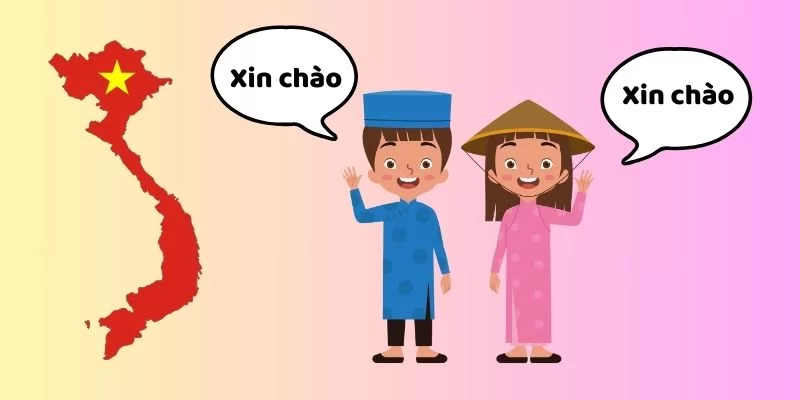
The simplest way to say hello in Vietnamese is "Xin chào" (pronounced [sin tchao]):
- "Xin" is pronounced roughly like "sin" in English.
- "chào" resembles the sound "chao" in English, but with a falling intonation).
This versatile expression can be used at any time of day and with anyone. It's the perfect starting point for beginner travelers.
3. Beyond "Xin chào": The nuances of Vietnamese greetings
To truly impress the locals, delve into the richness of Vietnamese greetings. The language reflects a social hierarchy based on age, status, and relationships. Here are some examples:
- For slightly older people:
- Chào anh [tchao an] = Hello sir (for a man older than oneself)
- Chào chị [tchao tchi] = Hello madam (for a woman older than oneself)
- Chào ông [tchao ong] = Hello sir
- Chào bà [tchao ba] = Hello madam
- Chào em [tchao em] = Hello (regardless of gender)
4. The subtleties of pronunciation
Vietnamese is a tonal language, which means pronunciation is crucial. Even if locals will appreciate your efforts, here are some tips to refine your accent:
- Listen carefully to native speakers and try to reproduce the sounds
- Practice with your Typic Travel guide during your excursions
- Don't hesitate to ask locals to correct you
5. The six tones of Vietnamese
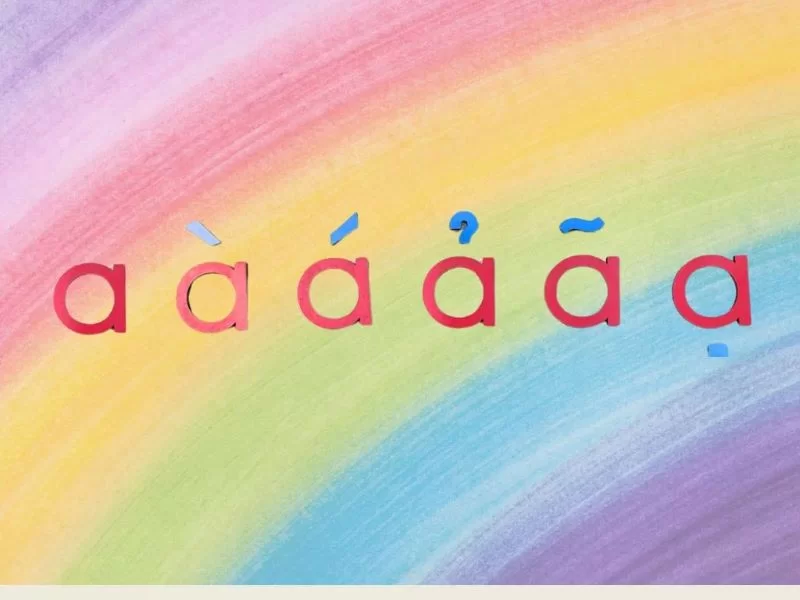
One of the fascinating peculiarities of Vietnamese is its tonal system. The language has six main tones, called "thanh điệu":
- Ngang (no accent) like [a]: your flat tone
- Huyền (grave accent) like [à]: your falling tone
- Sắc (acute accent) like [á]: your rising tone
- Nặng (dot under the letter) like [ạ]: your abrupt falling tone
- Hỏi (question mark) like [ả]: your dipping tone (falling-rising)
- Ngã (tilde) like [ạ]: your glottal rising tone
Here's how to pronounce these different tones:
- Ngang (no accent): the voice remains stable, as when you speak normally in English
- Huyền (grave accent): the voice drops slightly towards the end of the word
- Sắc (acute accent): the voice rises towards the end of the word, as if you were asking a question
- Nặng (dot under the letter): the voice drops abruptly, as if you were dropping something
- Hỏi and Ngã: these two tones are the most difficult for English speakers, as they have no equivalent in English. The Hỏi tone falls then rises slightly, while the Ngã tone rises then falls abruptly.
Don't be discouraged if you find these tones difficult at first. With practice and patience, you will gradually improve your pronunciation. Remember that the main thing is to make the effort - Vietnamese people will appreciate your attempt to speak their language, even if your pronunciation is not perfect!
6. Beyond Hello: Useful Phrases for Your Trip
Learning a few Vietnamese words will open many doors (and earn you many smiles!). The Vietnamese language is tonal, meaning that the "melody" of a word changes its meaning. This may seem intimidating, but don't worry! Vietnamese people greatly appreciate the effort.
Here's an ultra-simplified pronunciation guide for English speakers:
-
ch / tr: Pronounced "ch" (as in "chair").
-
nh: Pronounced "ny" (as in "canyon").
-
gi / d (in the North): Pronounced "z" (as in "zebra").
-
u: Pronounced "oo" (as in "moon").
-
ư: Pronounced "uh" (like the "u" in "fur").
-
ơ: Pronounced "uh" (like the "u" in "blur").
-
ă: A very short "a".
-
kh: A soft "k" sound, similar to the "ch" in Scottish "loch".
To go further in your interactions, here are some essential expressions:
| Essentials (Politeness) | Simplified Phonetic Pronunciation | English Translation |
| Cảm ơn | [kam uhn] | Thank you |
| Xin lỗi | [sin loy] | Excuse me / Sorry |
| Tạm biệt | [tam beet] | Goodbye |
| Bao nhiêu tiền? | [bow nyoo tee-en] | How much does it cost? |
| Rất ngon! | [zat ngawn] | Very delicious! |
| Ok | Ok | Yes, good, well |
| Toilet / WC? | Toilet | Where is the restroom? |
| Đắt quá! | [Dat kwah!] | It's too expensive! |
| Không cay | [Khom kai] | Not spicy |

The Typic Travel Approach: Linguistic and Cultural Immersion
At Typic Travel, we believe that language is the gateway to an authentic travel experience. That's why we offer:
- Bilingual local guides to help you practice
- Homestays for total immersion
- Express Vietnamese language courses before your excursions
Learn more about our tour guides: Does a private chauffeur guide in Vietnam tempt you?
Conclusion: Open the doors to authenticity
Learning to say hello in Vietnamese is much more than a simple formality. It's an invitation to discover the richness of Vietnamese culture, to create authentic connections, and to live unique experiences. At Typic Travel, we are convinced that these small gestures make all the difference in your trip.
Ready to put your new language skills into practice? Contact Typic Travel today to plan your tailor-made Vietnamese adventure, rich in cultural discoveries and authentic encounters.