




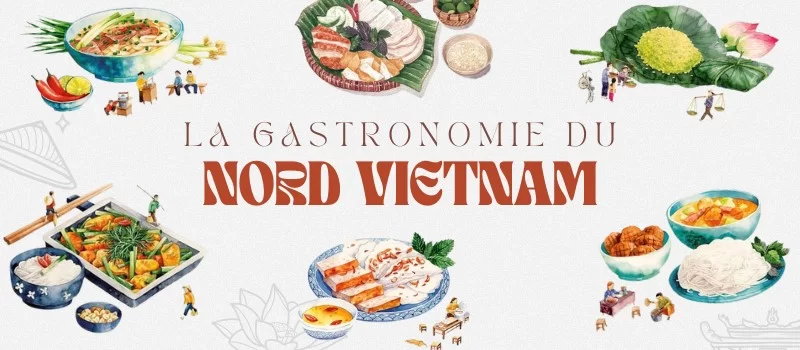
Hanoi and beyond: North Vietnam's gastronomy
The cuisine of Northern Vietnam in Hanoi and its surroundings. Savory dishes and authentic traditions!

When I think back to my childhood, the most vivid memories are those of the enticing aromas wafting from small street stalls and bustling markets. Northern Vietnamese cuisine is far more than mere food – it's an essential element of our culture, our history, and our daily lives.
Today, I invite you on a culinary journey through my native region, to discover the distinctive flavors that have made Northern Vietnamese gastronomy famous.
Table of Contents
1. Overview of Hanoi and Northern Gastronomy
-
General Characteristics of Vietnamese Cuisine
Vietnamese cuisine is celebrated for its fresh ingredients and the delicate harmony of its flavors. Aromatic herbs such as coriander and Vietnamese mint infuse each dish with a touch of freshness. Rice, vegetables, and seafood form the foundation, prepared with gentle cooking methods like steaming and boiling to retain their nutrients and subtle tastes.
The taste profile of Northern cuisine is mild and balanced, avoiding excessive fat and sugar. Fine fish sauce and shrimp paste are primarily used to enhance flavors. Hanoi, truly the culinary heart of the North, is renowned for iconic dishes like phở, bún thang, cha ca vermicelli, Vong village green rice flakes, Thanh Tri steamed rice rolls, and unique spices such as Ca cuong essential oil and Lang basil.
To delve into the culinary diversity of the three regions: Vietnamese Cuisine: Follow the Local Guide for an Authentic Experience
-
Specifics of Northern Gastronomy
Northern Vietnamese cuisine also exhibits Chinese influences, evident in the use of noodles, dumplings, and soy sauce. The flavors are lighter and less spicy than those found in the South, reflecting a cooler climate and distinct culinary traditions. Specific aromatic herbs, such as Vietnamese mint and long coriander, add subtle and intricate nuances to the dishes.
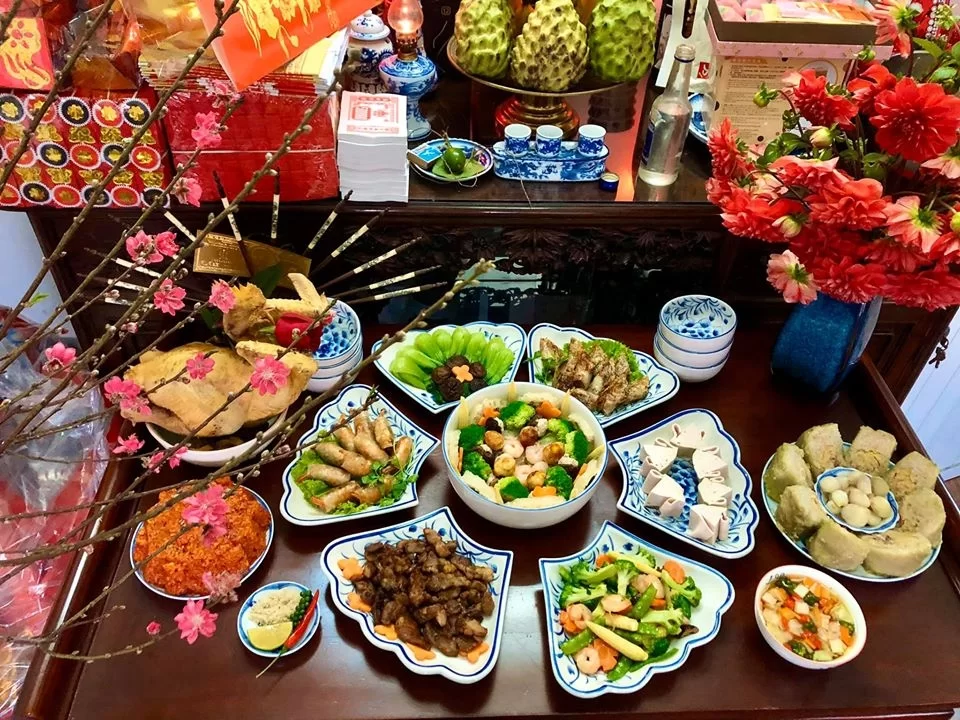
2. Hanoi, the Culinary Capital of the North
A culinary journey to the North would be incomplete without a stop in Hanoi. The capital city abounds with iconic specialties that have earned it global fame.
Phở
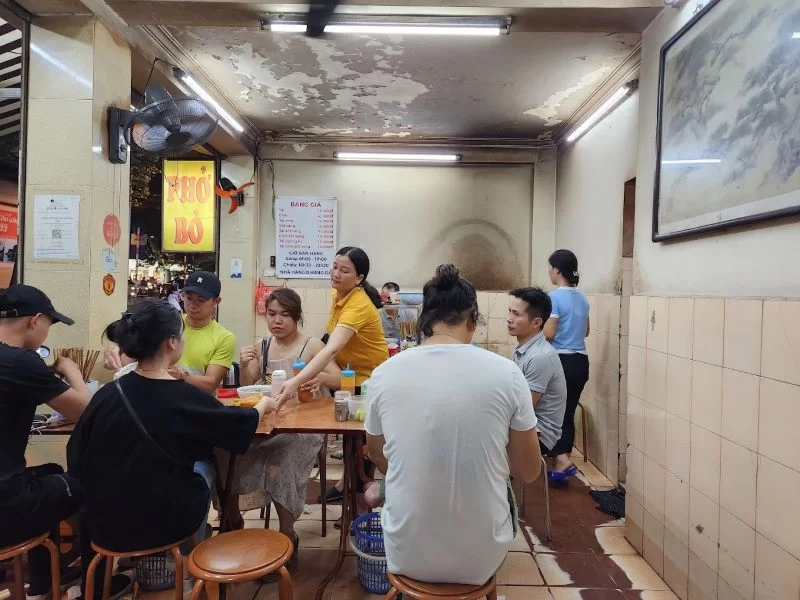
Phở is arguably Hanoi’s most iconic dish. This clear, fragrant broth, typically served with beef (phở bò) or chicken (phở gà), is a testament to a long culinary heritage. Phở's origins trace back to the early 20th century, with each bowl narrating a tale of patience and skill. To savor an authentic phở in Hanoi, here are my top restaurant recommendations in Hanoi:
Recommended Eateries
- Pho bo Lâm: 48 Hàng Vải Street (from 5:30 AM to 9:30 AM)
- Pho bo 8 Hàng Da: 8 Hàng Da Street (from 6 AM to 11 AM and from 4:30 PM to 10 PM)
- Pho ga Hồng: 9 Lý Thái Tổ Street (all day)
Eateries to Avoid
- Pho bo 49 Bát Đàn: Once celebrated, this restaurant has become overly touristy, and the quality of its phở has unfortunately declined in recent years.
- Pho bo Ly Quoc Su: While the name remains famous, the quality is no longer up to par.
- Pho Thin Bờ Hồ: This restaurant's reputation is no longer warranted, as its quality has long since diminished.
- Pho Thin Lò Đúc: This establishment, unrelated to Phở Thìn Bờ Hồ, is more a product of advertising than an authentic spot.
Bún chả
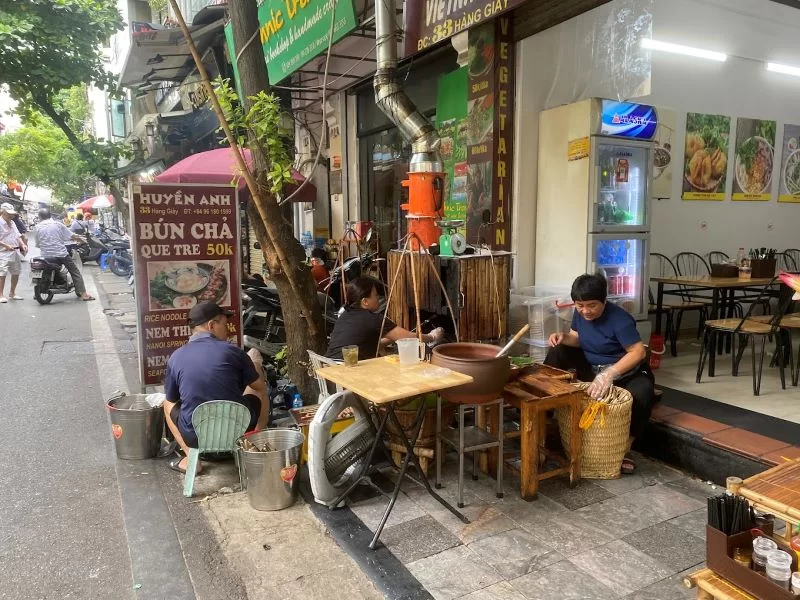
Bún chả is another must-try dish in Hanoi. Bún chả is another must-try dish in Hanoi. These grilled pork patties served with rice vermicelli and fresh herbs are a true delight. I recommend enjoying them like a local, by dipping the patties in nuoc-mam sauce.
Good addresses
- Bún chả que tre: 33 Hàng Giấy Street (10 AM to 9 PM)
- Bún chả Hàng quạt: 74 Hàng Quạt Street (10 AM to 2 PM)
Addresses to avoid
- Bún chả Đắc Kim: Once renowned, this restaurant has become too touristy and the quality of its cuisine now leaves much to be desired.
- Bún chả Hương Liên: Its reputation is mainly due to Barack Obama's visit, but the quality of the dishes does not match the establishment's fame.
Chả cá Lã Vọng
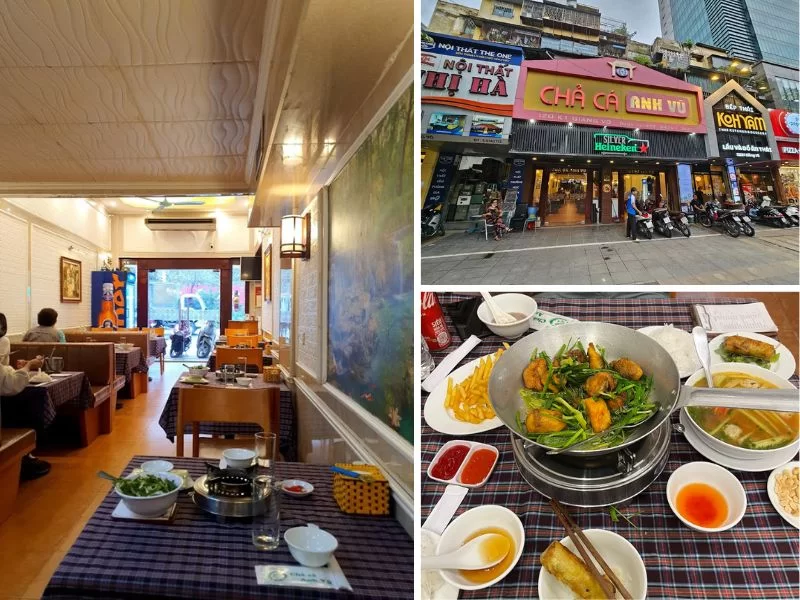
Chả cá Lã Vọng is an iconic fish dish, usually catfish, marinated in turmeric and aromatic herbs, then grilled and served with rice vermicelli, peanuts, and fresh herbs. This dish, originating from Hanoi, is a true delight that you should not miss.
- Chả cá Thăng Long: 6B Đường Thành Street, Cửa Đông, Hoàn Kiếm
- Chả cá Anh Vũ: Giảng Võ Street, Chợ Dừa, Đống Đa
Bún bò Nam Bộ
Bún bò Nam Bộ, beef noodle soup, is a Hanoi dish, not from southern Vietnam. It comes from a street formerly named Nam Bo (currently Le Duan Street). This dish consists of marinated and stir-fried beef, served on a bed of rice vermicelli, with fresh herbs, bean sprouts, roasted peanuts, and a sweet nuoc mam sauce.
- Bún bò Nam Bộ Bách Phương: 73 Hàng Điếu, Hoàn Kiếm
| Good to know Don't miss visiting Đồng Xuân alley to taste all the delights of Hanoi street food. Even if you don't eat, this alley is worth a visit for its lively atmosphere and numerous stalls. |
3: Culinary journey to the northern provinces
-
Ha Giang
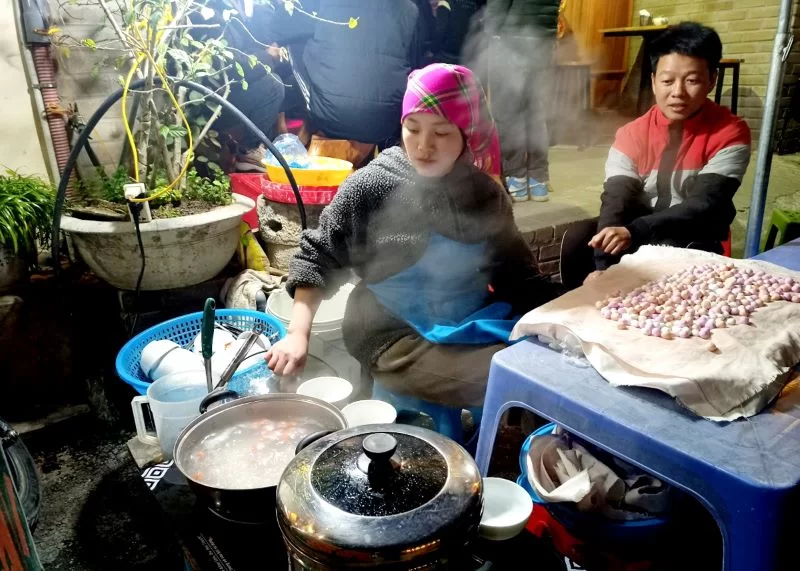
Ha Giang, with its breathtaking mountainous landscapes, offers unique cuisine influenced by the traditions of local ethnic minorities. Thắng cố, a horse meat soup, is a traditional dish not to be missed. Mèn mén, a ground corn dish, and thắng dền, stuffed sticky rice balls, are also local specialties to discover in ethnic markets. It may sound strange, but it's very good!
-
Ninh Bình
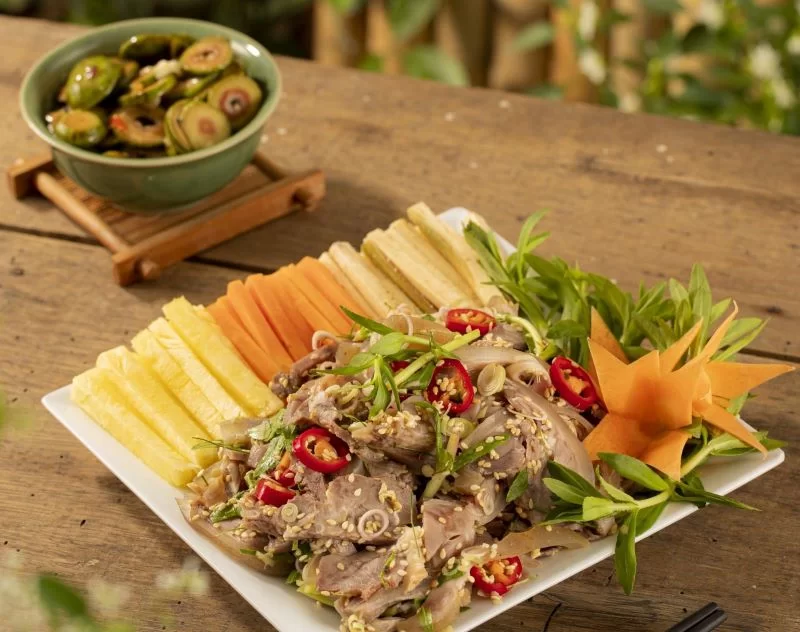
Ninh Bình, famous for its karst landscapes, offers culinary delights such as cơm cháy (crispy rice) and dê núi (mountain goat). Restaurants located by the river offer stunning views while allowing you to savor these delicious dishes. Don't miss trying nem chua, a fermented pork sausage.
-
Sapa
Sapa, known for its terraced rice fields and ethnic minorities, offers unique dishes such as lợn cắp nách (grilled suckling pig), cá hồi (salmon), and rau cải mèo (wild vegetables). Sapa's colorful markets are perfect for discovering not only local products but also traditional crafts.
4: A local's tips for an authentic culinary experience
To fully experience the richness of Northern Vietnamese gastronomy, here are my local tips:
Dare to embark on a culinary adventure: Step out of your comfort zone and let yourself be surprised by new flavors. Ask your guide or locals for advice to discover unknown specialties.
Explore local markets: This is where you'll find the freshest ingredients and most authentic dishes. Markets are the beating heart of Vietnamese culinary culture.
Favor small neighborhood restaurants: Street food stalls and family-run establishments are often the best places for affordable and authentic Vietnamese cuisine.
| Attention Don't forget that in local markets and small restaurants, cash payment (in Vietnamese dong - VND) is often the only accepted method. Consult this article to better understand Vietnamese currency and prepare for your transactions: Currency, tips & bargaining in Vietnam: a complete guide |
Learn a few Vietnamese words: Greet vendors, order your dish, and thank them in Vietnamese for a warm welcome. A simple "xin chào" (hello) or "cảm ơn" (thank you) can make all the difference.
Trust your guide: An experienced local guide is your best ally for immersing yourself in the culinary culture of Northern Vietnam. They will show you secret addresses and explain local customs.
Learn more about our French-speaking guides: French-speaking guide in Vietnam: prices, selection, and good deals
In short, be curious, open-minded, and let yourself be guided for a unique and unforgettable culinary experience in Vietnam.
Conclusion
Ready to discover Northern Vietnamese cuisine? Book your culinary trip with Typic Travel now! Contact us for a personalized quote and discover our exclusive gastronomic tours. Happy travels and bon appétit!