





Non La - A cultural icon of Vietnam
As a cultural icon of Vietnam, conical hats appear in many aspects of local life, such as a stroll around town, literature, fashion, and the arts. The conical hat is an indispensable element of Vietnam's past, present, and future.

As a cultural icon of Vietnam, conical hats appear in many aspects of local life, such as walking around town, literature, fashion, and arts. The conical hat is an indispensable element of Vietnam's past, present, and future. Let's learn a thing or two before we head to our country!
Conical hats and ao dai are the first things that come to mind when thinking of Vietnam's traditional costume. Although the conical hat is rustic, it is an elegant costume when combined with the ao dai. An interesting fact you may not know is that the conical hat appeared before any other traditional costume in Vietnam. Over time, it has significant meaning in Vietnamese culture. Let's see what made the conical hat an essential element of the country.

History of Non La (Conical Hat)
The image of the conical hat was engraved on a Ngoc Lu bronze drum and a Dao Thich bronze jar between 2500 and 3000 BC. The bronze drum is considered one of Vietnam's oldest archaeological artifacts. These images, therefore, have a special meaning for our history.
Since time immemorial, the conical hat has appeared in daily life, folk tales, literature, and Vietnamese arts. Although there have been many wars throughout the country's history, the conical hat remains. In Hue, you will find traditional conical hat villages such as Dong Di (Phu Vang district), Da Le (Huong Thuy district), and Phu Cam (Hue city). These traditional trading villages are also famous tourist attractions nowadays.

How to make a conical hat?
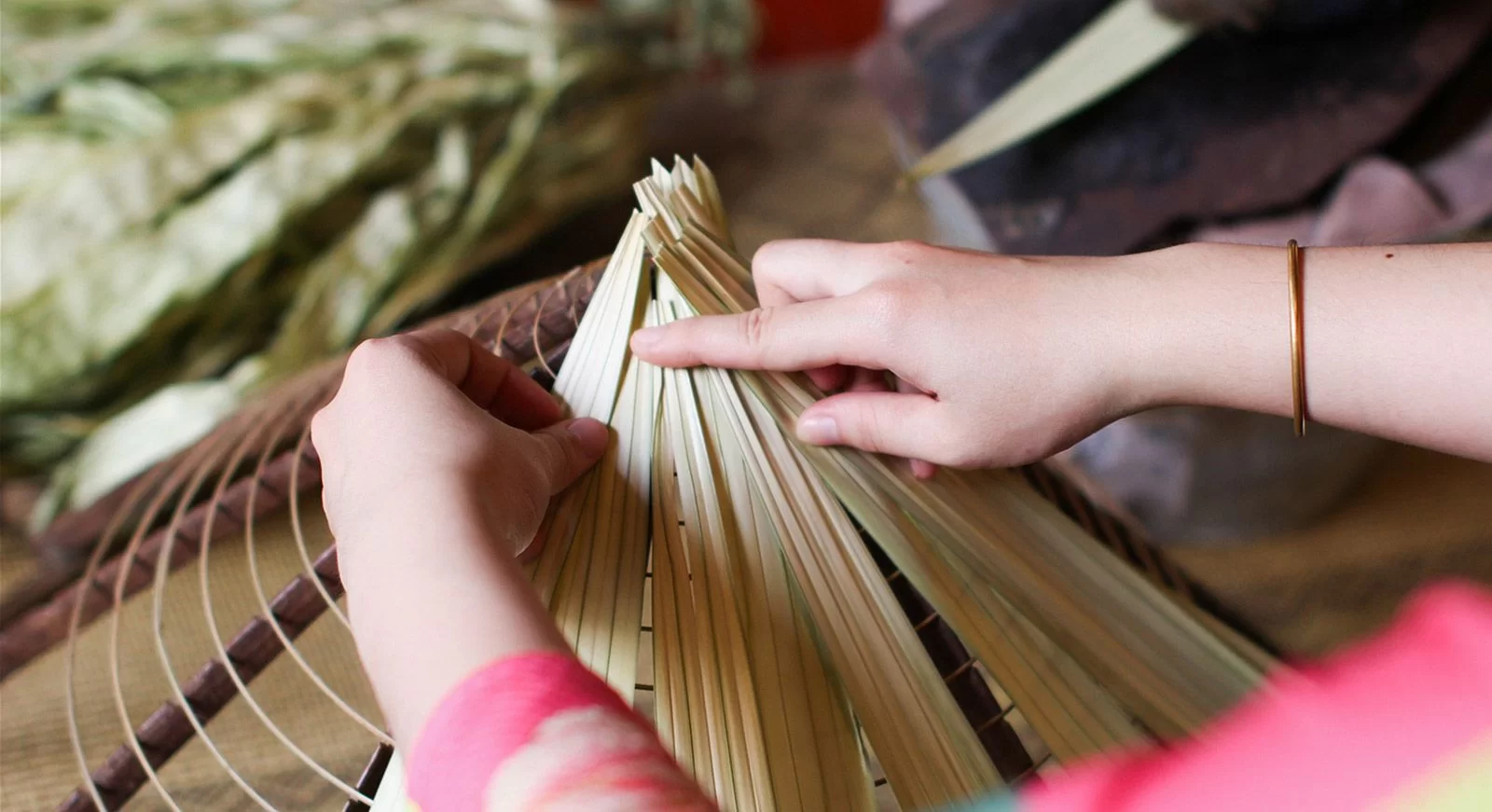
The conical hat is generally woven with different kinds of leaves such as palm, bamboo, or coconut leaves. The hat generally has the shape of a cone as its name suggests. Thin and small bamboo sticks are bent into a circle of different diameters. These circles are pinned to a conical frame with thread, silk, or filaments. Hat makers flatten the leaves, cut the head across the top of the leaves, and use a needle to sew the top of 24 or 25 leaves together.
Then, the sewn leaves are attached to the conical frame. As the leaves are thin, the conical hat will easily deteriorate if worn in heavy rain. Therefore, the hat maker uses bamboo spathes for the second layer, so that the conical hat is both hard and durable. Then, the last leaf layer is attached to the frame and this layer is identical to the first. All layers are attached with strings to the frame. The leaves of the third layer cannot cover the entire frame. So the hat maker cuts the other leaves into small pieces to fill these gaps. Then, all the leaves and layers are sewn with a thread around each bamboo circle of the frame.
In the middle of the third and fourth bamboo circles, the hat maker uses thread to tie the strap. The strap is usually made of velvet or silk of different colors. The outside of the conical hat is covered with varnish to increase durability and beauty.
Different types of conical hats in Vietnam
There are many types of conical hats. Some of them are wide and flat hats. In fact, the conical hat is called nón lá in Vietnamese, which means leaf hat. Therefore, other hats made from the leaf are considered a nón lá or conical hat in English. However, the common shape of the hat is still the cone and other shapes appear less. Elderly people, children, officials, and soldiers use different types of conical hats. The hat also has its own unique characteristics in different regions of the country.
Practical Uses and Important Significance in Vietnamese Culture
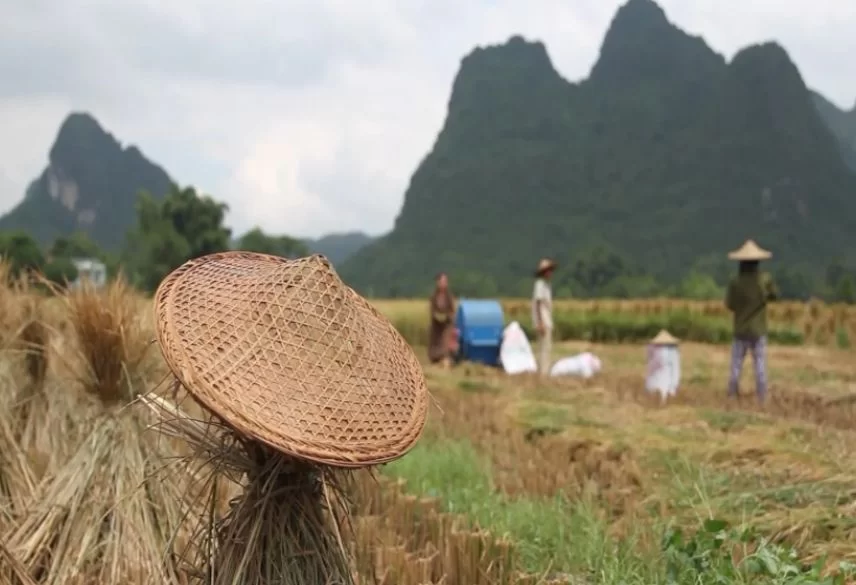
The conical hat is used to protect the wearer from the sun and rain. In rural areas of Vietnam, you will see many scenes of conical hats entering and exiting plants on a farm. These are hard-working farmers with conical hats on their heads, and they rarely part with them. In hot weather, they can also use the hat as a fan. Not only do farmers wear these hats, but street vendors, market sellers, or people simply working in the elements wear the conical hat.

The conical hat is considered a fashion item in Vietnam. Beautiful girls usually wear the ao dai, the traditional garment of Vietnam, with the conical hat. Ao Dai and the conical hat create an elegant costume and are a symbol of the Vietnamese girl. Non bai tho in Hue is usually painted with an image of a young Vietnamese girl wearing her ao dai and conical hat. Even in fashion shows, the appearance of the conical hat is a regular occurrence. The conical hat has even appeared in fashion shows in foreign countries.

218 Dance Crew is the first representative of Vietnam to enter the Asia’s Got Talent final in 2017. The conical hat was part of the uniform! Thanks to this competition, the image of the conical hat and traditional culture has spread widely among foreign friends around the world.
These hats have even been transformed into decoration. Put a light bulb inside the hat and tie the hats together to create a string. The hat softens the glow of the bulb, creating an attractive bohemian look. This decoration is generally used in cultural festivals. Wind chimes designed with the shape of the conical hat are also a beautiful decoration and souvenir for tourists.

In addition, the conical hat brings endless inspiration to the artist. Painters and photographers generally use the conical hat and pretty girls to create unique images and photos. Many images and photos are exhibited and sold in art galleries.
And yes! They even feature in our ancient literature in the form of folk songs and poems.
Because the conical hat is very important to our culture, it is also considered a special gift chosen by tourists visiting Vietnam. Conical hats are sold in many large markets across the country. If you wear a conical hat in Vietnam, you will also look more local and friendly. Therefore, you should wear the conical hat at least once during your trip to Vietnam and take a photo to remember it.
Where to buy the conical hat.
A conical hat costs between 30,000 and 50,000 VND. Large markets sell many types of conical hats, so you will have more choices. The list below lists the most famous markets in the city center. Therefore, vendors will often overcharge foreigners. You must exercise your bargaining skills to get the most reasonable price.
Ben Thanh Market
Address: Le Loi Street, Ben Thanh Ward, District 1, Ho Chi Minh City.
Hoi An Market
Address: Tran Quy Cap Street, Cam Chau Ward, Hoi An
Dong Xuan Market
Address: Dong Xuan Street, Hoan Kiem District, Hanoi
| * If this article is interesting and useful please share it with your Friends and people around you by choosing the sharing channel below! * If you want to travel to Vietnam and truly discover it in depth with the most authentic places and the most typical cultures, we suggest you take a tailor-made trip to your wishes with a French-speaking travel agency in Vietnam like Typic Travel. Click our button "Free quote" or "Tailor-made trip" or send an email to Typic Travel * If you are simply looking for travel ideas in Vietnam or Indochinese Countries, Typic Travel offers you some main ideas according to the category of our trips on "idea of our trips" or follow us on one of your social networks to get more permanent info: |
| Follow us on: | TripAdvisor | Facebook | Petit Futé | Youtube | Twitter | Instagram |


