




The secret of Cu Chi tunnels, a heroic land of steel
The Cu Chi tunnels are the clearest mark of this heroic historical period, and today, they are not only a national monument but also a tourist attraction drawing millions of domestic and international tourists every year.

Ho Chi Minh City is not only impressive with its dynamic lifestyle, exceptional high-rise architecture, unique cafes, and exciting shopping malls. Ho Chi Minh City also carries the bold historical marks of a wartime era. And Cu Chi Tunnels are the clearest mark of this heroic historical period.
Today, Cu Chi Tunnels are not only a national monument but also a tourist attraction, drawing millions of domestic and international tourists every year. Let Typic Travel help you discover interesting things when visiting Cu Chi Tunnels.
Tunnel Address
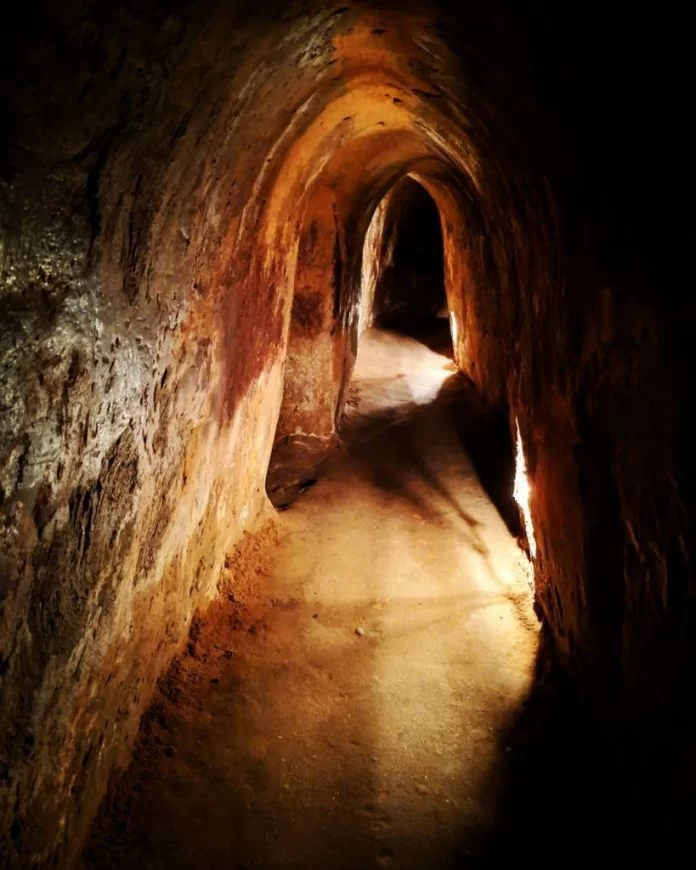
Cu Chi Tunnels are about 70 km northwest of the center of Ho Chi Minh City. Nicknamed "the heroic land of steel", this is where the underground tunnel system is nearly 250 km long. The tunnels are the battle of transformation and creativity of Cu Chi soldiers in the resistance war against the invading enemy, winning the country's independence and freedom.
The tunnels are preserved in two locations 13 km apart:
Ben Duoc Tunnels in Phu Hiep Hamlet, Phu My Hung Commune, Cu Chi District, Ho Chi Minh City, were recognized as a national historical and cultural relic in 1979.
Ben Dinh Tunnels in Ben Dinh Hamlet, Nhuan Duc Commune, Cu Chi District, Ho Chi Minh City, were recognized as a national historical site in 2004.
Exploring Cu Chi Tunnels
Cu Chi Tunnels are "a unique wonder for fighting the enemy" with 250 km of tunnels spreading like a spiderweb underground. Uninterrupted works were built inside the tunnels, meeting the daily and combat needs of the army and people of Cu Chi such as: trenches, mounds, combat campaigns, cellars, sleeping bunkers, meeting bunkers, military medicine, hidden food storage, wells, the special Hoang Cam kitchen, ..
Cu Chi Tunneling Experience:
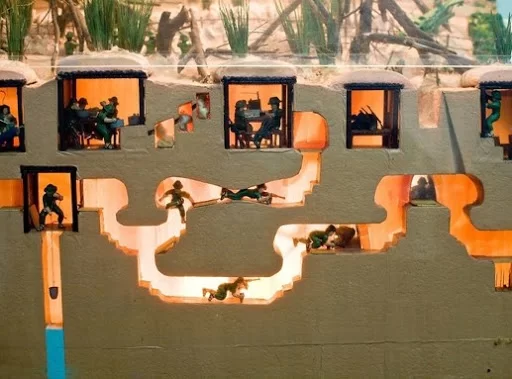
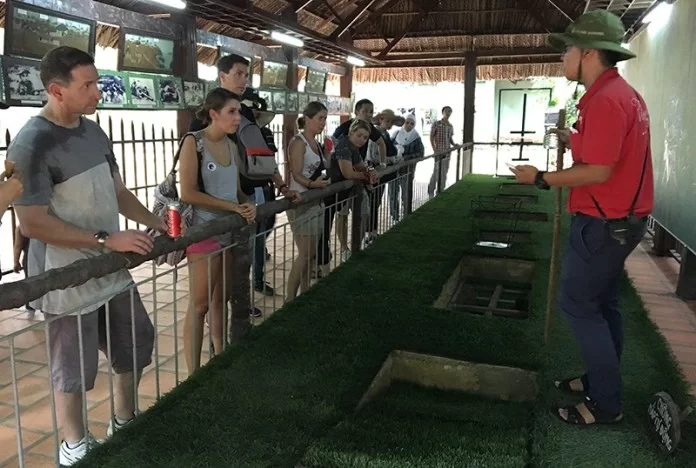
Before starting to test the endurance of the tunnels, you can watch a documentary, presenting the history of formation as well as the role of Cu Chi Tunnels during the Indochina War and the Vietnam War. At the same time, you will be briefly introduced to the model of the tunnel structure.
The tunnel is built on an area of high-strength lateral lateritic clay with less erosion. The tunnel system is deep underground, consisting of 3 floors radiating countless branches, connecting to each other and can be connected to the Saigon River. The first floor is 3m from the ground, capable of withstanding artillery shells and the weight of tanks and armored vehicles. The next 2nd floor, 5m from the ground, can withstand small bombs. The last floor is 8-10m from the ground. The space between the floors has a secret trapdoor.
In the tunnels, there are buttons to block necessary points to prevent enemy sprays or chemical poisoning. Along the tunnel, there are vents above that are discreetly disguised and exposed to the ground by many secret doors. Countless doors are structured into combat rooms, sniper rifle mounds are very flexible. Under the tunnels in the critical area and around the hatch, there are well tunnels, nail holes, traps ...
After listening to the introduction, you can try the feeling of moving, exploring the nooks and crannies of the tunnel.
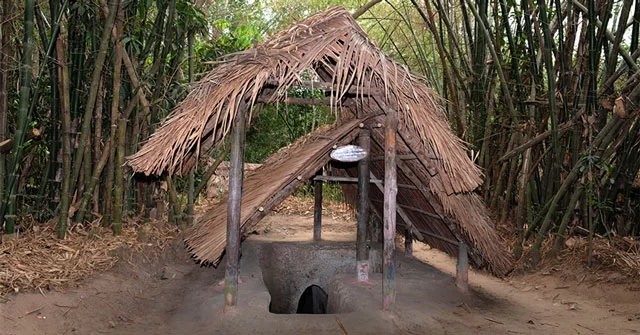
The tunnel you visit is 120 m long, 2 floors deep. Although loosened to allow visitors to move more comfortably, the tunnel passage is still quite small and narrow for adults, some places where you have to bend your back and move with your knees. Sometimes, there will be a feeling of difficulty breathing due to the confined space and lack of oxygen.
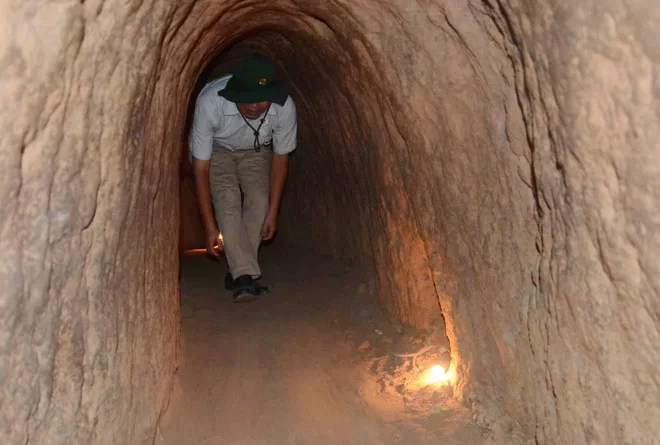
For those of you who are afraid of confined spaces or have heart problems, it is still recommended not to try.
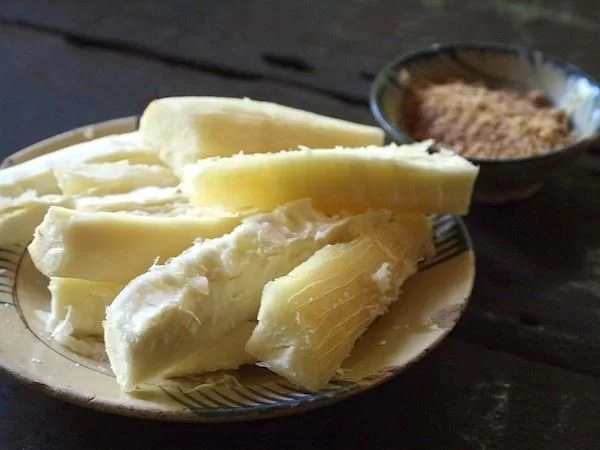
After exiting the tunnel, you will have time to rest, wash off the dirt and dust during the tunnel visit. You will also enjoy steamed tapioca balls with salt and sesame seeds prepared in advance by the tour guides. You can see this dish in the underground kitchens, tasting it in a cramped and humid space, you will feel a little of the fate and lack of old soldiers.
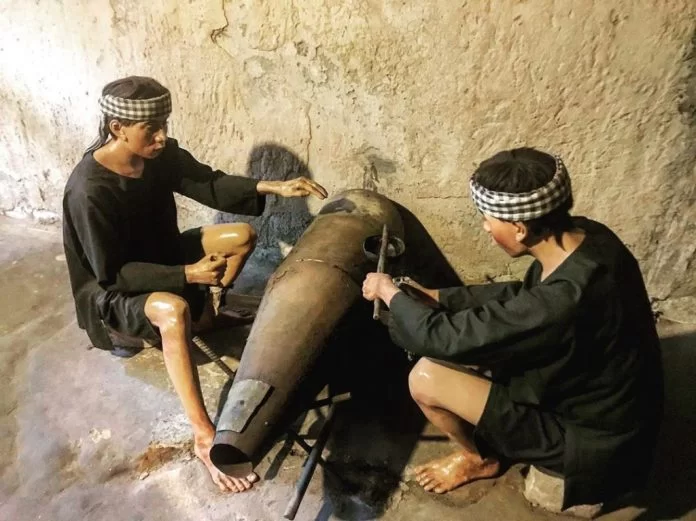
Discovering the life of the army and people of Cu Chi during the war
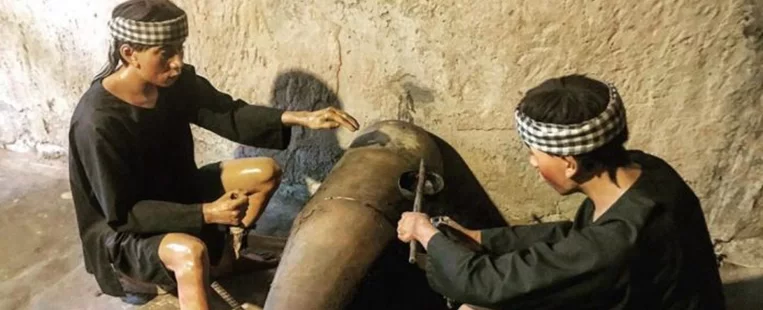
Each area of the tunnels is built with a doll to recreate the life of the people of Cu Chi under the tunnel such as: forging, hammering, dancing; cooking with the special Hoang Cam kitchen;...
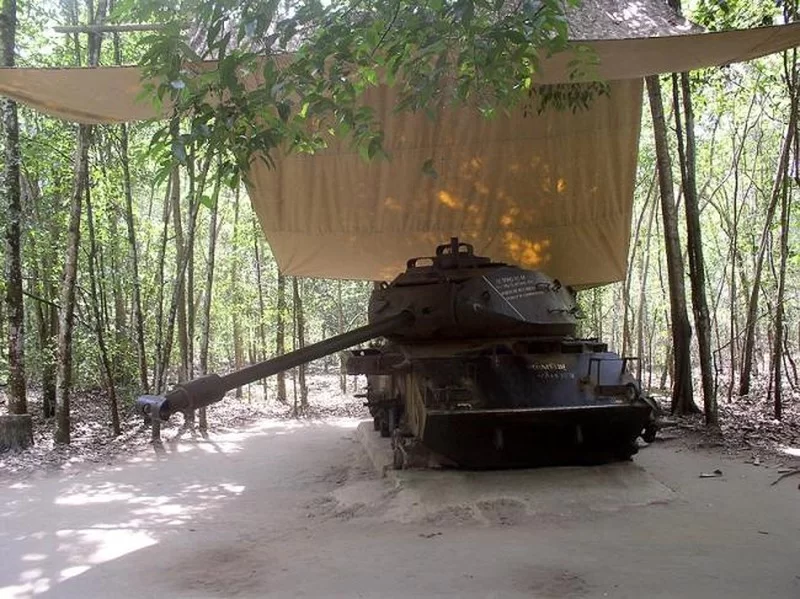
You can also visit and take photos with the models of wreckage, battle tanks, cannons, ammunition, and artillery used during the resistance period, which are still preserved here.
Furthermore, you will learn about the functions of trenches, mounds, combat training; how the militia and people of Cu Chi built tunnels against the enemy's destructive plots such as using water, using an army of "rats" or using professional dogs to destroy the tunnels, ...; the mechanism of action of different types of traps and tunnels; ...
Some tips for better exploring the Cu Chi Tunnels
There are no regulations on attire here, but you should choose clean, dark-colored clothes so you don't have to wash too hard when stains stick.
Prepare a pair of sneakers for comfortable walking.
Apply insect repellent as there are mosquitoes sometimes in the tunnel.
If you suffer from claustrophobia and have high blood pressure, do not enter the small tunnels.
| * If this article is interesting and useful, please share it with your friends and people around you by choosing the sharing channel below! * If you want to travel to Vietnam and truly discover it thoroughly with the most authentic places and the most typical cultures, we suggest you take a tailor-made trip to your wishes with a French-speaking travel agency in Vietnam like Typic Travel. Click our button "Free quote" or "Tailor-made trip" or send an email to Typic Travel * If you are simply looking for travel ideas in Vietnam or Indochinese Countries, Typic Travel offers some main ideas according to the category of our trips on "ideas for our trips" or follow us on one of your social networks for more permanent information: |
| Follow us on: | TripAdvisor | Facebook | Petit Futé | Youtube | Twitter | Instagram |


