




Category: general. Audience: B2C. Café and street food in Hanoi: an immersion into the Vietnamese soul
Discover the best cafes and street food in Hanoi: Vietnamese coffee, local specialties, must-visit addresses, and an authentic immersion into the heart of Vietnamese culture with Typic Travel Vietnam.

GASTRONOMY & CULTURE · HANOÏ
Café and street food in Hanoi:
an immersion into the Vietnamese soul
From Cà phê sữa đá served by the alleys to the steaming Bún chả from the morning markets — in Hanoi, every cup, every bowl is an invitation to pause.
Table of Contents
There are cities that are discovered by walking. Hanoi, however, is discovered by sitting down. Around a coffee, in a paved alley of the old quarter, or on a plastic stool at the foot of a hundred-year-old tree. Coffee, in Hanoi, is not a break in the day — it's the very rhythm of the city. Blended with the smells of lemongrass and hot broth, it tells something essential about this country: generosity, chosen slowness, the art of sharing.
-
An extraordinary coffee culture
Vietnam is currently the world's second-largest coffee producer, with production dominated by robusta from the central highlands of the country — in Dak Lak, in Buon Ma Thuot. But in the streets of Hanoi, what strikes first is not the quantity: it's the way coffee integrates into every moment of social life.
At seven in the morning, the small stalls are already full. Elderly men read the newspaper, students open their laptops, friends meet before work. Vietnamese coffee is not a fast-moving consumer product: it's a ritual, a pretext, a space for sociability that nothing has replaced, not even the big international chains.
Cà phê sữa đá, the undisputed star
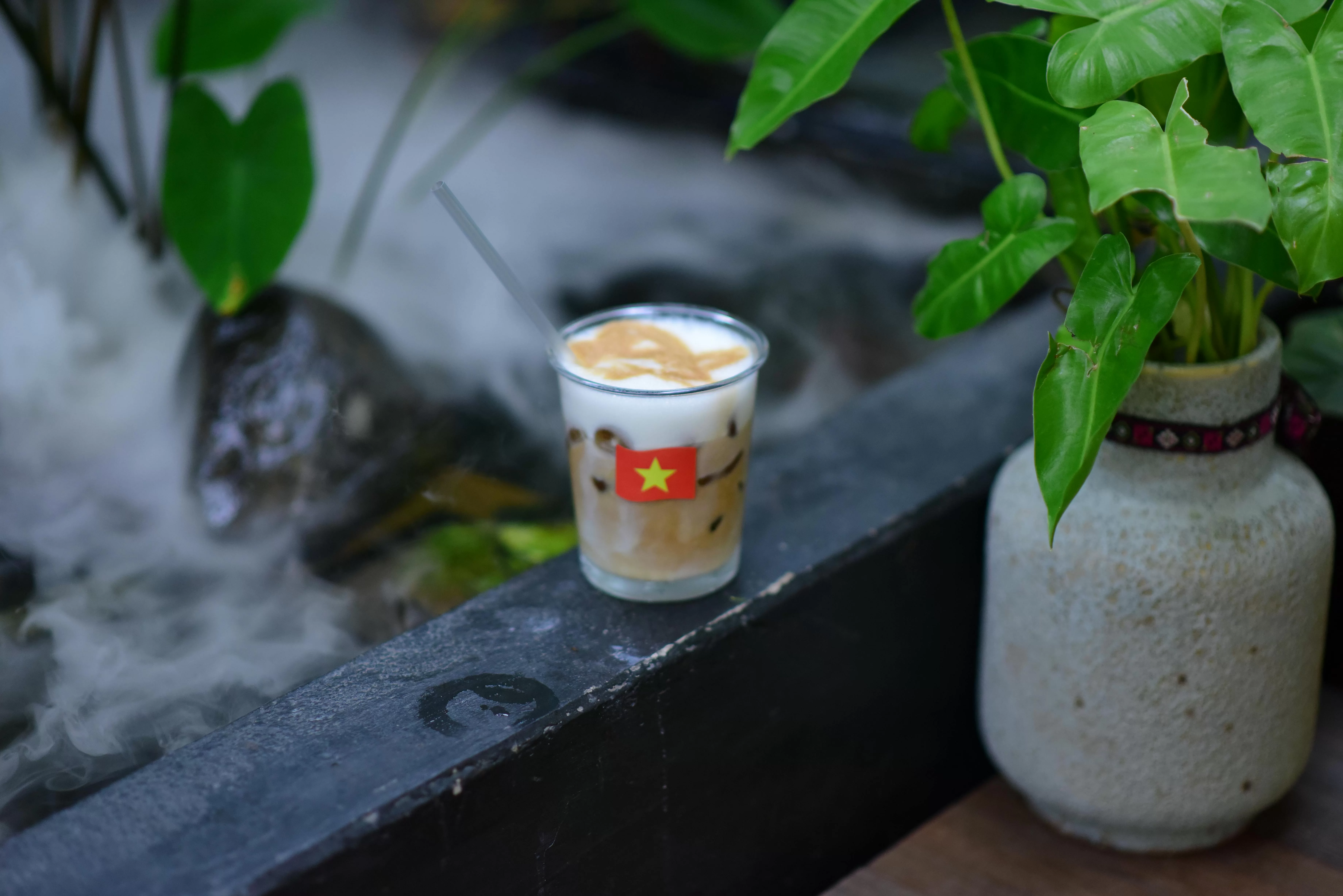
The most widespread drink remains Cà phê sữa đá: a very strong coffee slowly filtered through a small metal filter (the phin), poured over sweetened condensed milk, then drowned in ice cubes. The result is intense, slightly bitter, with a very characteristic sweet roundness. For those who prefer it without milk, Cà phê đen đá — black coffee over ice — is just as popular.
And for the curious, Hanoi offers a local specialty that always surprises travelers: Cà phê trứng, the famous egg coffee. Invented in the 1940s during a milk shortage, it is prepared with an egg yolk beaten with sugar and condensed milk, whipped into a creamy foam and placed on hot coffee. A unique taste experience, absolutely a must-try at least once.
“In Hanoi, you don't order a coffee to leave. You order a coffee to stay.”
Cà phê sữa đá, iced coffee with condensed milk — a must-try in Hanoi.
-
Iconic Hanoi cafes not to miss
The city is full of addresses, from the most modest sidewalk stool to the designer cafe nestled on the third floor of a tube house. Some places have gained a real reputation and are worth a detour during your trip to northern Vietnam.
Giang Café — the creator of egg coffee
It was here, in a discreet alley in the old quarter, that Nguyễn Văn Giang invented Cà phê trứng in 1946. The place has barely changed: worn wooden stairs, subdued light, cups served on small lacquer trays. A legendary address, 39 Đinh Tiên Hoàng.
Cà Phê Phố — the authentic atmosphere
To experience coffee like a true Hanoian, look for small unmarked stalls in the alleys around Hoan Kiem Lake. Low tables, colorful stools, ceiling fans. The Cà phê sữa đá there costs less than a euro and is worth all the trendy cafes in the world.
The cafe-terraces of the old quarter
Several addresses offer terraces on the second or third floor, with views of the bustling streets below. The atmosphere blends wooden furniture, tropical plants, and soft music — an immersion into a Hanoi that is both modern and true to itself.
➤ Want to discover these addresses with a local guide?
Our Typic Travel experts know the best places in Hanoi, from street stalls to hidden cafes. Share your desires with us, and we'll build the trip that suits you.
→ Create my tailor-made trip → typictravel.com
-
Street food and coffee: a natural alliance
In Hanoi, coffee is never really experienced alone. It is almost always accompanied by a snack, a light dish, a dessert. Vietnamese street food and coffee culture form an inseparable duo, two facets of the same art of living: simple, generous, convivial.
The morning markets — particularly around Đồng Xuân market or in the alleys of the Hoàn Kiếm district — offer dozens of specialties from dawn. It is at this time, between six and nine in the morning, that Hanoi truly reveals itself. The smells of broth, the steam from street kitchens, the clinking of coffee glasses — everything contributes to creating an atmosphere difficult to find elsewhere.
For travelers who wish to go beyond a simple meal, Typic Travel offers gourmet culinary tours specially designed to explore this richness in an immersive way — market visits, cooking classes, lunches with locals.
-
Must-try dishes with a coffee
Here are the specialties not to miss during your stay in Hanoï, ideally accompanied by a good Cà phê sữa đá:
- Bún chả — The iconic dish of northern Vietnam. Rice vermicelli served with charcoal-grilled pork, a slightly sweet nuoc-mâm sauce, and fresh herbs. A Hanoï lunch essential.
- Bánh cuốn — Steamed rice crepes, filled with minced pork and black mushrooms, served with fragrant broth and herbs. The traditional breakfast par excellence — to be enjoyed hot in the morning.
- Bánh mì — The Vietnamese sandwich, a legacy of the French period, now a global icon. Crispy bread, pâté, cold cuts, pickled vegetables, cilantro, and chili sauce. Quick, tasty, perfect with a black coffee.
- Bánh bao — Steamed bun filled with pork, mushrooms, and hard-boiled egg. Soft, slightly sweet, ideal for a mid-morning break. You can find it on every street in Hanoï, often in a bamboo steamer.
- Xôi — Sticky rice with various toppings: shredded chicken, mung beans, fried onions. The breakfast of busy Hanoïans, sold in banana leaf cones for a few cents.
- Bánh flan — Vietnamese-style crème caramel, served cold with a very strong coffee poured over it. A very popular quick dessert that perfectly combines the sweet and bitter notes of robusta.
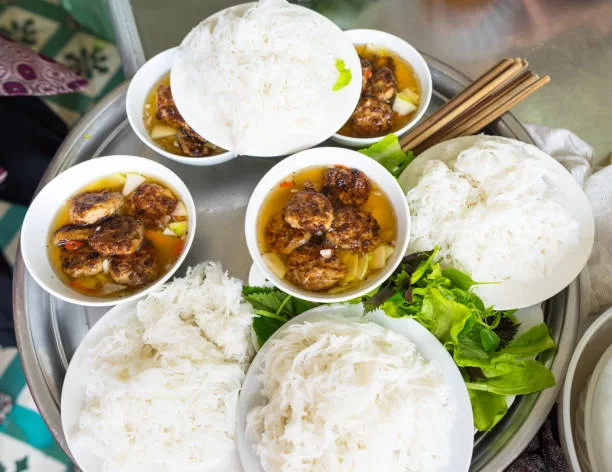
Bún chả, the iconic dish of northern Vietnam — charcoal-grilled pork, vermicelli, and fresh herbs.
-
Which neighborhoods to experience this?
The Old Quarter (Phố Cổ)
This is the historic heart of Hanoï, with its 36 guild streets. Each street is named after a traditional trade: paper street, tin street, silk street. Even today, artisans coexist with cafes, restaurants, and guesthouses. This is where street food is densest, liveliest, and most authentic.
The neighborhood around Hoan Kiem Lake
The Lake of the Restored Sword is the green lung of Hanoï. Around it, a series of cafes with lake views offer a respite from the hustle and bustle. In the morning, locals practice tai-chi, children run on the paths — a daily spectacle that makes you want to settle down for an hour.
The Tây Hồ (West Lake) neighborhood
More residential and bohemian, this neighborhood has seen a new generation of cafes flourish in recent years — artisan roasters, coworking-cafe spaces, vegetarian addresses. This is where expatriates and trendy young Hanoïans gather. Ideal for a bike exploration at the end of the day.
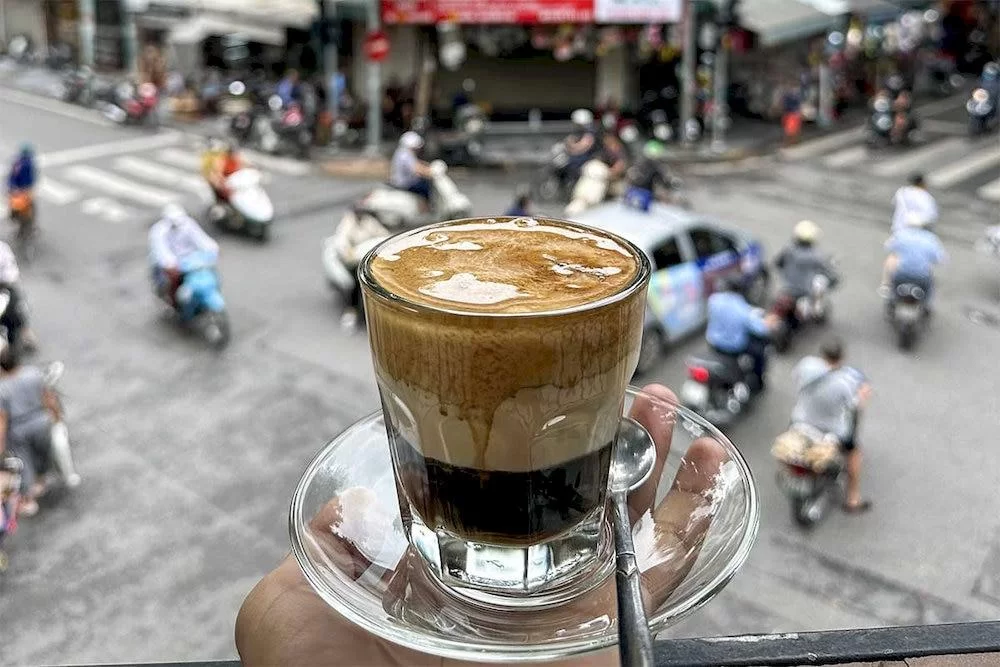
A coffee on a terrace in the alleys of Hanoï's Old Quarter — wooden furniture, old fans, and a view of the street's hustle and bustle.
-
Our practical tips for enjoying like a local
Hanoï is a city that takes a little effort. It can seem chaotic at first — traffic is intense, sidewalks are sometimes overrun with motorbikes and cafe tables — but as soon as you agree to slow down, it reveals a generosity and a gentle way of life that few Asian capitals can match.
For a first visit, allow at least three days in Hanoï to start feeling the pulse of the city. Two days are enough to check off the tourist sites (Ho Chi Minh Mausoleum, Temple of Literature, Museum of Ethnology), but it's the third day — the one without a specific agenda — that often yields the best memories.
- Avoid peak hours (12 pm–2 pm) in the Old Quarter: the alleys become very crowded and free tables are scarce.
- Go early in the morning for street food — between 6 am and 9 am, the markets are at their busiest and the specialties are freshest.
- Don't hesitate to point: even without speaking Vietnamese, a smile and a gesture towards your neighbor's dish work perfectly.
- Allow time for the coffee to drip: the phin doesn't rush. It's precisely this waiting that is part of the ritual.
- Beware of French menus in the Old Quarter: often synonymous with tourist prices. Look for addresses without signs, frequented by locals.
-
Want to go further? The tailor-made culinary journey
At Typic Travel, we believe that gastronomy is one of the best ways to understand a country. That's why we have developed gourmet culinary tours entirely dedicated to Vietnamese cuisine — from north to south, from markets to gourmet restaurants.
These tours can include: guided market visits with your guide in the late morning, cooking classes in local homes, lunches with locals, coffee tastings at artisan roasters in the Dak Lak region, and of course, free time to explore at your own pace.
Our French-speaking guides, all native to Vietnam, know the addresses you won't find in any tourist guide. They are the ones who will take you to order a Cà phê trứng at Giang, track down the best Bún chả in the neighborhood, or discover a local market far from the usual circuits.
"To go to Hanoi with Typic Travel is to experience Vietnam like a local — one cup of coffee at a time."
➤ Ready to discover Hanoi?
Contact our Vietnam experts to create your tailor-made itinerary. Gastronomic tour, family trip, cultural discovery — we build the stay that suits you.
→ Request my free quote → typictravel.com/voyage-sur-mesure.html
See also: Culinary trips · North Vietnam tours · 15-day Vietnam tour
·


