




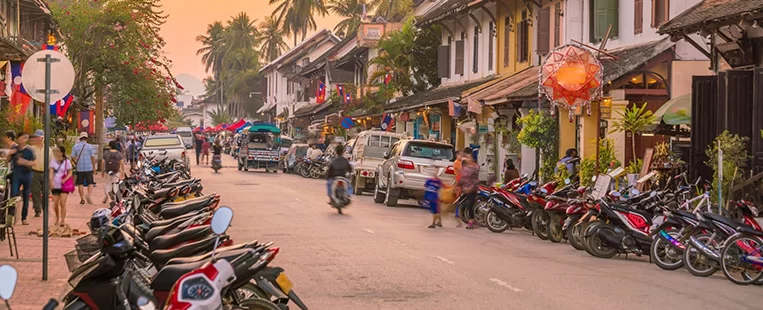
The city of Luang Prabang
Luang Prabang is a city in northern Laos, the current capital of Luang Prabang Province. Luang Prabang was formally the royal capital of Lan Xang (Kingdom of a Million Elephants) from the 14th century to 1946. The effective capital was Vientiane from 1563, then, after the separation of the Kingdom of Luang Prabang and the Kingdom of Vientiane in 1707, the title of capital of Lan Xang was disputed between the two cities.
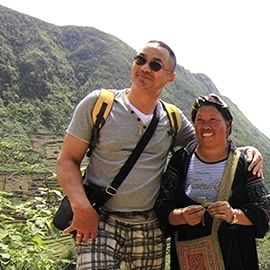
Luang Prabang is a city in northern Laos, the current capital of Luang Prabang province. Luang Prabang was formally the royal capital of Lan Xang (kingdom of a million elephants) from the 14th century to 1946. The effective capital was Vientiane from 1563, then, after the separation of the kingdom of Luang Prabang and the kingdom of Vientiane in 1707, the title of capital of Lan Xang was disputed between the two cities.
1/ Luang Prabang heritage city
is a city in northern Laos, the current capital of Luang Prabang province. Luang Prabang was formally the royal capital of Lan Xang (kingdom of a million elephants) from the 14th century to 1946. The effective capital was Vientiane from 1563, then, after the separation of the kingdom of Luang Prabang and the kingdom of Vientiane in 1707, the title of capital of Lan Xang was disputed between the two cities.
It is a river port located on the Mekong, 210 kilometers upstream from Vientiane. Nestled in a mountainous environment, the climate is cooler and the difficulty of access has allowed it to retain its original and typical appearance. Sparsely populated, with approximately 70,000 inhabitants, it opened up to tourism in the 1990s and has been listed as a UNESCO World Heritage site since 1995.
2/ History of Luang Prabang
Capital of the principality of Muong Xua before the 14th century, it was called Xieng Thong Xieng Dong. In 1353, King Fa Ngum, returning from exile in the Khmer kingdom, undertook to unite the various principalities and founded the Kingdom of a Million Elephants (Lan Xang), with Xieng Thong Xieng Dong as its capital. In 1358, a monastic delegation was tasked with bringing a precious 7th-century Buddha statue of Sri Lankan origin, called Phra Bang. When the capital of Lan Xang was transferred to Vientiane for security reasons, Xieng Thong Xieng Dong took the name Luang Phra Bang in honor of the statue, considered a national palladium.
In 1773, the city was plundered by the Burmese of the Konbaung dynasty. The end of the 19th century was marked by strong instability: Luang Prabang was plundered by Chinese Black Flags in 1887, then occupied by Siamese troops.
In 1893, the kingdom of Luang Prabang accepted the French protectorate for the entire country.
The French rebuilt Vientiane, endowing it with infrastructure, roads, and universities, and expanded the Kingdom of Luang Prabang by integrating provinces from the north and the former state of Vientiane. The city of Luang Prabang, where the French commissioner resided, then adopted colonial architecture. Today, it retains many traces of the French presence. The royal palace, built between 1904 and 1909 during the reign of King Sisavang Vong, has been transformed into a national museum.
Classified as a UNESCO World Heritage site in 1995, Luang Prabang is one of Asia's most beautiful and best-preserved cities, thanks to the presence of the Heritage House which ensures the safeguarding of the old city.
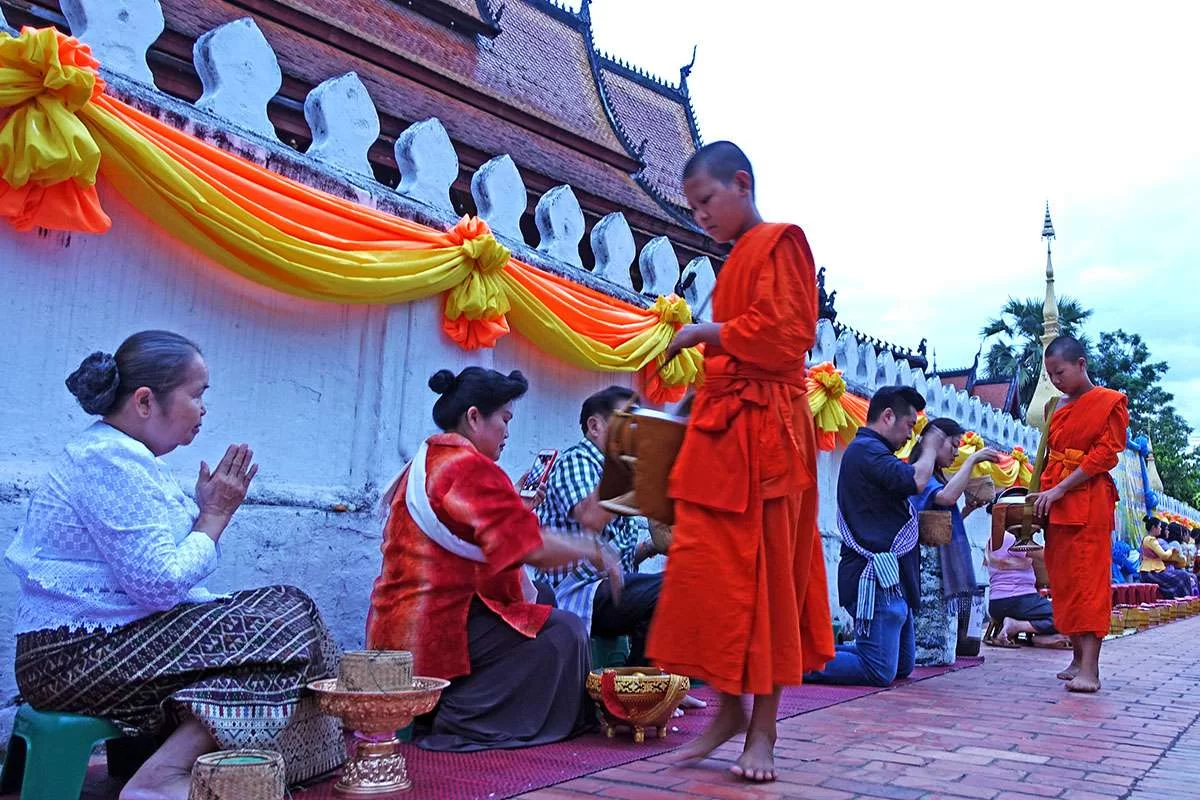
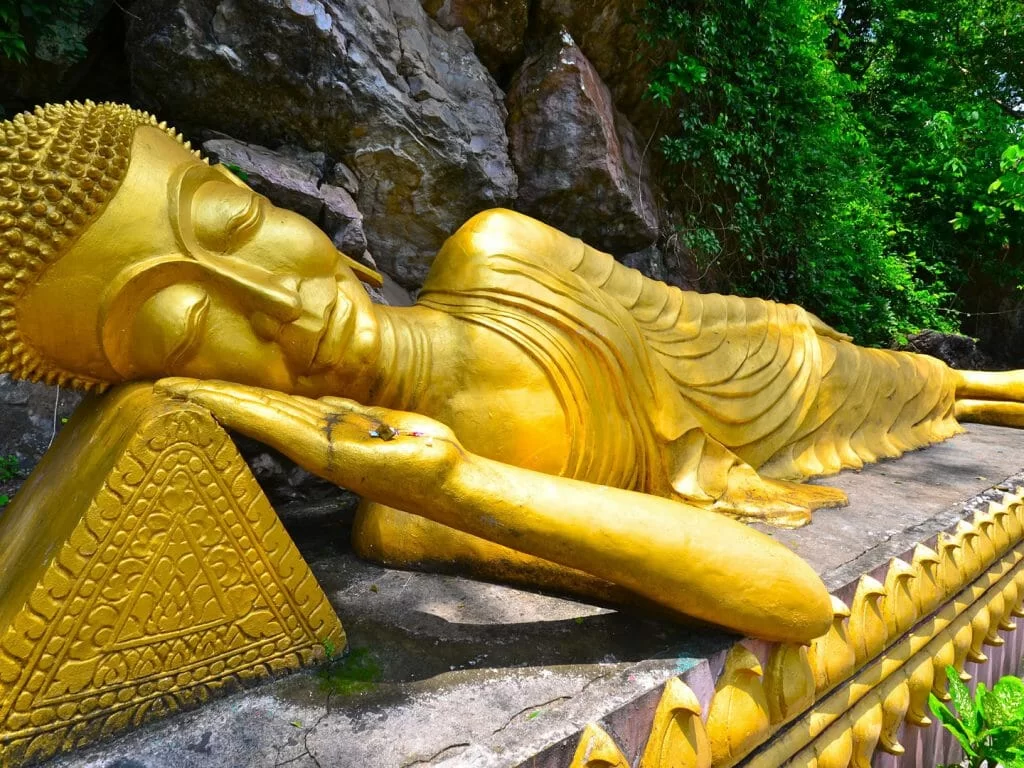
Luang Prabang is also one of the highest symbols of Buddhism in Asia; it enjoys a great aura among a still very fervent and practicing population. With dozens of temples occupying nearly a third of its surface, Luang Prabang is still today the seat of many religious events; thousands of monks dressed in saffron robes reinforce its singularly mystical character.
3/ Monuments to visit in Luang Prabang
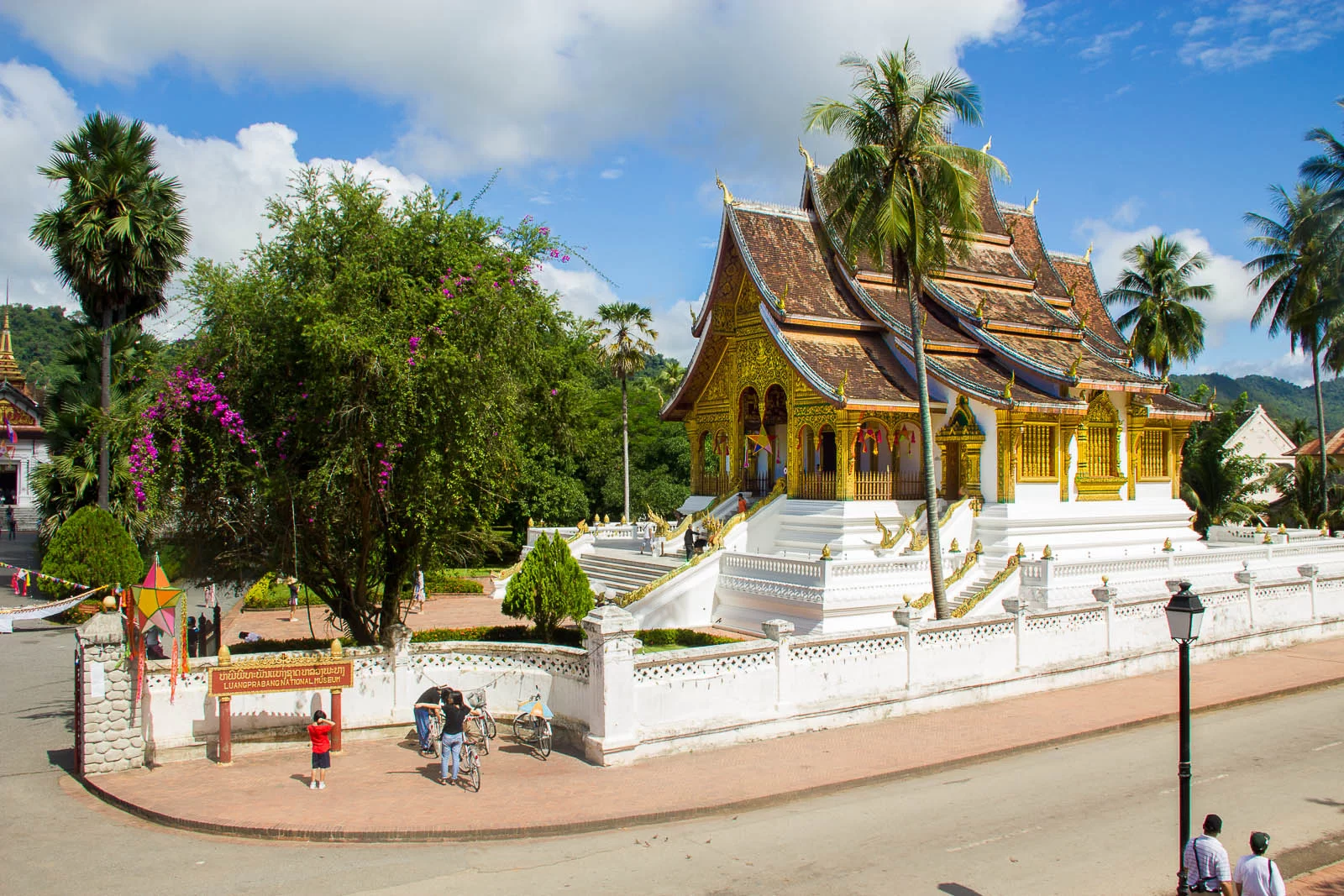
*/ The Royal Palace of Luang Prabang, seat of the National Museum, where one can see the Pha Bang Buddha (actually a copy, the original is kept in a vault).
*/ National Museum (former royal palace)
*/ The Vat Mai, typical of Luang Prabang architecture
*/ The Vat Xieng Thong, dating from 1560, the most beautiful temple in Laos
*/ The Vat Visoun, the oldest in the city (around 1450), rebuilt in 1898.
4/ Transport in Luang Prabang
Luang Prabang, one of the country's leading tourist destinations, is served by a small airport (in 2010, 70% of tourists arrived by plane). Expansion work on this airport began in February 2010, without interruption of service. They are scheduled to be completed in 2013. The runway, extended to 3000 m, will be able to accommodate wide-body aircraft (except the Airbus A380), and 4 Boeing 737s and 7 ATRs will be able to park there simultaneously. The estimated cost of the work is 86.4 million US dollars, financed by a loan from the Chinese government. 500 families are to be relocated.
Road access to Luang Prabang from Vientiane is also to be improved by the construction of a new 68 km section, including 10 bridges, at a cost of 60 million dollars. Work began in 2008. When completed in 2013, the journey will take only four hours, compared to about eight today.
* If you are interested in this article and find it useful, please share it with your Friends and people around you.
* If you wish to travel to Laos and especially around Luang Prabang to discover all its beauty and charm with a 100% customized trip, the TypicTravel agency, a local expert, offers you a tailor-made trip according to your wishes.
* If you are looking for travel ideas, Typic Travel allows itself to propose some main ideas according to the category of our trips:
- Essential Trips
- Off the Beaten Path
- Hiking - Trekking
- Multi-Country Combinations
- Family Trips
- Themed Trips
- Photo Tours
- Deluxe Trips
- Honeymoon Trips
- Culinary Trips
- Cruises & Holidays
- Beach Stays & Short Tours
- Popular Trips
- Heartfelt Novelties
You can send us an email by clicking HERE or easily follow us on our social networks for permanent updates:
| Follow us on: | TripAdvisor | Facebook | Petit Futé | Youtube | Twitter | Instagram |


