

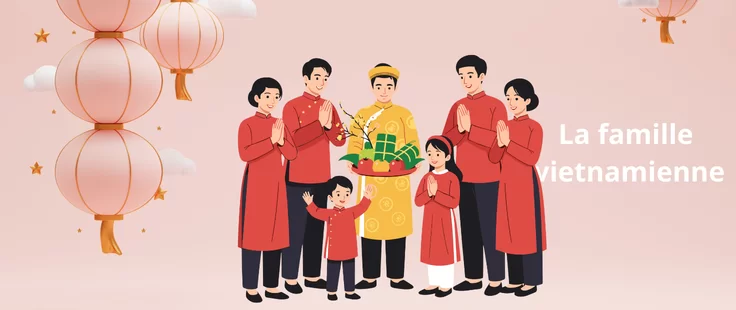
The Vietnamese family
The people related by blood, intimately united in a basic unit which is THE FAMILY and constituting THE LINEAGE (kinship). The clan becomes a united community that plays an eminently important role for Vietnamese people.
Table of Contents
1. General view on the family
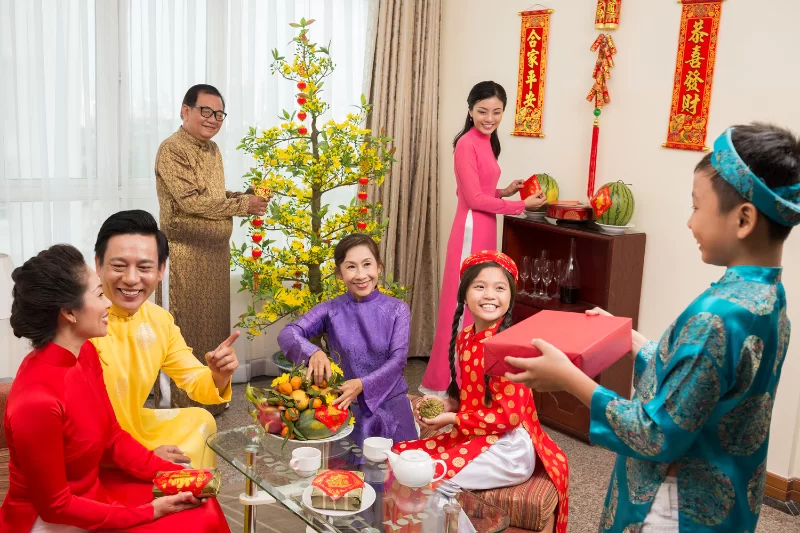
In the East, the family plays a much more important role than in the West, where the individual is given more consideration. However, a more refined comparison within the East itself shows us a subtle difference:
-
In China (agricultural culture of pastoral origin, mobile character): The family is considered a fundamental base; Confucianism gives it enormous consideration.
-
In Vietnam (purely agricultural culture): The role of the clan is predominant. Being a strictly agricultural culture, the nuclear family alone was not enough to face the challenges of the natural and social environment. The entire clan and, subsequently, the village community were needed.
This is why, in Vietnam, the role of the lineage and, by extension, that of the community, is often more important than that of the nuclear family.
Key notions illustrate this structure:
-
Cửu tộc: descendants of the 9th generation from the same ancestor.
-
Tộc trưởng: head of the lineage.
-
Giỗ họ: commemoration of the ancestor of the lineage.
-
Giỗ tổ: commemoration of the first ancestor.
-
Từ đường: family chapel.
-
Gia phả: genealogical book.
2. The Vietnamese family according to Professor DANG QUOC CO
a. The family, the foundation of society
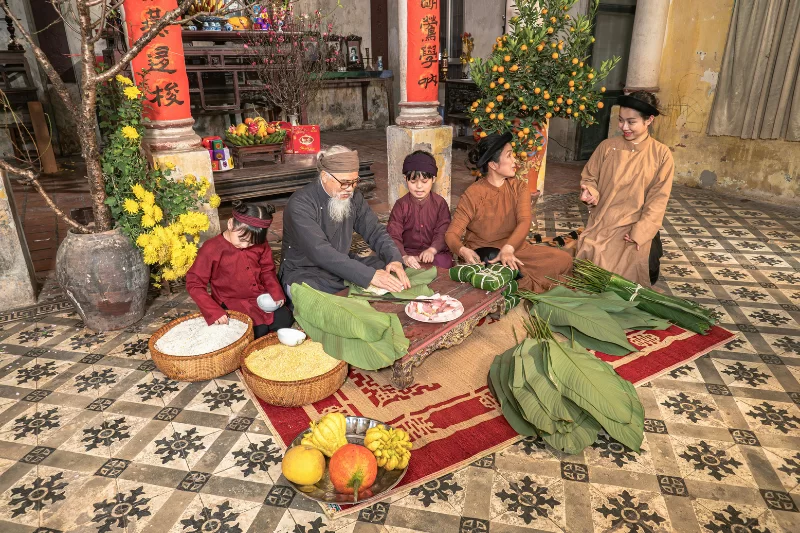
The Vietnamese family brings together the living and the dead. On Tet holidays and death anniversaries, those who preceded us symbolically return to live with us. The ancestral altar has always been the soul of the house. Ancestor worship remains the country's primary devotion, ensuring continuity between the present and the past, the link with the gods of the macrocosm and with Heaven.
Funeral ceremonies, tomb restoration, wedding banquets, and family gatherings satisfy children's need to be connected to their roots. The dream of descending from a prestigious ancestor (like Nguyễn Du or Trần Hưng Đạo) creates a real craze for genealogy (Gia phả). This emotional quest proves that the eternal family still lives within us.
The Confucian tradition contributes to intergenerational solidarity and filial piety (Hiếu), the first of virtues. The poet Nguyễn Du celebrates these values in the national poem Kim Vân Kiều:
Xót người tựa cửa hôm mai > Quạt nồng ấp lạnh những ai đó giờ ? > (She who, morning and evening, leaned against the doorframe, who now fanned her in summer, covered her in winter?)
The ancients followed the precept:
Nhất cần, thiên hạ vô nan sự > Bách nhẫn, gia trung hữu thái hòa > (With effort, there are no insurmountable difficulties. By practicing patience a hundred times, peace and harmony will reign within the family.)
An anecdote tells that an Emperor, impressed by a family where five generations lived in harmony, asked the patriarch for the secret. He wrote the word Patience (Nhẫn nhịn) 100 times. Rewarded with a single royal orange, the old man boiled it in a large pot of water so that the whole family could taste its flavor.
b. The family, the strength of the nation
-
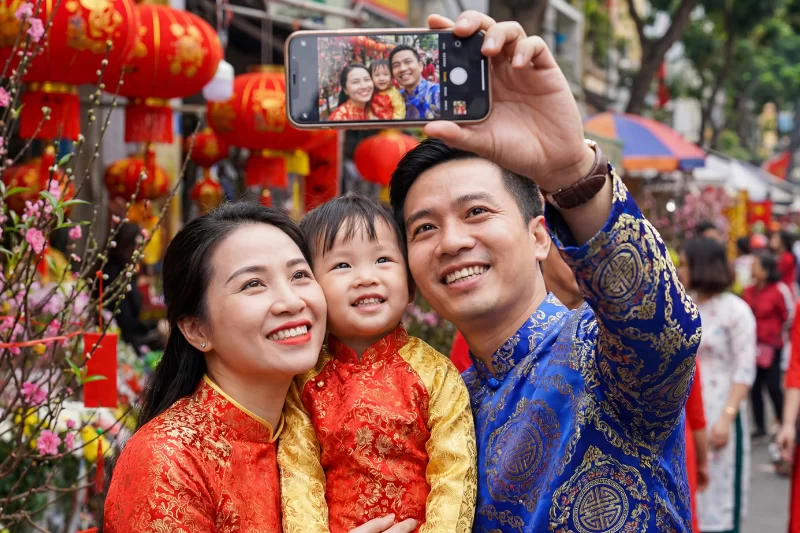
Territorial expansion: The aspiration for numerous offspring ensured population growth, the main strength of agrarian economies. From a few hundred thousand at the time of the Trưng Sisters (year 40), the population exploded to nearly 100 million today. This demographic boom enabled the "March to the South" (Nam Tiến).
-
Educational Development: The family would "bleed itself dry" for their children's studies, the only way out through mandarin exams. This tradition continues even today: the family accepts all sacrifices to send young people to the best schools. As Christian Jelen says: "The family is the secret to success".
-
Economic Development: The family educates, nourishes, and protects. It was the family plot (gardening, livestock) that prevented famines during difficult periods. Family businesses (crafts, trade) still constitute a major part of the national income, often started thanks to family solidarity loans based solely on trust.
c. The Fragmented Family
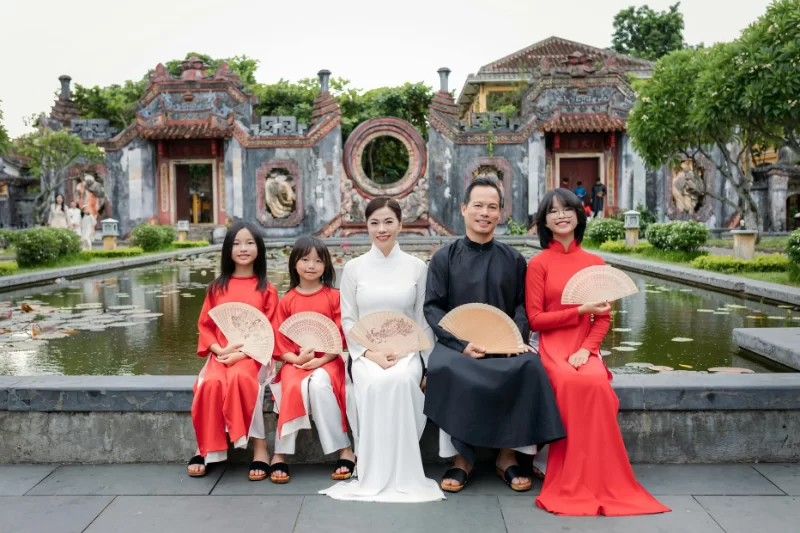
Life expectancy has increased, but modern society brings its challenges. The temptation to explore new horizons, the freedom of morals, and social evolution sometimes lead to the breakdown of the traditional structure.
Một gánh giang san ở giữa đồng, > Thuyền quyên ứ hự anh hùng nhổ chăng ?
The family, a pillar of the nation, tends to weaken as in Western countries, although sometimes for different reasons.
d. The Decline of Rituals
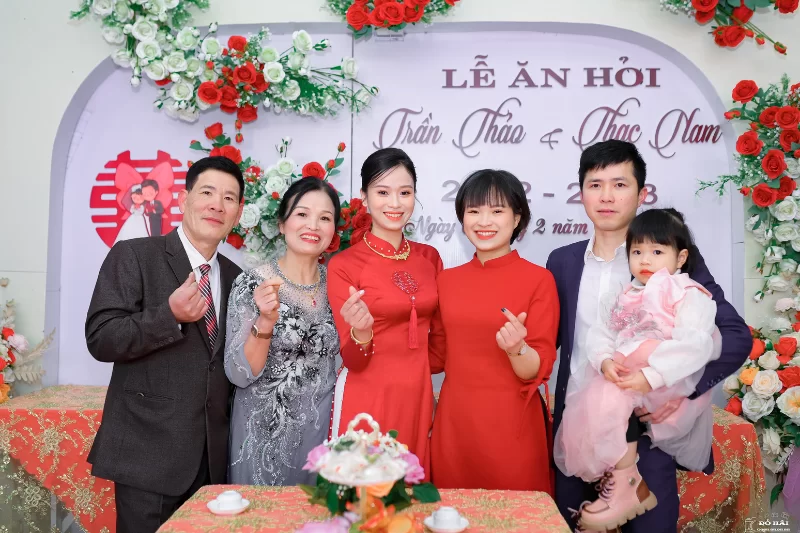
Traditional marriage was a religious institution, consecrating the union before the Ancestor altar through six ritual ceremonies (from Dạm ngõ to Lễ Tơ Hồng). Today, although simplified, these ceremonies retain their essence.
Unfortunately, in some homes, the ancestor altar sometimes disappears in favor of material modernity. The house risks losing its soul to keep only the body. Confucius taught: "Tu thân, tề gia, trị quốc, bình thiên hạ" (Cultivate oneself, manage one's family, govern one's country, pacify the world). When family ties loosen, the entire social structure suffers.
e. Historical Upheavals
Revolutions and wars sometimes perceived family interests as obstacles to the general interest. Difficult periods saw the family disintegrate under political pressure, where denouncing relatives was sometimes elevated to a duty.
f. The Return to Grace of the Family
In the face of modern individualism, the family unit resists. Just as the Napoleonic Code in France had restored cohesion to the family after the Revolution, a return to safe haven values is observed in Vietnam.
Lee Kuan Yew (Singapore) said in 1994: "Governments come and go, but the family is eternal". After centuries of wars and sacrifices, the family remains the lifeline for Vietnamese people, both at home and abroad.
Do you want to discover authentic Vietnam?
If this article has helped you understand the soul of Vietnamese culture, feel free to share it.
-
Customized trip: To discover the beauty and charms of Vietnam with a 100% personalized itinerary, Typic Travel – a local French-speaking expert – is at your disposal.
-
Inspiration: Consult our travel ideas adapted to your desires on our website.
* If you are interested in this article and find it useful, please share it with your friends and people around you.
* If you wish to travel to Vietnam to discover all its beauty and charms with a 100% personalized trip, the agency TypicTravel, a local expert, offers you a customized trip according to your wishes.
* If you are looking for travel ideas, Typic Travel allows itself to propose some main ideas according to the category of our trips:
- Essential Trips
- Off the Beaten Path
- Hiking - Trekking
- Multi-Country Combinations
- Family Trips
- Themed Trips
- Photo Tours
- Deluxe Trips
- Honeymoon Trips
- Culinary Trips
- Cruises & Vacations
- Beach Stays & Short Tours
- Popular Trips
- New Discoveries
You can send us an email by clicking HERE or easily follow us on our social networks for permanent updates:
| Follow us on: | TripAdvisor | Facebook | Petit Futé | Youtube | Twitter | Instagram |
