


Sapa Vietnam: Top 8 most beautiful villages in 2025
Discover the most beautiful villages of Sapa. Terraced rice fields, encounters with the H'mong and Dao ethnic groups, and practical tips for an authentic trip to Vietnam

Nestled in the heart of the Hoang Lien Son mountain range, Sapa district is much more than just a colonial hill station. It is the sanctuary of terraced rice fields, where each mountain slope tells the age-old story of ethnic minorities. If you are looking for a destination in Sapa to experience an authentic human experience, you are in the right place. At Typic Travel, we believe that the true beauty of this region is not found in the bustling city center, but off the beaten paths leading to isolated hamlets.
Table of Contents
Sapa: The essence of Northern Vietnam
Staying in Sapa means resonating with untouched nature. An invitation to trade city bustle for the wild poetry of the highlands and the gentle flow of water.
Where is Sapa located?
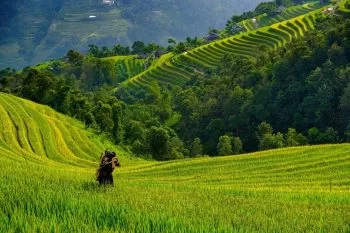
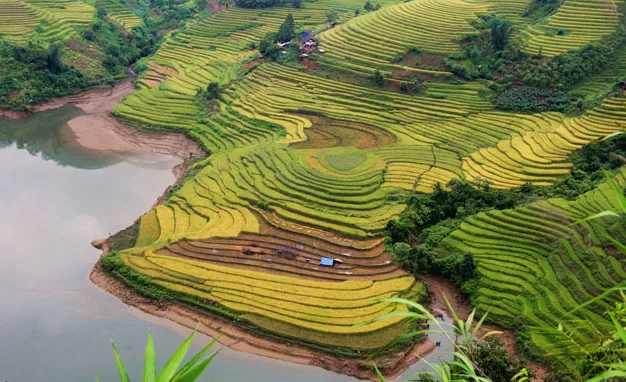
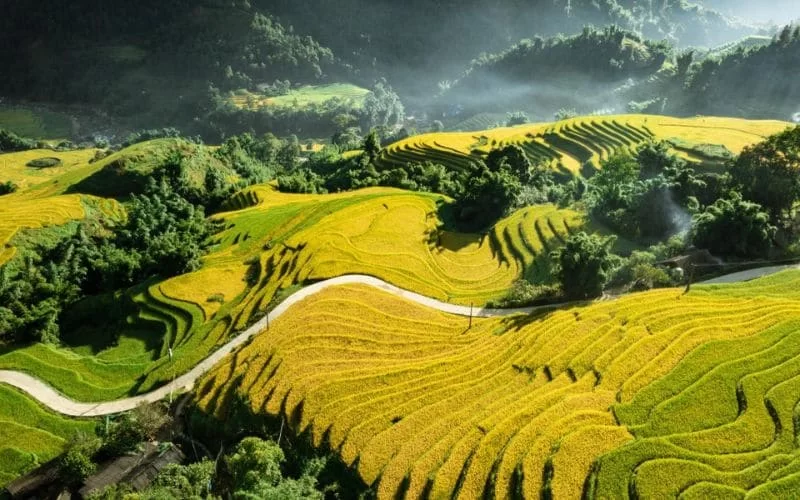
Located in Lao Cai province, Northern Vietnam, Sapa is famous for its spectacular landscape and cultural diversity. The terraced rice fields in Sapa are ranked among the most beautiful in the world, hand-carved by generations of farmers.
From Hanoi, the road distance is approximately 315 km. To reach Sapa, several options are available to you:
- Sleeper bus / limousine: often 6-7 hours depending on traffic and weather
- Overnight train to Lao Cai + transfer: a romantic 8-hour train experience leading to Lao Cai station, followed by an hour's drive up to Sapa.
- Private car: comfortable option offered by Typic Travel for a photo stop at your leisure, often 5–6 hours, more flexible
| Comfort tip: If you arrive early in Hanoi, a private car or limousine is simpler. If you prefer to save a night, the overnight train is often chosen. |
When to visit Sapa?
Sapa is famous for its mists, its terraced rice fields, and its changing weather (cooler than the rest of Vietnam). For a village and rice field experience, think in agricultural seasons:
- April – June (water season): terraced rice fields transform into giant mirrors reflecting the sky. This is the transplanting season.
- July – August (intense green): very green rice fields, but it is also a wetter period, bring a rain jacket and gripping shoes.
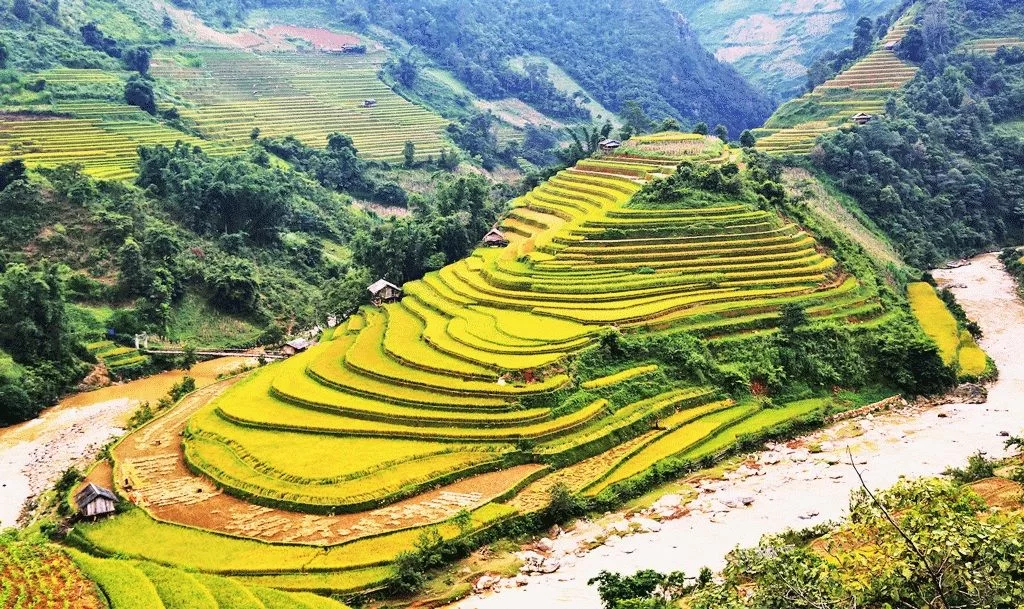
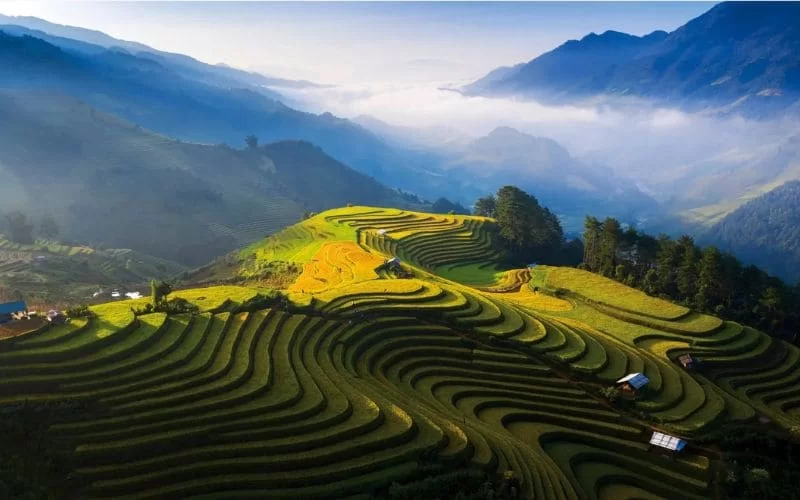
- September - October (harvest season): one of the best times. The entire valley is adorned with a sparkling golden yellow.
- December - March : mists and cold (sometimes very cold). The sea of clouds can be magical on some mornings. A unique atmosphere, but bring very warm clothes.
Discover our complete guide to Sapa: Sapa Vietnam: Adventure and change of scenery in the heart of the mountains
Must-visit villages around Sapa
Cat Cat Village
- Address: Cat Cat Village, Ta Van Commune, Sapa, Lao Cai
- Ticket: 150,000 VND ≈ 4.8 € per adult, 80,000 VND ≈ 2.6 € per child
- Hours: generally open daily, from 6 AM – 6 PM
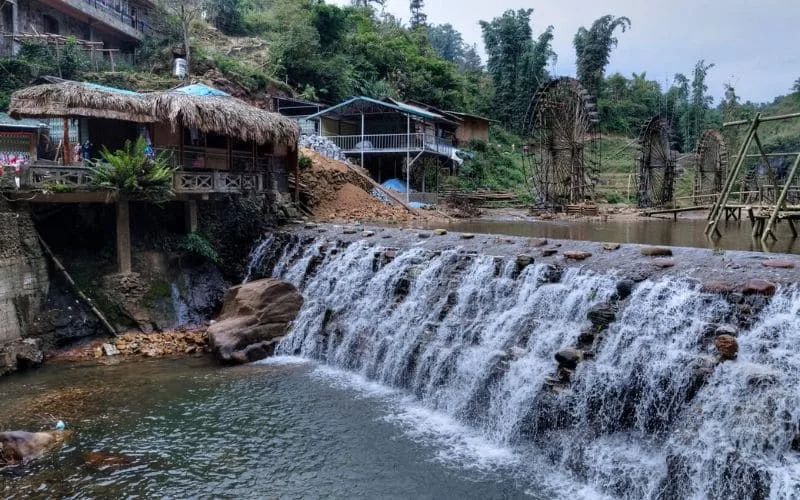
Cat Cat is often the first gateway when looking for an accessible, photogenic village in Sapa that is easy to integrate even on a short getaway. People come here to experience the atmosphere of a H'Mong mountain village. Walking along the paved paths that descend into the valley, you will discover traditional houses whose wooden walls house hemp weaving looms. One of the peculiarities of this place is the mastery of natural indigo dyeing, which gives the locals' clothes their characteristic dark and bluish color. In the center of the village, a majestic waterfall offers a refreshing spectacle, surrounded by old water mills that once ground grain. It is a place where French colonial history meets mountain traditions in surprising harmony.
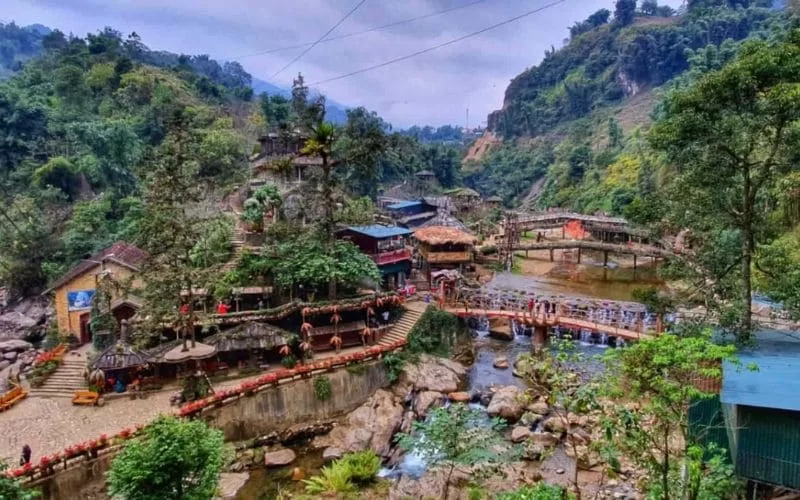
For an authentic experience, the best approach is to come early or in the late afternoon and to avoid the most crowded areas. Take the time to stop in a small workshop, observe the gestures, ask before taking photos, and prioritize a useful purchase (authentic craft, fair price) rather than identical souvenirs from one stall to another.
Sin Chai Village
- Address: Sin Chai Village, Ta Van Commune, Sapa, Lao Cai
- Ticket: 40,000 VND ≈ 1.20 € per adult, 20,000 VND ≈ 0.65 € per child
- Hours: Open all day
If you are looking to get away from the tourist hustle and bustle of Cat Cat village, continue your journey to Sin Chai. This village has preserved its rural authenticity, typical of the Northwest. Here, residents mainly live from cardamom cultivation and buffalo breeding. The terraced rice paddy landscape is steeper, offering spectacular views of the surrounding peaks. It is the ideal place to observe the daily work of farmers without any artifice.
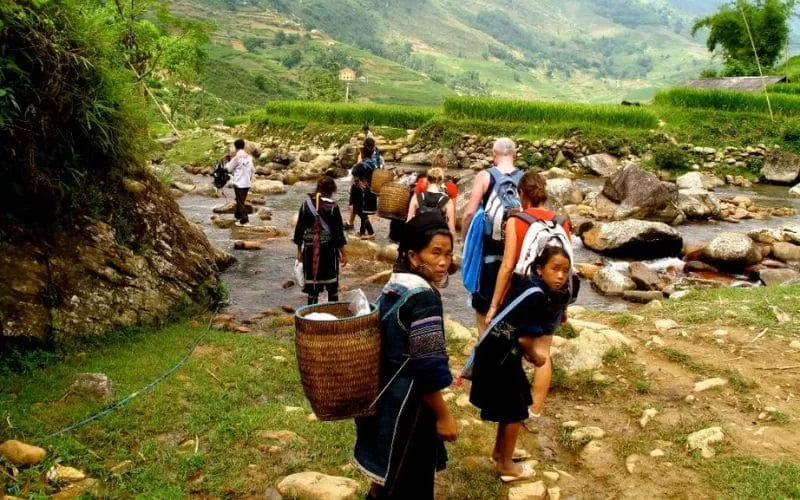
Travelers generally prefer to visit between September and October, when the village is adorned with a vibrant yellow, that of ripe rice covering each terrace. Another privileged time is the period from April to June, called the water season. You can then admire the beauty of the manual work of local farmers transplanting rice in the water mirrors formed by the rice paddies, a touching image of simplicity and sincerity.
Ta Phin Village
- Address: Suoi Thau Hamlet, Ta Phin Commune, Sapa, Lao Cai
- Entrance ticket: 40,000 VND ≈ 1.20 € per adult, 20,000 VND ≈ 0.65 € per child
- Hours: Open all day
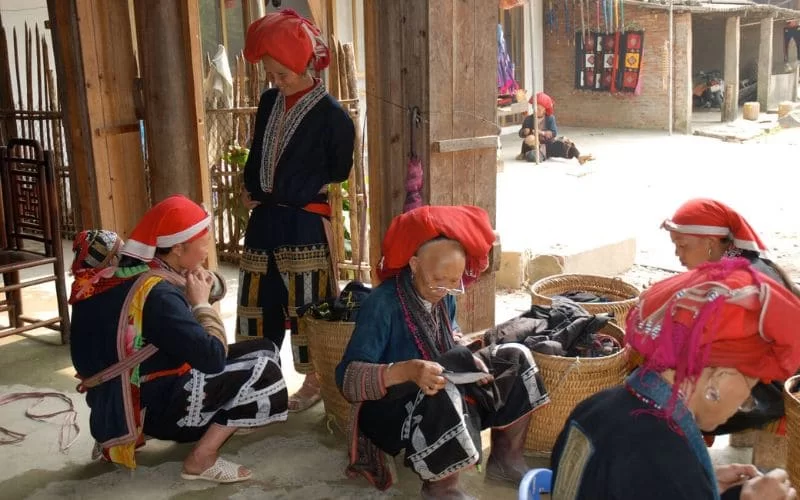
Ta Phin village offers a different kind of break compared to other villages. Here, the experience is not limited to rice paddies and trekking. People also come for a form of well-being rooted in local culture: the traditional medicinal herbal bath of the Red Dao ethnic group. After a day of walking in the valley, immersing oneself in this warm water infused with mountain leaves and herbs becomes a true moment of pause: you feel the warmth relaxing your muscles, your body recovering, and your mind slowing down.
Lao Chai Village
- Address: Lao Chai Commune, Sapa, Lao Cai.
- Entrance ticket: 75,000 VND ≈ 2.4€/adult, 50,000 VND ≈ 1.6€/child
- Hours: Open all day.
Located at the bottom of the valley, Lao Chai offers one of the most impressive panoramas of Sapa's terraced rice fields. From the center of Sapa, the route gradually descends into the valley, and you can see the air becoming more humid, the terrain opening up, and the terraces beginning to appear in layers on the mountain slopes. The further you go, between dirt paths, small hamlets, and viewpoints, the more you see the lines of the rice fields forming like natural architecture.
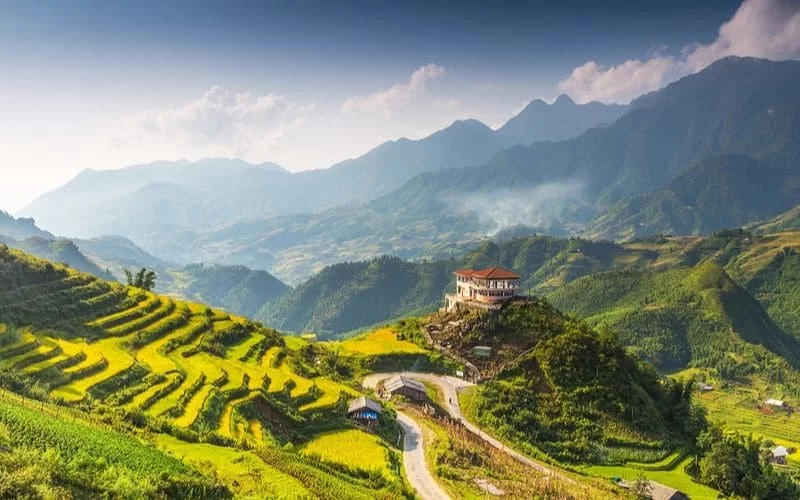
The village is particularly recommended during two key periods: from April to June to admire the reflections of the water season, or from September to October for the harvests. It is a place where time seems to stand still, allowing for a deep connection with the land and its inhabitants.
Ta Van Village
- Address: Ta Van Commune, Sapa, Lao Cai.
- Entrance fee: 75,000 VND ≈ 2.4 €/ person
- Hours: Open all day
Often considered one of the most beautiful hamlets in the region, Ta Van village leaves an indelible mark on the hearts of travelers. The village's uniqueness lies in its rice terraces that undulate along the mountain slopes and seem to stretch endlessly. Walking in Ta Van is discovering a visual poetry where each curve of the landscape tells the story of the courage of local minorities facing the slope.
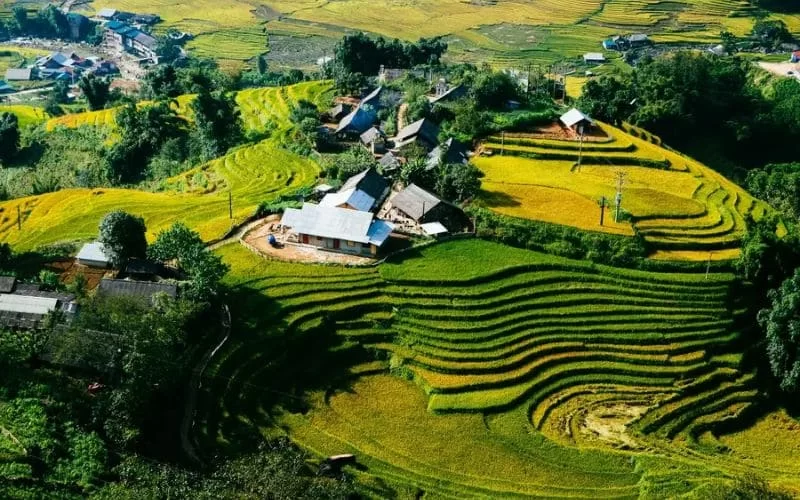
Ta Van is one of the best villages for a peaceful night's sleep and to see the rice fields early in the morning, making it an ideal stop on an authentic village itinerary in Sapa.
| Tip: for a true experience, plan an overnight stay here to experience a local dinner, a misty morning, and a walk before other travelers arrive. |
Ban Ho Village
- Address: Ban Ho Commune, Sapa, Lao Cai.
- Entrance fee: 40,000 VND (~1.50€)/ person
- Hours: Open all day
Located about 12 km from the center of Sapa, Ban Ho is one of the most remote villages, which guarantees it a rare tranquility. Here, the Tay people are the majority residents. The landscape is marked by winding roads, steep hills, and the constant murmur of waterfalls. Visitors come here to experience a simple rhythm: taste local specialties prepared by the inhabitants, enjoy the freshness of the surroundings, and, depending on the season and conditions, even take a break by the water or swim in clear water.
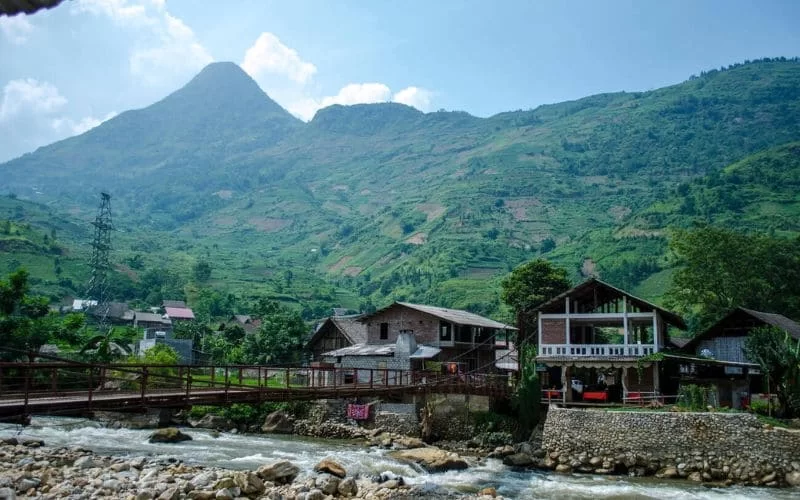
If you have 3 days in Sapa, Ban Ho is an ideal stop to get off the beaten path and experience a more natural side of the Vietnamese mountains.
Y Linh Ho Village
- Address: San Sa Ho Commune, Sapa, Lao Cai
- Entrance fee: Free
- Hours: Open all day
If you are a hiking enthusiast, Y Linh Ho village is your ideal destination. To reach it, you have to take quite long and winding paths that snake through the mountains. As you walk, the mountain opens up and offers you magnificent landscapes: terraced rice fields, cornfields, streams murmuring in the valley, and that feeling of calm that many French-speaking travelers come to Sapa to seek. The hospitality of the inhabitants, who welcome you warmly, completes this idyllic picture. You will also find superb artisanal embroideries to bring back as souvenirs.
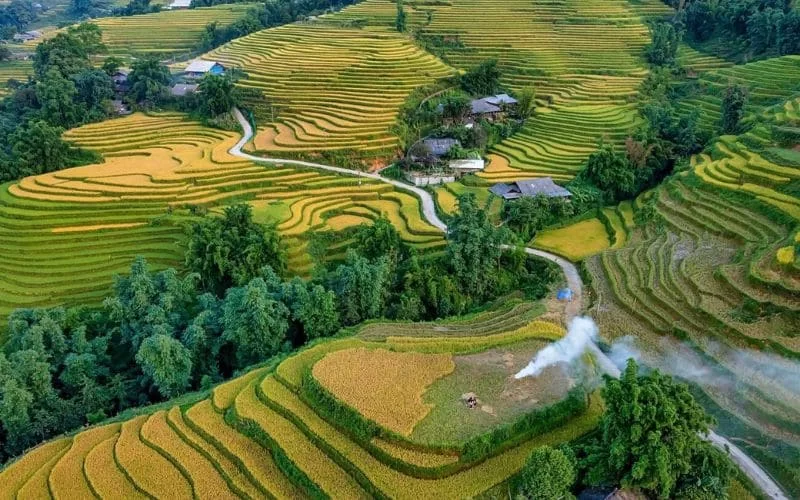
For those who love to walk and experience Sapa at the pace of the trail, Y Linh Ho is an excellent choice. It is a village that must be earned, but which richly rewards with its panoramas and human atmosphere.
Hang Da Village
- Address: Hau Chu Ngai Hamlet, Hau Thao Commune, Sapa, Lao Cai
- Entrance fee: Free
- Opening hours: Open all day
Unknown to the general public, the village of Hang Da is the perfect place to chase clouds. Located about 6 km from the center, this hamlet offers a permanent celestial spectacle where clouds float between the houses. The road leading to Hang Da is a journey in itself, offering majestic panoramas where mountain slopes stretch endlessly, bordered on each side by rice fields. You can breathe in the enchanting scent of ripe rice while exploring the splendor of the sky and earth.
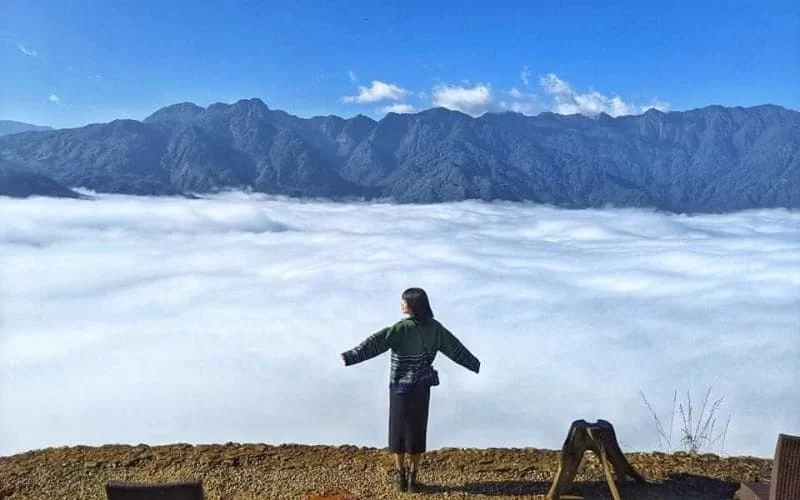
The ideal time to capture this spectacle is a sunny day following a rainy day. The humidity of the soil combined with the warmth of the sun causes water vapor to rise, creating an absolutely impressive sea of clouds. To get there, you can head towards Sapa Jade Hill Resort, then follow the small path that leads to this magnificent road. Once there, the wild beauty and warmth of the locals will make you want to stay forever.
Which village to choose in Sapa? The guide according to your traveler profile
Given the diversity of each village, it is sometimes difficult to make a choice. The secret to a successful trip lies in matching your expectations with the real atmosphere of each hamlet.
If you have little time or it's your first visit
For an effective introduction, the village of Cat Cat is the simplest option. Very close to the center, it allows you to see the essentials of H'mong architecture in a few hours. However, for a condensed version of magnificent landscapes, the duo Lao Chai and Ta Van remains the essential classic. This is where you will find the best balance between terraced rice fields, accessible walking, and discovering H'mong cultures.
If you are looking for calm and immersion in nature
If you are fleeing the hustle and bustle, turn to Ban Ho. Further away and located at a lower altitude, this village offers a rare tranquility and a human warmth specific to the Tay ethnic group. For a more raw experience, Sin Chai is the ultimate "wild" alternative. During the harvest season, it is one of the most authentic places to contemplate a terraced rice field without encountering other tourist groups.

If you want an experience focused on well-being and culture
The village of Ta Phin is your priority destination. Here, beyond the beauty of the mountains, it is the ancestral know-how of the Red Dao that prevails. A stay in Ta Phin is not complete without the emblematic medicinal herbal bath, a sensory immersion that heals both body and mind after a day of exploration.
If you are a hiking and adventure enthusiast
For those who want to wear out their hiking boots, Y Linh Ho and Hang Da are exceptional playgrounds. Y Linh Ho plunges you into steep and winding paths, while Hang Da offers you the privilege of chasing clouds on the peaks. These villages require a more sustained physical effort, but the panoramas of the terraced rice fields there are the most spectacular and least polluted by modern activity.
Mistakes to avoid in Sapa for a successful trip
A trip to a village in Sapa cannot be entirely improvised. To guarantee a smooth and respectful experience, here are the pitfalls to avoid according to our Typic Travel advisors.
- Visiting Cat Cat in the middle of the day: This is when the crowds are at their maximum. To enjoy the waterfall and traditional houses in peace, arrive as soon as it opens at 6-8 am.
- Underestimating the mountain climate: Even if Hanoi is scorching, Sapa can be very cool, especially in the evening or in winter. Always plan for the three-layer system (breathable T-shirt, fleece, and waterproof windbreaker).
- Wanting to visit too many villages: This is the most common mistake. Piling seven villages into two days will only leave you with blurry memories. At Typic Travel, we advise choosing a maximum of 2 or 3 places to take the time to talk with the locals and soak up the atmosphere.
- Ignoring the agricultural cycle: If your dream is to see the bright yellow rice paddies, do not come in November or February. Aim for the water season (May-June) or the harvest season (late August-September).
- Neglecting travel times: The mountain road is winding and can be slowed down by fog or roadworks. Always allow extra time so you don't stress about your return schedule.
Traveler's ethics: the case of child vendors
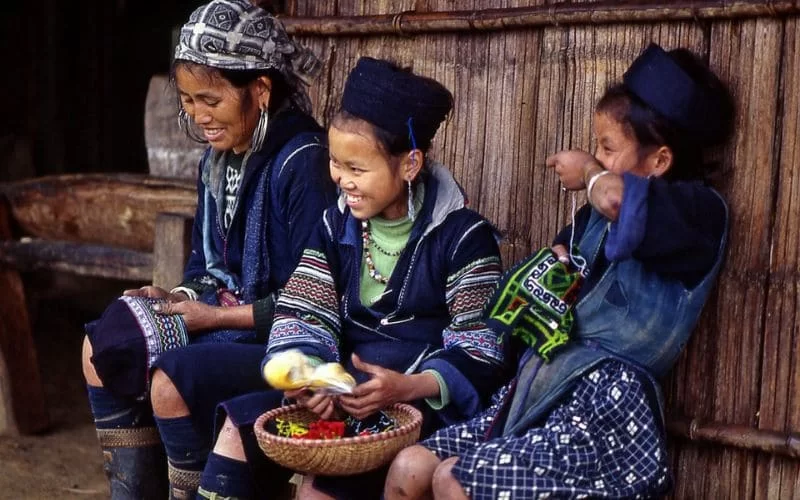
It is very common to encounter young children from ethnic minorities selling bracelets or souvenirs, sometimes insistently. To truly help these communities and promote healthy tourism, we recommend not giving them money or buying products directly from them on the street.
Giving money encourages parents to take children out of school to send them to sell to tourists. To support the local economy ethically, prefer to buy handicrafts from adults in homes or workshops, or go through certified local organizations. By doing so, we protect the future of these children and the dignity of their culture.
Conclusion: your tailor-made trip with Typic Travel
Exploring each village in Sapa, is much more than taking photos of landscapes; it's opening up to a human and spiritual dimension that only Northern Vietnam can offer. Sapa is the ideal playground for an authentic trip where walking becomes a link between cultures. Whether you are looking for the adventure of a trek to Y Linh Ho or the poetry of waking up above the clouds in Hang Da, these lands will mark your mind forever.
The secret to a successful experience? It's the perfect equation between the right season, the right pace, and the judicious choice of villages according to your desires. At Typic Travel, we build your tailor-made itinerary based on your walking level and your desires (total immersion, comfort of an eco-resort, or homestays).
Contact our Typic Travel experts now for your personalized quote!