
Vietnamese tea and its culture
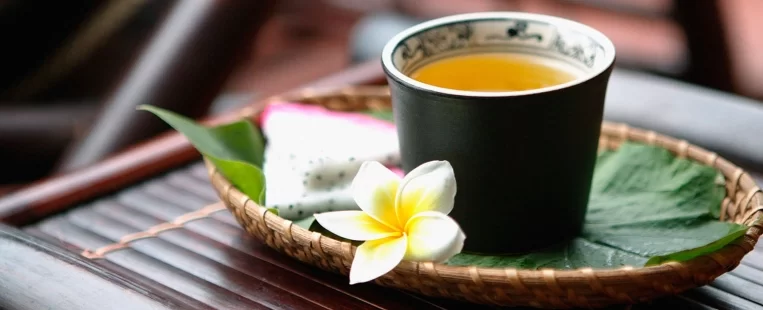
Industry: general. Audience: B2C. The Vietnamese use tea all year round, from street water stalls to family teapots or luxury restaurants. Sipping a cup of tea is the beginning of chatty encounters between soulmates, sudden exchanges to go from stranger to friend.
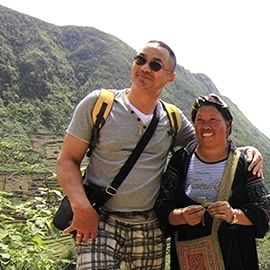
Tea is used by Vietnamese people all year round, from street water stalls to family teapots or luxury restaurants. Sipping a cup of tea is the beginning of chatty encounters between kindred spirits, of sudden exchanges to go from stranger to friend.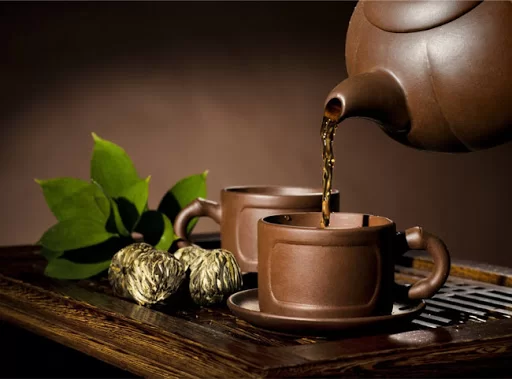
In Vietnam, there is Phong Tra (tea consumption style), which richly demonstrates the cultural and behavioral aspects of Vietnamese people.
Therefore, the Vietnamese tea tree has become a source of emotional communication in daily life, an indispensable drink for the Vietnamese people.
Tea Consumption among Vietnamese |
Origin of Tea
The origin of tea dates back over 4000 years in China. And the story considered a legend of tea has more myth than truth. King Shennong, during his patrol journey to the South, accidentally drank a drop of leaves from a pot of boiling water, making his mind happy, so he called it "tea".
Or someone with medical expertise who discovered tea as an herb in 2737 BC when a few leaves fell into his boiling kettle. After drinking it, he discovered it had miraculous power... Immediately, he put the tea tree on a list of herbs.
Tea - A Healthy Drink
Currently, scientists have proven that green tea is a treasure trove of bioactive substances. Typically, it contains polyphenols, alkaloids, amino acids, vitamins, flavonoids, flour, tannins, saponins... All 12 active groups of the tea plant.
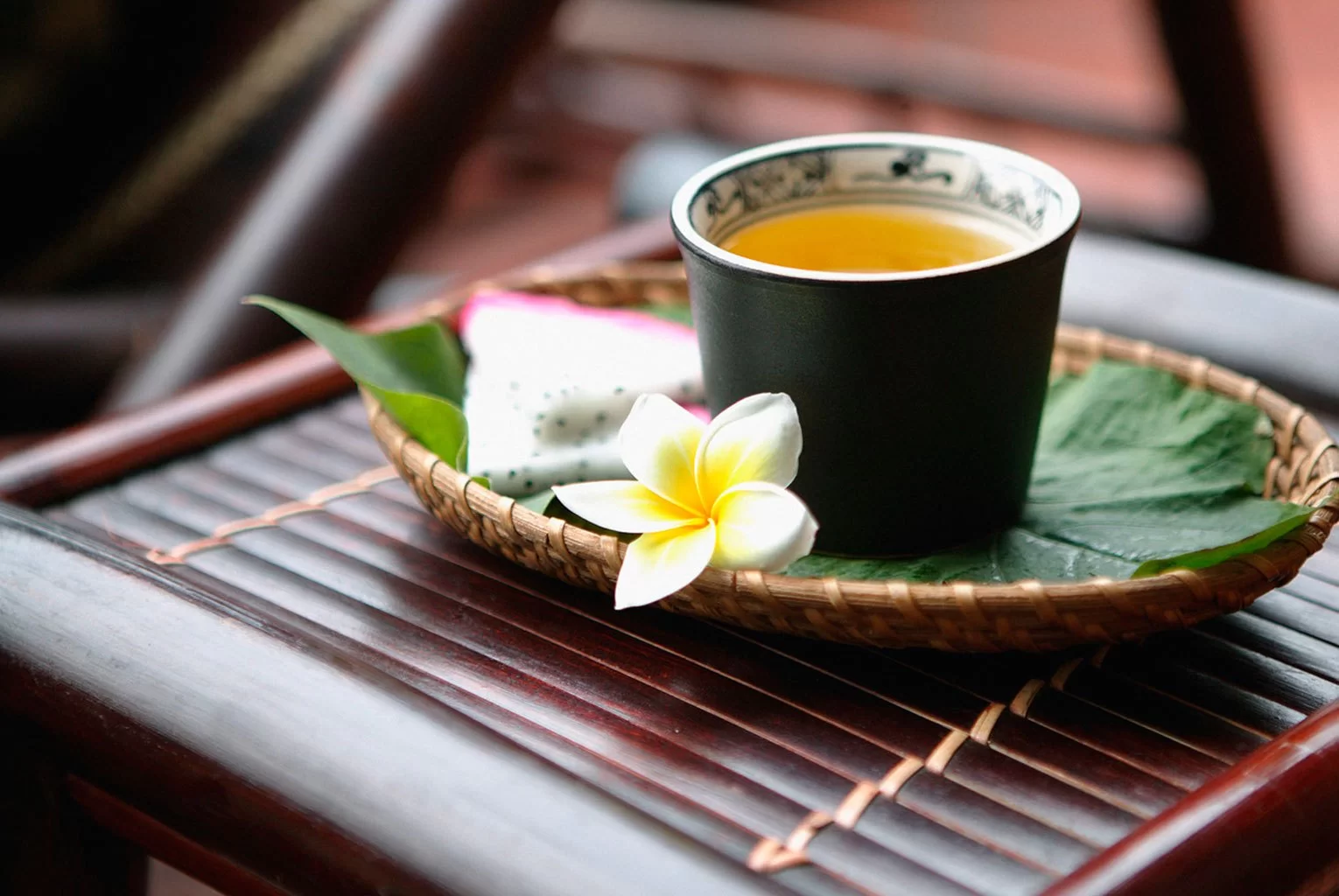
Tea has the ability to stimulate work and bring joy, tea has respiratory and cardiovascular benefits, tea has the ability to inhibit and prevent the growth of cancer cells because tea contains a medicinal herb called ECGC (Epigallocatechin gallate), the substance has an anti-cancer capacity (from stopping cancer cells to stopping tumor metastasis). ECGC has an oxidative vitality 100 times stronger than vitamin C and 25 times more powerful than vitamin E.
Each Country Has Its Own Way of Drinking Tea
Around the world, there are many tea-growing countries and corresponding to many ways of drinking it.
The way of savoring tea has become an art in China and Japan - which treated tea as a religion (like how to call Tra Kinh, Tra Dao).
In Vietnam, there is Phong Tra (tea consumption style), which shows rich cultural and behavioral aspects of the Vietnamese people. And the way of tea cuisine of the Vietnamese people is also very unique: the ancient ancestors said that tea is an art, but art is not a formula.
For this reason, the ancestors often had the following ways of drinking tea: before drinking, they often took it by the nose to appreciate the taste of the tea, then gradually went down to their mouth, small sips from their lips, bitterness and teeth felt tight, immediately clapped a little from the mouth to mix with the gastric juice in the mouth.
Vietnamese people use original tea (pure tea with different ingredients in lotus tea, white tea (flavored with five types of white flowers: jasmine, white chrysanthemum, white camellia japonica, 2 types of Orchid), Honey tea, ginseng tea... Each type of tea gives a different flavor, of which lotus tea is the most precious tea, in the past, reserved for kings.
Tea broth is generally rainwater that is captured from the sky, or natural springs, more elaborate than the dew on lotus leaves in the morning. The way of boiling water must also ensure that it is still calm and does not affect the flavor of the tea (Vietnamese people call "first is water", "second is tea") whether rustic or fragrant tea is used.
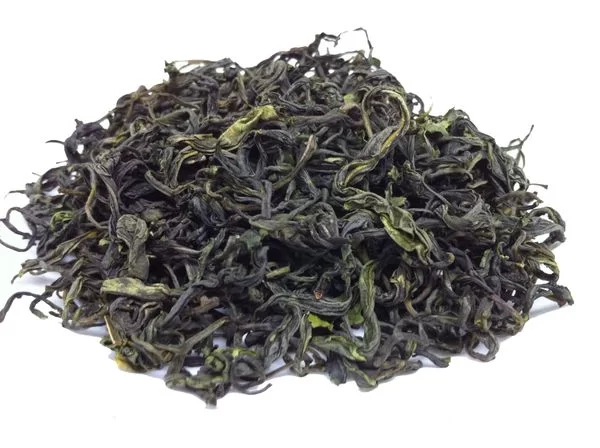
For tea connoisseurs, tea curled like a hook is the most precious tea.
"Tam boi, tu binh" (pot and teapot) which is the teapot set with teapots and 4 small cups, a large cup used when drinking tea.
In Vietnam, we have "bạn trà", meaning finding "tea friends" is sometimes more difficult than finding "wine friends". Because tea friends are good friends, enjoying tea together, reciting poems, expressing their feelings or discussing family and social situations.
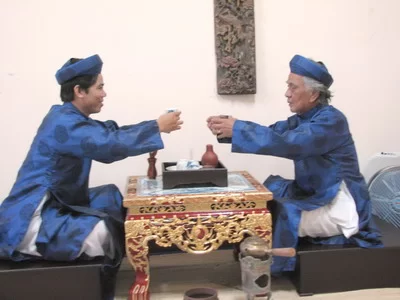
The discerning tea drinker who chooses the time to drink tea at dawn (around 4-5 am) when the moment of yin and yang harmony, last night - next day), drinking tea at this moment of harmony will be beneficial for health and soul, guiding tea drinkers towards good things.
The space for Vietnamese tea consumption also requires a large area to fully enjoy the essence of tea. The space for drinking tea is often somewhat a culture of meditation - a pure, elegant, and soft space. Ideally, places with beautiful calm natural landscapes, indoors with images, calligraphy, a reading corner, or a chessboard.
Therefore, Vietnamese tea culture has been summarized by people as both sophisticated and rustic.
| * If this article is interesting and useful, please share it with your Friends and people around you by choosing the sharing channel below! * If you want to travel to Vietnam and truly discover it in depth with the most authentic corners and the most typical cultures, we suggest you take a tailor-made trip to your wishes with a French-speaking travel agency in Vietnam like Typic Travel. Click our "Free quote" or "Tailor-made trip" button or send an email to Typic Travel * If you are simply looking for travel ideas in Vietnam or Indochinese Countries, Typic Travel offers you some main ideas according to the category of our trips on "idea of our trips" or follow us on one of your social networks to get more permanent info: |
| Follow us on: | TripAdvisor | Facebook | Petit Futé | Youtube | Twitter | Instagram |
