


Top Craft Villages in Hanoi: 7 Places to Meet Local Artisans
From Bat Trang's pottery wheels to Quang Phu Cau's colourful incense yards — explore 7 traditional craft villages near Hanoi and watch local artisans at work.
A potter steadies a bowl on a spinning wheel. A hat maker draws a needle through layers of leaves. A weaver turns thin strips of rattan into an intricate pattern. The top craft villages in Hanoi offer a closer look at the skill behind objects you will encounter throughout Vietnam.
If you are deciding what to do in Hanoi beyond the Old Quarter and the city’s historic landmarks, a craft village visit adds a different dimension to your stay. You can watch artisans at work, join a suitable workshop and choose a souvenir with a story you understand.
This guide covers seven villages across the wider Hanoi area, from Bat Trang’s pottery studios to Quang Phu Cau’s colourful incense yards. Choose the craft that interests you most, then leave enough time to enjoy it.
Table of Contents
- Which Hanoi Craft Village Should You Visit?
- Bat Trang Pottery Village: Try Your Hand at Ceramics
- Quang Phu Cau: Discover Hanoi’s Colourful Incense Village
- Chuong Conical Hat Village: Learn How a Non La Is Made
- Phu Vinh Bamboo and Rattan Weaving Village: See Everyday Materials Transformed
- Van Phuc Silk Village: Explore Hanoi’s Textile Heritage
- Chuon Ngo Mother-of-Pearl Inlay Village: Art in Fine Detail
- Chang Son Fan Village: Discover the Art of the Folding Fan
- How to Plan a Day Visiting Hanoi’s Craft Villages
- Practical Tips for Your Hanoi Craft Village Tour
- FAQs About the Top Craft Villages in Hanoi
- Which craft village is best for a first visit?
- Can I visit all seven villages in one day?
- How far is Quang Phu Cau from Hanoi?
- Do I need to book a craft workshop in advance?
- Can children join these visits?
- How much does a craft village visit cost?
- Is Quang Phu Cau worth visiting in rainy weather?
- Can I customize a Hanoi tour around these villages?
- Plan Your Craft Village Visit with Typic Travel
Which Hanoi Craft Village Should You Visit?
For a first pottery experience, start with Bat Trang. For colourful photography, consider Quang Phu Cau. Textile enthusiasts may prefer Van Phuc, while Chuong, Phu Vinh, Chuon Ngo and Chang Son reward travellers interested in particular making techniques.
|
Village |
Best suited to |
Suggested time on site |
|
Bat Trang |
Pottery activities and ceramics |
2-4 hours |
|
Quang Phu Cau |
Incense craft and photography |
1-2 hours |
|
Chuong |
Conical hats and artisan visits |
1-2 hours |
|
Phu Vinh |
Bamboo and rattan weaving |
1-2 hours |
|
Van Phuc |
Silk weaving and textile shopping |
1-2 hours |
|
Chuon Ngo |
Mother-of-pearl inlay |
1-2 hours |
|
Chang Son |
Traditional fans and decorative art |
1-2 hours |
>> You may like: Traditional craft villages in Vietnam
Bat Trang Pottery Village: Try Your Hand at Ceramics
On the Red River, roughly 14 kilometres from central Hanoi, Bat Trang pottery village has a ceramic tradition spanning centuries. Its shops and market display bowls, tea sets, vases and decorative pieces, giving you plenty to explore even without joining an activity. For a more memorable visit, book a pottery workshop. Working with clay helps you appreciate the control required to shape a balanced cup or bowl. Check whether your chosen session involves throwing clay on a wheel, hand-building or decorating a prepared piece; these are different experiences. Leave time to walk through the older village lanes and visit the Bat Trang Pottery Museum, whose curved architecture provides another perspective on the village’s creative identity.
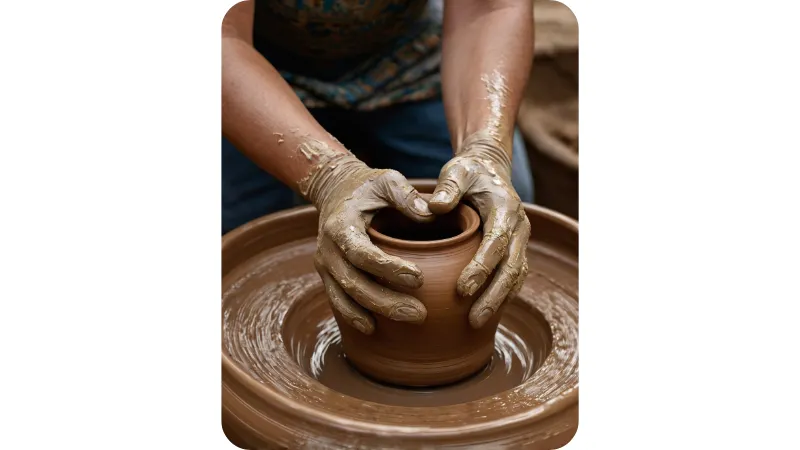
Before booking: Ask whether firing, glazing and taking your piece home are included. A clay object made during a short session may need further processing, so confirm collection or delivery arrangements before you begin. Bat Trang is our suggested starting point for families and travellers who want an activity alongside sightseeing. You can spend a relaxed half-day here, or extend the visit with a museum stop and lunch.
>> Learn more: Potter for a day in Bát Tràng
Quang Phu Cau: Discover Hanoi’s Colourful Incense Village
Around 35 kilometres from central Hanoi, Quang Phu Cau (Quảng Phú Cầu) is known for its incense-making trade and vividly coloured bundles of sticks. The finished incense is used in offerings at household altars, temples and pagodas. Bamboo preparation, dyeing, drying and further production help explain the work behind this familiar part of Vietnamese spiritual life. Many visitors know this incense village through photographs of bundles spread into bright, fan-shaped arrangements. Some display yards are specifically arranged for visitors, while working production areas serve a different purpose. A visit that includes an explanation of the craft gives useful context to the photographs.
Ask your guide or host which stages you will see and whether any participation is included. A photo-yard visit does not automatically include an incense-making workshop.
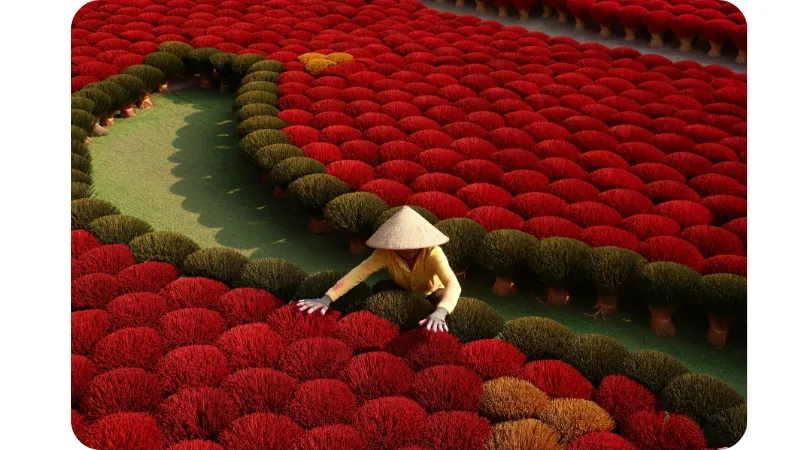
Before visiting: Check the forecast and ask the host when the bundles will be displayed. Outdoor drying depends on suitable weather, and rain can change the experience. Confirm any photography or entrance charge at your chosen courtyard, and ask before stepping among the bundles. For a full day focused on village crafts, we suggest pairing Quang Phu Cau with Chuong, subject to the hosts’ availability and your transport arrangements.
Explore Hanoi’s traditional craft villages, with authentic tours designed by our local experts.
Chuong Conical Hat Village: Learn How a Non La Is Made
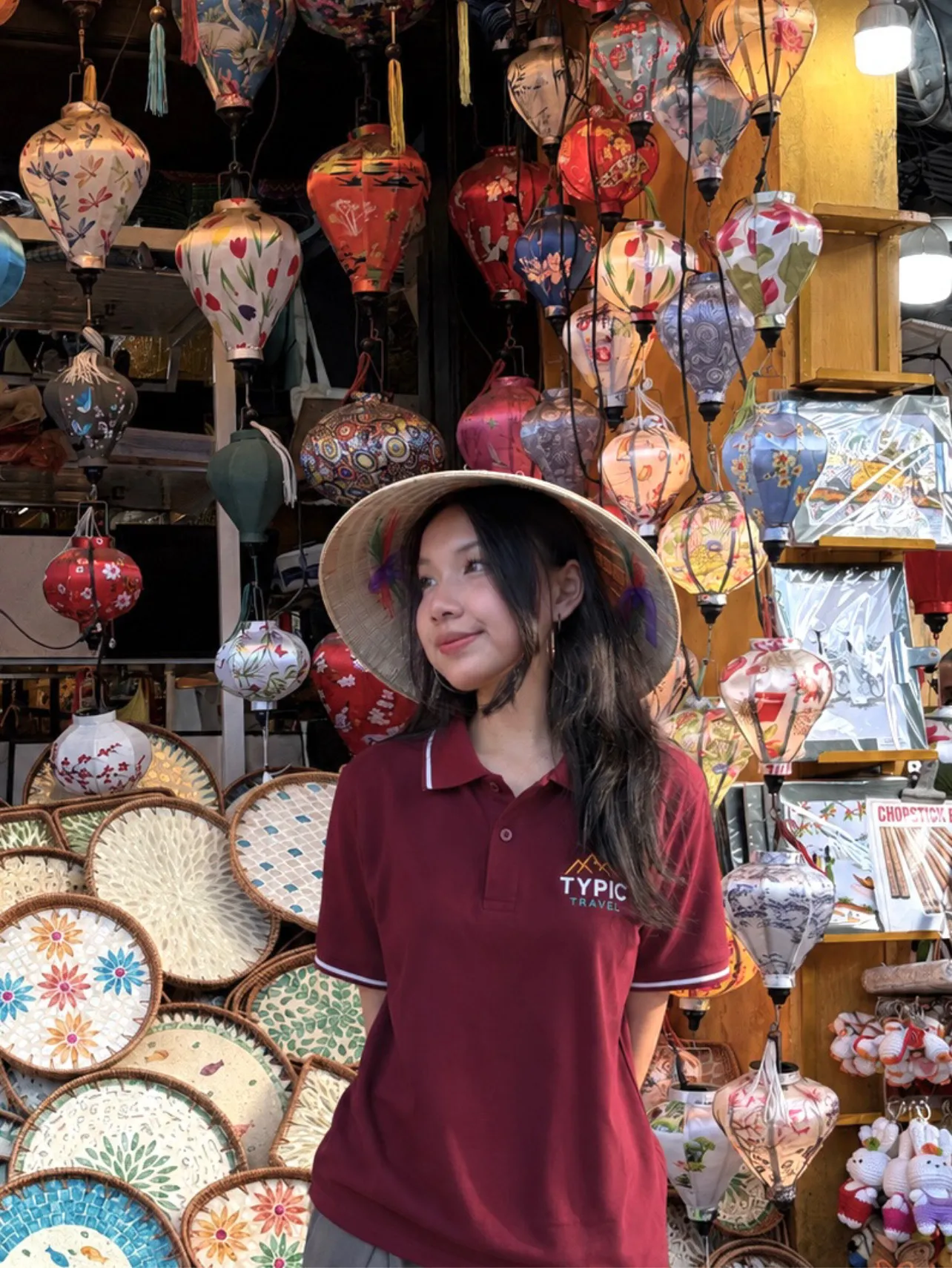
The Vietnamese non la, or conical hat, looks deceptively simple. At Chuong Conical Hat Village, approximately 30 kilometres southwest of central Hanoi, you can see how carefully its structure is assembled. Makers prepare and layer leaves over a bamboo frame, then secure them with fine, closely spaced stitches. Designed to offer protection from sun and rain, the hat also holds a familiar place in Vietnamese cultural imagery. Watching this process changes how you look at a familiar Vietnamese object. Ask the artisan to show you how the frame holds its shape, how the leaves are prepared and what distinguishes a well-made hat. Some households welcome visitors to try simple stages under supervision. Arrange this beforehand if participation matters to you, and ask whether the activity involves stitching, decorating a finished hat or observing a demonstration.
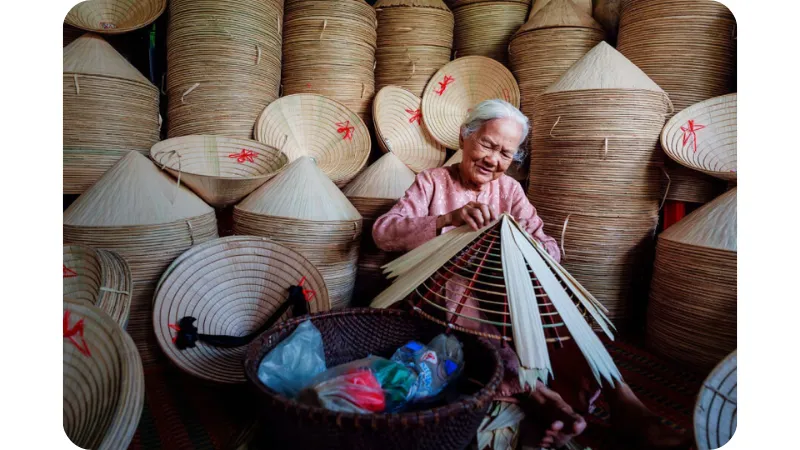
Before booking: Find out how much of the session is practical and what you can take home. Making a complete hat requires more skill and time than a brief visit can convey. Chuong suits travellers who enjoy conversation and close observation. An English-speaking guide can help you ask about the maker’s experience and understand the decisions behind each step.
>> You may like: Non La - A cultural icon of Vietnam
Phu Vinh Bamboo and Rattan Weaving Village: See Everyday Materials Transformed
At Phu Vinh bamboo and rattan weaving village, west of central Hanoi, slender strips become baskets, trays, vases and elaborate decorative pieces. The craft depends on selecting and preparing suitable material, keeping the strips consistent and controlling the weave. Look closely at the work: a tidy rim, a repeated pattern and a smoothly curved surface all demand precision. Phu Vinh’s artisans are also known for ambitious woven pictures and portraits, showing how far these materials can be taken beyond household use.
An artisan visit is a good choice for travellers interested in design and making processes. Ask to see both an unfinished piece and a completed one; comparing the two makes the technique easier to follow.
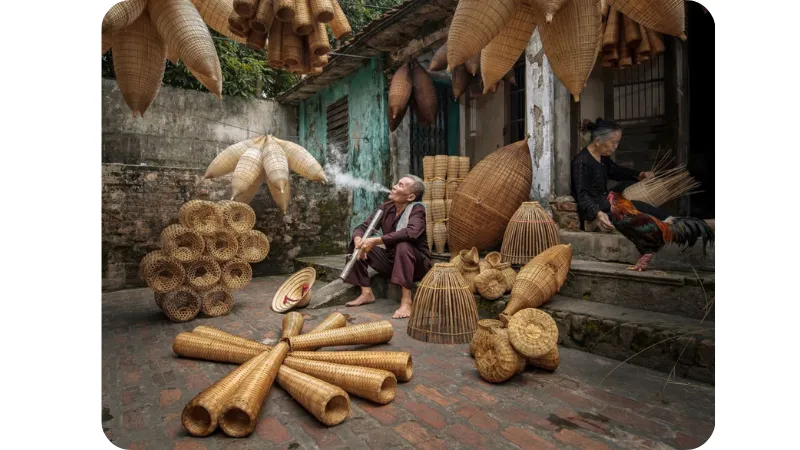
Before booking: If you would like a weaving workshop, request a specific beginner activity and wait for confirmation. Do not assume that a production workshop operates as a walk-in classroom. When shopping, consider how you will pack your purchase. A small woven item may be easier to carry than a large basket, and asking who made it adds useful context to your choice.
Van Phuc Silk Village: Explore Hanoi’s Textile Heritage
In the Ha Dong area southwest of central Hanoi, Van Phuc Silk Village combines a long weaving tradition with opportunities to browse scarves, clothing and lengths of fabric. A visit can include watching looms in operation and learning how threads become patterned cloth. For a detail to look out for, ask about van silk, a local speciality with patterns that reveal themselves differently as the fabric catches the light. Seeing a sample beside a loom helps connect the finished textile to its construction.
If you are considering what to see in Hanoi with an interest in fashion or decorative arts, Van Phuc is an appealing addition to your itinerary. Leave time to compare textures and ask questions before choosing a piece.
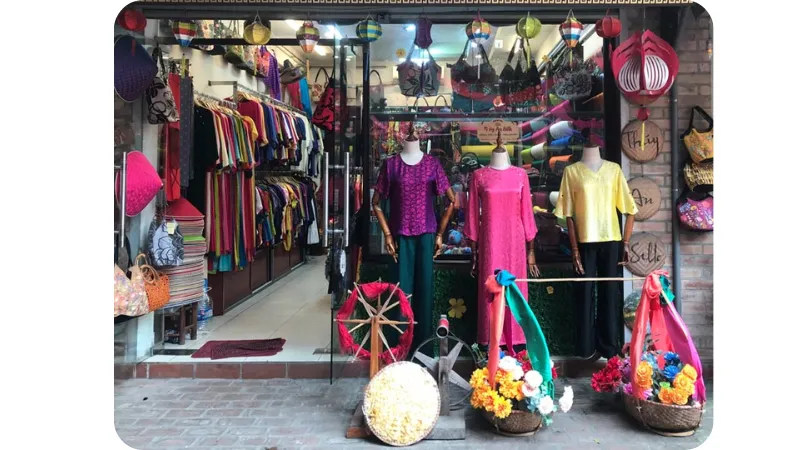
Before buying: Ask about fibre composition, where the cloth was woven and how to care for it. If local production matters to you, ask the seller to explain the item’s origin. For a visit centred on the craft, request a working loom demonstration when arranging your stop. A shopping visit and a weaving demonstration offer different experiences, and it helps to specify your preference.
Chuon Ngo Mother-of-Pearl Inlay Village: Art in Fine Detail
Roughly 40 kilometres south of central Hanoi, Chuon Ngo Mother-of-Pearl Inlay Village specialises in fitting pieces of iridescent shell into wooden surfaces. Mother-of-pearl, also called nacre, gives the designs their changing sheen. The technique is used on furniture, decorative panels and smaller objects such as boxes. Artisans develop a design, cut the shell to shape, carve matching recesses in the wood and set the pieces in place before finishing the surface. The close fit between shell and wood is part of what makes the finished work so impressive.
This is a particularly rewarding stop for anyone who enjoys detailed workmanship. Look at the same piece from different angles to see how the shell reflects light, then ask the maker to explain one part of the design.

Before booking: Plan for an artisan demonstration. The cutting and inlay stages are specialist work, so any practical activity needs to be agreed with the host in advance. Allow time to watch one stage properly. Understanding how a small detail is made often makes the finished piece more interesting.
Chang Son Fan Village: Discover the Art of the Folding Fan
West of central Hanoi, Chang Son Fan Village is associated with traditional paper and silk fans, ranging from handheld objects to large decorative works. Their construction brings together carefully prepared frames, neatly applied coverings and, on painted examples, artwork designed around the folds.
The challenge is easy to overlook until you examine a fan closely: it must open smoothly while allowing its decoration to remain coherent across a moving surface. On painted fans, the artist has to consider where the folds will pass through the scene. Silk fans also find a place in performances and festivals, giving the craft a life beyond the souvenir shop. Chang Son is a good choice for visitors interested in illustration, decorative objects and the relationship between useful design and art. Ask to compare a simple everyday fan with a more elaborate display piece.
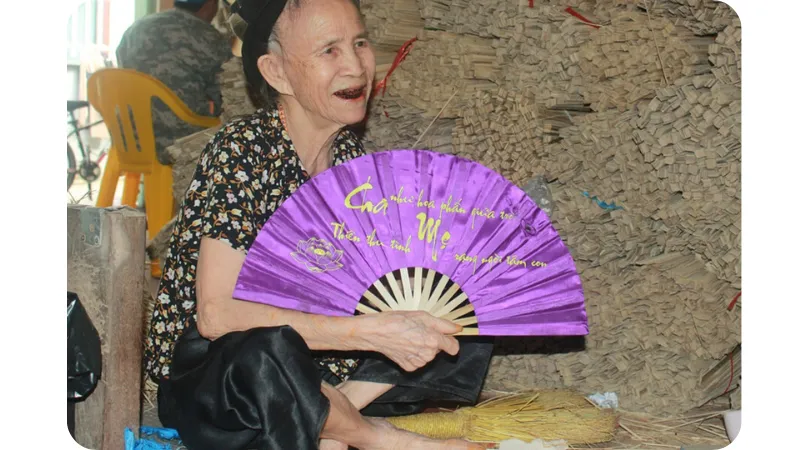
Before booking: Confirm that a maker will be available during your visit. If you want to paint or assemble a fan, request that activity specifically and check what materials are provided. A finished fan can be a compact keepsake. Before purchasing, open and close it gently with the seller’s permission and ask how best to protect it during your journey.
How to Plan a Day Visiting Hanoi’s Craft Villages
If you have a day to visit the villages, we recommend choosing one main interest and building the route around it. One village can fill a half-day once transport is included; two nearby stops usually make a more comfortable full-day plan. The combinations below are suggested itineraries based on the villages’ locations and crafts. Confirm the order with your driver or tour organiser once workshop appointments and your hotel pick-up point are known.
Incense and Conical Hats: Quang Phu Cau and Chuong
Arrange a morning visit to Quang Phu Cau when the host expects the outdoor displays to be ready. Continue with a lunch break and a pre-arranged artisan visit in Chuong. Leave time for questions, photographs and a short practical activity if one has been confirmed.
Pottery at Your Own Pace: Bat Trang
Make Bat Trang the focus of your day if you want a substantial pottery session. Combine it with the market, older lanes and museum, adjusting the order to your activity booking. A single-village itinerary is especially useful when travelling with children or when you prefer fewer transfers.
Textiles and Weaving: Van Phuc and Phu Vinh
For an interest in materials and design, consider Van Phuc and Phu Vinh on a western and southwestern route. Arrange a loom demonstration and an artisan visit before setting off, then allow time to compare the different techniques. If mother-of-pearl inlay or fan making is your main interest, build a tailor-made tour around Chuon Ngo or Chang Son. Ask your organiser to suggest a suitable second stop after confirming the artisan appointment.
Practical Tips for Your Hanoi Craft Village Tour
Plan around the experience you want: Tell your host whether your priority is making something, photography, learning about production or shopping. Confirm the activity, duration, language support and what the price includes.
Arrange transport in both directions: A private car with a driver is a practical option when combining villages. For an independent visit, agree on the return journey and share the exact workshop location with your driver. Allow flexibility for traffic.
Choose the season, then check the day’s forecast: Autumn, particularly September to November, generally offers more comfortable weather for exploring Hanoi than the hot, humid summer. Winter and early spring can be cool and misty. For Quang Phu Cau, suitable drying weather matters more than a particular month.
Ask about individual charges: Check whether your quote includes courtyard access, demonstrations, workshop materials, museum tickets and any finishing or delivery of your handmade piece. These are separate components, so compare the actual inclusions.
Visit with consideration: Ask before photographing people or entering a family’s work area. Follow the host’s instructions around tools and materials, and keep paths clear while production continues. Paying for an agreed demonstration or buying directly from a maker can make your visit worthwhile for both sides.
Share practical needs early: If anyone in your group needs step-free access, frequent seating or a shorter activity, ask the specific venue to confirm what it can accommodate.
FAQs About the Top Craft Villages in Hanoi
Which craft village is best for a first visit?
➡️ We suggest Bat Trang for a first visit because you can combine a pottery activity with browsing ceramics and exploring the village. Choose Quang Phu Cau if colourful photography is your main interest, or Van Phuc if you prefer textiles.
Can I visit all seven villages in one day?
➡️ We would plan several outings for all seven. They are spread across the wider Hanoi area, and combining them in one day would leave little time with artisans. For a day trip, choose one village with a longer activity or two compatible stops.
How far is Quang Phu Cau from Hanoi?
➡️ Quang Phu Cau is approximately 35 kilometres, or 22 miles, from central Hanoi. Your actual journey depends on the starting point, traffic and the courtyard you are visiting, so ask your organiser for a transfer estimate for your route.
Do I need to book a craft workshop in advance?
➡️ Advance booking is advisable if you want a particular activity, English-language instruction or a session for a group. Ask for explicit confirmation at smaller artisan workshops. Being able to visit a craft village does not guarantee a practical class on arrival.
Can children join these visits?
➡️ A short pottery activity can be a good starting point for families. Before booking any session, share the children’s ages and ask about the tools used, supervision and recommended minimum age. Choose an activity length that suits their attention span.
How much does a craft village visit cost?
➡️The total depends on transport, guiding and the experiences you choose. Ask for an itemised quote covering admission where applicable, demonstrations, materials and any firing or delivery fees. Confirm the price with the individual venue or tour provider before booking.
Is Quang Phu Cau worth visiting in rainy weather?
➡️ A production visit may still be interesting if the host confirms access, but rain can affect outdoor drying and the colourful displays. If photography is your priority, discuss rescheduling. An indoor pottery or weaving visit may be a more suitable alternative.
Can I customize a Hanoi tour around these villages?
➡️ Yes. When requesting a customized Hanoi tour, share your preferred crafts, travel date, group size and whether you want a practical activity. Ask the organiser to confirm artisan availability and create a route with enough time at each stop.
>>Watch more:
Video: Discover traditional craft villages around Hanoi and meet the artisans preserving Vietnam's centuries-old craftsmanship.
Which would you enjoy most: shaping clay, exploring textile patterns or meeting a maker behind a finely stitched conical hat?
Tell Typic Travel about your interests, travel dates and preferred pace. We can help you plan a tailor-made tour that fits a craft village visit into your time in Hanoi or a longer Vietnam itinerary. Let us know whether you would like to watch, photograph or participate, so we can explore suitable arrangements with you.
Contact Typic Travel to discuss your Hanoi tour and customize your day around the crafts that interest you.
Email: advisor.typictravel@gmail.com | Website: typictravel.com