


Vientiane Laos, complete guide for an authentic trip
Discover Vientiane, the serene capital of Laos. Sacred temples, local cuisine, and expert advice. Experience an authentic and human journey with Typic Travel.
Vientiane is not a noisy or frantic capital. Unlike Asian metropolises that exhaust themselves in a frantic race towards modernity, the Laotian capital seems to have chosen serenity. Here, there are no suffocating skyscrapers or a symphony of honking horns, but a suspended atmosphere, imbued with a gentle way of life.
It is a city that seduces with its calm, its spirituality, and its peaceful pace of life. In this article, Typic Travel accompanies you in discovering an intimate, human, and authentic Laos. We believe that true luxury lies in these moments of rediscovered simplicity, far from the beaten path.
Table of Contents
- Vientiane Laos: What you need to know before you go
- Why visit Vientiane during a trip to Laos?
- What to do in Vientiane? The essentials
- Vientiane differently: local experiences to live
- Where to eat in Vientiane? Flavors of Laos
- Where to sleep in Vientiane?
- How to get to Vientiane from France?
- When to go to Vientiane? Climate & weather
Vientiane Laos: What you need to know before you go
Located on the left bank of the Mekong, facing the Thai border, Vientiane (or Viang Chan) has been the beating heart of Laos since 1560. Although it is the largest city in the country, it preserves a rare human density for an Asian capital, making it a choice destination for a relaxing stay.
Some landmarks for your trip:
- Geography: The city extends over a fertile plain, offering spectacular sunsets over the Mekong, a daily ritual for locals and travelers.
- History: Ancient city of the Lan Xang kingdom (the Kingdom of a Million Elephants), it bears the scars and beauty of its past, between Siamese influences and French protectorate.
- Culture & Language: The name "Vientiane" literally means "The City of Sandalwood". While Lao is the official language, the Francophone heritage is still palpable, especially in administration and among the elderly, often facilitating exchanges for our travelers.
- Climate: A tropical monsoon climate. The ideal period to visit is from November to March, when temperatures are mild (around 25-28°C) and the sky is azure blue.
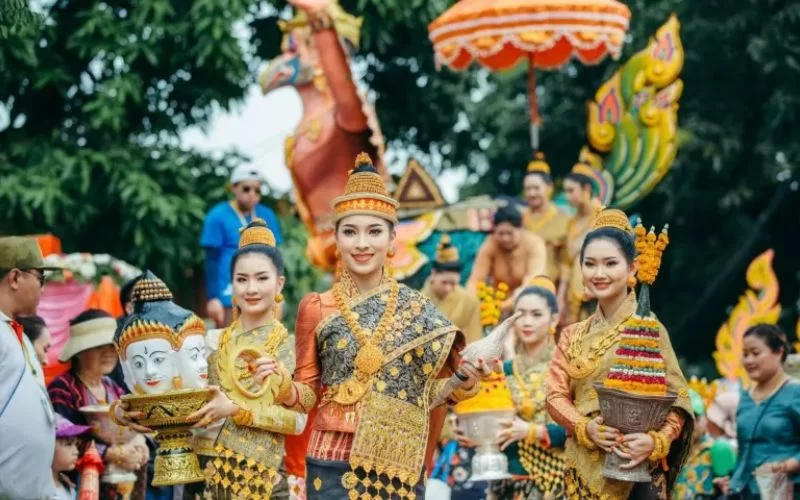
Why visit Vientiane during a trip to Laos?
If Luang Prabang is the romantic pearl, Vientiane is the tranquil soul of the country. One does not come here to check off boxes on a list of monuments, but to feel an atmosphere that exists nowhere else in Southeast Asia.
A human-sized capital
Vientiane surprises with its horizontal silhouette: here, few skyscrapers obscure the horizon. With little traffic compared to its neighbors, the city can be tamed without stress. It is a capital that can be explored at your own pace, easy to visit on foot or by bike, allowing you to stop as you wish at encounters and shaded alleys.
Spirituality and living Buddhist heritage
What strikes the traveler is this omnipresent spirituality. In Vientiane, temples are active places of life, rooted in daily life. You will encounter the omnipresence of monks in local life, between ancestral rituals and moments of meditation. This atmosphere of contemplation, which has become rare in large cities in Southeast Asia, offers a profound moment of serenity.
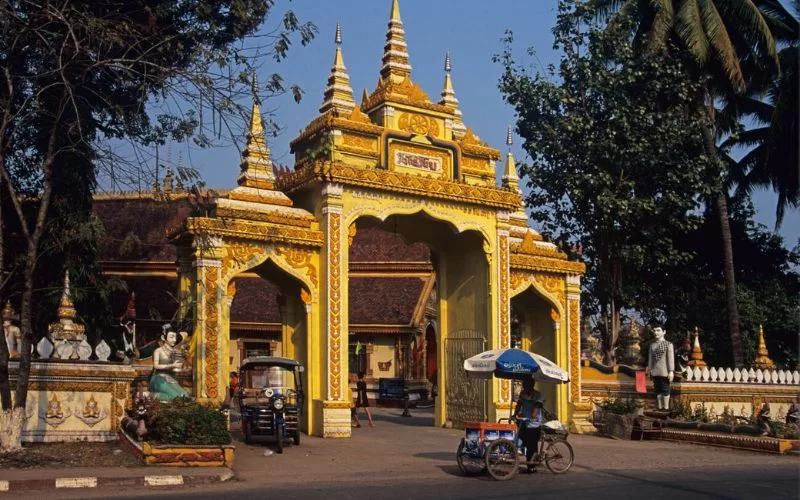
A discreet but visible French influence
History has left Vientiane with a singular charm where East meets West. Colonial architecture can be seen around every corner, while the smell of coffee and freshly baked baguettes recalls a strong historical link. Among older generations, the French language still resonates, creating a unique cultural bridge for French-speaking travelers.
A slow pace, ideal for sensitive travelers
Far from mass tourism, Vientiane is a sanctuary for slow travel. It is the perfect destination for:
- Couples seeking intimacy.
- Solo travelers looking for safety and reflection.
- Seniors appreciating comfort and tranquility.
- Slow travel enthusiasts who want to see less, but see better.
>> Discover our cultural tours in Laos for a tailor-made immersion
What to do in Vientiane? The must-sees
Visiting Vientiane means accepting to be guided by the golden spires of the temples that dot the horizon. Here is the essential step of your stay:
Pha That Luang, spiritual symbol of Laos
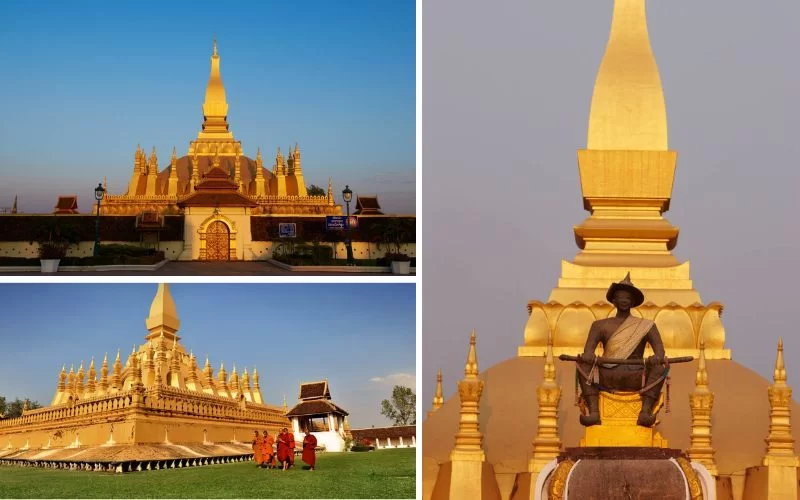
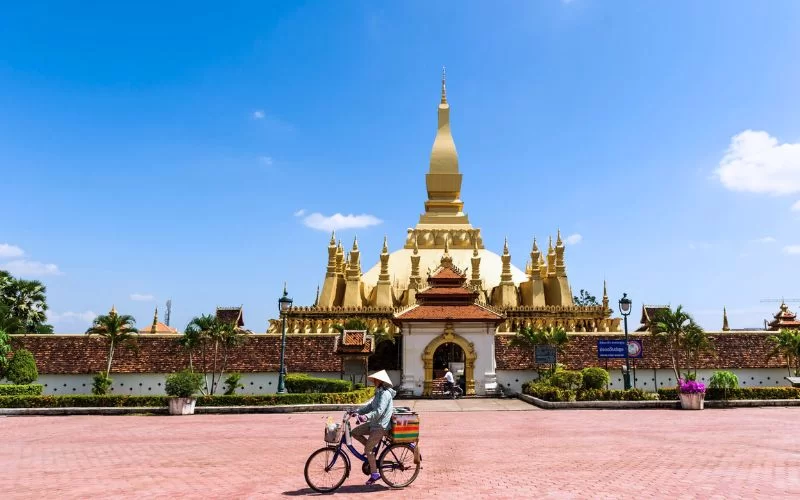
Considered the most important national and religious monument in the country, Pha That Luang is much more than just a stupa. It is the heart of Laotian identity. Built in 1566 during the transfer of the capital from Luang Prabang to Vientiane, this majestic edifice has become over the centuries the symbol of national unity and the country's sovereignty.
From an architectural point of view, this impressive golden monument forms a quadrilateral of 48 meters per side and 45 meters in height, entirely covered with gold leaf. According to tradition, it is said to house a hair of the Buddha.
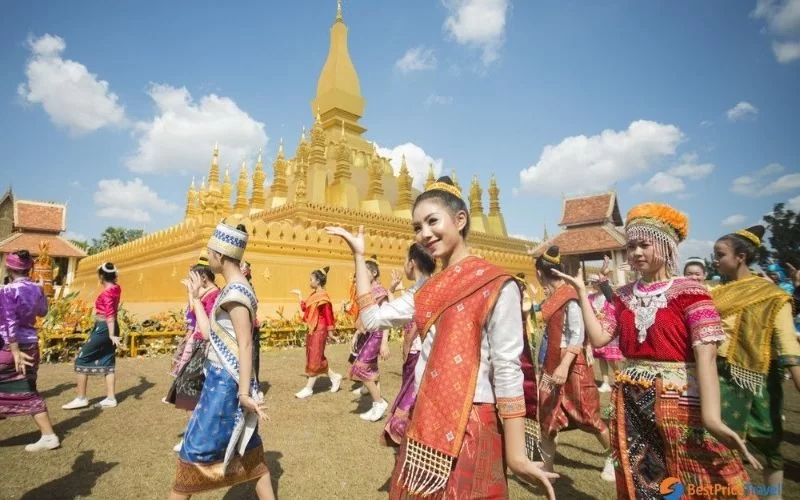
It is also the heart of major Buddhist festivals, especially during the That Luang festival in November, where pilgrims and monks flock from all over Laos in a deeply contemplative atmosphere.
When to visit?
To capture all the magic of the place, the choice of time is essential:
- In the morning (08:00 - 10:00): To enjoy soft light and a peaceful atmosphere before the midday heat. This is the ideal time to see devotees making offerings.
- In the late afternoon (from 16:00): To admire the spectacular gold at sunset, when the stupa seems to ignite under the last rays.
Typic Travel local tip (the little extra): For a respectful immersion, we advise you to visit outside weekends. The site is then much calmer, conducive to meditation. It is imperative to wear covering attire (shoulders and knees covered), this is the key to being accepted by locals and observing rituals in silence, without disturbing the serenity of the place.
Patuxai, the Laotian Arc de Triomphe
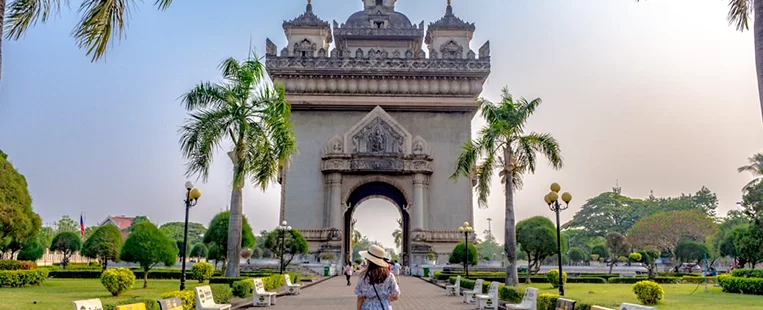
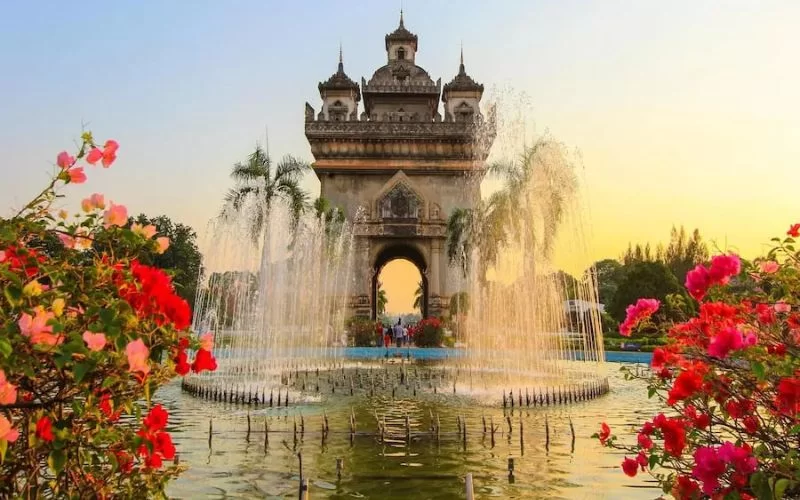
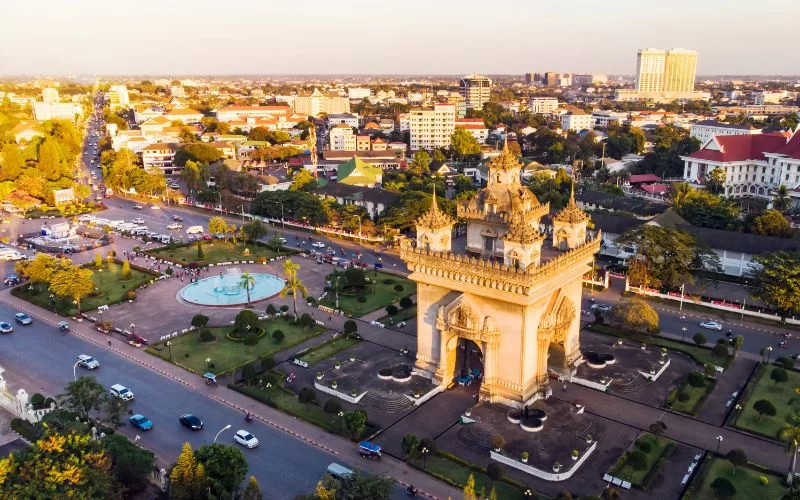
Nicknamed the "Gate of Victory", Patuxai is one of the most photographed monuments in the capital. Built in the 1960s, this massive structure pays tribute to the Laotian fighters who fought for the country's independence. It is a strong symbol of resilience and national pride.
Although the monument is openly inspired by the Parisian Arc de Triomphe, it distinguishes itself with an identity deeply rooted in Laotian soil. Looking up under its arches, you will discover lotus flower motifs and representations of Hindu and Buddhist deities (such as the Kinnari).
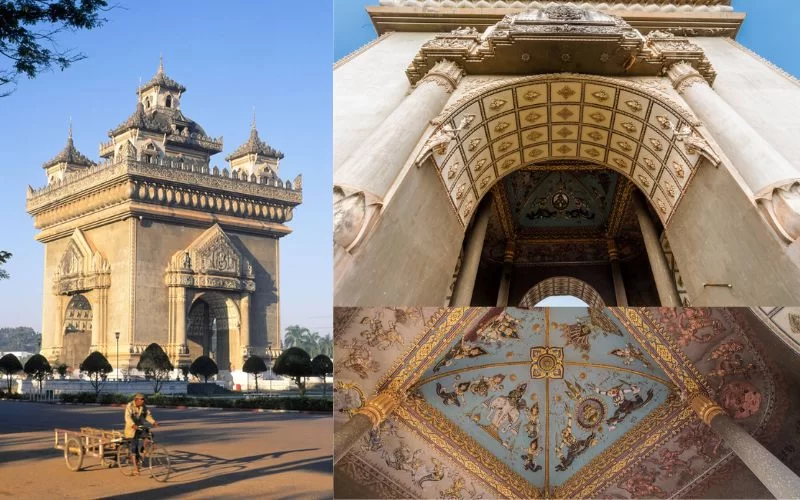
Typic Travel tip: Favor a visit at the end of the day. The park surrounding the monument comes alive with musical fountains, offering a moment of relaxation much appreciated by Laotian families.
Wat Si Saket, the treasure of serenity with 6,000 Buddhas
Located in the heart of a peaceful garden in the center of the capital, Wat Si Saket is undoubtedly the most beautiful testament to the city's past.
Wat Si Saket is the oldest temple in Vientiane to have remained standing. During the Siamese invasion of 1828, when the city was almost entirely destroyed, Wat Si Saket was the only one spared. This historical resilience gives it a special aura, that of a silent witness to centuries past.
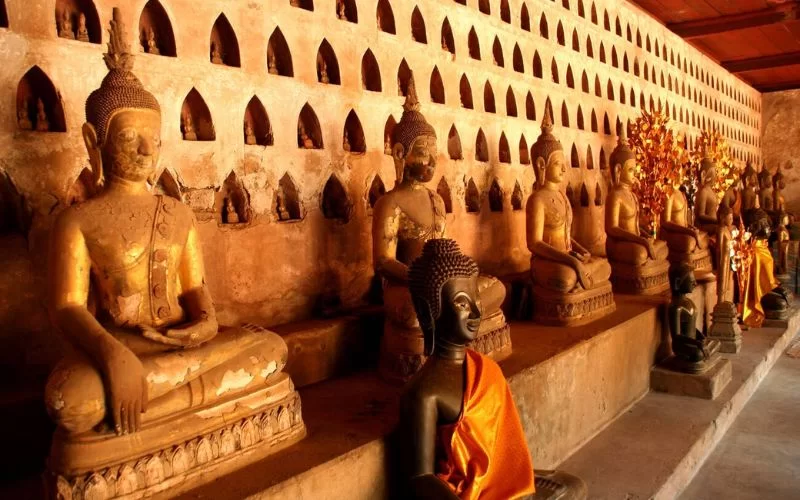
What makes the visit unforgettable is the multitude of Buddha statues that populate the place. Wandering under the covered galleries of the cloister, you will discover more than 2,000 statuettes, made of wood, stone, silver or bronze, delicately nestled in the walls, creating an ensemble that is both impressive and soothing. In total, counting the statues on the pedestals, the temple houses nearly 6,840 representations of Buddha, creating an almost tangible spiritual presence.
The Typic Travel expert's opinion: Take the time to observe the details of the wood carvings on the ceiling of the Sim (main sanctuary). They bear witness to exceptional craftsmanship that we love to introduce to our travelers during our private tours.
Haw Phra Kaew, guardian of royal treasures
Just opposite Wat Si Saket stands Haw Phra Kaew, a monument with imposing and refined architecture that embodies the grandeur of Laotian history.
Originally built in 1565 by King Setthathirath, this edifice was once the former royal temple of the Laotian monarchy. Its historical renown comes from the fact that it was built to house the famous Emerald Buddha, one of the most sacred relics in Southeast Asia (now preserved in Bangkok after being taken by the Siamese in the 18th century).
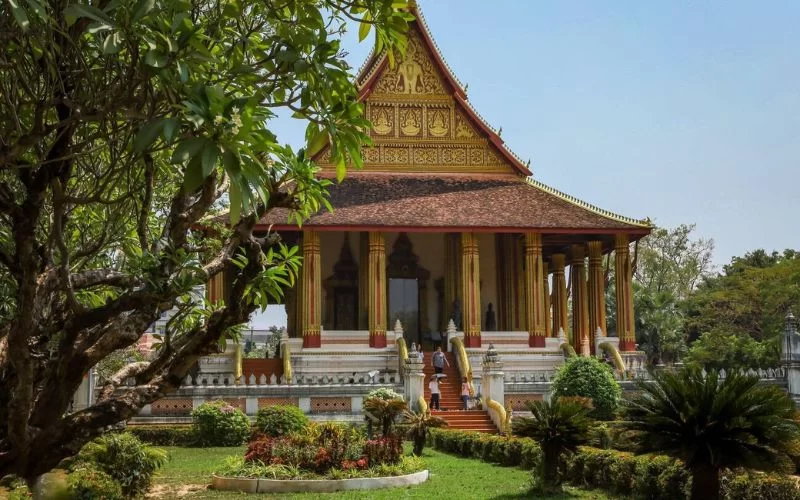
Today converted into a religious museum, Haw Phra Kaew no longer serves for worship but for heritage preservation. It is the ideal place to understand the spiritual history of Laos through a rare collection:
- Bronze sculptures: Buddha statues in various postures, dating from different periods of Laotian art.
- Sacred art: Engraved steles, cult objects, and finely carved woodwork that bear witness to the finesse of local craftsmanship.
- Majestic architecture: Its well-maintained gardens and balustrades adorned with Nagas (mythical serpents) offer a magnificent photographic setting.
Xieng Khuan Park, park of mystical sculptures
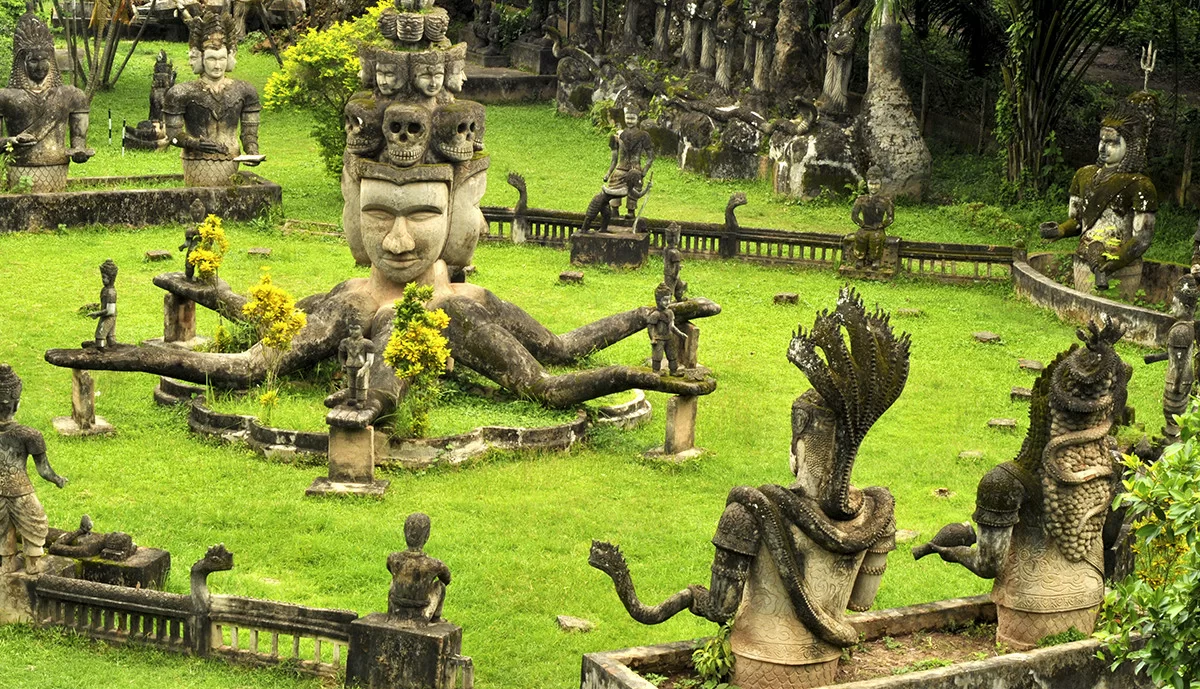
About 25 kilometers from the city center, on the banks of the Mekong, lies one of the most unusual places in the country: Xieng Khuan Park, better known as Buddha Park. Far from the architectural rigor of urban temples, this sculpture garden seems to have sprung from a waking dream.
Built in 1958 by a visionary priest-shaman, Bunleua Sulilat, this verdant park houses more than 200 monumental concrete statues. The particularity of this place lies in its philosophy: merging Hindu and Buddhist mythologies within the same space.
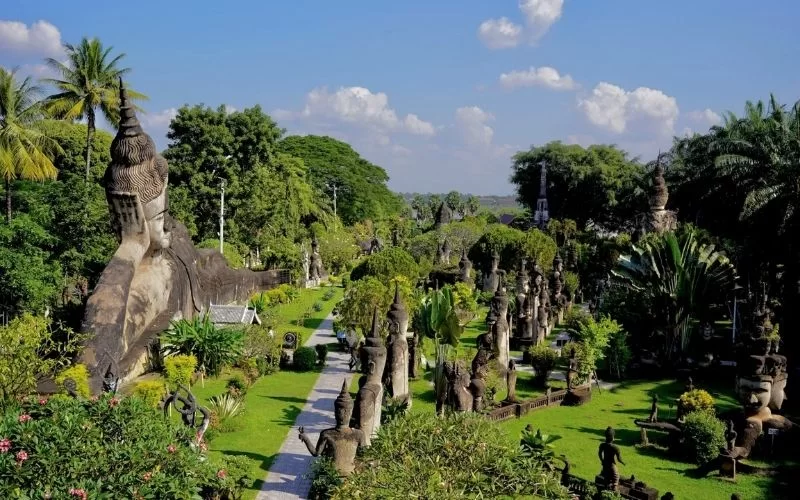
Wandering through the alleys, you will encounter a gallery of fascinating characters consisting of multi-armed Hindu deities, grimacing demons from local legends, and a giant reclining Buddha 40 meters long, a symbol of absolute serenity.
The unusual Typic Travel experience: Don't miss entering the giant pumpkin-shaped structure. You can climb inside, passing through the three levels representing hell, earth, and paradise, to reach the top. From up there, you will have an overview of this spiritual labyrinth, a perfect panorama for your travel photos.
The Vientiane Night Market
As soon as the sun begins to set, the capital's life converges towards the banks of the Mekong. This is where the famous night market sets up, recognizable by its rows of iconic red tents. Much more than a place of commerce, it's a true social gathering where the air finally cools down.
Far from mass-produced goods, the market is a showcase of Laotian craftsmanship. It's the ideal place to find traditional textiles (the famous Laotian Sinh) and silk weaves, carved wooden objects and handmade crafts, paintings and souvenirs that support the local economy.
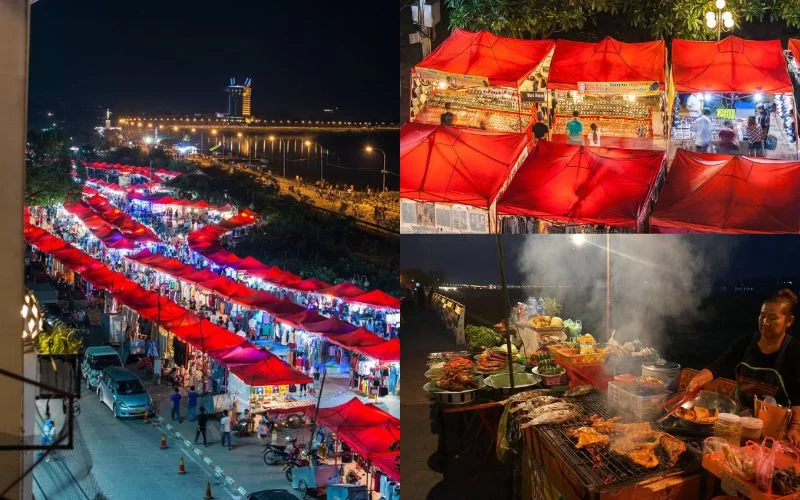
Furthermore, the market and its surroundings are also a perfect introduction to Laotian gastronomy. You can taste authentic and accessible street food such as grilled skewers, freshly squeezed fruit juices, or the famous sticky rice (Khao Niao) served in small wicker baskets.
Typic Travel's tip: Arrive around 5:30 PM to admire the sunset over the Mekong before getting lost in the market's alleys. It is this precise moment, between the golden light and the awakening of the stalls, that best defines the peaceful soul of Vientiane.
Vientiane differently: local experiences to live
Beyond the monuments, the soul of Vientiane reveals itself in its immutable rituals and spontaneous moments of sharing. For a meaningful trip, we invite you to experience these timeless moments.
Immersion in daily spiritual and authentic life
Vientiane belongs to those who wake up early. To grasp the Laotian fervor, one must awaken with the city.
- Morning offerings (Tak Bat): Unlike the tourist hustle and bustle of some cities, Tak Bat in Vientiane remains intimate. Participate or observe with respect the silent quest of the saffron-robed monks.
- Local markets at dawn: Dive into real daily life at Talat Sao market or in small neighborhood markets. This is where the city's heart beats, amidst the scents of aromatic herbs and simple exchanges.
- Sunset stroll: Join the locals for a slow walk along the Mekong. This is when the capital relaxes, offering a soothing natural spectacle facing the Thai bank.
- Artisan encounters: We take you to meet local families and artisans (weavers, goldsmiths) who perpetuate ancestral know-how far from classic souvenir shops.
Vibrate to the rhythm of traditional festivals
If your calendar allows, experiencing a national festival is a strong emotional experience:
- Boun Pi Mai (April): The Lao New Year is an explosion of joy and water, symbolizing purification and renewal.
- That Luang Festival (November): A grandiose celebration where thousands of pilgrims converge on the golden stupa for religious ceremonies and popular fairs.
- Seasonal ceremonies: Whether it's the boat festival or the end of Buddhist Lent, each season offers its share of lights and songs.
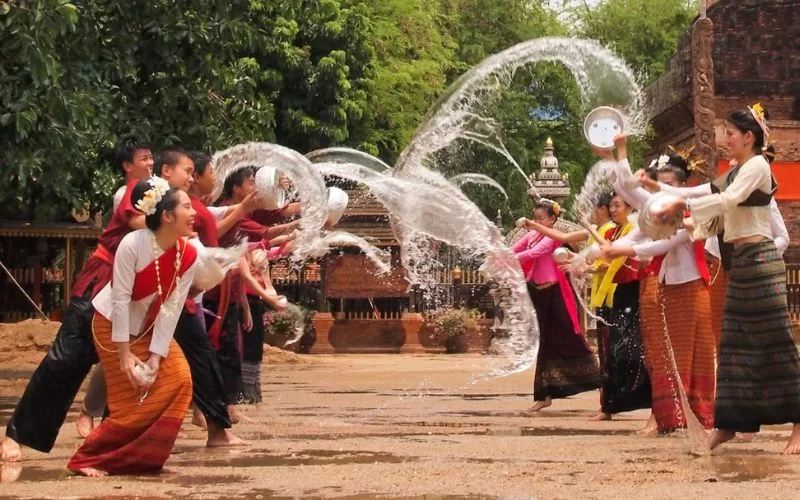 Rituals, encounters and simple moments reveal the deep soul of Vientiane
Where to eat in Vientiane? Flavors of Laos
Laotian gastronomy is an explosion of flavors: a subtle balance between the bitterness of wild herbs, the spiciness of chili, and the freshness of lime. Vientiane is the ideal place to discover this rich and little-known cuisine.
The essentials of Laotian cuisine
During your stopover, be sure to taste the pillars of local cuisine:
- Laap (National Salad): This emblematic dish, made from finely chopped meat or fish, is seasoned with mint, coriander, and toasted rice powder. It's a concentrate of absolute freshness.
- Tam Mak Hoong: The famous pounded green papaya salad. Be careful, it can be very spicy! It perfectly embodies the bold character of the country's flavors.
- Khao Niaw (Sticky Rice): The true base of every meal, it is eaten with the fingers. Presented in its small bamboo basket (thip khao), it is the indispensable companion to all your dishes.
- Herbal soups and broths: Taste Khao Piak Sen, a comforting noodle soup, or stews made with local herbs picked fresh from the markets that very morning.
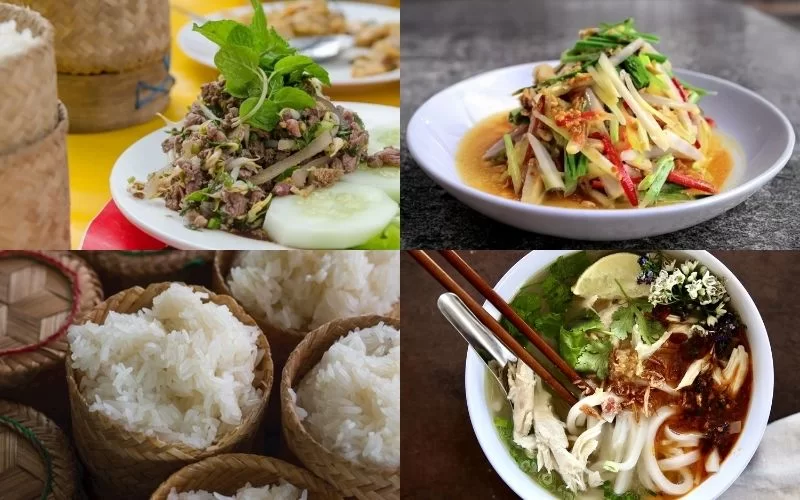
Gourmet tip: Don't hesitate to accompany your meal with a cold Beerlao, the national pride, while watching the sun disappear behind the Mekong.
Local restaurants vs. tourist restaurants in Vientiane
In Vientiane, the choice of restaurant greatly influences the culinary experience. Here are the differences between local and tourist restaurants.
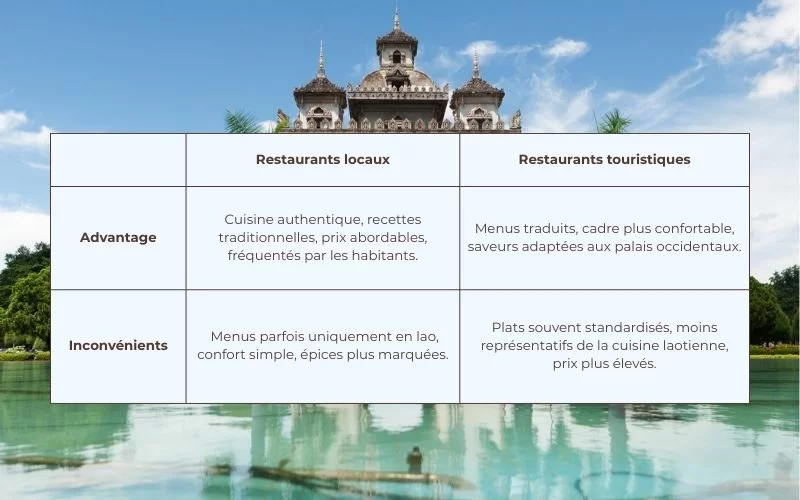
Where to eat like a local without risk?
Prioritize establishments frequented by local families, with a good turnover of customers, visible kitchens, and dishes prepared to order. Markets and small neighborhood restaurants are ideal for tasting Laotian cuisine with simplicity and safety, especially when recommended by local actors or integrated into guided tours.
A fair balance between authenticity and comfort allows you to savor Vientiane without unpleasant surprises.
>> Our gourmet tours in Southeast Asia
Where to stay in Vientiane?
Choosing your base in Vientiane is essential to immerse yourself in the gentle way of life of the capital. Far from impersonal complexes, the city is full of architectural gems offering an intimate experience.
The neighborhoods we recommend
Depending on your desires, several atmospheres are available to you:
- The City Center (Nam Phou Fountain Quarter): This is the historic heart. Ideal for those who want to do everything on foot, be close to the best cafes, bakeries, and main temples like Wat Si Saket.
- The Mekong Riverfront: To enjoy the fresh river air and the lively night market. This is the liveliest area in the evening, perfect for watching the sunset from your balcony.
- Quiet neighborhoods near temples: A little set back from the main thoroughfare, these residential areas offer absolute silence, only broken by the sound of gongs from the monasteries in the early morning.
Prioritizing charm and authenticity
We have selected for you human-sized establishments that tell a story:
- Boutique hotels: Often nestled in carefully restored old colonial villas, they combine modern comfort with old-world elegance. The service is personalized and attentive.
- Charming guesthouses: Run by Laotian families or country enthusiasts, they offer a warm "home away from home" atmosphere. This is the ideal choice for exchanging and receiving valuable advice on local life.
How to get to Vientiane from France?
Reaching the Sandalwood City from France has become very simple, although there are no direct flights yet. This is an opportunity to start your journey with a stopover in one of Asia's major metropolises.
The air journey: Paris – Vientiane
Most travelers prefer a flight departing from Paris-Charles de Gaulle (CDG). The journey takes an average of 14 to 17 hours, depending on the duration of your layover.
The most frequent layovers
Several renowned airlines serve Vientiane with a single layover, offering an excellent level of comfort:
- Via Bangkok (Thailand): Certainly the fastest and most flexible option. Numerous daily connections link Bangkok to Vientiane in just 1 hour of flight.
- Via Hanoi or Ho Chi Minh City (Vietnam): Ideal if you are considering an Indochina combination. Vietnam Airlines offers smooth connections to the Laotian capital.
- Via Seoul (South Korea): An increasingly popular alternative for the quality of service of Korean airlines.
Arrival at Wattay International Airport
Your journey will truly end at Vientiane International Airport (VTE). Located just 3 km from the city center, it is one of the few airports in the world where you feel the serenity of the country as soon as you step off the plane.
Typic Travel welcome: To avoid any stress upon arrival, our tours systematically include a personalized welcome. As soon as you pass immigration, your private French-speaking driver will be waiting to take you directly to your charming hotel, allowing you to begin your immersion in complete tranquility.
When to go to Vientiane? Climate & weather
Laos lives to the rhythm of a tropical monsoon climate, marked by two distinct seasons. To fully enjoy bike rides and open-air temples, choosing the right period is strategic.
The two faces of the Laotian climate
- The dry season (December – April): This is the most predictable period. The sky is generally azure blue and rain is almost non-existent. It is the ideal time to explore the city and its surroundings without constraint.
- The rainy season (May – November): Showers, often brief but intense, generally occur at the end of the day. While the landscapes become incredibly green, humidity and heat can be more challenging for urban visits.
The best period for European travelers
For optimal comfort, we particularly recommend two key times:
- From December to February (ideal): This is the most pleasant period. Temperatures are mild and dry (between 20°C and 28°C), perfect for those who fear strong tropical heat. Evenings by the Mekong are deliciously cool.
- In April (for cultural immersion): Although it is the hottest month, it is also the month of Lao New Year (Boun Pi Mai). It is a unique experience to live if you wish to participate in giant water battles and discover the fervor of traditional festivals.
Typic Travel tip: If you are traveling between November and February, remember to bring a light sweater for evenings on the terrace by the river, as the breeze can be surprising once the sun sets.
Vientiane, an invitation to an inner journey
More than just a technical stopover, Vientiane is the necessary prelude to any successful immersion in the land of a million elephants. By choosing to stop there, you choose a journey that prioritizes depth over speed, and emotion over simple tourist consumption.
Between its secular temples, its vibrant gastronomy and the natural benevolence of its inhabitants, the Laotian capital teaches you a valuable lesson: happiness lies in simplicity and respect for time.
Because an authentic trip cannot be improvised, Typic Travel puts its field expertise and passion for Laos at your service. We don't just book hotels, we weave an itinerary that suits you:
- French-speaking expertise for fluid and serene communication.
- Human encounters carefully selected for a real immersion.
- A tailor-made pace that respects your thirst for discovery and your need for rest.
Don't just visit Laos, live it.
Contact our Typic Travel experts today to design your tailor-made trip to Vientiane and beyond.