
Vietnam National Day 2026: History, Traditions, Events & Travel Guide
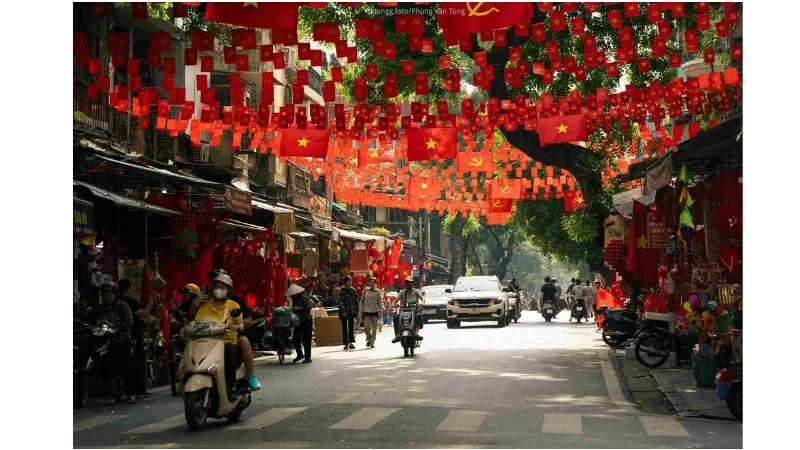
In the days leading up to September 2, one sight becomes impossible to miss across Vietnam: red flags with golden stars lining streets, homes and public squares.
September 2 marks the moment when President Ho Chi Minh proclaimed the independence of Vietnam at Ba Dinh Square in Hanoi in 1945, announcing the birth of the Democratic Republic of Vietnam.
In 2026, Vietnam celebrates the 81st anniversary of National Day, officially commemorated on September 2, 2026. Civil servants and public employees will have a five-day holiday from August 29 to September 2, although holiday arrangements for employees in the private sector may differ depending on their employers.
For travelers, visiting Vietnam during this period offers something unusual: an opportunity not simply to see the country, but to watch history, national identity and everyday life come together in public.
This guide explains the history behind Vietnam National Day, the traditions and symbols associated with September 2, the best places to experience the celebrations, the confirmed 2026 event schedule and everything travelers should know before joining the festivities.
Table of contents
- What Is Vietnam National Day?
- The History Behind Vietnam National Day
- Why Should You Visit Vietnam During the September 2nd Holiday?
- Traditions and Symbols of Vietnam National Day
- Best Places to Experience Vietnam Independence Day
- Vietnam National Day 2026 Event Schedule
- Travel Tips for Vietnam National Day
- Is Vietnam Worth Visiting During National Day?
- Frequently Asked Questions About Vietnam National Day
- When is Vietnam National Day?
- Why does Vietnam celebrate September 2?
- Is Vietnam National Day the same as Vietnam Independence Day?
- How long is the Vietnam National Day holiday in 2026?
- Are there fireworks in Vietnam on September 2, 2026?
- Will there be a military parade in Hanoi in 2026?
- Where is the best place to celebrate Vietnam National Day?
- Experience Vietnam Beyond the Ordinary
What Is Vietnam National Day?
Vietnam National Day is celebrated every year on September 2.
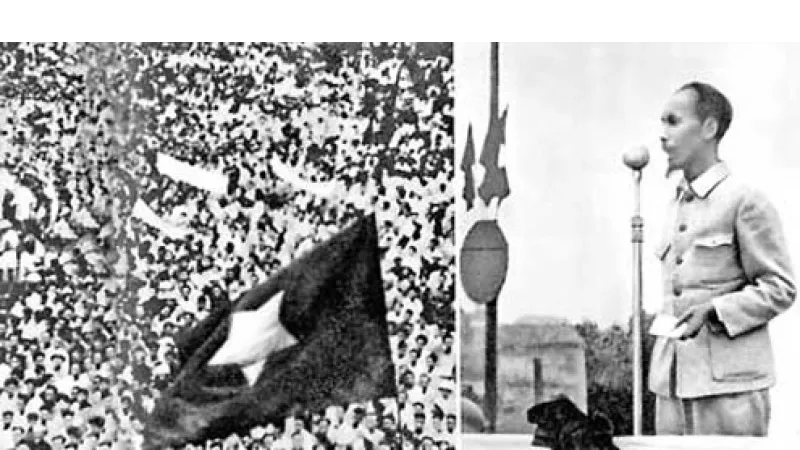
The date commemorates September 2, 1945, when President Ho Chi Minh stood before a vast crowd at Ba Dinh Square in Hanoi and read the Declaration of Independence, proclaiming the establishment of the Democratic Republic of Vietnam.
International travelers sometimes search for the occasion as Vietnam Independence Day, while in Vietnamese it is officially known as Quốc khánh 2/9. You may also hear the more emotional expression Tết Độc lập, literally meaning the “Independence Festival” or “Independence Holiday.” To understand why September 2 carries such weight in Vietnam today, it is necessary to go further back than the events of 1945.
The History Behind Vietnam National Day
Vietnam Before 1945: Decades of Colonial Rule
For much of the period preceding World War II, Vietnam was under French colonial rule as part of French Indochina.
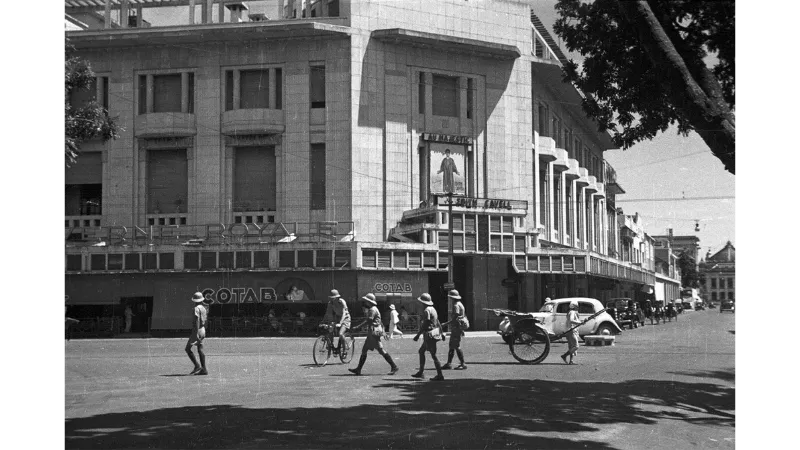
Colonial administration transformed the country's political and economic structure while Vietnamese resistance movements repeatedly emerged in different forms. By the early twentieth century, independence had become a central objective for a growing number of political organizations and nationalist movements. The situation changed dramatically during World War II.
After France fell to Nazi Germany in 1940, Japanese forces moved into French Indochina. For several years, Japanese military power existed alongside the French colonial administration, creating an unusual situation in which Vietnam was effectively subjected to overlapping French and Japanese control.
On March 9, 1945, Japan overthrew the remaining French colonial administration in Indochina and assumed direct control. Vietnam was now approaching one of the most turbulent moments in its modern history.
The devastating famine of 1944–1945
The famine did not have a single cause. Wartime economic disruption, food requisitions, problems transporting rice from southern Vietnam, damage to transport infrastructure, natural disasters and failures of both colonial and wartime administration all contributed.
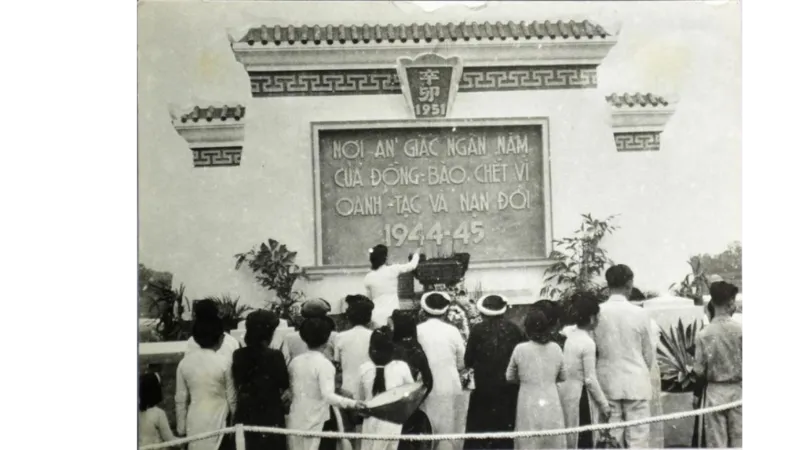
Estimates of the death toll vary. Vietnamese historical narratives have often cited as many as two million deaths, while modern academic research has estimated approximately one million or more. What is clear is that the famine caused enormous social suffering and intensified political discontent during the final months of World War II. It also helped strengthen popular support for revolutionary movements, particularly the Viet Minh, which organized resistance against Japanese occupation and campaigned for national independence.
Japan Surrenders and a Political Vacuum Opens
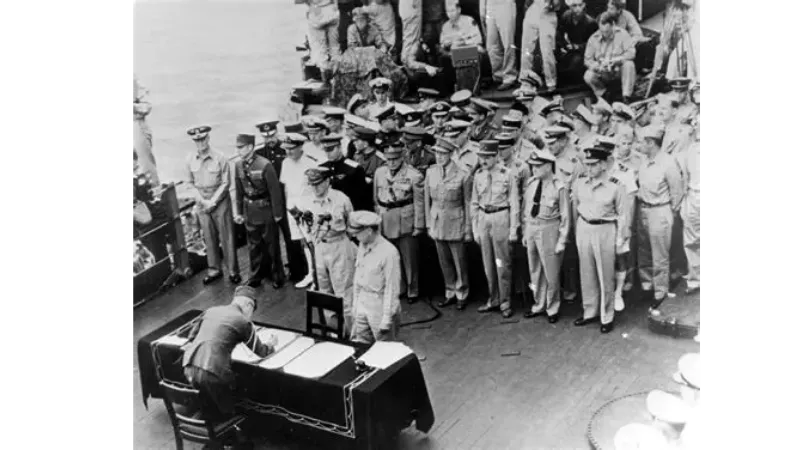
On August 15, 1945, Japan announced its surrender to the Allied powers. For Vietnam, this created an extraordinary political opening. Japanese authority was collapsing, the French colonial administration had already been dismantled by the Japanese coup in March, and Allied forces had not yet arrived in significant numbers to disarm Japanese troops. Vietnamese revolutionary leaders saw the moment as a unique opportunity to seize political power.
From August 13 to 15, revolutionary leaders meeting at Tan Trao in northern Vietnam decided to launch a nationwide uprising. On August 16, the National Congress at Tan Trao approved the general uprising and selected the red flag with a golden star as the national flag. This became known as the August Revolution — Cách mạng Tháng Tám.
The August Revolution: A Country Changes in Days
Events moved extremely quickly.
August 19 – Hanoi
On August 19, 1945, revolutionary forces and large crowds took control of key government institutions in Hanoi. The success of the uprising in the capital became one of the decisive moments of the August Revolution.
August 23 – Hue
Four days later, power was taken in Hue, then the imperial capital of the Nguyen Dynasty.
August 25 – Saigon
On August 25, the revolutionary movement gained control in Saigon, today's Ho Chi Minh City. Within roughly two weeks, revolutionary administrations had been established across much of the country.
August 30 – Emperor Bao Dai Abdicates
Another symbolic turning point came in Hue. On August 30, 1945, Emperor Bao Dai, the last emperor of the Nguyen Dynasty, formally abdicated. Representatives of the provisional government received the imperial seal and sword in front of a large crowd. His abdication effectively brought centuries of Vietnamese monarchy to an end.
Only three days later, attention turned to Hanoi.
September 2, 1945: The Declaration at Ba Dinh Square
On the afternoon of September 2, 1945, an enormous crowd gathered at Ba Dinh Square in Hanoi. President Ho Chi Minh appeared before the public on behalf of the provisional government and read the Declaration of Independence. The document drew on ideas of universal rights associated with both the American Declaration of Independence and the French Declaration of the Rights of Man and of the Citizen before asserting Vietnam's own right to independence.
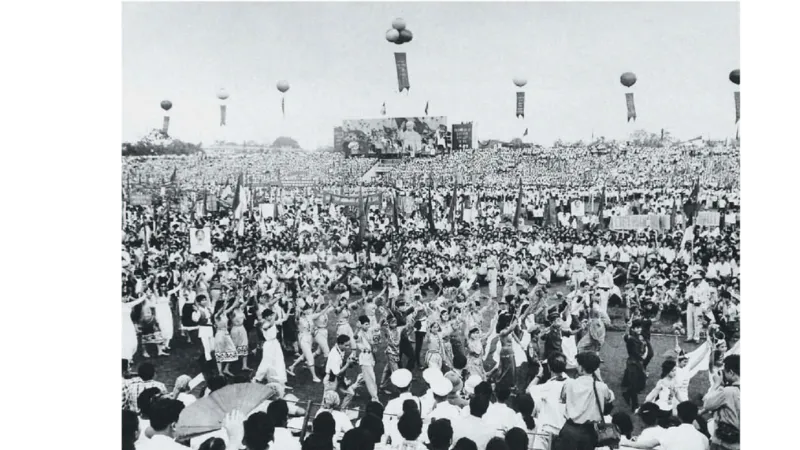
Its conclusion declared Vietnam a free and independent country and expressed the determination of the Vietnamese people to defend that independence. The declaration announced the birth of the Democratic Republic of Vietnam. That is why September 2 became Vietnam's National Day.
What Did September 2 Change for Vietnam?
The August Revolution and Declaration of Independence ended the existing colonial-era political order, brought the Nguyen monarchy to an end and established a new Vietnamese state. For many Vietnamese, 1945 therefore marks the beginning of a new era centered on national sovereignty and self-determination.
However, September 2, 1945 did not mean that conflict in Vietnam suddenly ended. France attempted to re-establish its position in Indochina after World War II. Tensions and armed confrontations followed, eventually developing into the First Indochina War, with full-scale conflict generally dated from late 1946. This distinction is important for international visitors.
Vietnam National Day commemorates the declaration and establishment of an independent Vietnamese state — not the end of every subsequent war fought on Vietnamese territory.
That broader historical context helps explain why September 2 remains one of the most emotionally significant dates on the Vietnamese calendar.
Why Should You Visit Vietnam During the September 2nd Holiday?
For international travelers, National Day offers an experience that is difficult to reproduce during an ordinary week in Vietnam.
1. See a Side of Vietnam That Tourism Alone Cannot Show You
Travelers usually encounter Vietnam through landscapes, food, historic monuments and local communities. National Day adds another layer. You see how Vietnamese people interact with their own history. Families visit monuments. Young people take photographs with national flags. Public spaces become gathering points. Revolutionary songs mix with modern music. Historic sites that may feel quiet on an ordinary morning suddenly have greater emotional significance.
It turns places that you may already know — Ba Dinh Square, Hoan Kiem Lake, Hue Imperial City or Nguyen Hue Walking Street — into part of a living national celebration.
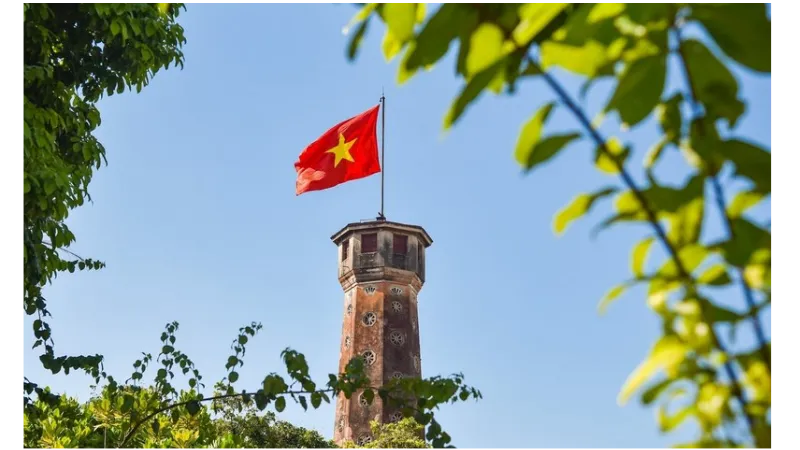
2. Experience Cities Completely Transformed by Red and Gold
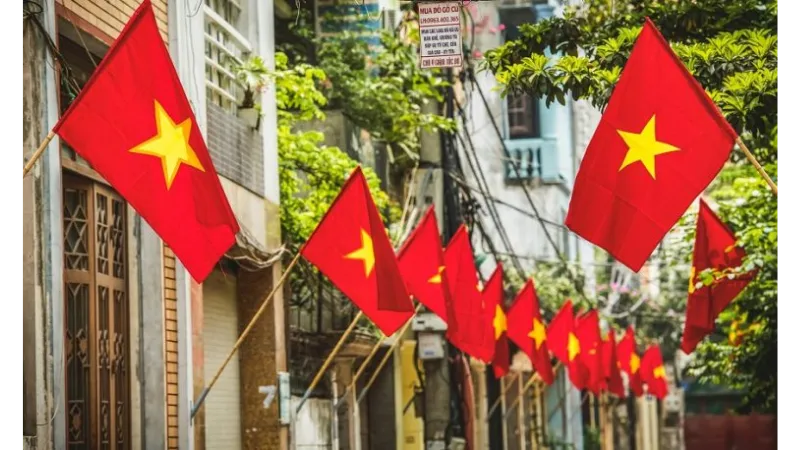
In the days before September 2, national flags appear throughout Vietnam. Hanoi has officially installed coordinated displays of flags, banners and visual decorations across major streets and central areas for the 2026 anniversary. Ho Chi Minh City's central streets are similarly decorated with flags, panels and red-and-yellow displays. But the transformation is not limited to government buildings. Flags can appear outside ordinary homes, small alleyways, cafés, local shops, apartment buildings and restaurants.
For photographers, it can be one of the most visually distinctive periods of the year.
3. Join Public Celebrations, Performances and Fireworks
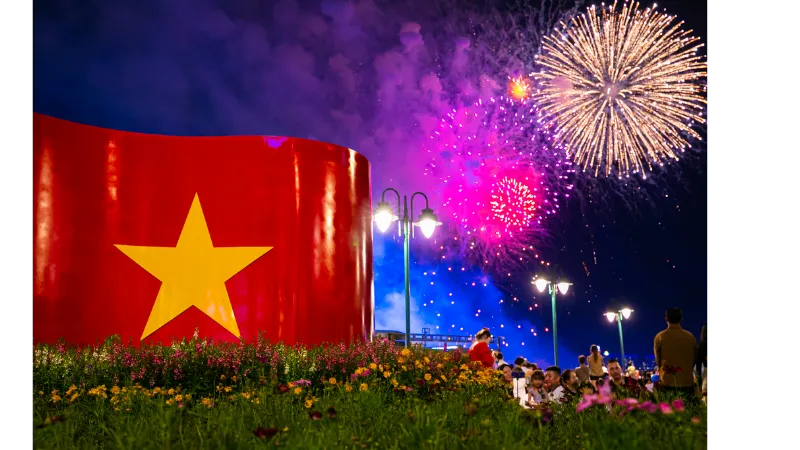
National Day celebrations are not concentrated in a single venue. Major cities organize cultural performances, exhibitions, concerts and fireworks, while smaller communities may host their own music, sports or cultural activities.
In 2026, Hanoi and Ho Chi Minh City have both confirmed major fireworks displays on the evening of September 2. Hue, Da Nang and Can Tho also have special tourism and cultural programs taking place during the holiday period.
4. Discover Vietnamese Culture Beyond the Famous Attractions
September 2 is also a period when destinations introduce local cultural programs designed for both residents and visitors.
- In Hue, for example, the 2026 holiday period includes music, traditional boat racing and heritage-related events.
- In Can Tho, National Day coincides with a large food week featuring more than 200 booths representing the culinary culture of the Mekong Delta and other regions.
- In the mountains, celebrations may look completely different, combining the Independence holiday with ethnic markets, local dress and community festivals.
So there is no single way to “celebrate National Day” in Vietnam. The experience changes as you travel from one region to another.
Traditions and Symbols of Vietnam National Day
The Red Flag With a Golden Star
Nothing represents National Day more visibly than the Vietnamese national flag.
Vietnam's flag has a red background with a five-pointed golden star in the center. It was adopted as a national symbol during the revolutionary period and was approved at the Tan Trao National Congress in August 1945. The flag is commonly understood as a symbol of revolution, independence and national unity, with the five points of the star historically associated with different sections of Vietnamese society united within the nation.
During National Day, visitors may see more Vietnamese flags in a few days than during the rest of their trip combined. They hang from balconies. They stretch across narrow residential streets. They appear on bicycles, motorbikes, T-shirts and headbands. Entire cafés can become red-and-yellow photo sets.
This is one reason September 2 is such a visually memorable time to travel through Vietnam.
Visiting Historical and Memorial Sites
National Day is also a time for remembrance. People visit museums, monuments, memorials and places connected with modern Vietnamese history.
- In Hanoi, that may mean Ba Dinh Square, the Ho Chi Minh complex or historical museums.
- In Hue, the Imperial City provides another perspective because of the abdication of Emperor Bao Dai during the August Revolution.
Historical attractions therefore become more than sightseeing stops during this period — their stories connect directly with the events being commemorated.
Cultural Performances, Exhibitions and Fireworks
Modern National Day celebrations include a broad range of public activities:
- concerts, traditional theatre, art performances, exhibitions, sporting events and fireworks.
- The scale changes from year to year.
- Anniversary years ending in 0 or 5 may involve especially large national ceremonies. The 80th anniversary in 2025, for example, featured the major A80 military parade in Hanoi.
Travelers should not assume that the same parade takes place every September 2.
For 2026, the official schedules reviewed as of August 26 focus on fireworks, artistic performances, tourism activities and local cultural programs rather than another A80-scale national parade.
Best Places to Experience Vietnam Independence Day
Northern Vietnam
1. Hanoi – The Most Historically Important Place to Be
If your main reason for traveling during National Day is to understand the history of September 2, Hanoi is the strongest choice.
This is where the Declaration of Independence was announced in 1945, and many of the country's major commemorative activities remain centered in the capital.
Ba Dinh Square
Start here.
Ba Dinh is the symbolic heart of National Day because it was the location of Ho Chi Minh's declaration on September 2, 1945.
Arriving early in the morning allows you to experience the square before the city becomes busier.
Ho Chi Minh Mausoleum and the Presidential Area
The surrounding complex gives visitors additional historical context about Ho Chi Minh and twentieth-century Vietnam.
Expect National Day to be considerably busier than an ordinary day.
Hoan Kiem Lake
For a more festive atmosphere, move toward central Hanoi.
Hoan Kiem is surrounded by decorated streets, cafés, pedestrian spaces and public gathering areas.
In 2026, the area will host both artistic performances and two of Hanoi's five fireworks positions.
Hanoi Old Quarter
The Old Quarter is less about an official ceremony and more about atmosphere.
Narrow streets decorated with rows of national flags make the area particularly photogenic, while cafés and restaurants become part of the celebration.
Special for 2026: Hanoi has announced that fee-charging scenic sites, historical relics and cultural sites under the city's management will offer free admission on September 2. Travelers should still check the individual site's operating schedule before visiting.
Discover more about Hanoi tours here!
2. Tan Trao, Tuyen Quang – Go Back to the Beginning of the August Revolution
Travelers interested in history beyond September 2 itself should consider Tan Trao. The area played a central role immediately before the August Revolution.
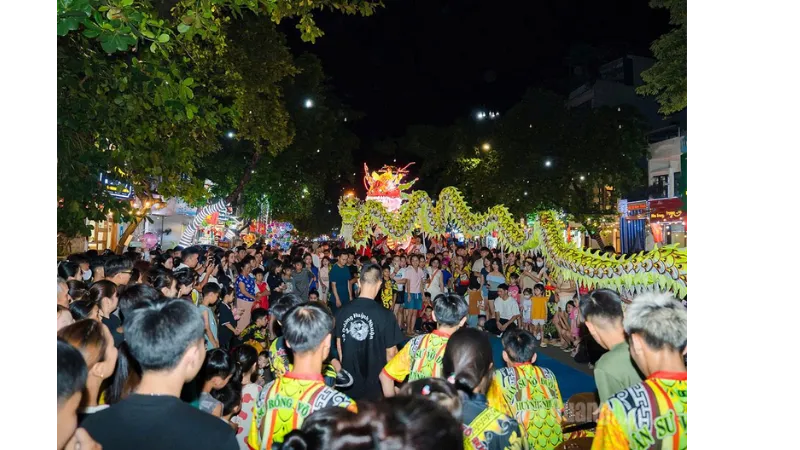
In August 1945, revolutionary meetings here approved the nationwide uprising, established the National Liberation Committee and confirmed the red flag with a golden star before political power shifted to Hanoi.
Tan Trao offers a quieter and more contextual historical experience than the large-scale celebrations in Hanoi.
3. Sa Pa and Fansipan – A Different Kind of National Day
For travelers who want landscapes alongside the celebration, Fansipan offers a very different atmosphere.
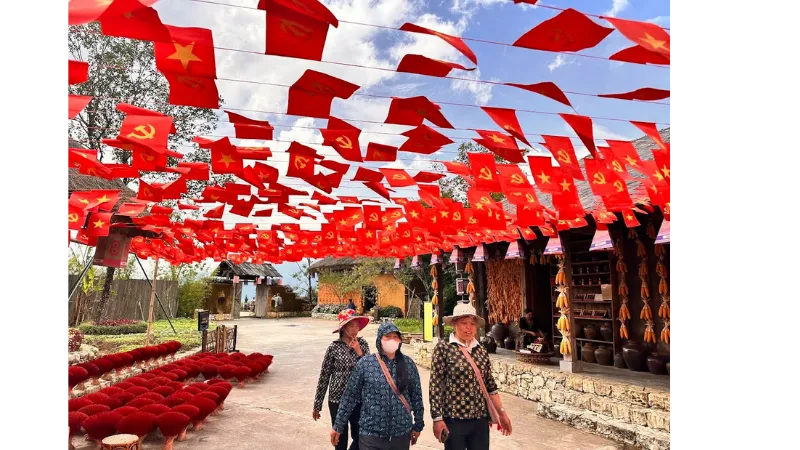
During the 2026 National Day period, the destination is decorated with flags and is organizing a ceremonial flag-raising event on September 2, alongside cultural activities linked with ethnic communities in the region.
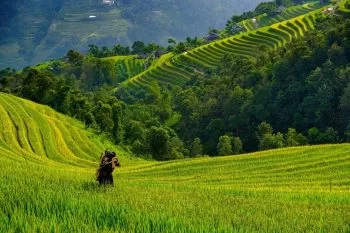
Late August and early September also coincide with the beginning of the spectacular rice-harvest season in parts of northwestern Vietnam.
>> You may like: Sapa: Complete Guide to the Roof of Indochina – Rice Terraces, Ethnic Groups and Peaks
Central Vietnam
4. Hue – Where the Last Emperor Abdicated
Hue occupies an extraordinary place in the story of August 1945. This was the imperial capital of the Nguyen Dynasty and the city where Emperor Bao Dai formally abdicated on August 30, 1945, just days before the Declaration of Independence in Hanoi.
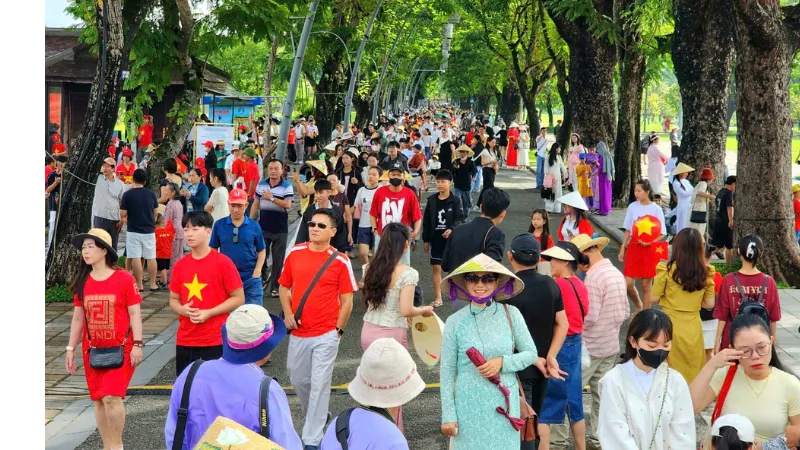
For travelers who want to understand the transition from monarchy to the new political era, Hue is one of the most meaningful places in the country. Walk through the Imperial City and Ngo Mon Gate, then connect what you see with the events that unfolded here 81 years ago.
Hue also has one of the strongest confirmed cultural programs for the 2026 holiday. Highlights include the Hue Wonderverse Music Fest from August 30 to September 1, an artistic celebration on Hai Ba Trung Walking Street and the 37th Hue Traditional Boat Race on the Perfume River on September 2. Vietnamese citizens also receive free admission to sites within the Complex of Hue Monuments on September 2.
5. Da Nang – Celebrate Beside the Han River
Da Nang offers a more contemporary version of the National Day experience.
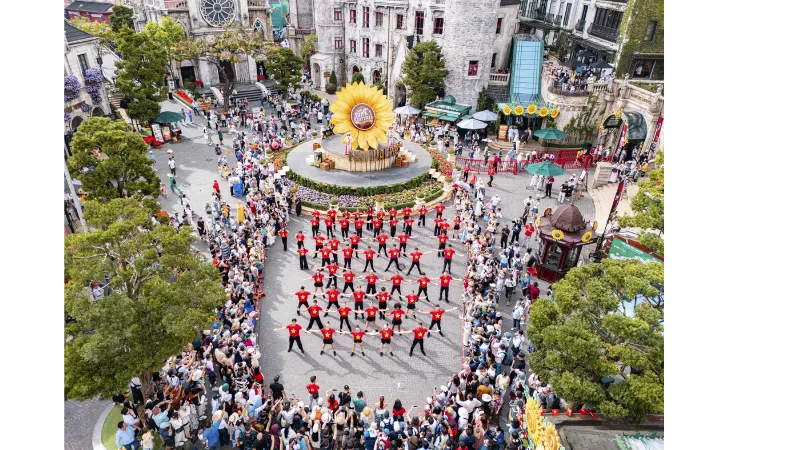
The riverside center is lively at night, while attractions and tourism areas are decorated for the holiday. One confirmed highlight in 2026 is the Dragon Bridge fire-and-water show at 9:00 PM every night from August 28 through September 2, giving travelers six consecutive opportunities to see the performance. Combine it with an evening walk along the Han River, local seafood or a trip to the beach.
>>You may like: Absolute must-see sites in Central Vietnam
Southern Vietnam
6. Ho Chi Minh City – The Biggest Southern Celebration
For travelers in southern Vietnam, Ho Chi Minh City is the obvious center of National Day activity. The city has confirmed artistic performances, exhibitions and fireworks across several districts and urban centers.
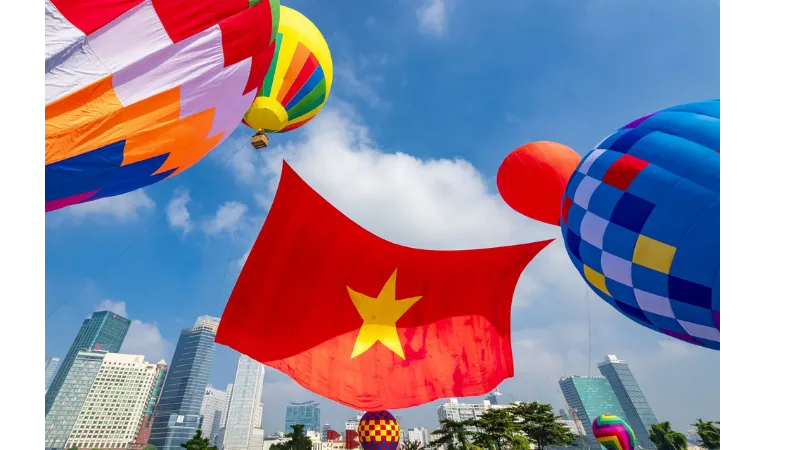
Nguyen Hue Walking Street
This is one of the best places to experience the crowds and public atmosphere.
A major artistic program is scheduled here at 7:30 PM on September 2, before the fireworks begin later in the evening.
Saigon River
The area around the Saigon River is particularly attractive at night.
One of the city's high-altitude fireworks displays will take place near the Saigon River Tunnel entrance in An Khanh Ward.
Central Ho Chi Minh City
Dong Khoi, Le Loi and surrounding streets are already being decorated with national flags and celebratory installations for the 2026 anniversary.
Visitors interested in history can combine the celebrations with the city's museums and historical buildings for a broader understanding of Vietnam's twentieth century.
7. Can Tho – Celebrate Through Mekong Food Culture
National Day does not have to mean crowds around a fireworks display. In the Mekong Delta, Can Tho offers an especially appealing option for food-focused travelers.
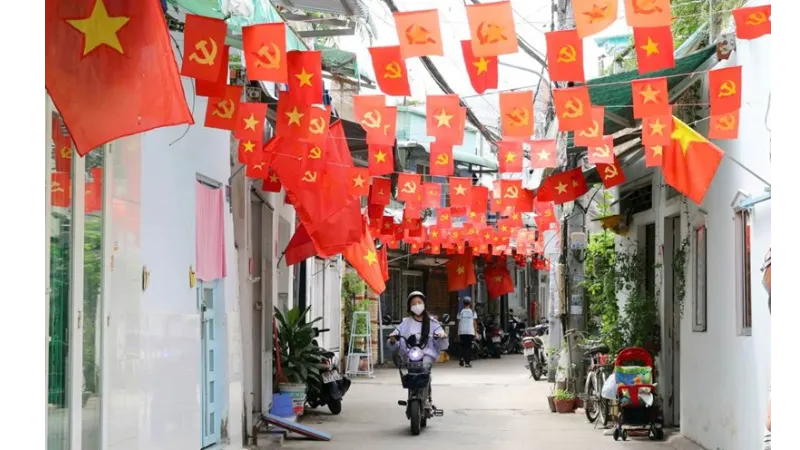
The Can Tho Food Week 2026 is scheduled from August 28 to September 2 at Song Hau Park, with more than 200 booths dedicated to food, regional products, tourism and cultural experiences. The opening is scheduled for 7:00 PM on August 28, with performances continuing throughout the event.
It is an excellent example of how the National Day holiday is celebrated differently across Vietnam's regions.
Vietnam National Day 2026 Event Schedule
The following schedule includes selected traveler-friendly events officially announced or reported by local authorities as of August 26, 2026. Programs may be adjusted because of weather, security or operational conditions, so always reconfirm locally before attending.
|
Date |
Destination |
Event |
|
Aug 28–Sep 2 |
Da Nang |
Dragon Bridge fire & water show at 9:00 PM nightly |
|
Aug 28–Sep 2 |
Can Tho |
Can Tho Food Week at Song Hau Park; opening 7:00 PM Aug 28 |
|
Aug 29–30 |
Hue |
A Luoi Highland Market – Independence Festival |
|
Aug 30 |
Hue |
National Day artistic program at Hai Ba Trung Walking Street |
|
Aug 30–Sep 1 |
Hue |
Hue Wonderverse Music Fest 2026 |
|
Aug 31 |
Hanoi |
Cultural performances in several communities including Bat Trang, Dan Phuong and others |
|
Sep 1–2 |
Hanoi |
Large artistic performances near Den Ba Kieu Garden / Hoan Kiem area |
|
Sep 2 |
Hue |
37th Hue Traditional Boat Race on the Perfume River |
|
Sep 2, 7:30 PM |
Ho Chi Minh City |
Major artistic programs at Nguyen Hue Walking Street, Bình Dương central park and Ba Ria Square |
|
Sep 2, 9:00–9:15 PM |
Hanoi |
Fireworks at 5 locations |
|
Sep 2, 9:00–9:15 PM |
Ho Chi Minh City |
Fireworks at 7 locations |
|
Sep 2, 9:00 PM |
Da Nang |
Final National Day Dragon Bridge fire-and-water performance |
Hanoi's five confirmed fireworks areas are around Hoan Kiem Lake, Thong Nhat Park, the F1/My Dinh National Sports Complex area and Lac Long Quan Garden, with two firing positions in the Hoan Kiem area. The displays run for approximately 15 minutes.
Ho Chi Minh City has confirmed seven fireworks sites, including three combining high- and low-altitude fireworks: the Saigon River Tunnel area, the Bình Dương new urban center and Tam Thang Tower Square in Vung Tau. Four additional low-altitude sites include Dam Sen Cultural Park, Saigon Marina IFC, Nha Be and Ba Ria Square.
Travel Tips for Vietnam National Day
Book Domestic Transport Early
Vietnam's 2026 National Day creates a five-day break for civil servants and public employees from August 29 to September 2, encouraging a major wave of domestic travel. Government authorities have warned that traffic volumes are expected to rise significantly on expressways, national highways and gateways to major cities. Flights, trains and popular intercity buses can therefore become much busier than usual. If you are traveling Hanoi–Da Nang, Hanoi–Hue, Ho Chi Minh City–Da Nang or to popular beach destinations, book ahead.
Reserve Hotels in Celebration Areas Before the Last Minute
Accommodation close to:
- Hoan Kiem Lake in Hanoi,
- central Hue,
- the Han River in Da Nang,
- Nguyen Hue in Ho Chi Minh City,
is particularly convenient during the celebrations. But convenience comes with demand. Staying within walking distance can be worth paying slightly more because traffic around large evening events may be slow.
Expect Road Closures and Heavy Traffic
- Large gatherings, fireworks and cultural programs often require temporary traffic restrictions.
- Do not plan an airport transfer immediately after a major fireworks display if you can avoid it.
- For central Hanoi or Ho Chi Minh City, walking or public transport can sometimes be more practical than trying to call a taxi from the middle of a huge crowd.
Arrive Early for Fireworks
The fireworks may begin at 9:00 PM, but arriving at 8:55 PM is a bad strategy. Popular viewing areas fill well before the start. Choose your viewing location in advance, have dinner nearby and then walk to your preferred area. Avoid standing in traffic lanes or blocking entrances to homes and businesses.
Check Opening Hours Even When Attractions Are “Open”
National Day is a public holiday. Some museums and attractions may extend hours, organize special programs or offer free entry, while smaller businesses may close or adjust their schedule. Never assume ordinary Wednesday opening hours automatically apply on September 2.
Pack for Rain
September is still part of the rainy period in several regions of Vietnam. The national weather forecast issued for the 2026 holiday indicates possible showers and thunderstorms in Hanoi and northern Vietnam, particularly from August 31 to September 2. Southern Vietnam may also experience afternoon and evening showers or thunderstorms.
Carry: a lightweight raincoat, waterproof protection for your phone and comfortable shoes that can handle wet streets.
Do not let an umbrella be the only thing standing between you and a tropical downpour.
Be Respectful Around National Symbols and Ceremonies
For Vietnamese people, September 2 is a celebration, but it is also a serious historical commemoration. During flag-raising ceremonies or the national anthem, follow the behavior of the people around you. At memorials and historical sites, avoid treating solemn ceremonies purely as photo opportunities. Taking photographs is generally part of the experience, but awareness of context matters.
Is Vietnam Worth Visiting During National Day?
Yes — especially if culture and history are important to the way you travel.
There are disadvantages: Cities are busier. Domestic transport is in high demand. Some attractions become crowded. Traffic around major events can be difficult.
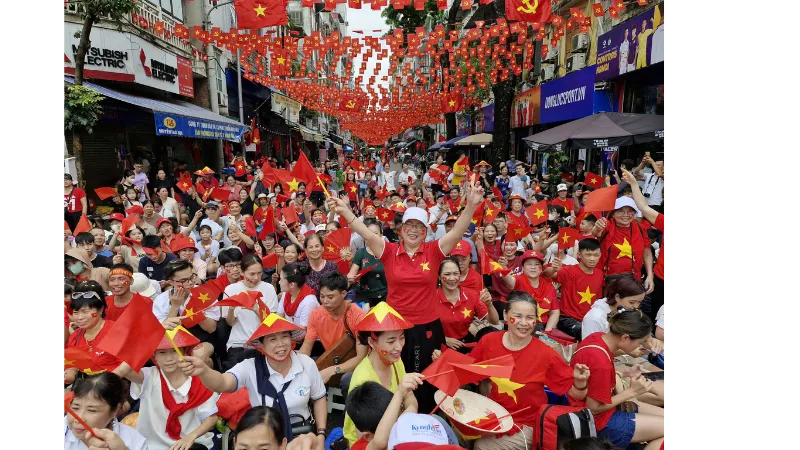
But National Day also gives travelers access to a version of Vietnam that is not present throughout the rest of the year.
You see the national flag not simply as an object in a museum but hanging outside thousands of homes. You see public squares become gathering places. You hear the national anthem in the same city where independence was declared. And you discover that September 2 is simultaneously historical, ceremonial, social and surprisingly contemporary.
For a first-time visitor, it can add an entirely new dimension to a journey through Vietnam. For a returning traveler, it may make familiar cities feel completely different.
Frequently Asked Questions About Vietnam National Day
When is Vietnam National Day?
Vietnam National Day is celebrated every year on September 2.
In 2026, September 2 marks the 81st anniversary of the Declaration of Independence in 1945.
Why does Vietnam celebrate September 2?
On September 2, 1945, President Ho Chi Minh read the Declaration of Independence at Ba Dinh Square in Hanoi and proclaimed the Democratic Republic of Vietnam.
Is Vietnam National Day the same as Vietnam Independence Day?
For international audiences, Vietnam Independence Day is commonly used to refer to the same September 2 holiday.
However, the official English term used by Vietnamese authorities is generally National Day.
How long is the Vietnam National Day holiday in 2026?
Civil servants and public employees receive a five-day break from August 29 through September 2, 2026.
Private-sector schedules may vary. Employers are required to provide the statutory National Day holiday but may determine the adjacent day and are encouraged to adopt favorable arrangements for employees.
Are there fireworks in Vietnam on September 2, 2026?
Yes.
Hanoi has confirmed fireworks at five firing locations, while Ho Chi Minh City has confirmed seven locations. Both cities currently schedule their displays from 9:00 PM to 9:15 PM on September 2.
Will there be a military parade in Hanoi in 2026?
The huge military parade many travelers may have seen online was held for the 80th anniversary in 2025.
As of August 26, the official Hanoi program reviewed for 2026 announces fireworks, cultural performances, tourism activities and other celebrations, but no comparable A80-scale military parade has been announced.
Where is the best place to celebrate Vietnam National Day?
- For historical significance, choose Hanoi.
- For heritage and cultural events, Hue is particularly interesting.
- For a modern urban celebration, consider Ho Chi Minh City or Da Nang.
- For food and Mekong culture, Can Tho offers an excellent alternative.
Experience Vietnam Beyond the Ordinary
National Day tells a story that cannot be understood through monuments alone. It is a story written in Ba Dinh Square, in the Imperial City of Hue, in streets covered with red flags, in songs sung by several generations and in the way Vietnamese people continue to remember September 2 more than eight decades later.
Traveling through Vietnam during this period gives visitors the chance to understand not only where the country is today, but some of the history that shaped how it got here.
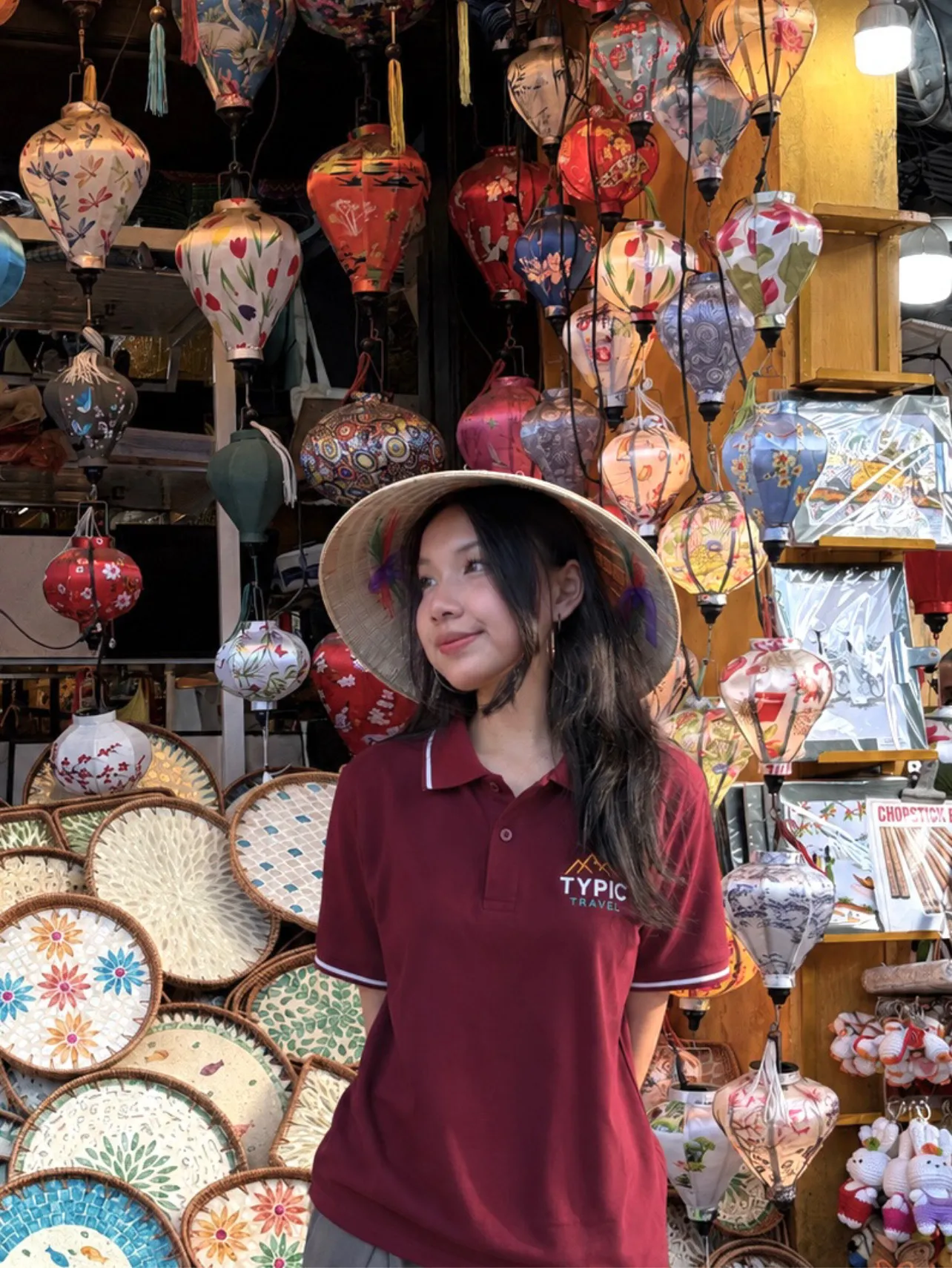
At Typic Travel, we design tailor-made journeys that go beyond simply moving from one attraction to another. With our local knowledge of Vietnam, we can help you combine the country's iconic destinations with historical sites, cultural experiences and authentic encounters that give each place greater meaning. Travel differently. Discover Vietnam through its history, its people and the moments that continue to shape the country today.
Travel with Typic Travel and experience Vietnam through local encounters, authentic traditions, and tailor-made journeys.