


Vietnam Weather in September: Where to Go & What to Expect
September is one of those months when Vietnam cannot be described with a single weather forecast. While northern Vietnam gradually moves away from the hot, rainy summer and into early autumn, Central Vietnam begins transitioning toward its wetter months. In the South, the monsoon is still active, bringing warm, humid days and frequent showers. So, is September a good time to visit Vietnam?

Table of contents
- Is September a Good Time to Visit Vietnam?
- Best Places to Visit Vietnam in September
- What About Da Nang, Hoi An and Phu Quoc?
- Early September vs. Late September: When Is Better?
- Suggested Vietnam Itineraries for September
- Vietnam September Travel Tips
- Frequently Asked Questions About Vietnam Weather in September
- Does it rain a lot in Vietnam in September?
- Does it rain all day in Vietnam in September?
- Which part of Vietnam has the best weather in September?
- Is Sapa good in September?
- Is Ha Long Bay worth visiting in September?
- Is September good for beaches in Vietnam?
- What should I wear in Vietnam in September?
- So, Should You Travel to Vietnam in September?
Vietnam Weather in September at a Glance
The weather in Vietnam in September varies considerably between the North, Central region and South.
|
Region |
Typical temperature |
Rain conditions |
Travel outlook |
|
Northern Vietnam |
Around 24–32°C in lowlands; cooler in the mountains |
Rain gradually decreases |
⭐⭐⭐⭐⭐ Excellent, especially later in the month |
|
Central Vietnam |
Around 24–32°C |
Rain becomes more frequent as the month progresses |
⭐⭐⭐ Good with a flexible plan |
|
Southern Vietnam |
Around 24–32°C |
Frequent tropical showers, often afternoon/evening |
⭐⭐⭐ Good for cultural trips |
|
Northern Highlands |
Cooler than Hanoi and the lowlands |
Occasional rain and mist |
⭐⭐⭐⭐⭐ Excellent for rice terraces and trekking |
For reference, long-term September climatology shows daytime highs in Hanoi around the low 30s°C, Da Nang around 30–32°C and Ho Chi Minh City around 32°C. Hanoi's chance of a wet day generally decreases during the month, while rainfall risk rises in Da Nang and remains high in Ho Chi Minh City.
A note for travelers visiting in September 2026
If you're planning a trip specifically for September 2026, there is one additional point worth knowing.
Vietnam's National Center for Hydro-Meteorological Forecasting said in its latest monthly outlook covering August 21 to September 20, 2026 that average temperatures nationwide may be around 0.5–1°C above the long-term average. Rainfall in Northern Vietnam and the Thanh Hoa–Quang Tri area may also be 10–30% above average during this period, while tropical cyclone activity is expected to remain broadly around normal levels.
This is a climate outlook rather than a day-by-day forecast, so travelers should still check local forecasts a few days before each destination.
Northern Vietnam Weather in September
For many travelers, Northern Vietnam is the strongest choice in September. The intense summer heat begins to ease, rainfall gradually becomes less frequent and the first signs of autumn appear in Hanoi and the northern mountains.
Hanoi
September marks the transition into one of Hanoi's most pleasant seasons.
Typical daytime temperatures remain warm, usually around 30–32°C, but mornings and evenings become more comfortable as the month progresses. Rain is still possible, particularly in early September, but climatological data show the probability of a wet day dropping considerably between the beginning and end of the month.
Vietnam Tourism identifies September to November as a particularly pleasant period in Hanoi, with cooler temperatures and generally clearer conditions than during the summer months.
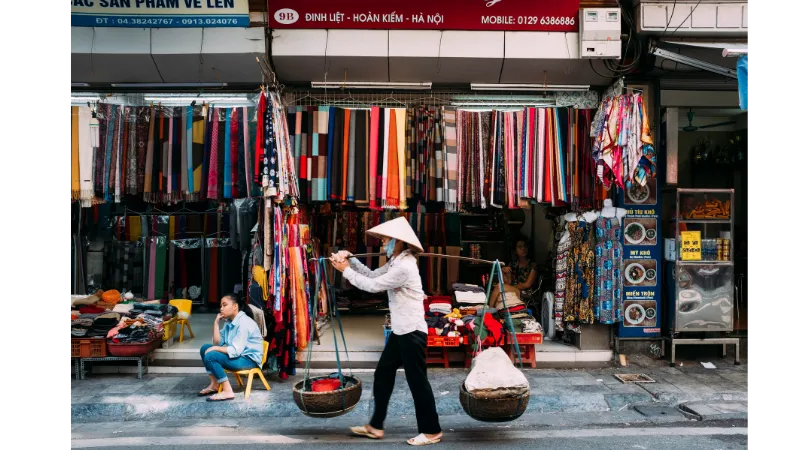
That makes September a great time for:
- Walking through Hanoi's Old Quarter
- Exploring Hoan Kiem Lake and the French Quarter
- Visiting temples, museums and local markets
- Trying seasonal Hanoi specialties
- Combining the capital with Ninh Binh, Sapa or Ha Long Bay
And there is something very local about Hanoi at this time of year: cốm, or young green rice, is closely associated with autumn in the capital.
>> You may like: Hanoi: Atmosphere, Climate and Life in the Vietnamese Capital
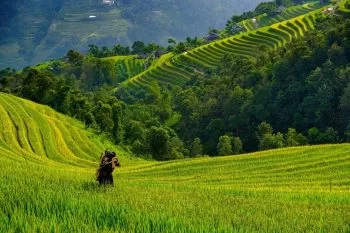
Sapa, Mu Cang Chai and the Northern Highlands. This is where Vietnam in September really stands out.
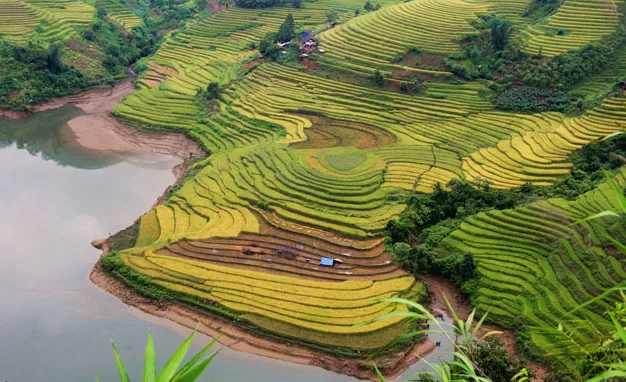
Across parts of the northern mountains, rice terraces begin changing from deep green to shades of yellow and gold as harvest season approaches.
Vietnam Tourism specifically lists September and October among the best months for seeing the golden rice terraces of Mu Cang Chai, while Sapa is also highly rewarding around the harvest period.
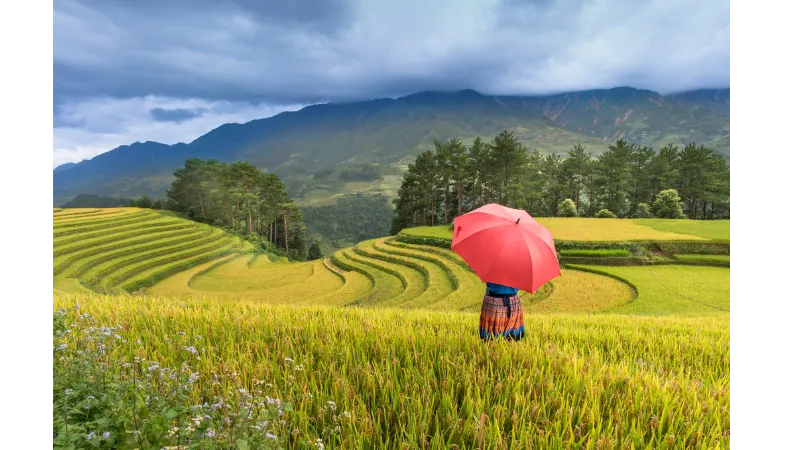
Mu Cang Chai, Sapa, Y Ty and Hoang Su Phi are particularly attractive for travelers interested in:
- Rice terrace photography
- Hiking and trekking
- Mountain scenery
- Ethnic minority villages
- Homestays
- Slow and nature-based travel
The exact timing of the harvest varies according to altitude, weather and local farming conditions, so the fields will not necessarily be golden everywhere at the same time.
Local tip: if rice terraces are a priority, avoid building your itinerary around a single village. A route covering several valleys gives you a better chance of catching the fields at their best.
>> You may like: What to pack in your suitcase for a trip to North Vietnam?
Ha Long Bay and Ninh Binh in September
September can also work very well for two of Northern Vietnam's most famous landscapes.
Ha Long Bay
Conditions around Ha Long Bay usually improve as summer ends.
Vietnam Tourism describes September to November as a period of mixed sunshine and clouds with warm-to-cool temperatures, making it one of the more attractive seasons for visiting the bay.

However, tropical storms remain possible.
If bad weather affects the Gulf of Tonkin, authorities may temporarily suspend cruises for safety reasons. For this reason, travelers should avoid planning an international flight immediately after their cruise and ideally leave some flexibility in the itinerary.
Discover more about Ha Long Bay tours here!
Ninh Binh
Ninh Binh is another strong September option.
Warm temperatures still make early starts advisable, but the landscape remains lush after the summer rains. Trang An, Tam Coc and the limestone mountains are easy to combine with Hanoi in a short Northern Vietnam route.

For travelers who want nature without committing to a multi-day mountain trek, Ninh Binh is one of the easiest alternatives.
Central Vietnam Weather in September
Central Vietnam is more complicated. September is a transition month, and conditions can change noticeably between early and late September.
Hue and Hoi An begin entering their wetter season, while rainfall and tropical-storm risk generally increase through autumn.
Vietnam Tourism notes that Hue's wet season runs from roughly September to February and that flooding can occasionally occur between September and November. Hoi An also becomes considerably wetter from September onward.
Da Nang and Hoi An
That does not mean you should automatically remove Da Nang or Hoi An from a September itinerary. You can still have sunny periods, particularly earlier in the month. But this is not the time to build a trip around guaranteed beach weather.
Climatological data for Da Nang show the probability of a wet day increasing substantially during September, which illustrates why flexibility becomes more important as the month progresses.
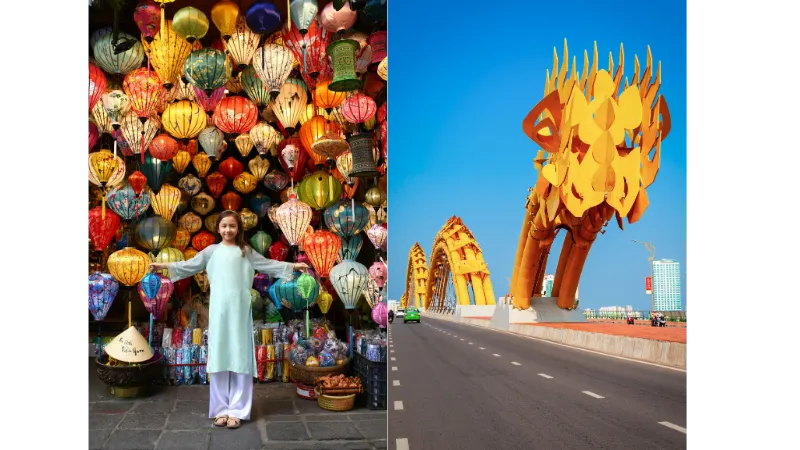
A good September itinerary here should combine outdoor and weather-proof experiences:
On clearer days:
My Khe Beach, Son Tra Peninsula, countryside cycling, My Son Sanctuary.
When it rains:
Hoi An Ancient Town, museums, cafés, cooking classes, lantern workshops, tailoring and local food experiences.
>>You may like: Absolute must-see sites in Central Vietnam
Southern Vietnam Weather in September
Southern Vietnam is still firmly within its rainy season in September.
Ho Chi Minh City typically stays warm at around 24–32°C, with high humidity and frequent rainfall. Long-term climatology shows September to be one of the wetter periods of the year in the city. But there is an important distinction:
A rainy day in Southern Vietnam does not necessarily mean a full day of rain. Many days include usable dry periods followed by heavier tropical showers later in the afternoon or evening. Vietnam Tourism describes Ho Chi Minh City's rainy season as generally lasting from May to November.
For sightseeing, this can still work perfectly well. Schedule major outdoor activities earlier in the day and keep museums, markets, cafés or spa time as backup options.
Mekong Delta
September is also an interesting time to explore the Mekong Delta.
The landscape is exceptionally green and waterways are full, giving travelers a strong sense of life along the river.

If your priority is local culture, markets, food and rural experiences rather than uninterrupted sunshine, the Mekong Delta remains a worthwhile addition to a Vietnam September travel itinerary.
>> You may like: North or South Vietnam: which region to choose?
Is September a Good Time to Visit Vietnam?
Yes — but it depends on what kind of trip you want.
September is particularly good for travelers who want:
- Golden rice terraces
- Northern mountain landscapes
- Hanoi in early autumn
- Fewer crowds than the summer holiday period
- Cultural sightseeing
- A flexible itinerary
- A mixture of cities, countryside and nature
September may be less suitable if your main goal is:
- Guaranteed sunshine every day
- A beach-only holiday
- A rigid itinerary with no room for weather changes
- Several consecutive days of sea excursions
In other words, September is not necessarily the easiest month to travel Vietnam — but it can be one of the most visually rewarding.
Best Places to Visit Vietnam in September
If weather is one of your main criteria, these are some of the best places to visit Vietnam in September.
1. Mu Cang Chai
Best for: Golden rice terraces, photography and mountain scenery.
September is one of Mu Cang Chai's signature seasons. Rice fields begin turning gold across the valleys, particularly as harvest approaches. Vietnam Tourism describes September and October as prime months for the area's famous terraces.
For landscape photographers, this is one of Vietnam's biggest seasonal highlights.
2. Sapa
Best for: Trekking, ethnic culture and mountain landscapes.
Sapa combines rice terraces with easy access to villages such as Lao Chai and Ta Van.
September is particularly attractive around harvest season, although mountain weather can change quickly. Pack a waterproof layer even when the forecast looks good.
3. Hanoi
Best for: Culture, food and a comfortable city break.
September brings a welcome seasonal change after the hot summer months. It is also one of the best bases for combining multiple northern destinations.
Spend two or three days here before continuing toward Ninh Binh, the northern mountains or Ha Long Bay.
4. Ninh Binh
Best for: Limestone scenery, boat trips and short countryside escapes.
Ninh Binh is especially convenient for travelers with limited time because it is easy to combine with Hanoi.
Trang An, Hang Mua and Tam Coc give you a good balance of landscapes and cultural attractions without requiring long mountain transfers.
5. Hoang Su Phi and Ha Giang
Best for: Off-the-beaten-path landscapes and road trips.
Northern Vietnam's early autumn is particularly photogenic, and Vietnam Tourism highlights destinations such as Ha Giang during the golden season.
For travelers who have already visited Sapa — or simply want somewhere less familiar — this region deserves serious consideration.
6. Ha Long Bay or Lan Ha Bay
Best for: Cruises and iconic limestone landscapes.
September can offer beautiful cruising conditions, especially later in the month, but always keep storm-related schedule changes in mind.
A flexible departure date is an advantage.
7. Ho Chi Minh City and the Mekong Delta
Best for: Food, history and local life.
These are not the driest destinations in September, but rain rarely removes every possibility for sightseeing.
They are particularly useful in longer itineraries because cities and cultural attractions provide plenty of alternatives when showers arrive.
What About Da Nang, Hoi An and Phu Quoc?
These destinations are still possible, but expectations matter.
Hoi An and Da Nang
Go if your priority is culture, food, heritage and atmosphere. Be more cautious if the main reason for your trip is spending every day on the beach.
September sits around the transition into wetter conditions in Central Vietnam, and rain risk generally increases later in the month.
Phu Quoc
September falls within Southern Vietnam's rainy season, so a beach-focused Phu Quoc stay carries more weather risk.
If pristine beach conditions are the central purpose of your trip, other months are generally more reliable. If Phu Quoc is only one part of a longer Vietnam itinerary, however, you can still include it with flexible expectations.
Early September vs. Late September: When Is Better?
Timing within the month can make a meaningful difference.
Early September
Expect:
- Warmer conditions in Northern Vietnam
- More lingering summer showers
- Rice fields beginning to change color in some northern areas
- A better chance of relatively dry weather in parts of Central Vietnam than later in autumn
One other consideration is Vietnam National Day on September 2. Domestic travel increases around the holiday, and central areas of Hanoi can be busier than usual.
Mid to Late September
Expect:
- More comfortable weather in Northern Vietnam
- Increasingly photogenic rice terraces
- Better conditions for northern road trips
- Increasing rain risk in Central Vietnam
- Continuing monsoon showers in the South
For travelers mainly interested in the North, mid to late September is usually the stronger window.
Suggested Vietnam Itineraries for September
Weather should influence your route rather than dictate your entire trip.
7–10 days: Focus on Northern Vietnam
A weather-friendly route could include:
Hanoi → Ninh Binh → Sapa or Mu Cang Chai → Ha Long/Lan Ha Bay
This works particularly well for first-time visitors who want a balance of:
- Culture
- Mountain landscapes
- Rice terraces
- Local villages
- A bay cruise
It also reduces the number of domestic flights and long cross-country transfers.
Discover the best of Vietnam, from stunning beaches to rich local culture, with 7 days tours designed by our destination experts.
12–15 days: North + Central or South
For a longer journey:
Hanoi → Northern Highlands → Ninh Binh → Ha Long Bay → Hoi An → Ho Chi Minh City/Mekong Delta
Build some flexibility around Central Vietnam. If significant rain or storms are forecast, a locally planned itinerary can adjust the sequence or allocate more time to another region. That is one of the biggest advantages of a tailor-made trip in September.
Discover the best of Vietnam, from stunning beaches to rich local culture, with 15 days tours designed by our destination experts.
Vietnam September Travel Tips
September weather is manageable when you plan for it rather than trying to avoid every drop of rain.
Start sightseeing early
Rain and thunderstorms often develop later in the day in tropical regions, so schedule outdoor highlights in the morning whenever possible.
Avoid very tight connections
This is especially important around:
- Ha Long Bay cruises
- Mountain roads
- Domestic flights
- Coastal destinations during storm periods
Leave some breathing room between major transfers.
Check the forecast locally
A nationwide weather app can make Vietnam look “rainy” for an entire week even when rain only lasts for a short period each day. Check forecasts destination by destination rather than treating Vietnam as one weather zone.
Pack for both heat and rain
Bring:
- Lightweight, breathable clothing
- Compact rain jacket or poncho
- Comfortable quick-drying shoes
- Sun protection
- Small waterproof bag
- Insect repellent
- A light layer for Sapa and other mountain areas
Keep one flexible day
If you are staying two or three weeks, leaving one unplanned day can make a huge difference. You can use it to reschedule a cruise, add an extra mountain day or move an outdoor experience depending on conditions.
Rainy Season in Vietnam in September: Should You Be Worried?
Not really — but you should understand how it works. If you're researching the rainy season in Vietnam in September, remember that all three regions are at different stages of their seasonal cycle:
North: approaching the end of its summer rainy season.
Central Vietnam: transitioning toward its wetter months.
South: still within the monsoon season.
This is exactly why blanket advice such as “September is rainy in Vietnam” is not very useful.
The better question is:
Where in Vietnam gives you the type of trip you want in September?
For trekking and autumn landscapes, go North. For Central Vietnam, stay flexible. For Southern Vietnam, plan outdoor activities around tropical showers.
Frequently Asked Questions About Vietnam Weather in September
Does it rain a lot in Vietnam in September?
It can, but rainfall varies significantly by region. Northern Vietnam gradually becomes drier, Central Vietnam moves toward its wetter season, and Southern Vietnam remains in the monsoon period.
Does it rain all day in Vietnam in September?
Usually not. Tropical rain often comes in showers or thunderstorms with dry periods in between, although prolonged rain can occur during major weather systems.
Which part of Vietnam has the best weather in September?
Northern Vietnam is generally the strongest choice, particularly Hanoi, Sapa, Mu Cang Chai, Ninh Binh and the northern highlands.
Is Sapa good in September?
Yes. September is one of the most attractive periods for Sapa and nearby northern mountain areas because of cooler conditions and the rice harvest season. Vietnam Tourism specifically recommends September and October for Sapa's rice landscapes.
Is Ha Long Bay worth visiting in September?
Yes. September can offer pleasant conditions, but tropical storms may occasionally cause cruise cancellations. Travelers should keep some flexibility around the cruise date.
Is September good for beaches in Vietnam?
It depends on the destination and the exact week. September is less reliable for a beach-only trip because rainfall increases in parts of Central Vietnam while Southern islands remain within the wet season.
What should I wear in Vietnam in September?
Light, breathable clothing works for most destinations. Bring rain protection, comfortable walking shoes and a light jacket if you plan to visit northern mountain areas.
So, Should You Travel to Vietnam in September?
Absolutely — as long as your itinerary matches the season.
The Vietnam weather in September creates some of the country's most memorable landscapes: golden rice terraces in the northern mountains, softer autumn light in Hanoi and lush scenery across the countryside.
There will be rain.
There may be changes of plan.
But Vietnam is a long country with several different climate zones, which means poor weather in one region can coincide with excellent conditions somewhere else.
Rather than trying to find a completely rain-free itinerary, build a journey that makes the most of each region.
Planning Vietnam in September? Typic Travel's local team can design a tailor-made route around your dates, travel style and preferred experiences — with enough flexibility to adapt the itinerary when weather conditions change.
Travel with Typic Travel and experience Vietnam through local encounters, authentic traditions, and tailor-made journeys.