




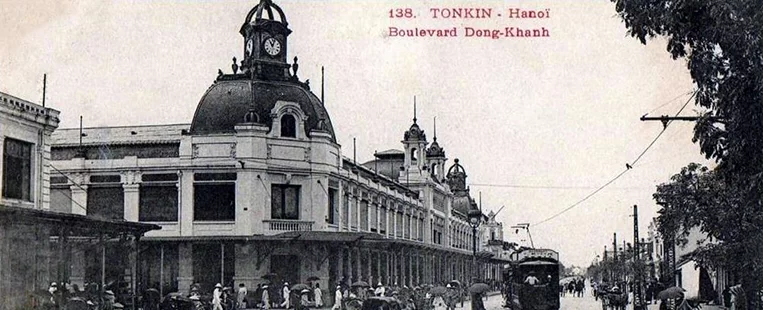
Hanoi: A Stroll Through the Heart of French Architectural Heritage - 2
Let's go back in time by discovering the city's architectural heritage to understand its subtle yet strong character. Part One

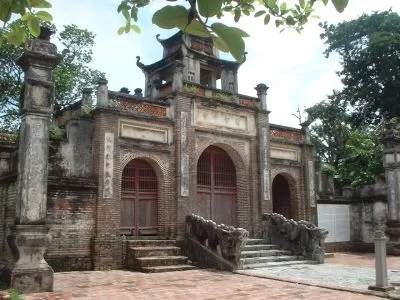 But first, let's remember that traces of occupation dating back 3000 years BC have been found here…
One of the very first known sites is the Citadel of Co Loa (257 BC), about twenty kilometers from the current Capital. Considered the oldest citadel in Vietnam, it was erected during the reign of Thuc An Duong, founder of the legendary Thuc dynasty. This ancestral village was the ancient capital of the kingdom of Au Lac, the former name of Vietnam. A spiral wall protected it, hence its name (Co Loa = spiral).
For those interested, they will find a historical museum, two temples, and some tombs there. All far from mass tourism...
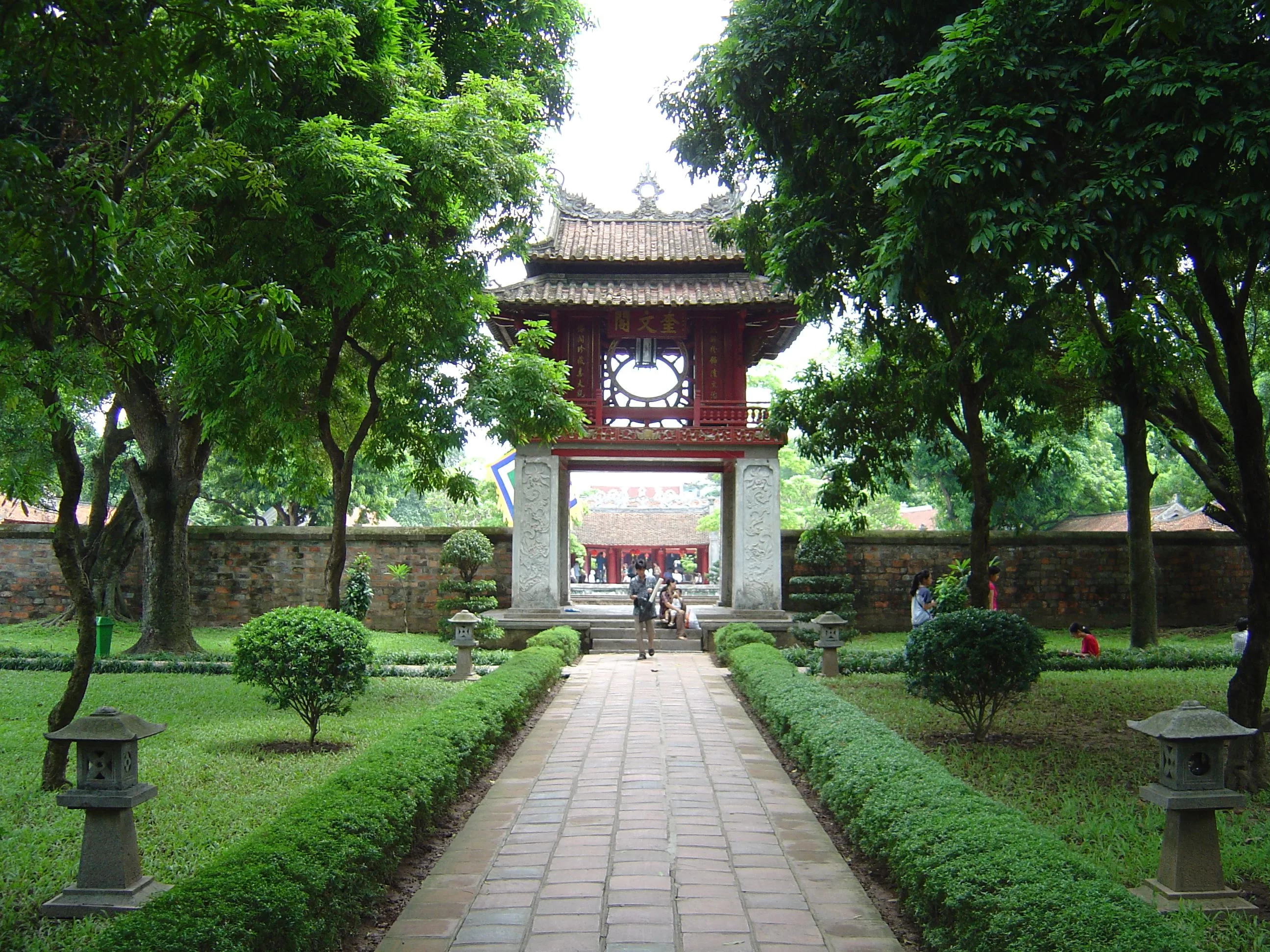 With that recalled, we can reasonably place the date of Hanoi's birth in 1010, when Ly Cong Uan declared the city "imperial capital". It was under his reign that the Temple of Literature was erected in 1070, which, six years later, would become the country's first university, training scholars and civil servants until... 1915. Despite the tumultuous history of the Dragon Country, this remarkable site is still present, a haven of peace, silence, and coolness amidst the hustle and bustle of the modern capital.
The 800 years that followed saw China regularly invade the area, causing its decline over time, until 1802, when King Gia Long, ruler of the Nguyen dynasty, decided to move the imperial capital to Hué. He had the old palace destroyed and another built, in the Vauban style.
Losing its title as an imperial city did not, however, prevent the city from developing. In 1831, King Minh Mang changed the name of Than Long to Hanoi. But in 1887, Hanoi became the capital of French Indochina…
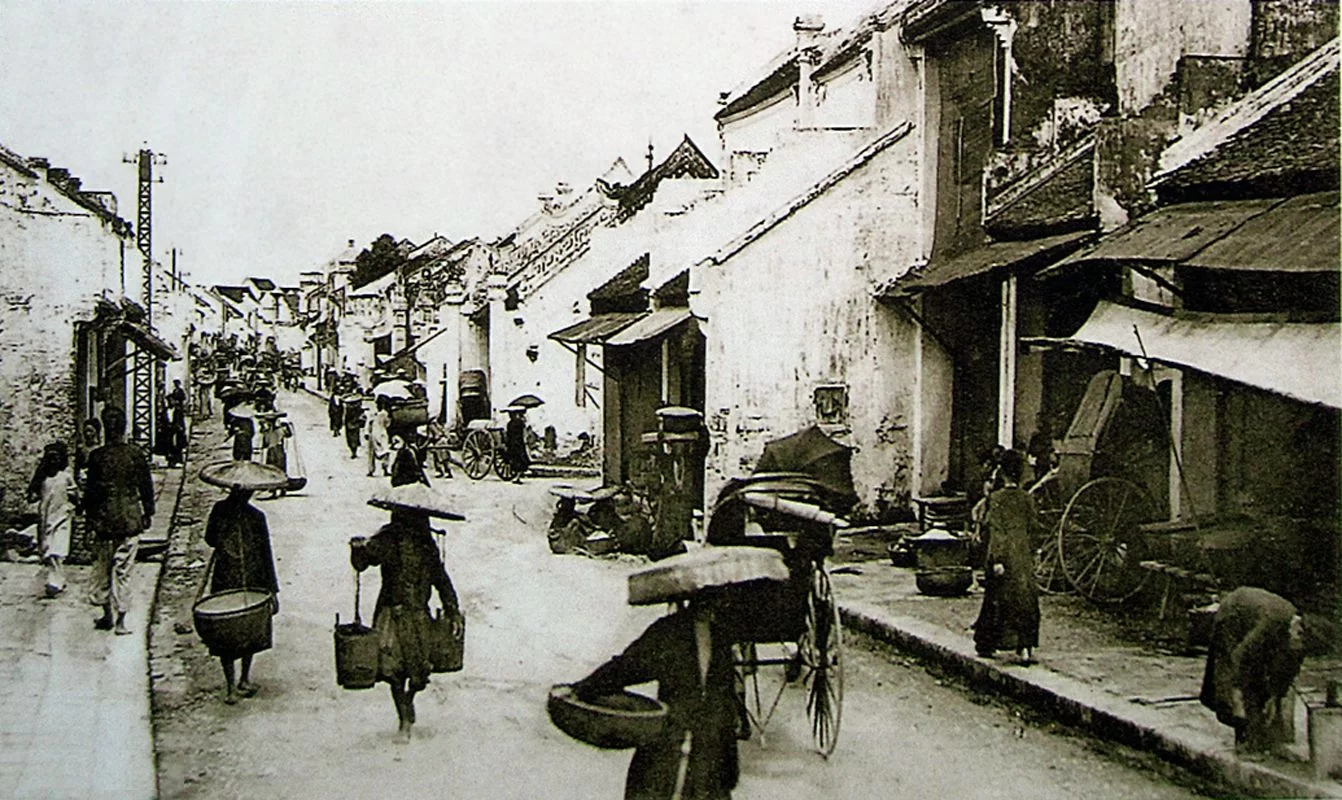 We must now talk about what is known today as "The Old Quarter".
At that time, the city was just a network of about 36 streets, which thus form, in part, the current Old Quarter. Each street was dedicated to a specific guild: the street of jewelry, silk, metallurgy, pottery, or mats… Long before the arrival of the French, the site enjoyed a solid reputation as a commercial area on the Red River Delta.
It is also in the Old Quarter that the One Pillar Pagoda and one of Hanoi's oldest temples, dating from the 9th century, are located: the Bach Ma Temple.
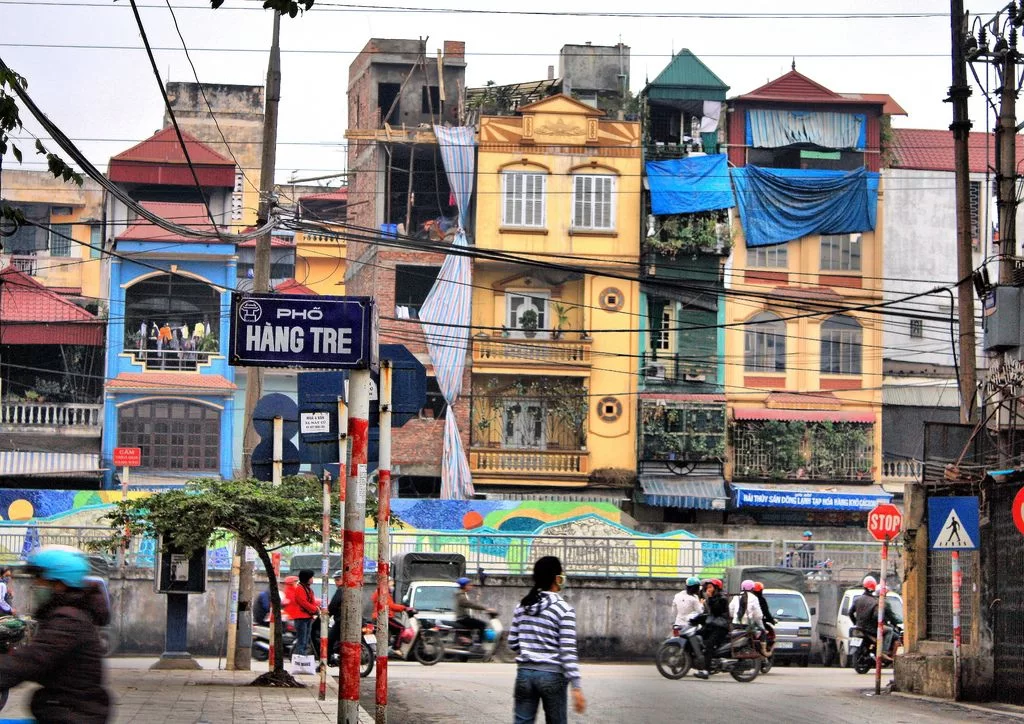 Perhaps the most interesting characteristic of the Old Quarter is the way the houses were designed. For hundreds of years, kings imposed on their subjects that their dwellings should not exceed the height of the royal palanquin. A quick geometric and, above all, pragmatic calculation, taking into account living space and population density, deduced a dwelling whose narrow facade would be reserved for shops, while the long body of the building would house workshops, dining rooms, and bedrooms.
This style of construction is still seen today, but with a few more floors than the height of a royal palanquin…
But let's return to our French colonists. Their arrival would leave a very strong mark on Hanoi's architectural landscape. They transformed the city's physiognomy, creating a style that did not exist in Southeast Asia, or perhaps even in all of Asia. As Paul Bert, then Governor-General, who launched the project of France's showcase in Indochina, emphasized: "Everything was permitted, provided that colonial power was inscribed in stone."
The process of implementing French architecture in Hanoi, however, took place in two stages:
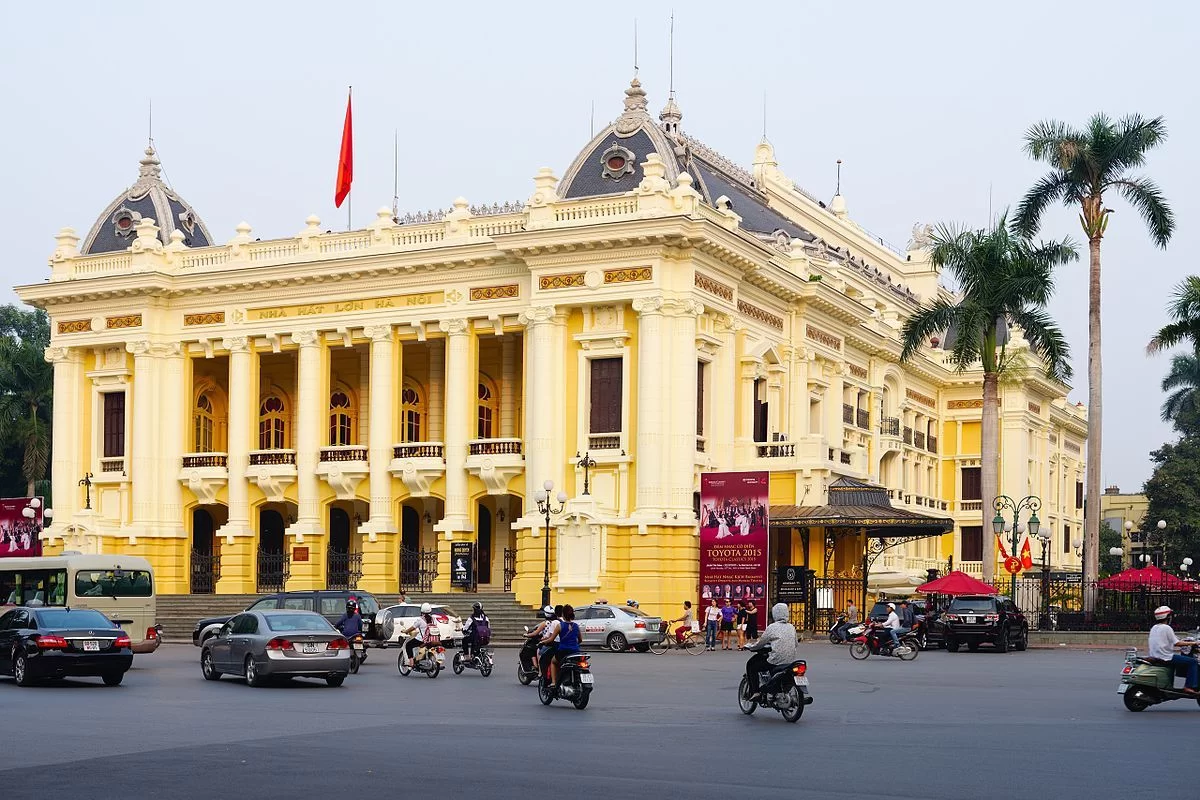 First, from 1900 to 1920, there was a "strict imposition of French architecture," with the appearance of constructions in the Franco-French style. Examples include the Opera House, the Metropole Hotel, Saint Joseph's Cathedral, and the Bank of Indochina. In their classical, monumental style and with their imposing facades, they are ostentatious symbols of the Protectorate's stability and the desire for a lasting colonial presence in Vietnam.
| * If this article is interesting and useful please share it with your Friends and the people around you by choosing the sharing channel below! * If you want to travel to Vietnam and truly discover it in depth with the most authentic places and the most typical cultures, we suggest you take a tailor-made trip to your wishes with a French-speaking travel agency in Vietnam like Typic Travel. Click our button "Free quote" or "Tailor-made trip" or send an email to Typic Travel * If you are simply looking for travel ideas in Vietnam or Indochinese Countries, Typic Travel offers you some main ideas according to the category of our trips on "idea of our trips" or follow us on one of your social networks for more permanent information: |
| Follow us on: | TripAdvisor | Facebook | Petit Futé | Youtube | Twitter | Instagram |


