

Top 5 historical monuments in Hoi An
Welcome to Hoi An, an architectural gem of Vietnam where time seems to stand still. Narrow streets, ancient wooden houses, scents of incense and jasmine... This UNESCO World Heritage city is a true open-air museum.
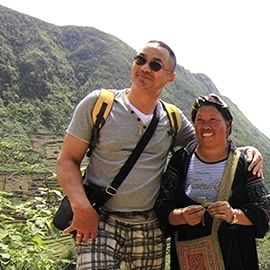
As passionate guides at Typic Travel, we invite you to discover the 5 ancient monuments that capture the essence of Hoi An. From the iconic Japanese Bridge to the preserved traditional houses, each site tells a fascinating story of trade, culture, and traditions.
Table of Contents
1. The Old House of Tấn-Ký: A Living Testimony to History
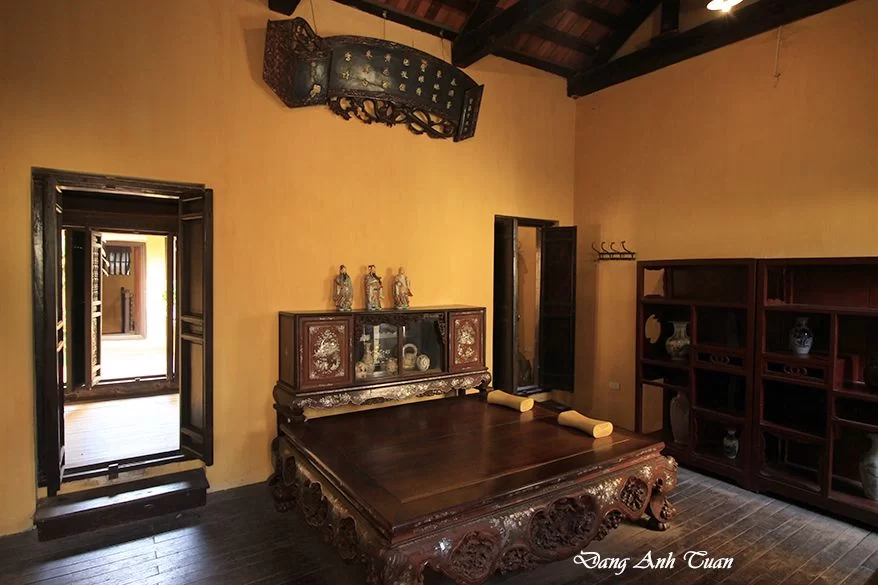
Built two centuries ago by an ethnically Vietnamese family, this house has been lovingly preserved for seven generations. Look for signs of Japanese and Chinese influences on the architecture! Japanese elements include the ceiling, which is supported by three superimposed beams. Under the crab ceiling, one can see carvings of crossed swords wrapped in silk ribbon. The swords symbolize strength; the silk represents flexibility.
The interior is brightened by a beautiful detail: Chinese poems written in inlaid mother-of-pearl are hung on some of the columns supporting the roof. The Chinese characters on these 150-year-old panels are entirely composed of gracefully depicted birds in different flight positions.
The exterior of the roof is made of tiles; inside, the ceiling is wooden. This design keeps the house cool in summer and warm in winter.
2. The Japanese Covered Bridge: The Emblem of Hoi An
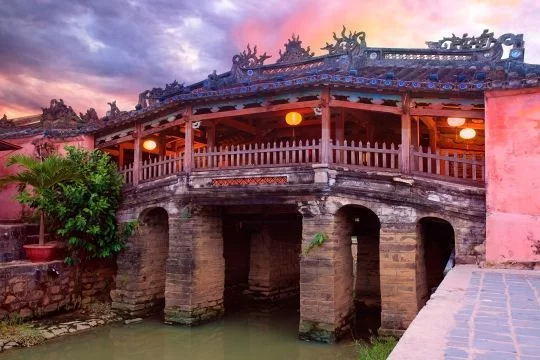
This beautiful small bridge is the emblem of Hoi An. This bridge was built here in the 1590s by the Japanese community to connect it to the Chinese quarters. In 1719, a Chinese mandarin visiting Hoi An gave it the name Lai Vien Kieu, "The bridge built by men who came from afar." Fifty years later, the Chinese decided to build a pagoda dedicated to Bac De Tran Vu, a highly respected Chinese mandarin.
The structure is very solidly built due to the threat of earthquakes. The entrances to the bridge are guarded by statues: a pair of monkeys on one side, a pair of dogs on the other. According to one story, many emperors of Japan were born in the years of the dog and the monkey. Another story says that the construction of the bridge began in the year of the monkey and ended in the year of the dog. Over the centuries, the ornamentation has remained relatively faithful to the original Japanese design.
3. Assembly Hall of the Fujian Chinese Congregation
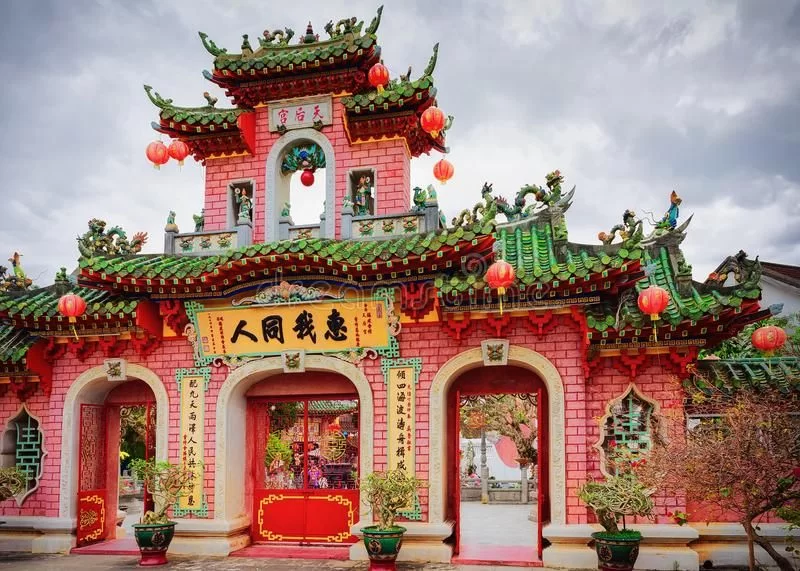
Originally a traditional assembly hall, this structure was later transformed into a temple for the worship of Thien Hau, a deity from Fujian province. The green mosaic triple gate dates from 1975. The painting on the wall depicts Thien Hau, illuminated by the light of a lantern as she crosses a stormy sea to save a ship. Opposite, a painting of the heads of the six Fujian families who fled China to Hoi An in the 17th century.
The penultimate chamber contains a statue of Thien Hau. On each side of the entrance are the red-skinned Thuan Phong Nhi and the green-skinned Thien Ly Nhan, deities who alert Thien Hau when sailors are in distress.
In the last room, the central altar contains seated figures of the heads of the six Fujian families. The smaller figures below represent their successors as clan leaders. Behind the altar on the right are three fairies and smaller figures representing the 12 bà-mụ - each of them teaches newborns a different skill needed for the first year: smiling, sucking, etc. Childless couples often come here to pray for offspring and leave fresh fruit as offerings.
4. Tran Family Chapel: A Preserved Family Sanctuary
Built to worship the family's ancestors, this chapel dates back to 1802. It was commissioned by Tran Tu, an ambassador to China. His photo is to the right of the chapel. The architecture of the building reflects the influence of Chinese style ("turtle" type roof), Japanese style (triple beam), and vernacular style (note the arches and arrows).
The central door is reserved for the dead - it was opened during Tet - the Vietnamese New Year festival and on November 11th, the anniversary of the main ancestor's death. Traditionally, women entered through the left and men through the right, although these distinctions are no longer mandatory.
The wooden boxes on the altar contain the stone tablets of the Tran ancestors, with carved Chinese characters indicating birth and death dates, as well as some small personal effects. On the anniversary of each family member's death, their box is opened, incense is burned, and food is offered.
After a short visit, you will proceed to the antique dealers' room, where there are many pieces for sale, and to a side room filled with souvenirs.
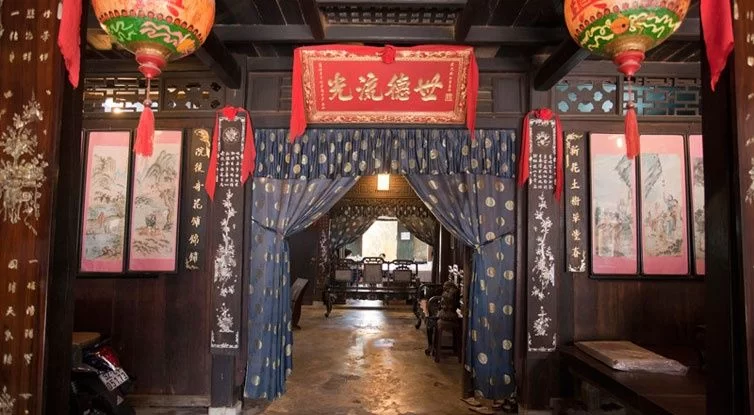
5. Diep Dong Nguyen Ancient House
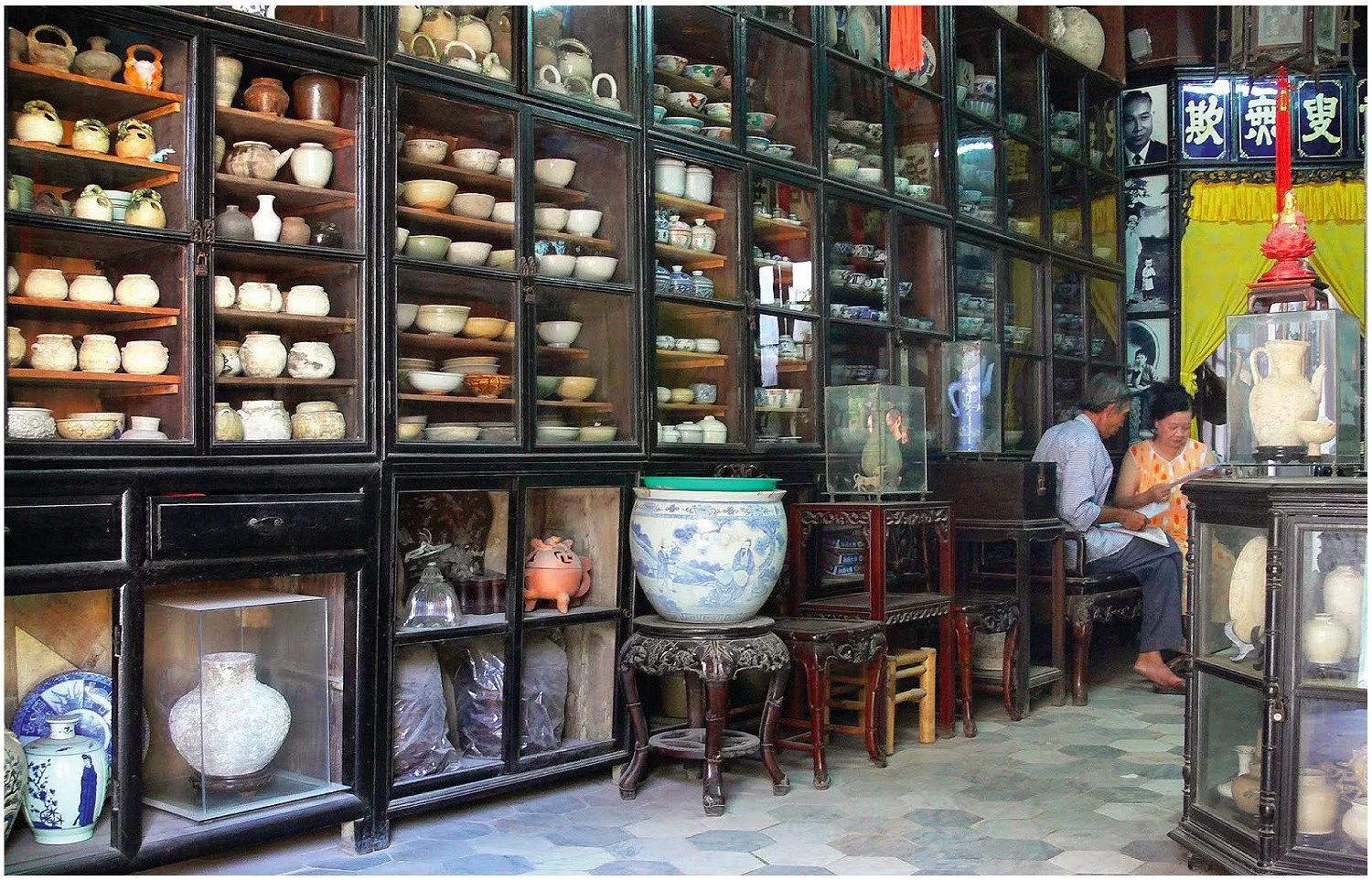
In Hoi An, the last place not to miss: Diep Dong Nguyen Ancient House, located at 82 Nguyen Thai Hoc Street. Considered the first private museum in central Vietnam, many tourists and researchers, both foreign and local, regard it as a valuable antique museum.
It was built at the end of the 19th century for a Chinese merchant, Diep Dong Xuan, originally from Guangdong province, China. In the mid-19th century, he opened a Chinese pharmacy in Hoi An and, after the construction of this house, he expanded his business by trading many products such as high-quality materials, jewelry, ceramics, books…
Today, the house is a famous tourist attraction thanks to its original architecture, style, building materials, and interior decoration. Every day, the Diep Dong Nguyen Ancient House opens its doors to welcome visitors who do not need a ticket; we can freely and safely see and touch the objects in the house. What a privilege!

| * If this article is interesting and useful please share it with your friends and people around you by choosing the sharing channel below! * If you want to travel to Vietnam and truly discover it in depth with the most authentic corners and the most typical cultures, we suggest you take a tailor-made trip to your wishes with a French-speaking travel agency in Vietnam like Typic Travel. Click our button "Free quote" or "Tailor-made trip" or send an email to Typic Travel * If you are simply looking for travel ideas in Vietnam or Indochinese Countries, Typic Travel offers some main ideas according to the category of our trips on "our travel ideas" or follow us on one of your social networks to get more permanent info: |
| Follow us on: | TripAdvisor | Facebook | Petit Futé | Youtube | Twitter | Instagram |