Religion of Vietnam: The complete guide to spiritual beliefs and practices
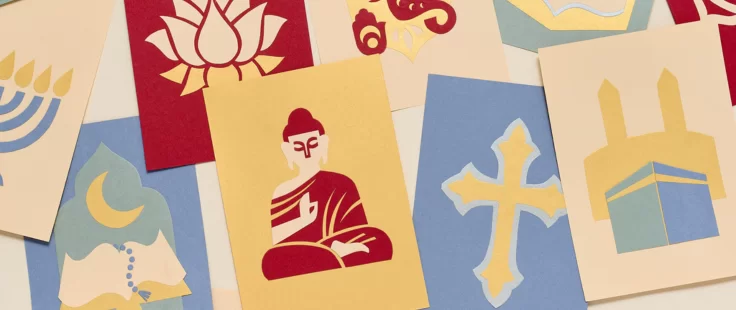
Vietnam is a multi-ethnic, multi-cultural, and multi-religious country. It is among the twelve countries in the world and six countries in the Asia-Pacific region recognized for their very high religious diversity, according to global surveys on religious diversity conducted by the Pew Forum Institute (United States).

Table of Contents
- Four main characteristics of religion in Vietnam
- Some beliefs of the Vietnamese people
- Main religions in Vietnam
Diversity results from the introduction, influence, and fusion of indigenous religions and religions imported from other cultures. In a context of international integration, the level of religious diversity in Vietnam continues to grow.
In 2022, the Vietnamese government officially recognized 16 religions (Catholicism, Buddhism, Protestantism, Islam, etc.) and 43 religious organizations, bringing together more than 26.5 million followers (27% of the population).
Furthermore, the majority of Vietnamese people practice traditional or popular spiritualities, often described as "atheism" or "non-religion".
Four main characteristics of religion in Vietnam
Vietnam is located between the spheres of influence of the Sinosphere and the Indosphere, so a high level of harmony is always necessary to harmonize different cultures, ethnicities, and, above all, different religions and beliefs.
Here are the four main characteristics of religion and beliefs in Vietnam:
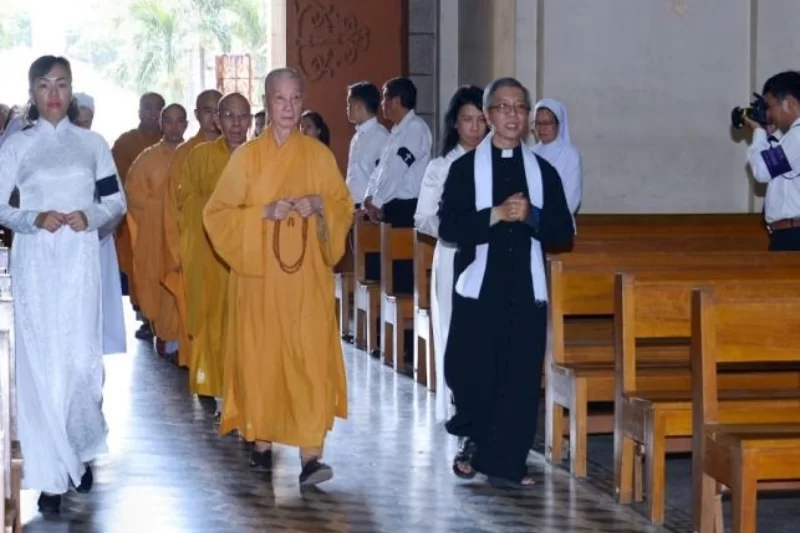
1️⃣ Harmony and Syncretism: Religions in Vietnam mix and coexist without conflict or discrimination.
This tolerance reflects the spirit of national unity, allowing believers of different faiths and non-believers to live peacefully together within the same villages and communities.
2️⃣ Origins and Influences: Although religious thought is rooted in Vietnam's ancient history (symbols of the Dragon and the Lac Bird), the deities worshipped are often of foreign origin.
Similarly, endogenous religions (such as Cao Dai or Hoa Hao) draw heavily on pre-existing doctrines.
3️⃣ Orientation towards the "True-Good-Beautiful": Regardless of their origin, all religions aim for universal moral values (Chân - Thiện - Mỹ) and have adapted to local traditions.
Over the centuries, imported beliefs have been "Vietnamized", becoming an integral part of the national culture.
4️⃣ Political Exploitation: Historically, religion has been used by colonizers to divide and dominate.
Even today, hostile forces attempt to instrumentalize "religious freedom" and "human rights" for political purposes to destabilize the Vietnamese state and society.
Some beliefs of the Vietnamese people
Most Vietnamese people do not follow any religion, but most have popular, folk beliefs passed down for thousands of years.
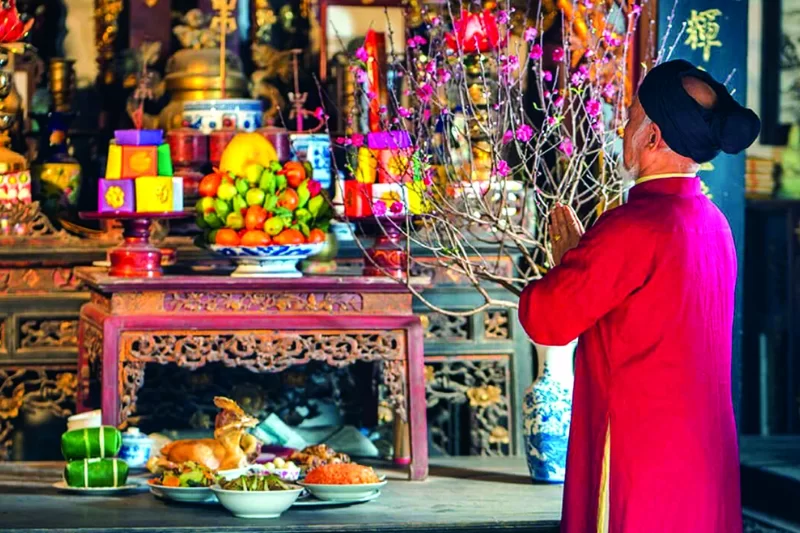
1. Ancestor Worship (The Cornerstone)
This is the number 1 belief.
To this day, ancestor worship remains the most popular form of belief in Vietnam. It is present everywhere.
In every home. In every mind.
It is not just a religious ritual. It is an essential spiritual need.
Why?
Because it acts as the cement that unites family members. It is the blood tie that connects the living to past generations.
Simply put: in Vietnam, family doesn't end with death.
2. The Cult of National Heroes
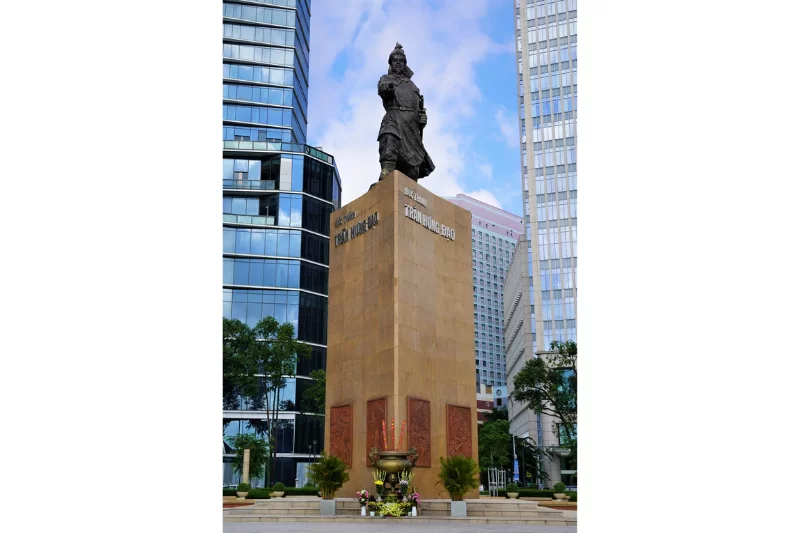
The history of Vietnam can be summarized in two constant struggles:
-
The struggle against foreign invaders.
-
The struggle against natural disasters.
That's why patriotism is in the DNA of Vietnamese people.
The cult of National Heroes perfectly embodies the Vietnamese philosophy of: "When drinking water, think of the source" (uống nước nhớ nguồn).
Social impact: This cult plays a huge role in spiritual life. It's not just about venerating the past. It's about educating future generations about patriotism and strengthening community solidarity.
3. The Cult of Thành Hoàng (Village Tutelary God)
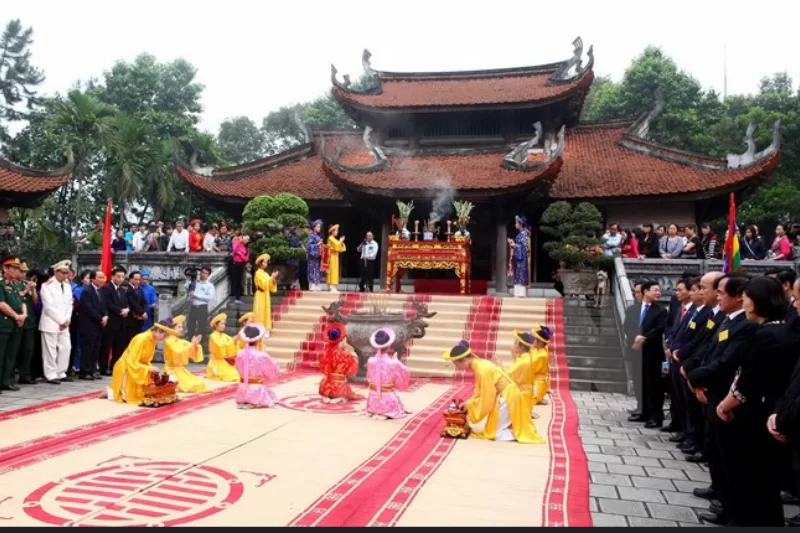
If ancestor worship is for the family, the cult of Thành Hoàng is for the village.
It reflects the communal mentality of Vietnamese villages.
Originally, Thành Hoàng was a deity worshipped by local inhabitants. But over time, this evolved.
Feudal dynasties recognized these deities, granted them royal titles, and standardized rituals.
The result?
Village worship became an official ritual activity, recognized by the State at the local level.
4. The Cult of Goddesses and Mothers (Mẫu)
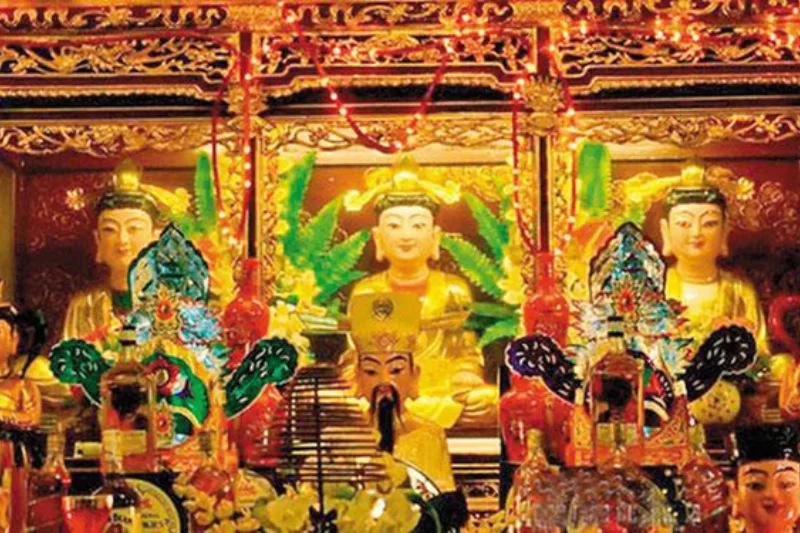
The cult of goddesses is a global phenomenon.
But in Vietnam? It's a level above.
This tradition has its roots in primitive society and the long period of matriarchy in Vietnamese history.
But here's the important nuance:
There are many goddesses in Vietnam, but not all are elevated to the rank of "Mother" (Mẫu).
Only those with supreme powers and an immense protective role receive titles such as:
-
Mẫu Sơn (Mother of the Mountain)
-
Quốc Mẫu (Mother of the Nation)
-
Thánh Mẫu (Holy Mother)
-
Mẫu Nghi Thiên Hạ (Model Mother of the Nation)
The cult of the Mother (Thờ Mẫu) has become a unique form of belief, with its own distinct and spectacular rituals.
Main religions in Vietnam
Vietnam is a spiritual mosaic.
But what are the forces that truly dominate?
Here's a quick analysis of the 5 major religions, their key figures, and what makes them unique.
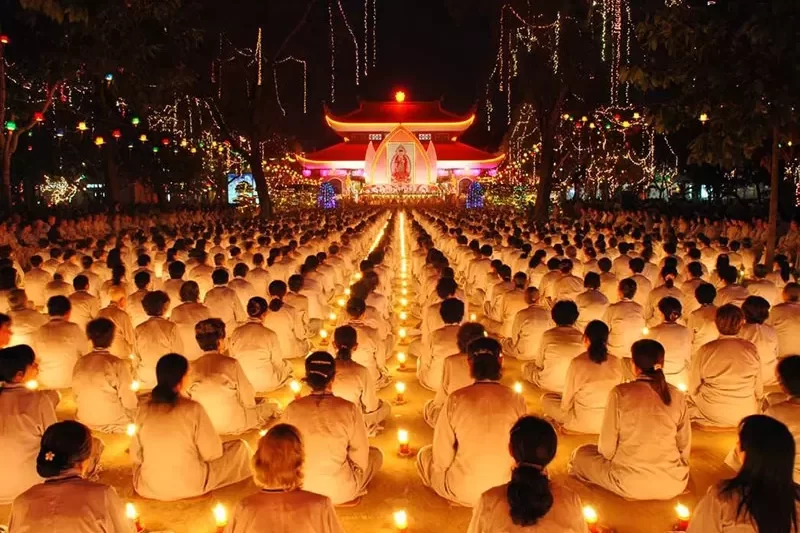
1. Buddhism (The Undisputed Leader)
Globally, Buddhism is not number 1. In Vietnam? That's another story.
It is the most popular religion, with approximately 14 million followers.
Why such success? It has accompanied the nation throughout its history. Its moral values are ingrained in the Vietnamese DNA, even among non-practitioners.
What you need to know:
-
Organization: The Buddhist Church of Vietnam manages the administration, but the real influence often comes from the spiritual masters of different sects.
-
Diversity: Each branch has its rules. Example: Theravada Khmer Buddhists do not eat after noon.
2. Catholicism (Rigor and Education)
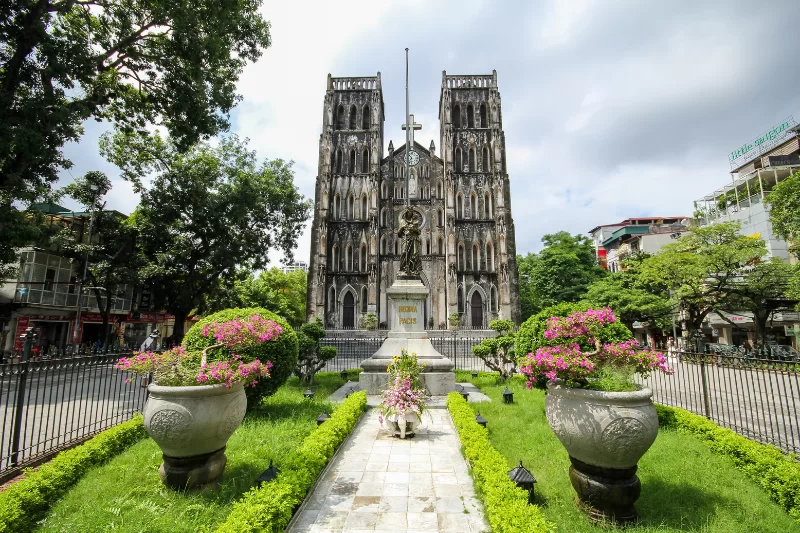
Vietnamese Catholicism is structured and powerful.
The Figures:
-
7 million followers.
-
52 bishops and nearly 6,000 priests.
-
34 provinces affected.
Unlike Buddhism, the organization here is centralized and directly linked to the Vatican (including for the appointment of bishops).
Their strength? Education. The clergy is highly educated, both religiously and secularly.
Their motto summarizes everything: "Living the Gospel in the heart of the nation to serve the happiness of compatriots".
3. Protestantism (Democracy and Growth)
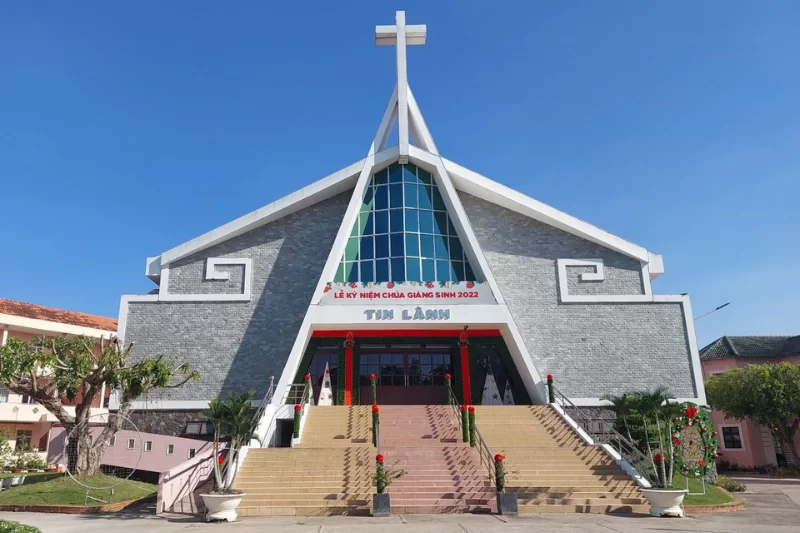
Originating from Christianity, but with a different flavor.
Protestantism in Vietnam is rapidly expanding, particularly due to its ties with the United States and South Korea.
Key points:
-
1.2 million followers.
-
Democratic: It values individual freedom and equality before God.
-
Target: Very strong development in ethnic minority regions.
It is a religion fragmented into numerous organizations (denominations), 11 of which are officially recognized by the State.
4. Caodaism (The 100% Vietnamese Invention)
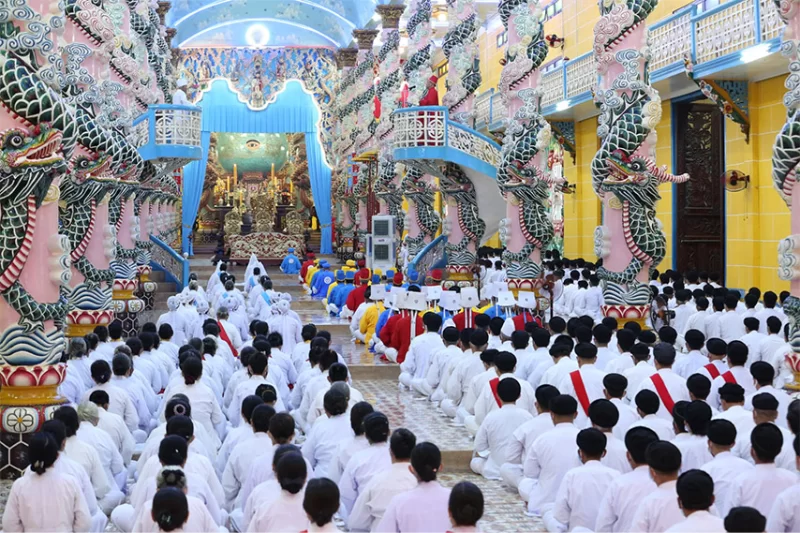
This is the only "nativist" religion on this list. Born in Vietnam, for Vietnam.
The concept? Total syncretism. Caodaism blends the doctrines of several religions.
On their altars, you will find a fascinating mix: Buddha, Jesus, saints... and even celebrities like Victor Hugo.
The Stats:
-
1.1 million followers.
-
10 Churches recognized by the State (including the famous Cao Đài Tây Ninh).
Their slogan? "Glory to the Nation - Light to the Religion".
5. Islam (The Global Giant, The Vietnamese Niche)
Globally, Islam is a titan (over 2 billion followers).
But in Vietnam? It's a compact, unique, and fascinating community.
Here's what distinguishes it:
Doctrinal Simplicity While other religions possess entire libraries of scriptures, Islam focuses on one book (the Quran) and one sacred language (Arabic).
Key Figures in Vietnam
-
Followers: Over 92,000.
-
Clergy: Approximately 1,000 dignitaries.
-
Places of worship: 89 mosques and prayer rooms.
-
Demographics: The vast majority of Vietnamese Muslims are from the Cham ethnic group.
One Community, Two Faces In Vietnam, Islam is not monolithic. It is divided into two main branches:
-
Bani Islam: Over 55,000 followers (a unique, indigenous form).
-
Sunni Islam: Over 37,000 followers (the international orthodox form).
Organization & Direction The State recognizes 7 official organizations (located in Ho Chi Minh City, An Giang, Ninh Thuan, Hanoi, etc.).
Their guideline is clear: Follow the Quran and Sunnah, obey Allah and Prophet Muhammad, while strictly respecting Vietnamese law to build a cohesive community.
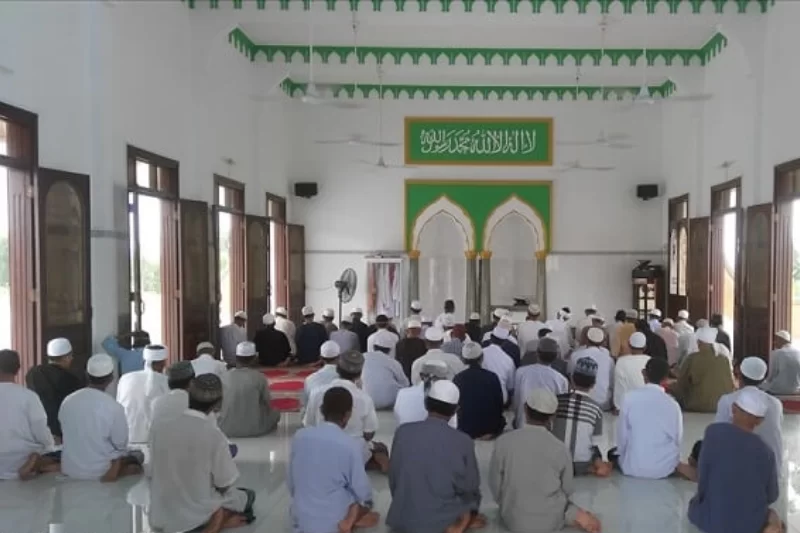
In conclusion, Vietnam's religious landscape is defined by harmonious diversity and unique syncretism. Whether it's the 26.5 million followers belonging to the 16 officially recognized religions (such as the predominant Buddhism, Catholicism, or local Caodaism) or the vast majority practicing ancestor worship, Vietnamese spiritual life transcends simple dogma. It acts as a true social cement, blending faith, millennia-old traditions, and patriotism to guide the nation towards the universal values of "Truth, Good, and Beauty."