
Vietnamese Traditional Folk Games: What They Are and Where to Experience Them
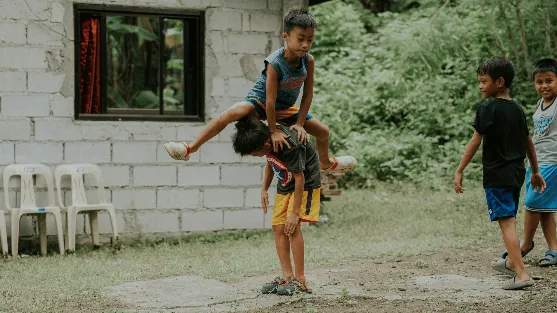
Vietnamese traditional folk games are games that families and villages have passed down over generations. Most need very little equipment: a few small stones, a rope, a bamboo pole or a patch of open ground. Some are children's games played in courtyards and school yards. Others belong to village festivals, when a community gathers to compete, sing and celebrate together.
Table of contents
- What Are Vietnamese Traditional Folk Games?
- Why Are Folk Games Important in Vietnamese Culture?
- Traditional Vietnamese Folk Games You Should Know
- 1. Ô ăn quan (Mandarin Square Capturing)
- 2. Chơi chuyền (Bamboo Jacks)
- 3. Rồng rắn lên mây (Dragon-Snake Climbing to the Clouds)
- 4. Thả diều (Kite Flying)
- 5. Cờ người (Human Chess)
- 6. Đánh đu (Bamboo Swing)
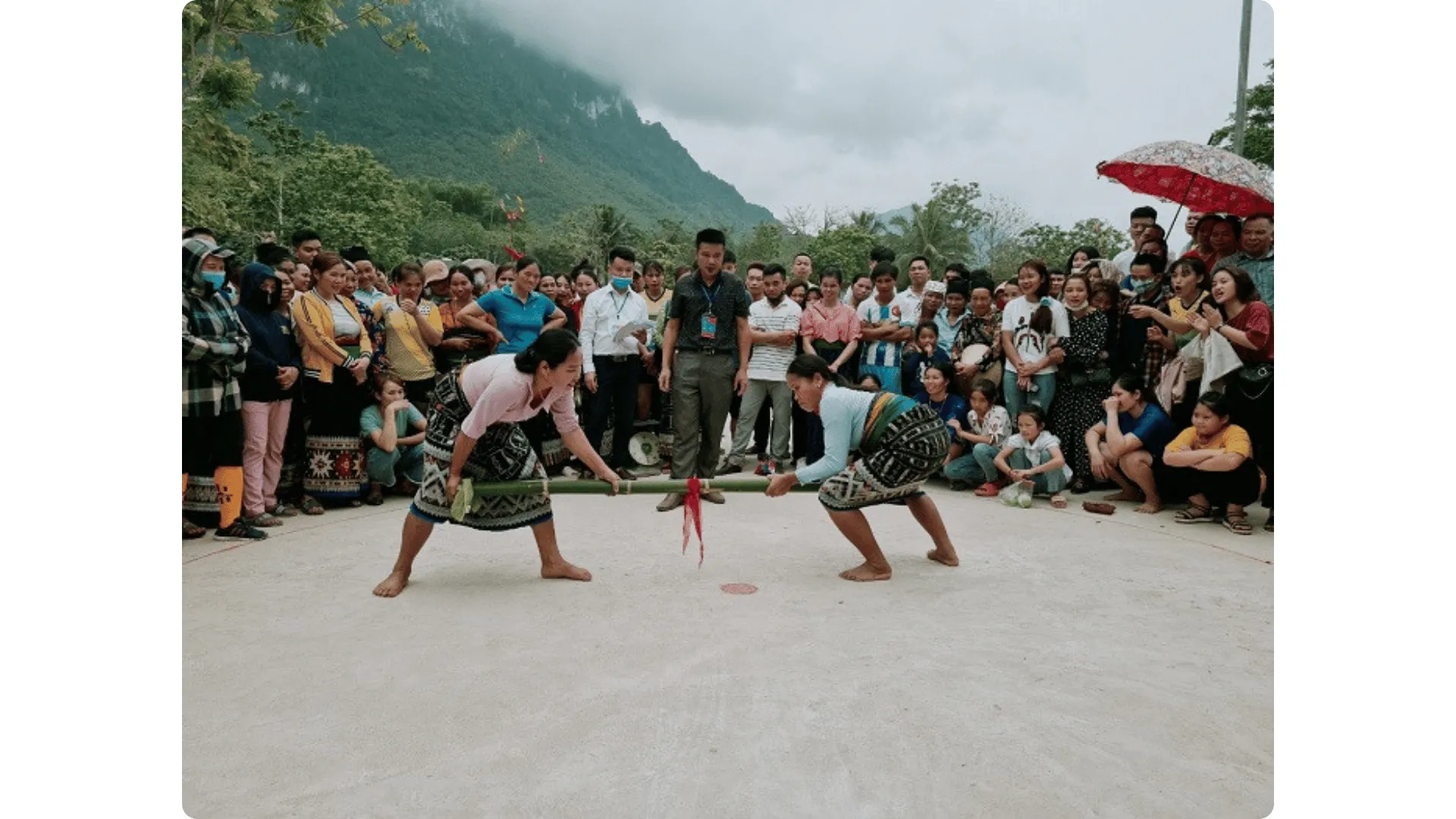
- 7. Kéo co (Tug-of-War)
- 8. Đập niêu (Blindfolded Pot Smashing)
- 9. Ném còn (Sacred Ball Throwing)
- 10. Bài chòi (Card Game in Bamboo Huts)
- Vietnamese Folk Games at Festivals and Village Celebrations
- Where Can You Experience Traditional Games in Vietnam?
- How Folk Games Connect Travelers with Local Life
- How to Experience Vietnamese Traditional Games on a Trip
- Frequently Asked Questions About Vietnamese Traditional Folk Games
- Plan a Cultural Experience with Typic Travel
What Are Vietnamese Traditional Folk Games?
In Vietnamese, trò chơi dân gian means, roughly, "games of the people." The term covers a wide range: rhyming games for children, pebble and board games, contests of strength and skill held at festivals, and card or singing games tied to particular seasons. The word trò can also mean an act or a performance, which suits festival games that are part competition and part public entertainment.
It helps to think of three broad groups:
- Everyday children's games, such as ô ăn quan and rồng rắn lên mây, learned from siblings and neighbors.
- Village festival games, such as human chess, bamboo swinging and tug-of-war, traditionally held in the courtyard of the communal house.
- Community-specific games, such as ném còn among the Tày and Nùng peoples of the northern uplands, or bài chòi in Central Vietnam.
Two points are worth keeping in mind. First, Vietnam has 54 ethnic groups, and games vary by region and community. A game that is common in a Red River Delta village may be unknown in the highlands, and the reverse is also true. Second, exact origins are often uncertain. Many games have been played for generations, and some share features with games elsewhere in Asia. Ô ăn quan belongs to the wide family of sowing games known as mancala, and cờ tướng, the chess played on Hanoi's pavements, is the Vietnamese form of Chinese chess. It is more accurate to call these long-established practices than to give them a single ancient date.
Why Are Folk Games Important in Vietnamese Culture?
In traditional Vietnamese culture, especially in the Red River Delta, life is organized around the village (làng) and its communal house (đình). A village festival (lễ hội) has two parts: lễ, the ceremonial side with offerings and processions, and hội, the celebration that follows. Games belong to the hội. They are not a side attraction but part of how a community marks the year together.
Many festival games also connect to the farming calendar. Tug-of-war is a good example: tugging rituals and games in rice-farming communities across East and Southeast Asia express hopes for a good harvest, and UNESCO added the versions from Vietnam, Cambodia, the Philippines and South Korea to its Representative List in 2015.
Children's games serve a quieter purpose. They teach counting, strategy, patience and teamwork, usually without adult instruction. Older children pass rules and rhymes to younger ones, so the games also carry local language and humor across generations.
Festivals have also been a setting where young people could meet. A historical chronicle mentions young men and women gathering to play swing games in spring during the Lý dynasty, and Tày accounts describe ném còn as a game that welcomes spring and helps young people meet.
Finally, these are living practices, and they change. Street play has become less common in cities as daily life has changed, so schools, museums and local communities now do much of the work of keeping games in circulation. Some have official recognition: bài chòi was listed by UNESCO in 2017, and the Lồng Tồng festival, where ném còn is played, was named national intangible cultural heritage in 2013.
Traditional Vietnamese Folk Games You Should Know
The ten games below are a representative selection, not a complete list. Each entry covers how the game works, who plays it, where it is associated and how visible it is today.
1. Ô ăn quan (Mandarin Square Capturing)
Players: two | Played by: mostly children | Where: widely known across the country | Today: still played
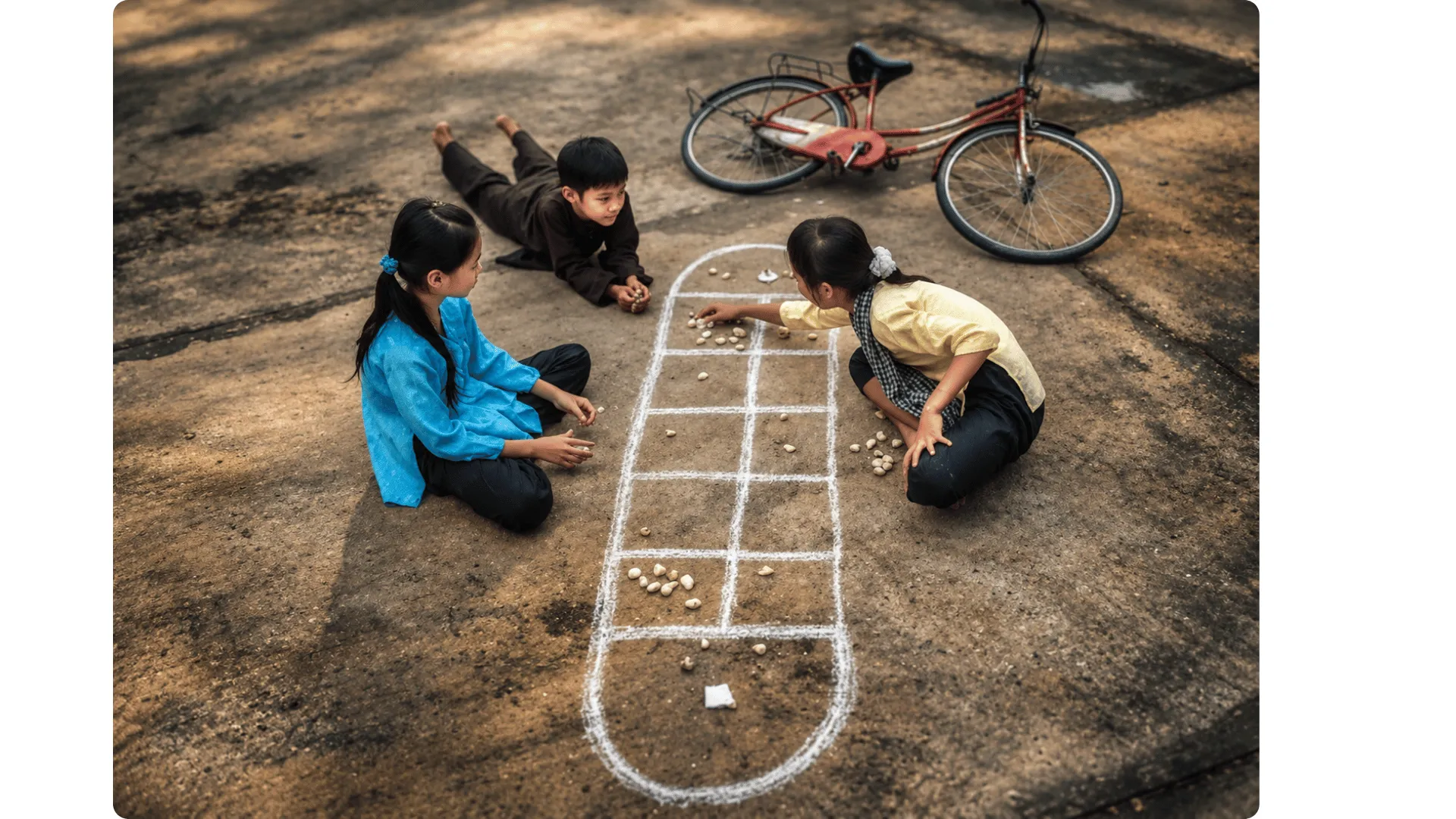
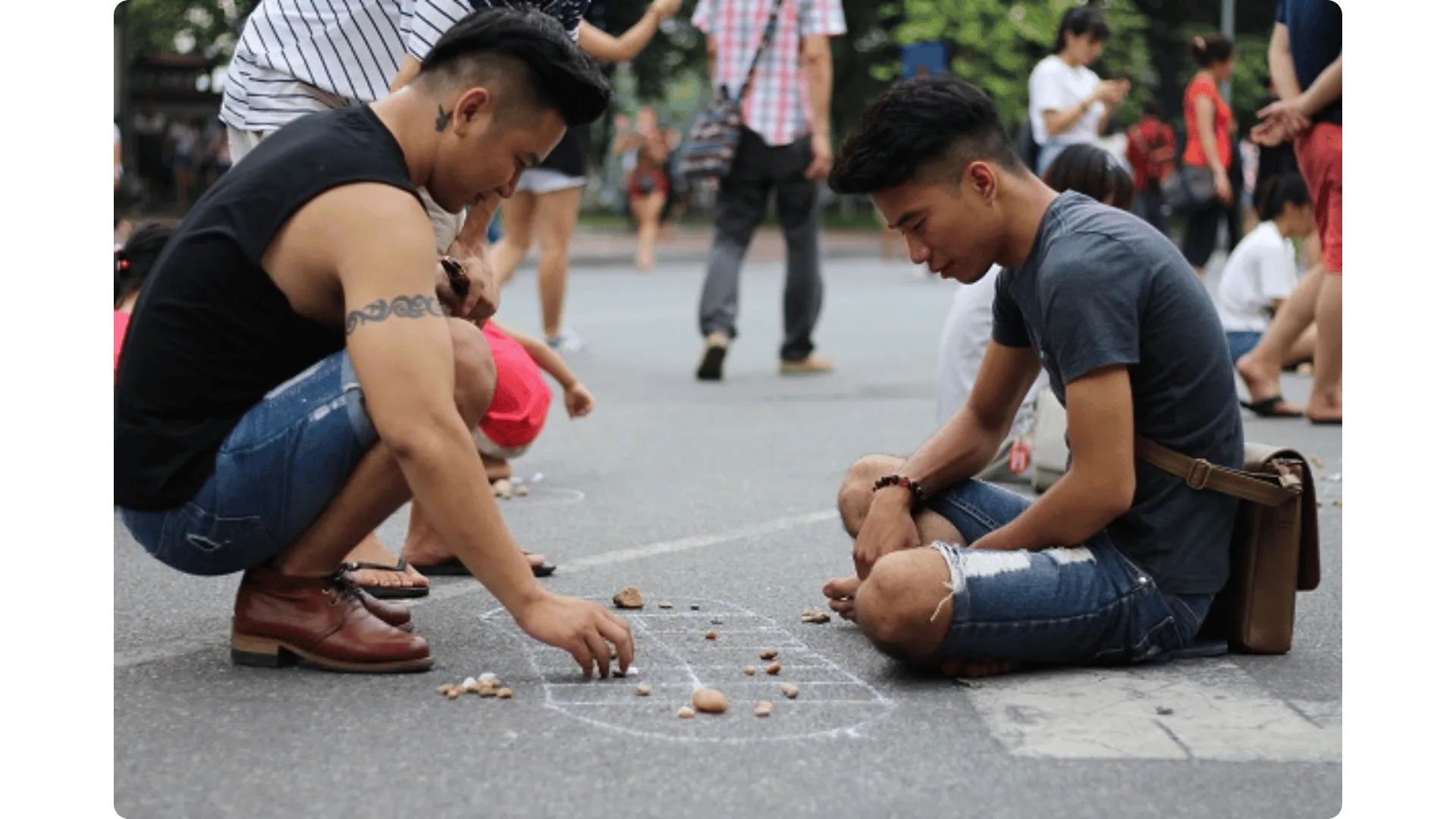
The board is a rectangle drawn on the ground or carved into wood: two rows of five small squares, with a larger half-circle at each end. Each small square starts with five small stones (dân, "the people"), and each end square holds one large stone (quan, "mandarin"). On each turn, a player lifts the stones from one of their squares and sows them one by one around the board. Depending on what lies beyond the last stone, the player continues sowing, captures stones or ends the turn. The game finishes when both mandarin squares have been taken, and the higher total wins.
Ô ăn quan belongs to the mancala family, so visitors who know a similar game will pick it up quickly. It needs only pebbles and a scratched grid, which is why children play it almost anywhere. On weekend evenings, groups also play it around Hoàn Kiếm Lake in Hanoi.
2. Chơi chuyền (Bamboo Jacks)
Players: one at a time, usually two to four | Played by: mostly children | Where: widely known | Today: still played
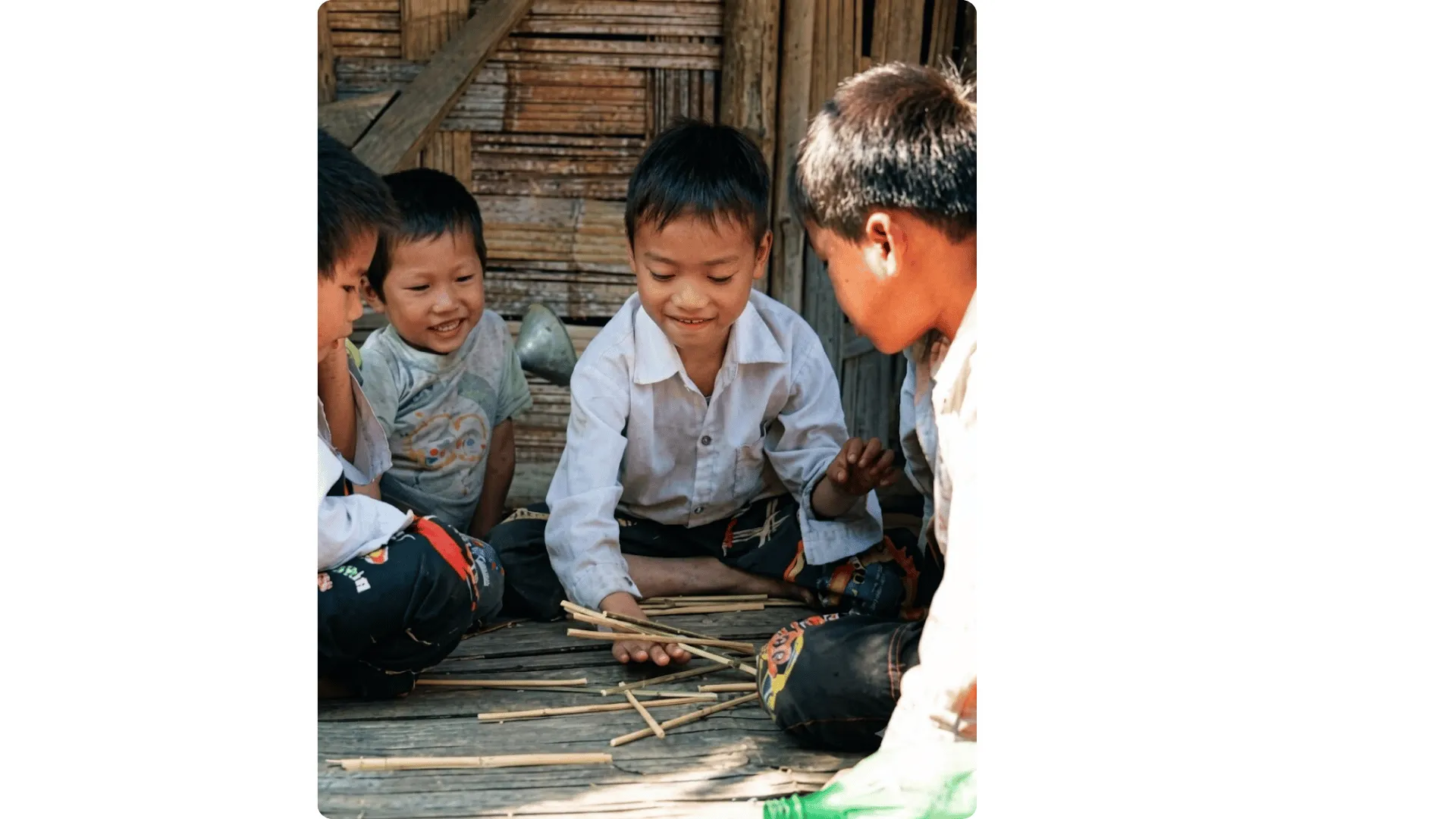
Chuyền uses small stones or short bamboo sticks. A player tosses one piece into the air, picks up pieces from the ground with the same hand and catches the falling piece before it lands. Each round asks for more, first one piece at a time, then two, and so on. A dropped piece passes the turn to the next player.
It is a game of coordination and rhythm rather than strength. Games like it have long been tied to Vietnamese childhood memories, and bamboo jacks appear among the games set up on Hanoi's weekend walking streets, where visitors can watch or ask to try.
3. Rồng rắn lên mây (Dragon-Snake Climbing to the Clouds)
Players: a group of six or more | Played by: children | Where: known across Vietnam, with local versions of the rhyme | Today: still known and played
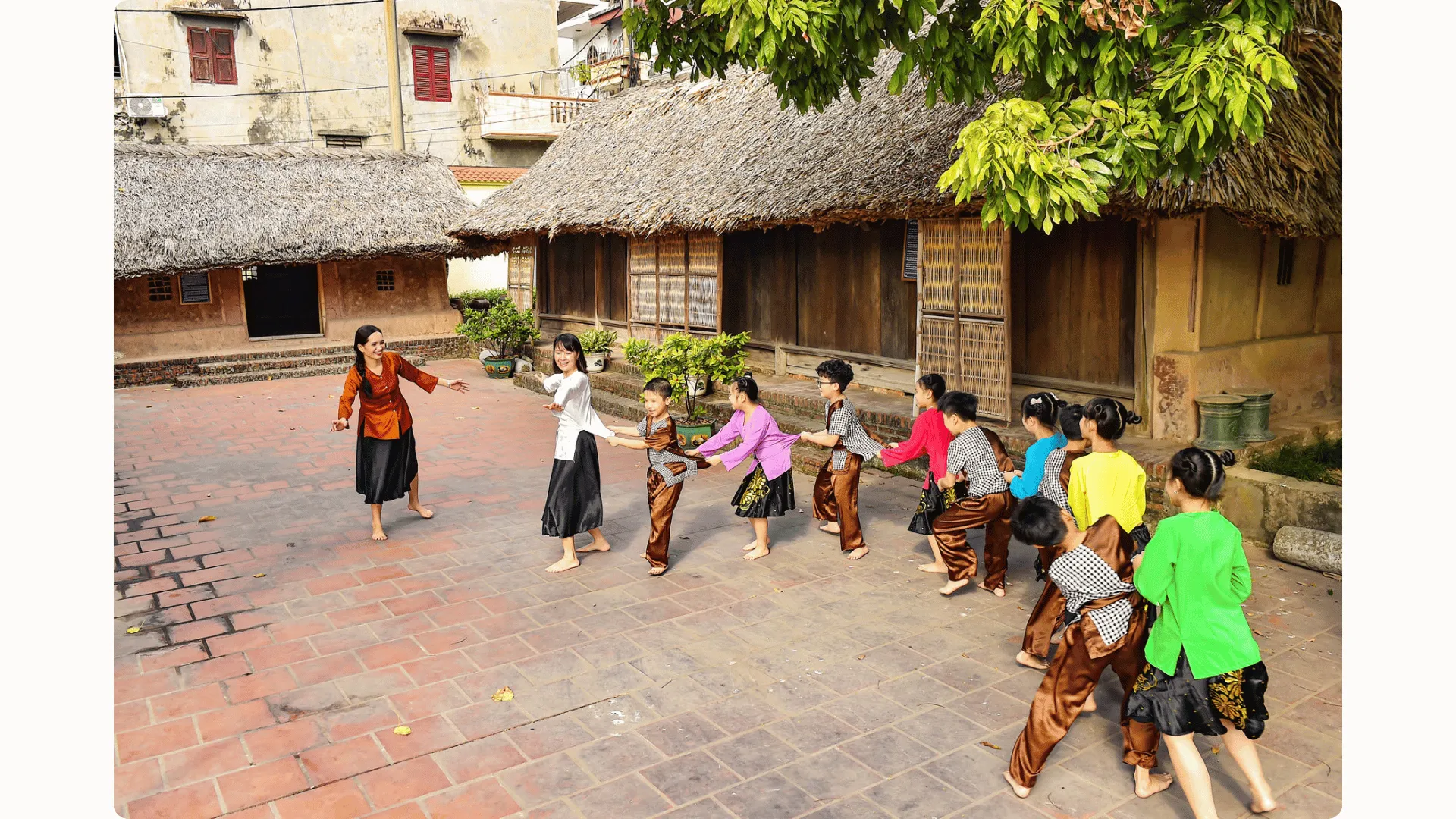
One child plays the doctor (thầy thuốc). The others form the dragon-snake (rồng rắn) by lining up and holding the shoulders or waist of the child in front. The doctor and the head of the line trade a rhyming dialogue in which the doctor asks for pieces of the dragon to make medicine, and the head answers with jokes. When the dialogue reaches the tail, the chase begins. The doctor tries to tag the last child while the head spreads its arms to block and the line swerves to protect the tail.
The game rewards teamwork more than speed, and the rhyme is half the fun. It needs no equipment and can be learned in one round, which makes it one of the easiest games for visitors to join.
4. Thả diều (Kite Flying)
Players: individuals or small groups, all ages | Where: open ground across Vietnam | Today: widely practiced
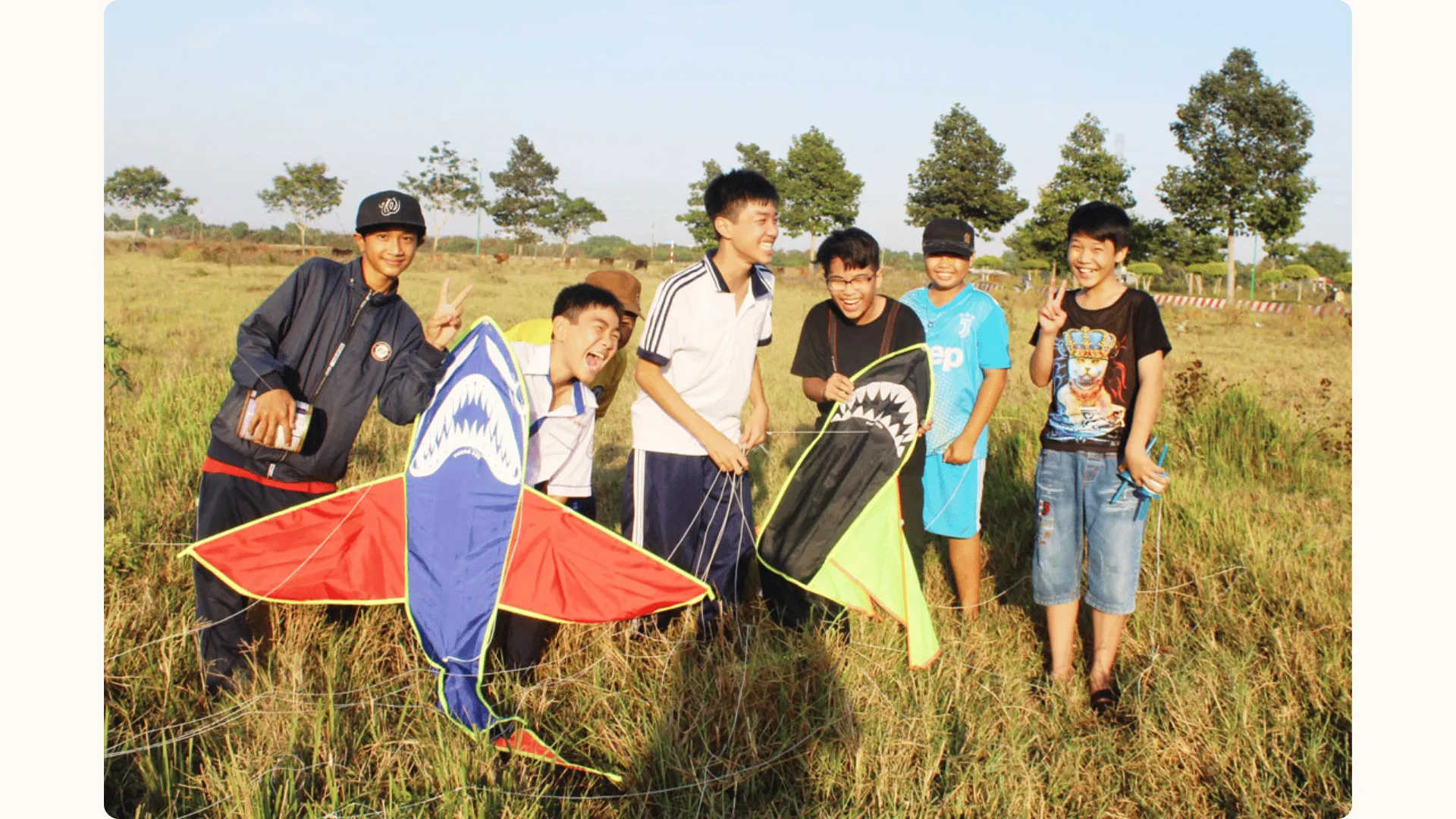
Traditional Vietnamese kites are made from a bamboo frame covered in paper or fabric. In parts of Northern Vietnam, some kites carry small bamboo flutes (sáo) that hum in the wind, and children and adults fly them over village fields and along dykes. Unlike most games here, kite flying is not tied to a festival. It is an everyday pastime that depends on wind and open space.
5. Cờ người (Human Chess)
Players: two teams of 16 living pieces, directed by two players | Where: spring festivals in the Red River Delta, including the Lim Festival | Today: performed at festivals and cultural events.
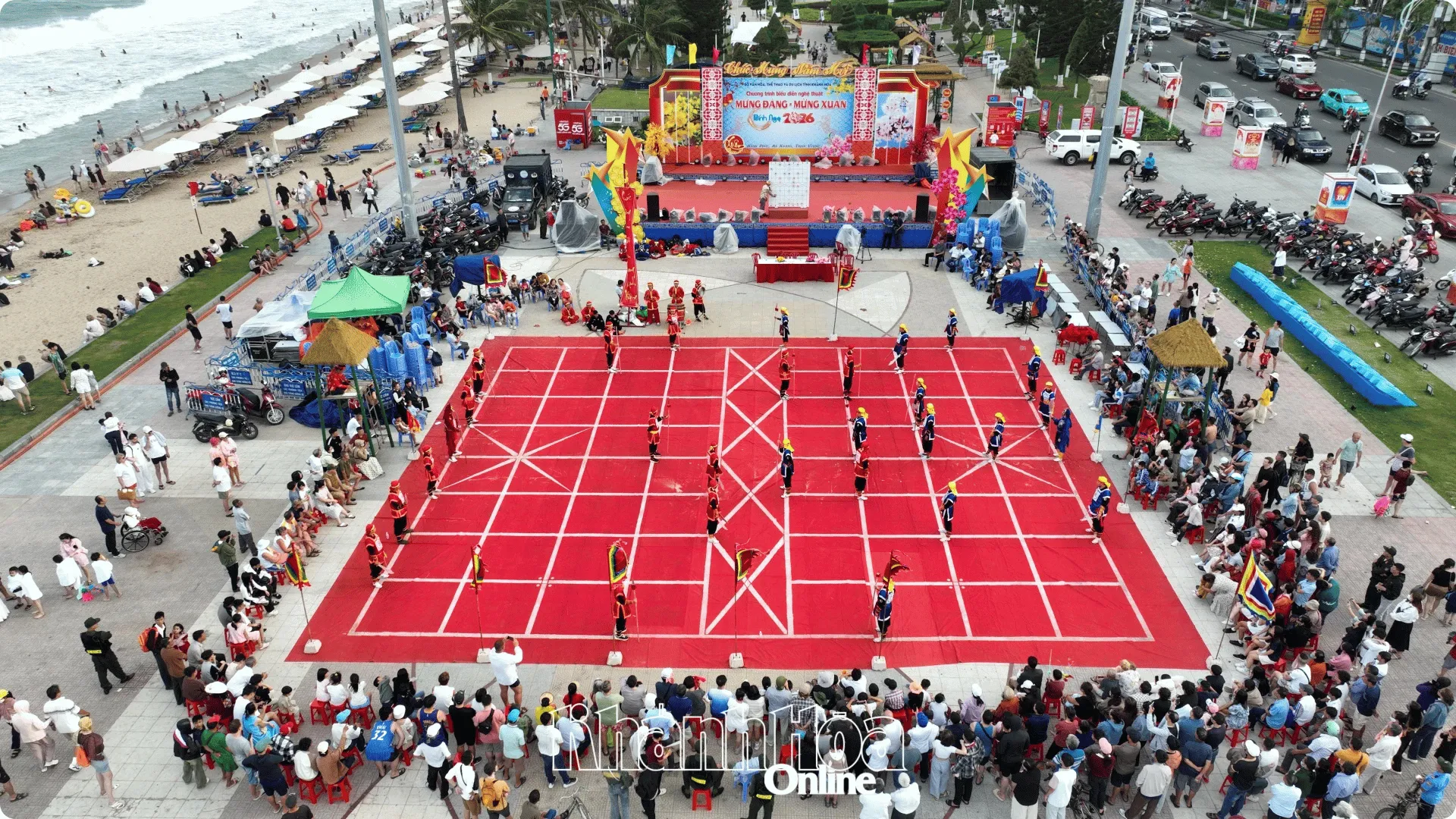
Human chess follows the rules of cờ tướng, but the pieces are people. Thirty-two costumed performers stand on a courtyard marked out as a giant board and move when the two players call their orders, often to drums. It is as much a staged spectacle as a game.
At the Lim Festival in Bắc Ninh, 32 human chess figures walk in the festival procession on the main day, and human chess is listed among the festival's folk games. In everyday Hanoi, you will see the same rules played on small pavement boards, with onlookers gathering to comment on each move.
6. Đánh đu (Bamboo Swing)
Players: one or two on the platform, watched by the village | Where: spring festivals in the northern delta, especially Bắc Ninh and villages around Hanoi | Today: performed at some festivals, revived in others
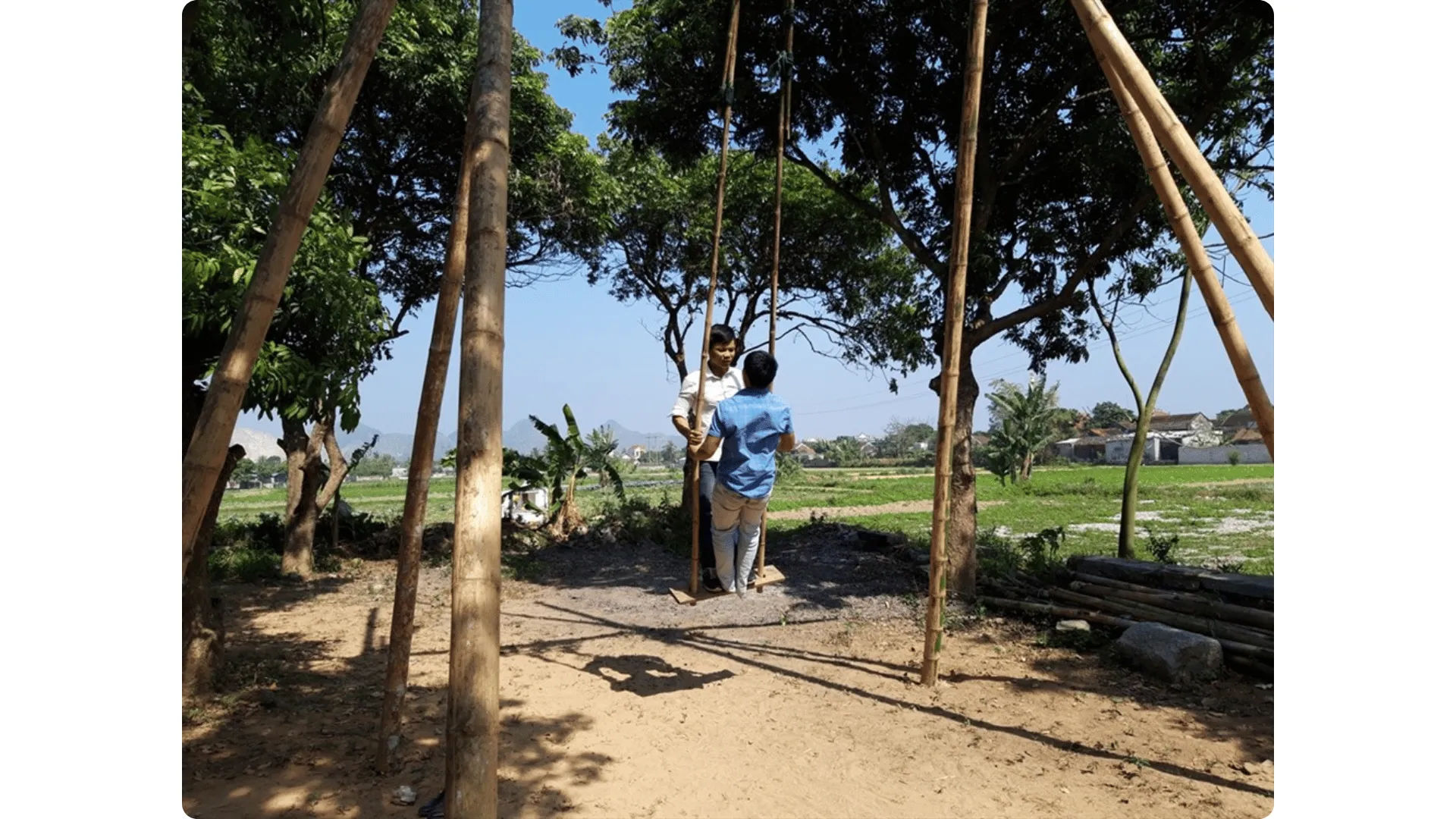
Village swings are built from tall bamboo posts near the communal house. The most common Vietnamese swing has a wooden platform instead of a seat, and one or two people stand on it and swing themselves high, until their bodies are nearly horizontal. In competitions, a prize or flag hangs at height and the swingers try to grab it, often as a couple.
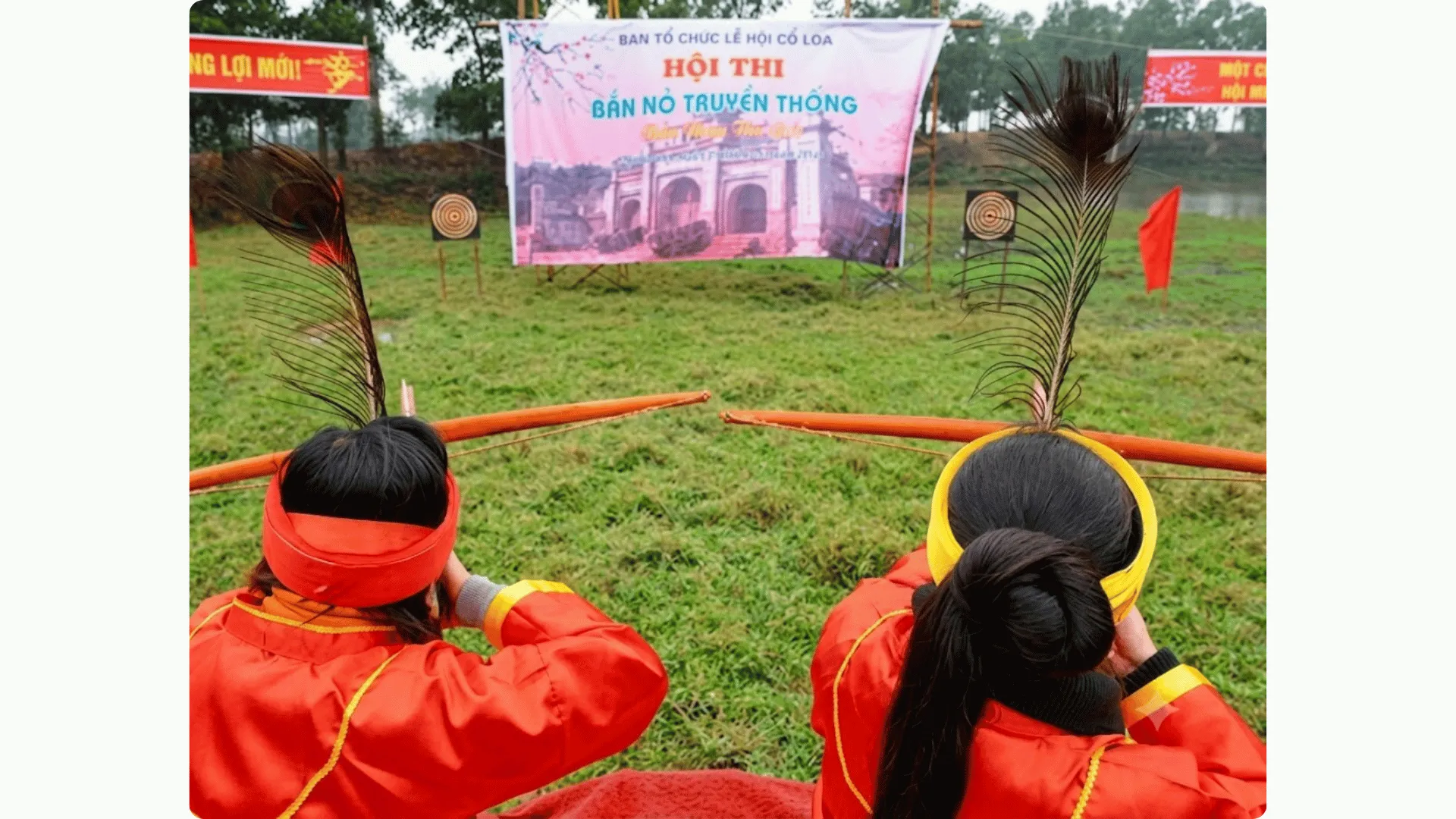
The game is most popular in the northern delta, especially in Bắc Ninh, and villages around Hanoi, including Cổ Loa, set up swings for spring festivals. It has not been continuous everywhere. In parts of Bắc Giang, swing contests lapsed for a time and have been restored over the past decade. Because of the height and skill involved, swinging is usually left to practiced villagers, and visitors generally watch.
7. Kéo co (Tug-of-War)
Players: two teams, often dozens of people | Where: spring festivals in Northern Vietnam | Today: actively practiced; UNESCO-listed (2015)
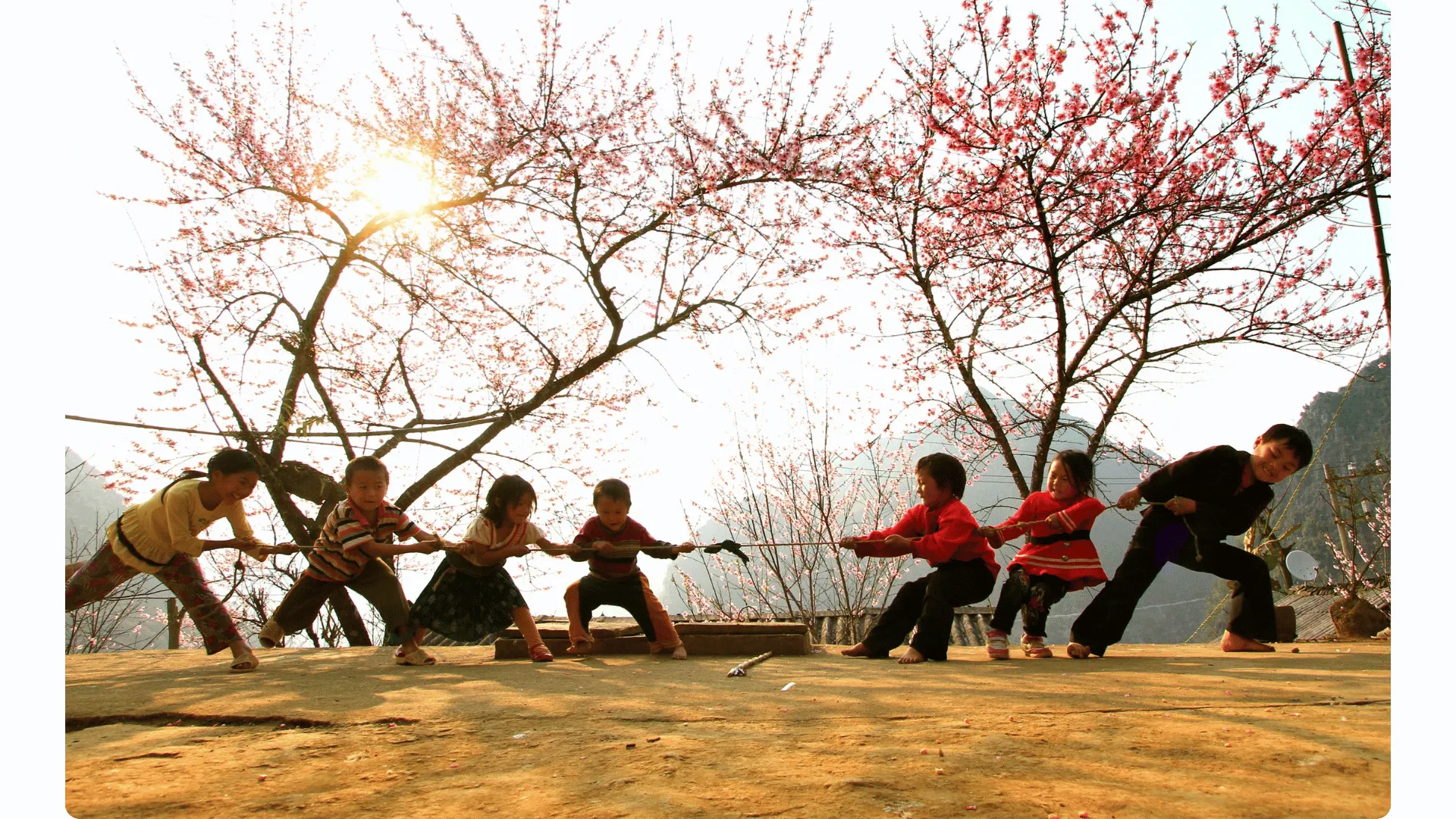
Two teams pull on opposite ends of a long rope, but the festival version is a ritual as much as a contest. It forms part of spring festivals, usually in front of the communal house, and nearly the whole community takes part, with elders guiding the rules and the rites. Winning matters less than unity and community harmony.
In Vietnam it is concentrated in the Northern Midlands, the Red River Delta and the North Central region, and Tày, Thái and Giáy communities also practice it. Local versions differ: in Thạch Bàn, in the Long Biên area of Hanoi, a sitting version is performed at the Trấn Vũ temple festival. A 2025 report described the tradition as thriving ten years after its UNESCO listing, and lighter versions turn up on Hanoi's weekend walking streets.
8. Đập niêu (Blindfolded Pot Smashing)
Players: one at a time, with a crowd | Where: festival programs, including the Lim Festival | Today: still part of festival programs
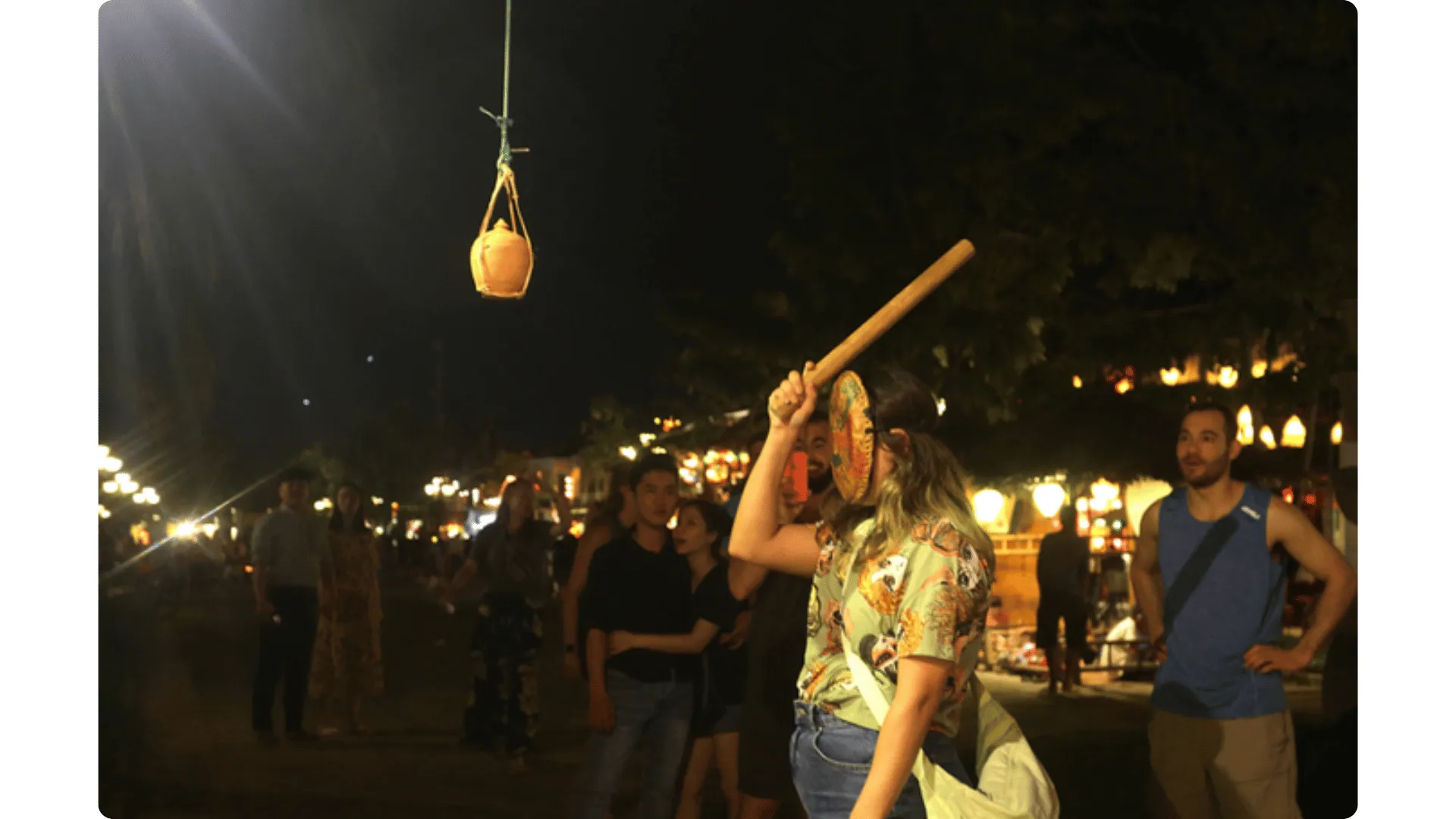
A clay pot (niêu) is hung up or placed at a distance. A blindfolded player walks toward it holding a stick and tries to break it, guided, and sometimes misled, by the shouts of the crowd. The audience is half the game. It needs only a pot, a stick and a scarf, so it is easy to organize and is often open to volunteers. Clay pot breaking is one of the games held at the Lim Festival, alongside bamboo swinging, wrestling, human chess and blind man's bluff.
9. Ném còn (Sacred Ball Throwing)
Players: individuals, pairs or teams | Where: Tày, Nùng, Thái and Mường communities in the northern uplands | Today: practiced at festivals and shown at cultural events in Hanoi
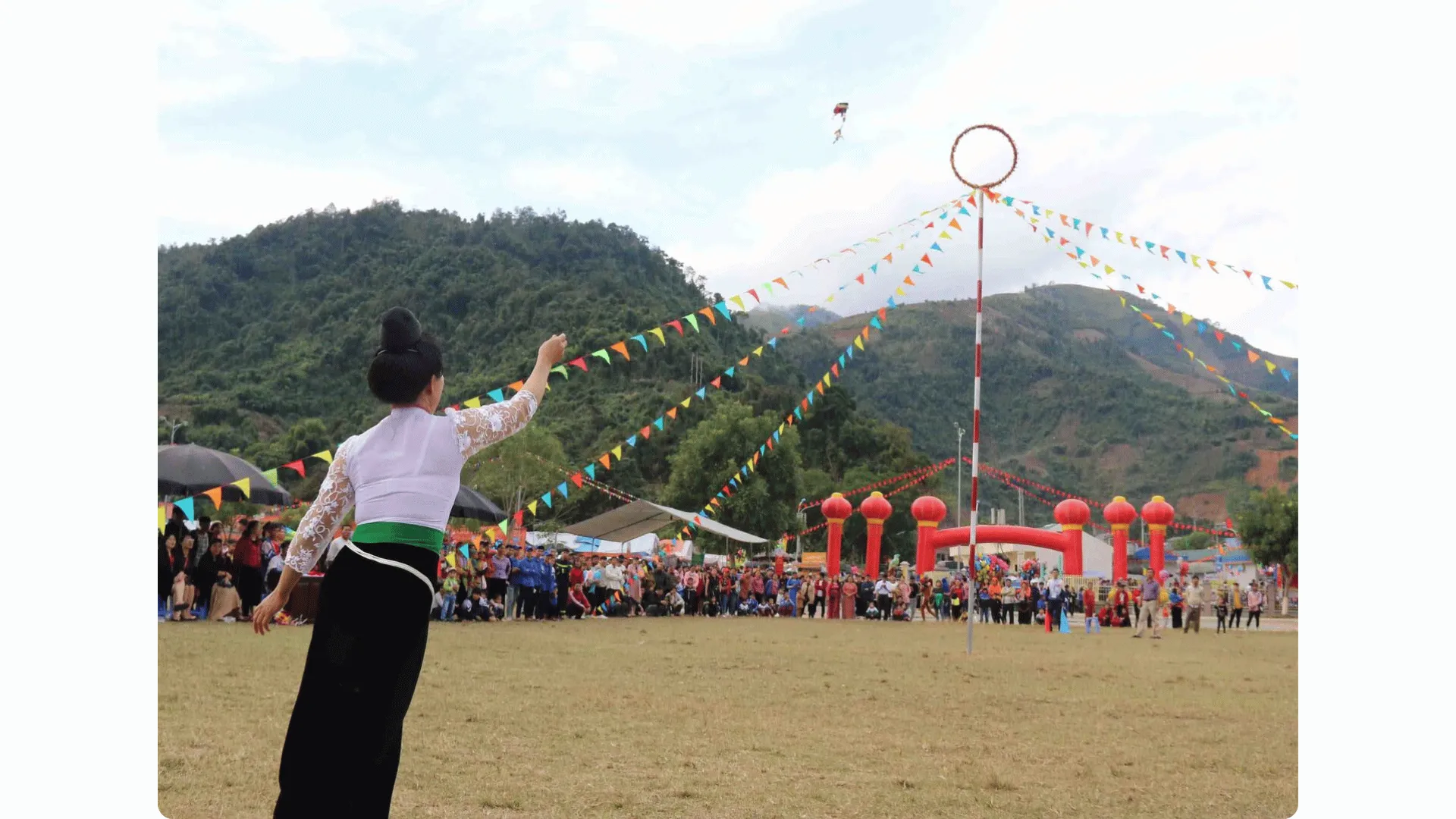
A tall bamboo pole stands in a field with a ring at the top. The còn is a cloth ball sewn from colorful fabric, stuffed with grain and cotton seeds and finished with tassels, and each family may throw its own ball through the ring for good luck. Ném còn is the centerpiece of Lồng Tồng ("going to the field"), a spring festival of the Tày and Nùng peoples. The festival includes an offering ritual, a ploughing ceremony and folk games, with tug-of-war and blind man's bluff alongside ném còn, and stick pushing and stilt walking also appear in some programs.
The game is not limited to one community. It is described as a game of the Tày, Nùng and Thái peoples, and Mường groups from Hòa Bình have demonstrated it at the Vietnam Museum of Ethnology in Hanoi.
10. Bài chòi (Card Game in Bamboo Huts)
Players: a group led by a caller, with an audience | Where: Central Vietnam, at Tết and spring festivals | Today: actively practiced; UNESCO-listed (2017)
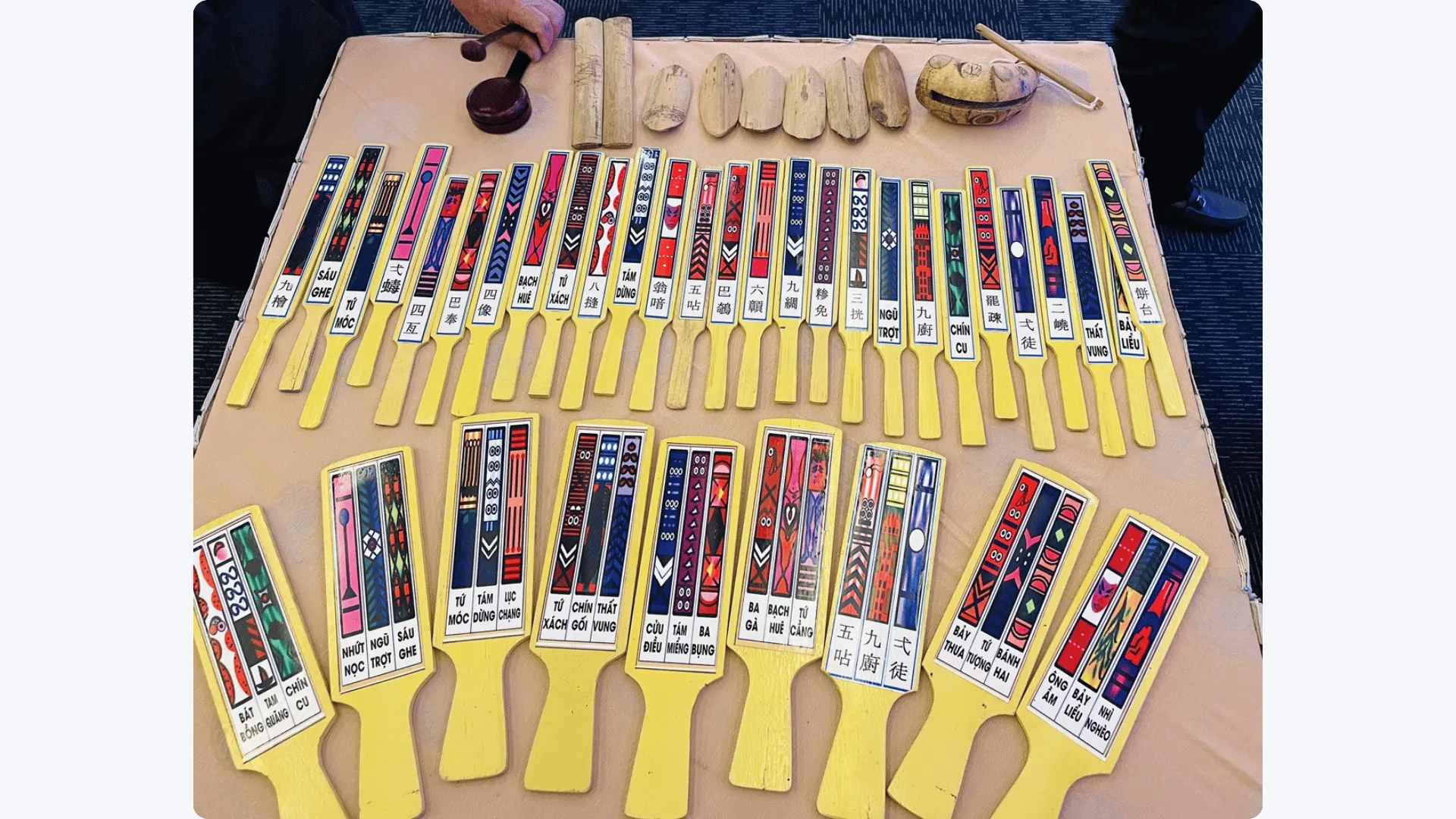
Bài chòi means "cards and huts," and it is part game and part folk theater. The games are played in bamboo huts during the Lunar New Year. Players sit in the small huts (chòi) holding cards, while a caller sings verses that hint at the names of the cards, and the first hut whose cards match the names called wins.
Bài chòi is a Central Vietnam tradition rather than a national one. It is popular in provinces from Quảng Bình to Khánh Hòa, including Đà Nẵng, and is often seen at local spring festivals. UNESCO noted that nearly 90 teams, groups and clubs practice and pass on the art, and visitors can play it in Hội An.
Vietnamese Folk Games at Festivals and Village Celebrations
Many Vietnamese festivals combine a ceremony with a celebration. In Northern Vietnam, a village festival is usually centered on the communal house, where the ritual part (lễ) comes first and the games and entertainment (hội) follow. The program depends on the village. One is known for tug-of-war, another for swings or wrestling, and a festival honoring a local hero may include reenactments. In some places, tug-of-war is closely linked to stories of local heroes who defended the land.
The Lim Festival in Bắc Ninh is the best-known example near Hanoi. It runs from the 11th to the 14th day of the first lunar month, with the main events on the 13th. It is best known for quan họ, a tradition of love-duet singing that UNESCO inscribed in 2009, performed in pagoda courtyards, at communal houses, on hills and on boats. Around the singing, the program has included wrestling, human chess, bamboo swinging and clay pot breaking.
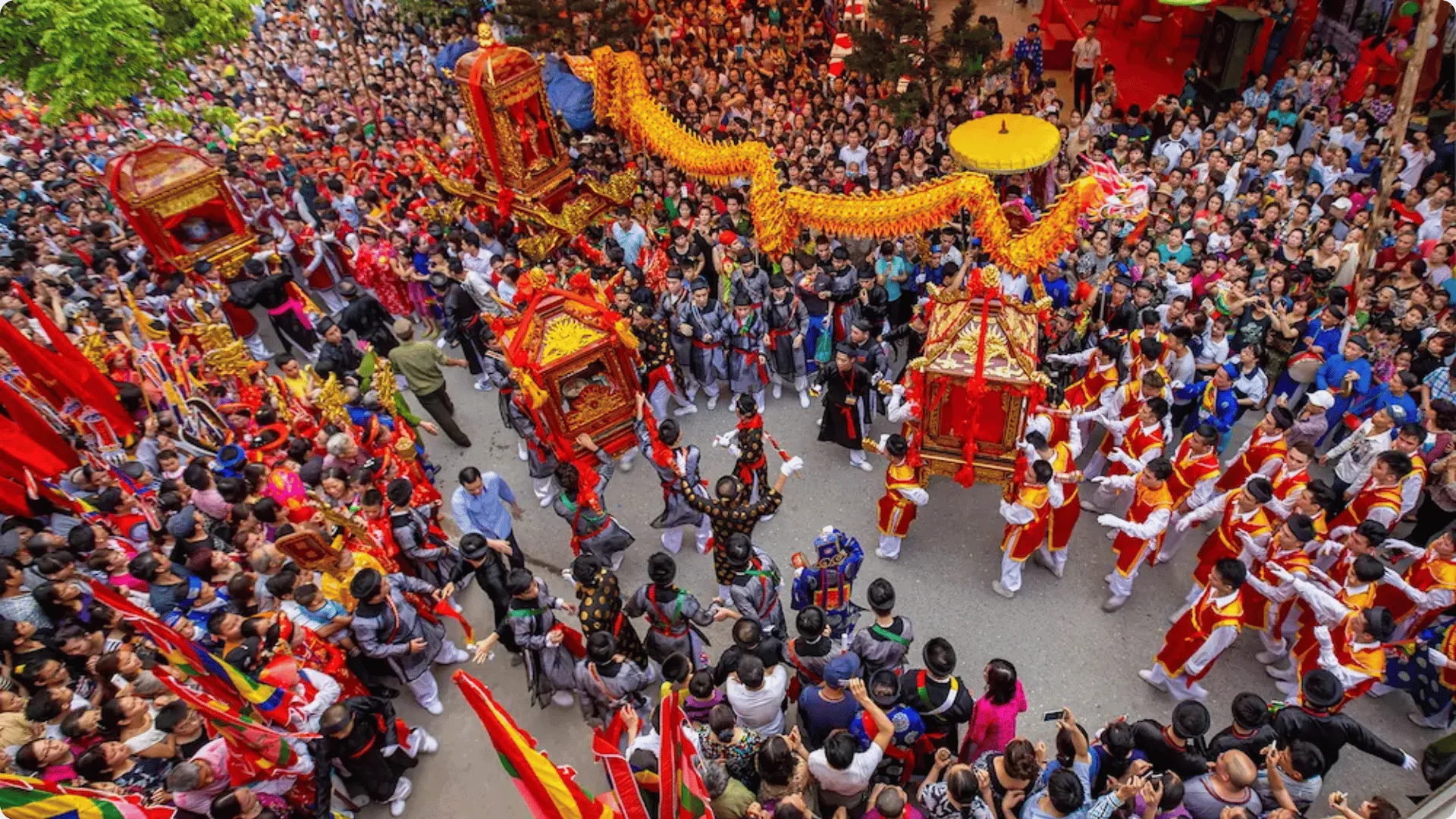
Northern village festivals cluster in the first months of the lunar year, so the season runs roughly from late January to April, although the Gregorian dates change every year. Tết itself is mainly a family holiday, and many village festivals begin a few days after it and continue for weeks. Spring is the best time to see games that need a crowd, such as tug-of-war, human chess and swinging. These are community events with their own schedules and rituals, and the program can change from year to year.
Where Can You Experience Traditional Games in Vietnam?
Some games can be found in Hanoi all year, while others depend on the festival calendar. The options below run from easy to plan to more involved.
Hanoi: Weekend Walking Streets and Museum Events
From Friday evening to Sunday night, streets around Hoàn Kiếm Lake are closed to vehicles, and folk games such as rope jumping, tug-of-war, ô ăn quan, bamboo jacks and stilt walking are often set up there. Activities change, so treat it as a chance to see the games rather than a guaranteed program.
The Vietnam Museum of Ethnology in Cầu Giấy is about 8 km from the city center. In past years its grounds have hosted folk games such as ô ăn quan and swinging over the first days of the lunar new year, and it has held folk-game events for International Children's Day. Check its calendar before you go. Both options fit easily into Hanoi tours as an evening or half-day stop.
Traditional Villages Near Hanoi
Set aside a day to visit one of the traditional villages near Hanoi to see the games in their local setting.
- Đường Lâm is an old village in the Sơn Tây area, roughly 45 to 50 km from central Hanoi. Its festival in the first lunar month is held at the communal house, with a palanquin procession, offerings and folk games. At other times of year, the local tourism office has offered farming and craft experiences.
- Cổ Loa, the ancient citadel site in Đông Anh, is one of the places where villagers set up swings for spring festivals.
- Thạch Bàn, on the east bank of the Red River, is where the sitting tug-of-war described above is performed.
A festival can be crowded and hard to follow without context, so village visits work best when local hosts or a guide can explain what you are seeing.
Local Festivals in Northern Vietnam
- Lim Festival (Bắc Ninh). Described above. It is about 20 km from Hanoi, so it can be done as a day trip.
- Lồng Tồng festivals (northern uplands). Celebrated between the 1st and 15th days of the lunar new year, Lồng Tồng is held in Tày and Nùng communities in provinces such as Cao Bằng, Lạng Sơn, Tuyên Quang, Hà Giang and Lào Cai. Distances are longer and each community sets its own program, so these need more planning than a day trip. They can be combined with wider Northern Vietnam tours, with the timing set around the festival calendar.
Beyond the North: Central Vietnam
Games differ by region, and a trip that continues south shows a different picture. In Hội An, visitors can play bài chòi. Around Huế, villages hold bamboo-swing contests during Tết, and the Đu Tiên festival in Gia Viên village is the best known, reported to take place every two years, so check whether it is running in the year you travel.
How Folk Games Connect Travelers with Local Life
Games work as a shared language. You do not need to speak Vietnamese to try ô ăn quan with a child or to pull on a tug-of-war rope, and a few minutes of play often starts a conversation more easily than a formal introduction.
They also show how a community is organized. At a festival, you can see who leads the ritual, who prepares the field or the rope, and how children, parents and grandparents each have a part. In tug-of-war, for example, elders guide the rules and rites while younger people learn by taking part.
Two things are worth remembering. Children's games are usually best learned from children, so a short session with local kids often teaches more than an adult's demonstration. And these are living practices, not museum pieces. Some games are played by neighbors for their own enjoyment, while others are organized as heritage programs or shown to visitors. Both are real, and asking your guide which one you are seeing adds useful context.
Folk games also fit well with other traditional Vietnamese activities, such as a walk through a craft village, a water puppet performance, a cooking session with a local family or a visit to a communal house. Beyond games, cultural experiences in Vietnam often combine several of these in one day.
How to Experience Vietnamese Traditional Games on a Trip
If you are deciding what to do in Vietnam on a first visit, folk games can be added to most itineraries. Vietnam cultural experiences that include them usually follow one of three routes, and the routes can be combined.
Three Ways to Include Folk Games
- Visit a festival. Spring is the season for games that need a crowd, such as tug-of-war, human chess and swinging. Dates follow the lunar calendar, so confirm them for your travel year.
- Use year-round settings in Hanoi. The weekend walking streets and museum event days offer a lighter introduction with no need to plan around a festival.
- Arrange a village visit. A day in a traditional village with hosts who can explain the games, alongside a meal or a craft session, is often the most relaxed option. This is where tailor-made tours help, because the visit can be set around your dates, your group and your interests.
If you are already planning a Hanoi tour, a museum visit or a village half-day can usually be added without reworking the whole route. Travelers with more time can build a Vietnam cultural tour that links Hanoi with villages, festivals and the northern uplands.
Practical Tips
- Check dates close to travel. Festival dates follow the lunar calendar and programs can change, so confirm a few weeks ahead.
- Plan around Tết. Around Lunar New Year, transport is busy and many shops and restaurants close for a few days. Village festivals mostly start after the holiday, so book early.
- Dress and behave respectfully. Dress modestly in a communal house or temple, follow local guidance around ritual areas, and ask before joining a game or photographing people, especially children.
- Prepare for crowds and weather. Major festivals such as Lim can be crowded, so arrive early and keep valuables secure. Spring in the North can be cool and drizzly, so bring a light rain layer.
- Ask about animal contests. Some traditional village festivals feature animal-related events, such as water buffalo fighting or bird singing contests. While these hold historical and agricultural significance, they may not align with modern animal welfare standards.
Frequently Asked Questions About Vietnamese Traditional Folk Games
Can tourists join in if they see locals playing games on the street?
⇒ Absolutely. In places like Hanoi’s weekend walking streets, locals are usually very welcoming. Games like tug-of-war or rope jumping are easy to jump into. Just make eye contact, smile, and ask before stepping in.
Do I need to speak Vietnamese to participate?
⇒ Not at all. Many Vietnamese traditional folk games rely on rhythm, counting, or physical coordination. Games like ô ăn quan (mandarin square capturing) are purely numbers-based, making them a great icebreaker even if you don't share a language.
I saw a game where people were swinging incredibly high on bamboo poles. What is that?
⇒ That is đánh đu (bamboo swinging), a major highlight of northern spring festivals. Pairs stand on a wooden platform suspended by tall bamboo poles and use their body weight to swing almost horizontally. It takes immense skill, so it's usually left to local experts while visitors watch and cheer.
What is the best time of year to see festival games in Vietnam?
⇒ The best time is during the spring, specifically in the month following the Lunar New Year (Tết), which usually falls in February or March. This is when northern villages host their annual festivals featuring tug-of-war, human chess, and blindfolded pot smashing.
Where is the best place in Hanoi to see traditional games?
⇒ The pedestrian zone around Hoan Kiem Lake from Friday evening to Sunday night is the easiest spot. For a more curated experience, check the events calendar at the Vietnam Museum of Ethnology, which often hosts folk game demonstrations during holidays and on International Children's Day.
Are these games just put on for tourists?
⇒ No. While you might see them organized at museums or cultural shows, they are deeply rooted in local life. Festival games are serious community traditions, and the street games you see on weekends are genuinely how many local kids and teens spend their free time.
Which Vietnamese folk games are easiest for traveling kids to learn?
⇒ Chơi chuyền (bamboo jacks) and ô ăn quan (the pebble board game) are great for kids. They require minimal setup, the rules are easy to grasp, and local children are usually very eager to show visiting kids how to play.
Is it okay to take photos of people playing games in villages?
⇒ Generally, yes, especially at public festivals where the atmosphere is highly celebratory. However, if you are visiting a quiet village or want to photograph young children playing, it is always polite to ask for permission first—a warm smile and a gesture with your camera is usually enough.
How can I include these experiences in my itinerary?|
⇒The easiest way is to book a tailor-made tour. A local expert can add a visit to a traditional village—like Duong Lam—or align your travel dates with a regional festival, ensuring you get an authentic cultural experience without the stress of navigating rural logistics.
Plan a Cultural Experience with Typic Travel
If you want to go beyond the usual sightseeing, spending time in a local village or timing your trip for a regional festival is one of the best ways to see the real Vietnam. But because festival dates change every year with the lunar calendar, and authentic village interactions are hard to arrange on your own, planning can be tricky.
That's where we come in. At Typic Travel, we design tailor-made tours that connect you directly with the rhythm of local life. Whether you want to add a relaxed half-day village visit to your Hanoi tour, or build a complete Vietnam cultural experience around a vibrant highland festival, get in touch with our team to start shaping your trip.