
What Is the Vietnamese Mid-Autumn Festival? A Traveler's Guide to Tet Trung Thu
Every autumn, streets across Vietnam fill with red star-shaped lanterns, the smell of fresh mooncakes, and the beat of drums leading a lion dance through the neighborhood. This is the Vietnamese Mid-Autumn Festival — known locally as Tet Trung Thu, and sometimes called the Vietnamese Moon Festival by English-speaking visitors. It's one of Vietnam's festivals that first-time visitors often notice without quite understanding what they're looking at.
What is the Vietnamese Mid-Autumn Festival? In short, it's a lunar-calendar celebration held on the night of the full moon in the eighth lunar month, centered on family, children, and gratitude for the harvest. Unlike Vietnam's Lunar New Year (Tet Nguyen Dan), it isn't a public holiday - shops stay open, transport runs as normal, and travelers can experience it without rearranging an entire itinerary. In 2026, the Vietnamese Mid-Autumn Festival falls on Friday, September 25, though because the date follows the lunar calendar, it shifts by two to five weeks each year.
This guide explains what Tet Trung Thu is, where its traditions come from, how Vietnamese families and communities celebrate it today, and how travelers - particularly those visiting Hanoi and Northern Vietnam - can experience it in a way that's respectful and genuinely worthwhi
Table of contents
- What Is the Vietnamese Mid-Autumn Festival?
- The History and Origins of Tet Trung Thu
- Why Is the Mid-Autumn Festival Important in Vietnamese Culture?
- How Is the Vietnamese Mid-Autumn Festival Celebrated?
- Traditional Foods of the Vietnamese Mid-Autumn Festival
- Where to Experience the Mid-Autumn Festival in Vietnam
- Vietnamese Mid-Autumn Festival vs. Other Mid-Autumn Festivals in Asia
- How to Experience Tet Trung Thu as a Traveler
- Frequently Asked Questions
- Plan a Cultural Experience with Typic Travel
What Is the Vietnamese Mid-Autumn Festival?
What Is Tet Trung Thu?
Tet Trung Thu translates roughly to "festival in the middle of autumn." In Vietnamese, "Tet" simply means "festival" or "celebration" and is attached to several occasions throughout the year — it isn't exclusive to Lunar New Year, which often causes confusion for first-time visitors. Tet Trung Thu is also commonly nicknamed Tet Thieu Nhi, or the Children's Festival, because of how central children are to the celebration.
The festival belongs to a wider family of Mid-Autumn celebrations marked across East and Southeast Asia, all tied to the same full moon. Vietnam's version, however, has developed its own distinct identity, which this guide covers in detail.
When Is It Celebrated?
The Vietnamese Mid-Autumn Festival is held on the 15th day of the eighth lunar month — the night the moon is considered fullest and brightest. Because it follows the lunar calendar rather than the Gregorian one, the date shifts every year. The Vietnamese Mid-Autumn Festival 2026 falls on Friday, September 25; in recent and coming years the date has ranged from mid-September to early October.
Unlike Tet Nguyen Dan, Tet Trung Thu is not an official public holiday in Vietnam. Businesses, banks, and transport all operate normally, which makes it an easy festival to fold into a wider trip rather than something that requires special planning around closures.
Why Is It Important in Vietnam?
At its core, the festival is about pausing to give thanks — historically for the rice harvest, and today more broadly for family, community, and the year's good fortune. It's also, unmistakably, a festival for children: much of what happens on the night itself, from lantern parades to lion dances, is built around giving kids an evening that's entirely theirs. The sections below go into each of these threads in more detail.
The History and Origins of Tet Trung Thu
Historians generally trace Mid-Autumn harvest festivals across East and Southeast Asia back many centuries, tied to the lunar-calendar agricultural cycle. The full moon of the eighth lunar month traditionally marked a pause between the rice harvest and the next planting season — a natural point in the year for communities to rest and celebrate together. Vietnam's Mid-Autumn Festival grew out of these shared regional roots, then developed its own character over time.
Much of what people associate with the festival's origin, though, belongs to folklore rather than documented history. The best-known story is the legend of Chu Cuoi, a woodcutter said to have clung to a magical banyan tree as it floated up to the moon after his wife accidentally damaged it. Different retellings exist — in some versions the tree has healing powers Cuoi discovered by watching a tigress treat her injured cubs; in others, the details of how the tree ends up airborne differ. That variation is a useful reminder that this is oral folklore, passed down and reshaped over generations, rather than a single fixed historical record. Vietnamese Mid-Autumn folklore also includes the moon goddess Hang Nga, a figure that appears in different forms across East Asian mid-autumn mythology more broadly. These stories are often used to explain, in the way folklore does, why children carry lanterns on the night of the festival — in the story, the lanterns are said to help light Cuoi's way back down to earth. They're best appreciated as cultural stories told to children rather than as historical fact.
What's better documented is how the celebration evolved within Vietnam itself. Over the twentieth century in particular, Tet Trung Thu became increasingly centered on children, which is how it earned its everyday name, Tet Thieu Nhi. That emphasis sets it apart from related festivals elsewhere in the region, where the day more often centers on adult family reunions — a difference explored further later in this guide.
It's also worth noting that celebrations aren't identical from family to family or region to region. Urban families in Hanoi or Ho Chi Minh City might mark the festival with a shop-bought mooncake and an evening out to see the lanterns, while rural communities may hold onto older customs like handmade toys or communal gatherings. Both are legitimate versions of the same traditional Vietnamese festival.
Why Is the Mid-Autumn Festival Important in Vietnamese Culture?
Family Reunions
Tet Trung Thu isn't the major travel event that Lunar New Year is, but it still draws families together for an evening. Where possible, family members make an effort to share a meal, admire the full moon, and eat mooncakes as a household — a smaller-scale, more low-key version of the reunion spirit found in Mid-Autumn celebrations elsewhere in the region.
Children and Childhood
This is where the festival's Vietnamese character is clearest. Parents and grandparents buy or make lanterns and toys, prepare mooncakes and sweets, and take children out to see the neighborhood decorations and performances. For many Vietnamese adults, Tet Trung Thu carries a strong current of nostalgia — it's frequently remembered as one of the most vivid parts of growing up.
Community Celebrations
Beyond individual households, the festival plays out at a community level. Neighborhoods, schools, and local cultural centers organize lantern processions and lion dance visits, and in cities like Hanoi, entire streets take on a festival atmosphere for weeks. This communal side of Tet Trung Thu is a large part of what makes it enjoyable for visitors, since much of it plays out in public space rather than behind closed doors.
Traditional Values and Cultural Symbolism
Running through all of this are a few consistent themes: gratitude for a good harvest, the importance of family unity — often symbolized by the round shape of the mooncake — and respect for elders, with children traditionally encouraged to see the festival as a chance to thank their grandparents and parents. These values are passed on partly through the festival's rituals and partly through its folklore, which is retold to each new generation of children.
How Is the Vietnamese Mid-Autumn Festival Celebrated?
Lanterns
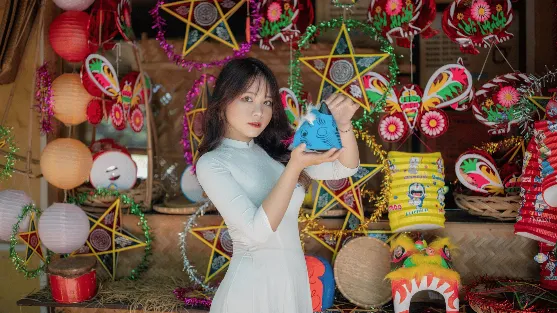
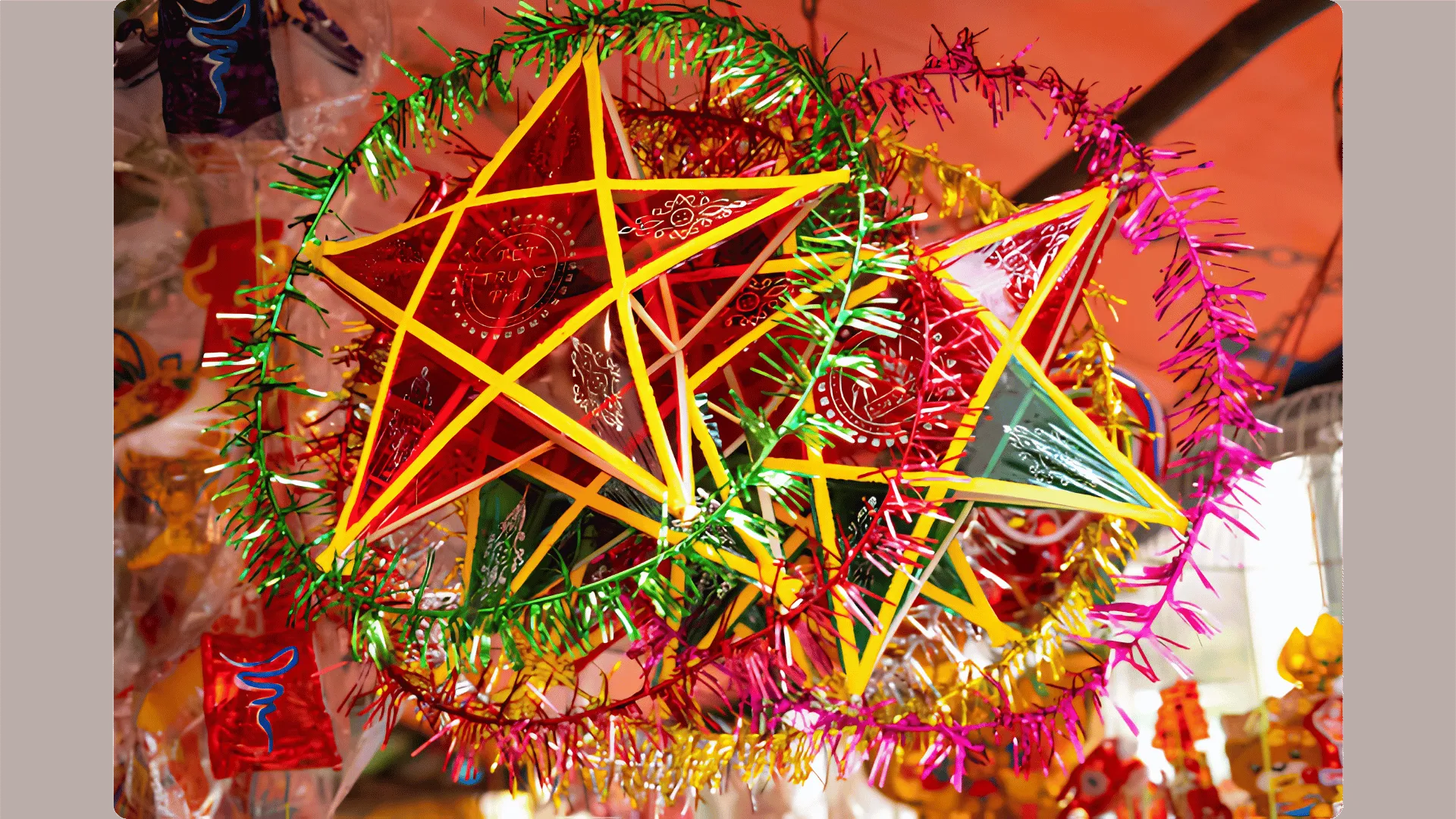
The star-shaped lantern, or den ong sao, is the single most recognizable symbol of the Vietnamese Mid-Autumn Festival: a five-pointed frame of thin bamboo covered in colorful paper or cellophane, traditionally lit with a small candle and today often fitted with LED lights. Children carry them through the streets in the evening, usually as part of an informal procession rather than a scheduled parade.
Other traditional shapes exist alongside the star, including carp-shaped lanterns (den ca chep), tied to their own local folk story, and den keo quan, a cylindrical lantern that spins from the rising heat of its candle, casting moving shadow figures onto the paper shade as it turns. Contemporary lanterns now range from cartoon-character designs to battery-powered versions of the classic star shape, sold alongside the traditional paper ones.
Lion Dances
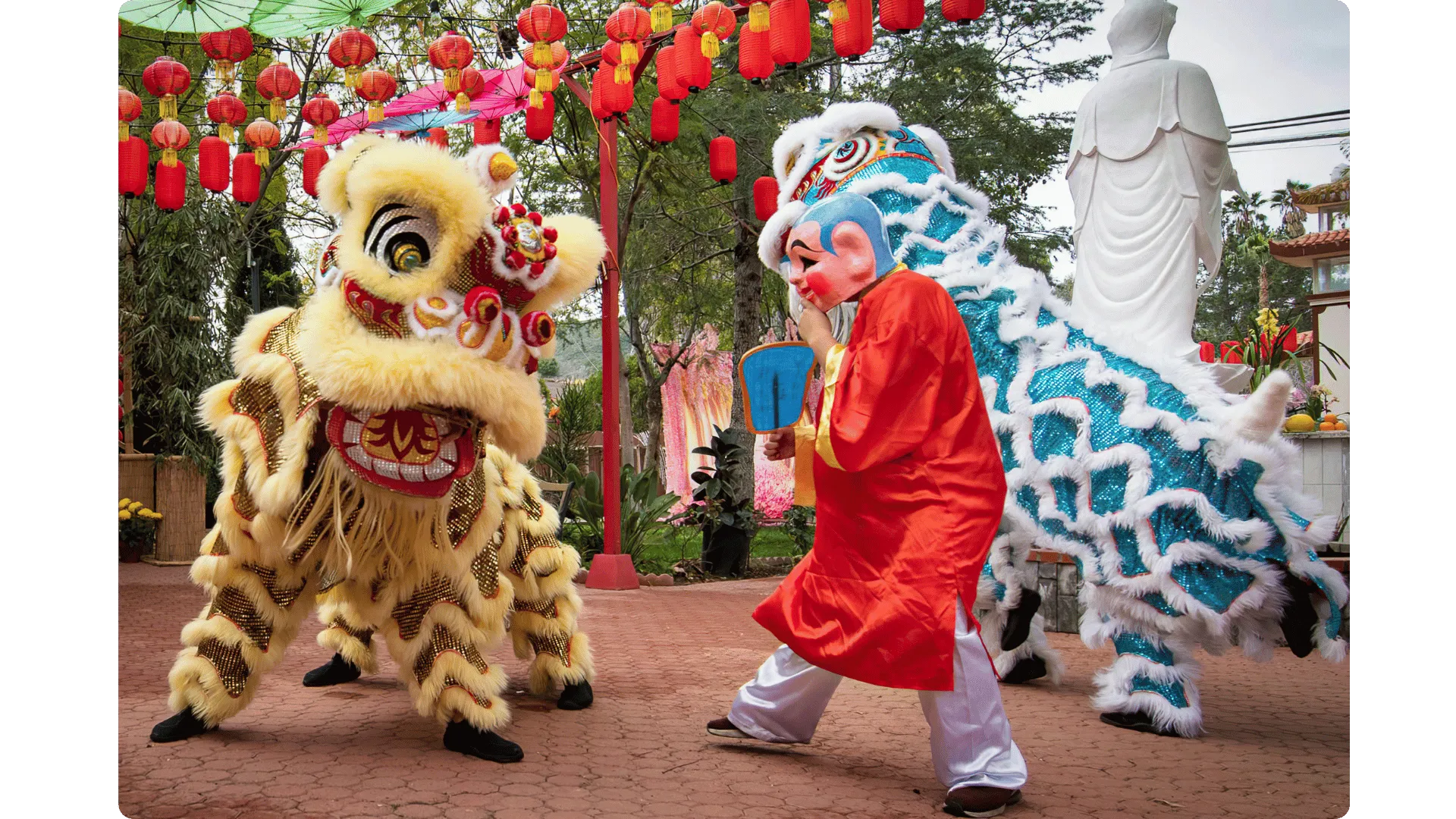
Lion dance, or mua lan, is a highlight of the festival in cities and villages alike. Two performers work inside a single elaborate lion costume — a different setup from the dragon dance, which uses many dancers along a long body — moving to the rhythm of drums, cymbals, and gongs. A comic, round-masked character called Ong Dia, representing the Earth God, typically leads the lion through the crowd, teasing it and interacting playfully with onlookers, especially children. The performance is believed to bring good luck and ward off misfortune, and troupes perform outside homes, shops, schools, and in public squares throughout the festival period.
Mooncakes
No description of Tet Trung Thu is complete without mooncakes, covered in full in the next section. In short: families share them at home, gift them to relatives and colleagues, and treat them as much as a symbol of the season as a treat to eat.
Children's Activities
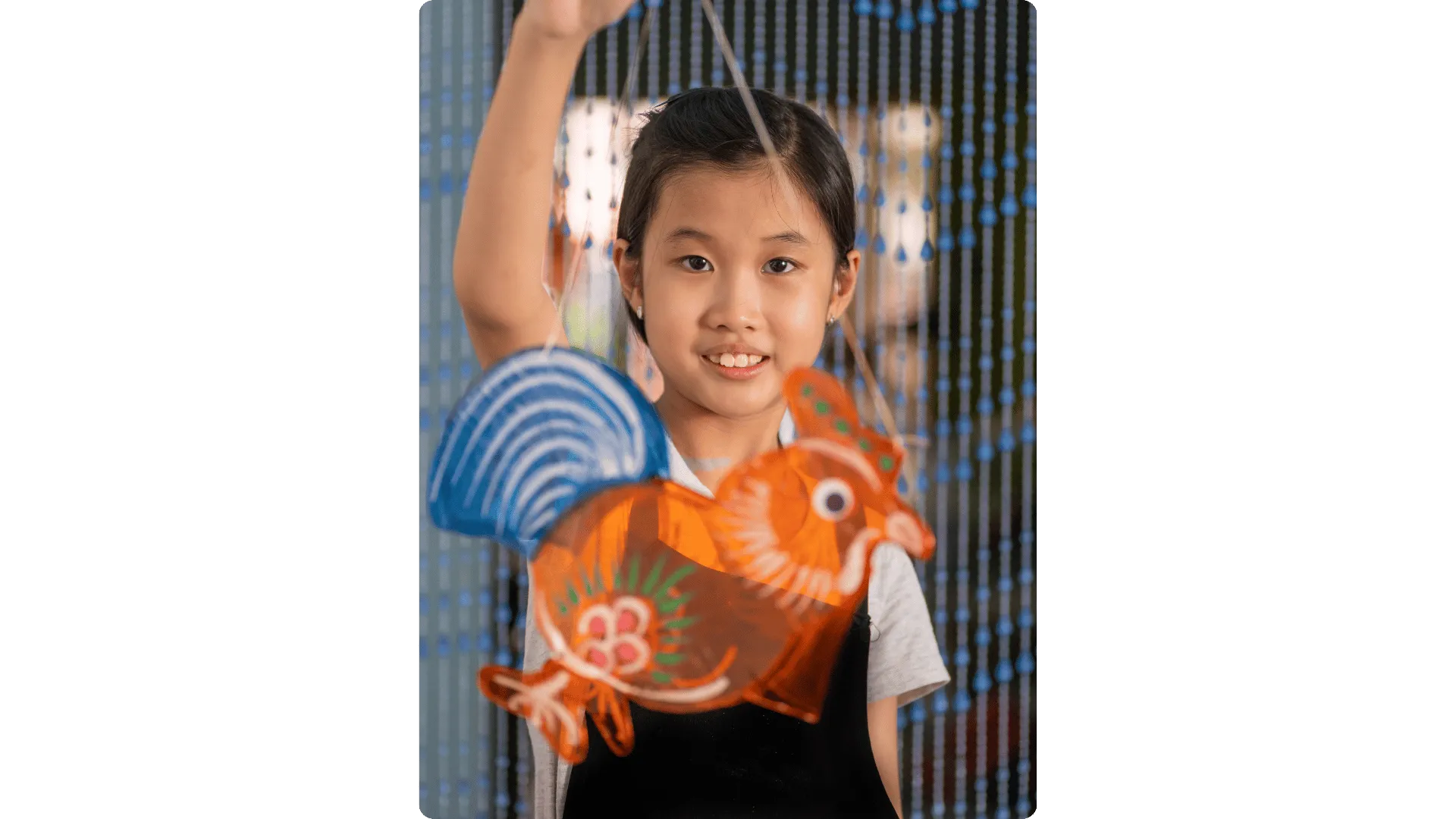
Beyond lanterns and lion dances, children take part in mask-making and lantern-making workshops, wear paper masks of animals or folklore characters, and play with traditional toys such as small drums and to he — tiny figurines molded from colored sticky rice dough. Schools and community centers often organize games and small performances in the days around the festival.
Family Gatherings
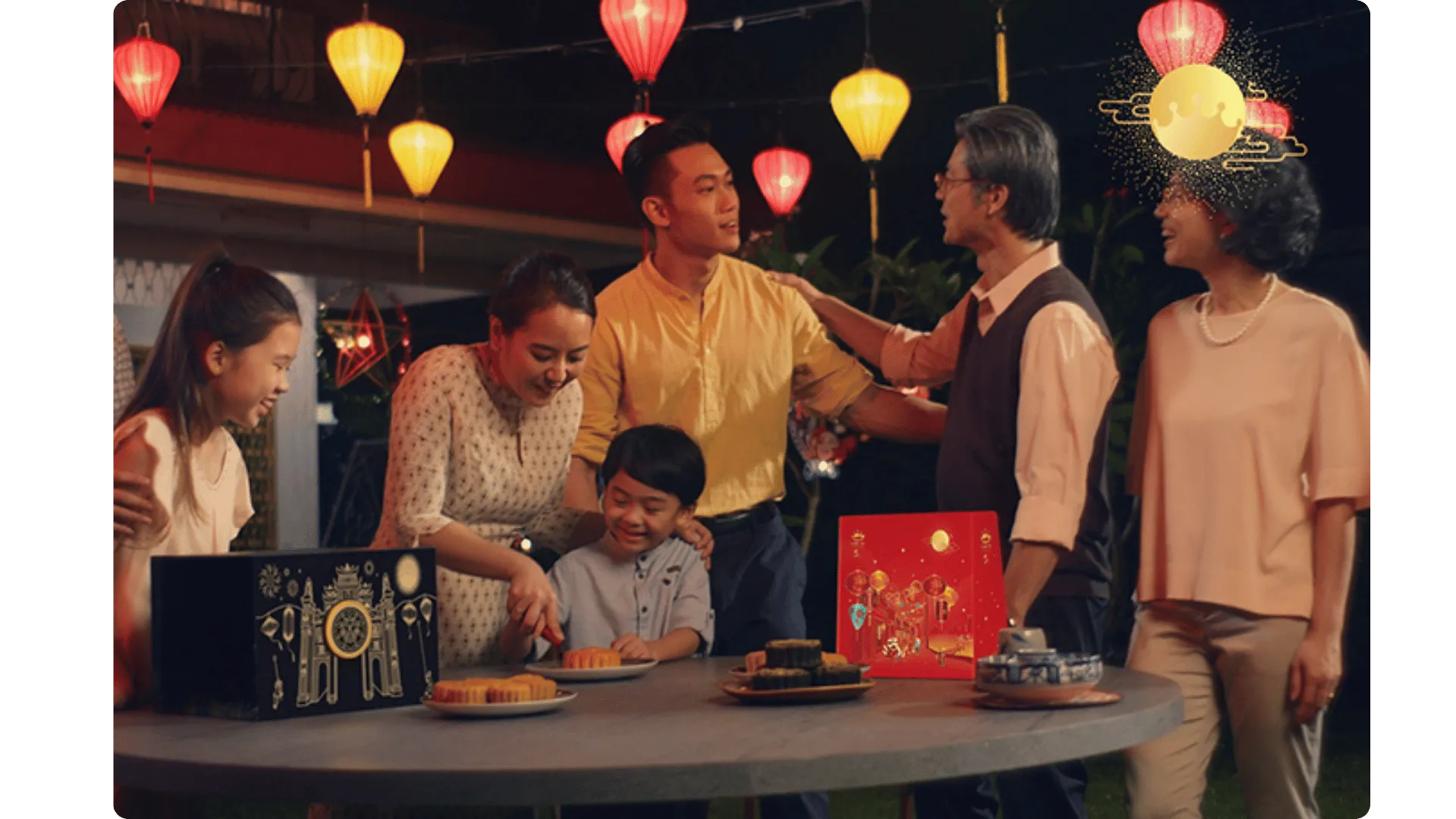
In the evening, families typically gather at home over mooncakes and seasonal fruit — pomelo, persimmon, and grapes are common — while looking out for the full moon together. It's also a common moment for parents or grandparents to retell the story of Chu Cuoi to younger children.
Traditional Decorations and Performances
Streets and homes fill with hanging lanterns in the weeks leading up to the festival, and some households prepare an elaborate fruit-and-cake tray known as mam co Trung Thu, occasionally shaped into playful figures for children, such as a "hedgehog" made from a scored pomelo. In parts of Northern Vietnam, communities have also preserved trong quan, a traditional call-and-response folk singing style historically associated with the Mid-Autumn season, though it's now less common than lanterns and lion dances.
Traditional Foods of the Vietnamese Mid-Autumn Festival
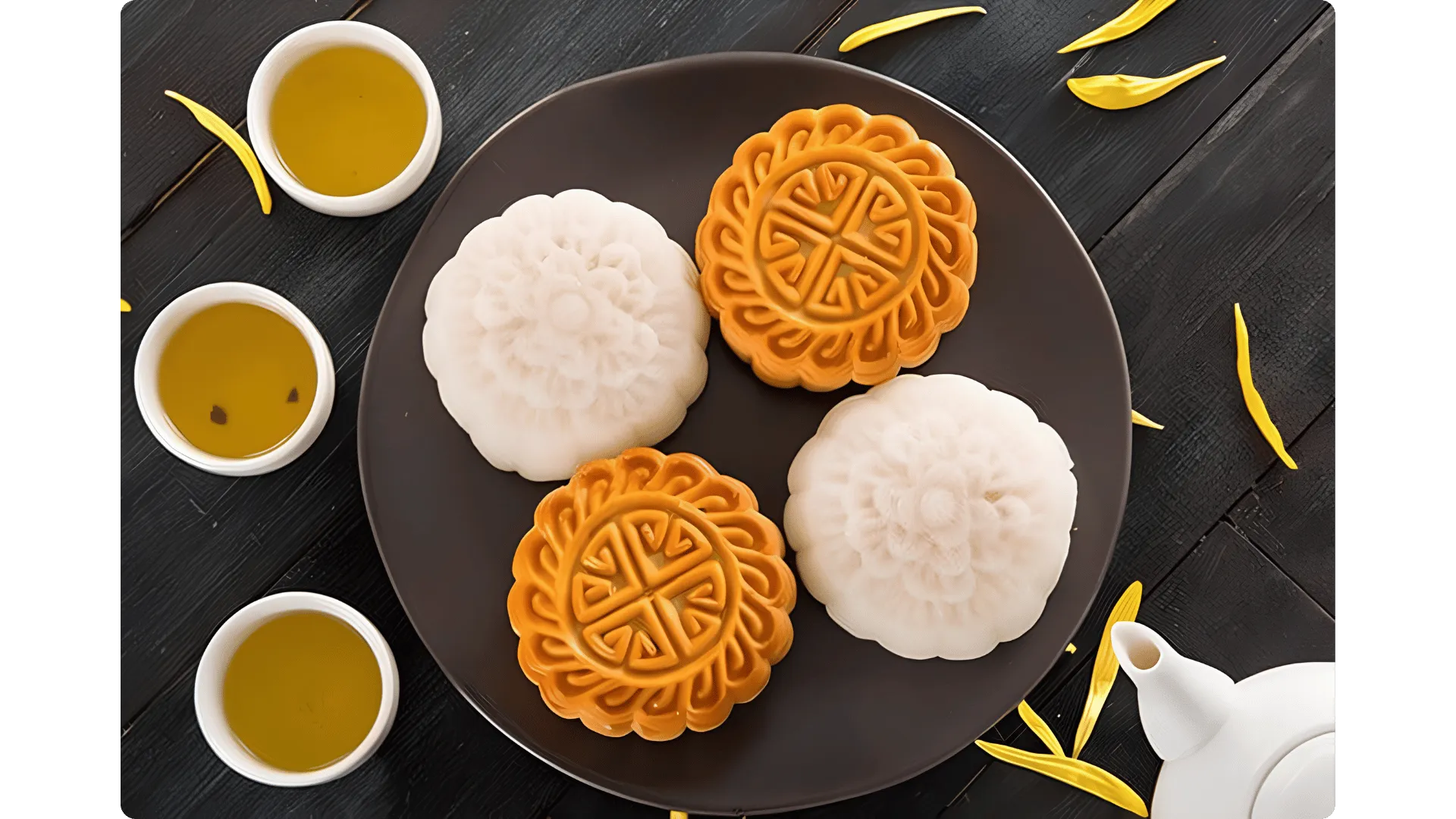
Mooncakes, or banh Trung Thu, are the signature food of the festival, and Vietnam has two distinct traditional styles.
Banh Nuong (Baked Mooncake)
Banh nuong has a golden-brown baked crust made from wheat flour, oil, and a malt-based syrup, brushed with egg wash before baking for its glossy finish. Traditional fillings combine salted egg yolk (meant to echo the full moon), dried pork sausage, roasted nuts and seeds, and mung bean or lotus seed paste, sometimes flavored with pomelo blossom water or citrus leaf.
Banh Deo (Sticky Rice Mooncake)
Banh deo isn't baked at all. Its soft, pale crust is made from pre-cooked glutinous rice flour mixed with sugar syrup and often pomelo blossom water, giving it a chewy texture and a delicate floral note. It's generally sweeter than banh nuong, filled with mixed nuts or mung bean paste, and best eaten fresh — it doesn't keep as long as its baked counterpart.
Modern and Traditional Fillings
Alongside the combinations above, contemporary bakeries in cities like Hanoi and Ho Chi Minh City now produce mooncakes with fillings such as taro, red bean, coconut, and matcha, along with novelty formats like mooncake-flavored cupcakes. It's a good example of how Vietnamese traditions keep developing rather than staying fixed — the festival's food culture continues to evolve while the two classic styles remain the standard against which newer versions are measured.
How Mooncakes Are Shared
Mooncakes are usually cut into small wedges and shared after a family meal, alongside tea. They're also widely given as gifts to relatives, friends, and colleagues in the weeks before the festival, often in decorative boxes — a seasonal gifting custom not unlike exchanging holiday treats elsewhere in the world. Commercial mooncake-making in Vietnam has its own local history: some of the country's earliest dedicated mooncake bakers were Chinese-Vietnamese communities in Ho Chi Minh City's Cho Lon district in the mid-twentieth century, and mooncakes are now produced and sold nationwide by both Vietnamese and international brands.
Where to Experience the Mid-Autumn Festival in Vietnam
Hanoi Old Quarter
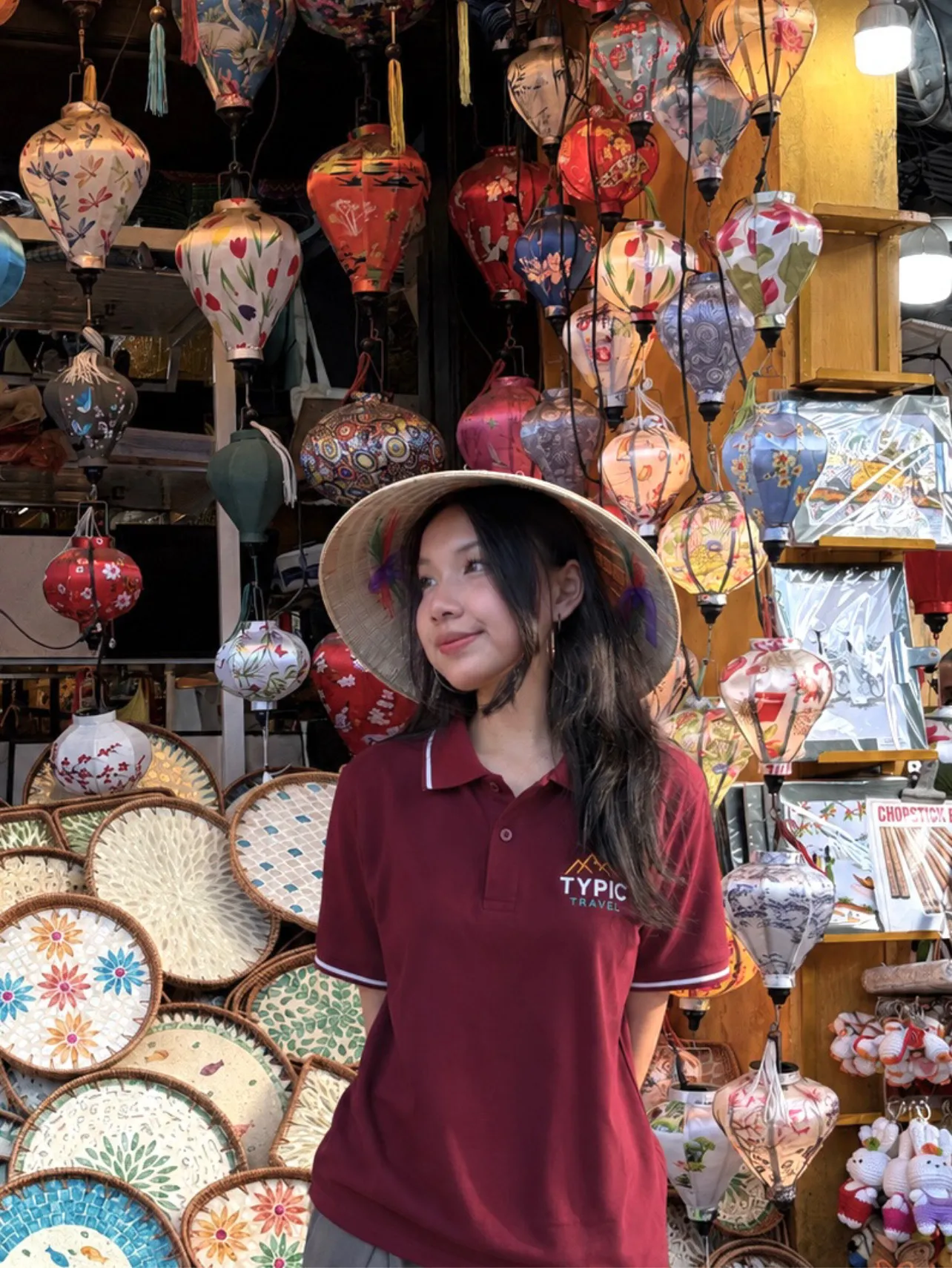
The center of it all is Hang Ma Street, a centuries-old trading street near Dong Xuan Market that has sold paper goods for generations and takes on its popular nickname, "Lantern Street," every year around this time. In the weeks before the festival, its shopfronts fill with star lanterns, carp lanterns, lion heads, masks, and drums, drawing local families doing their festival shopping alongside travelers curious about the atmosphere. Neighboring streets — Luong Van Can, Hang Luoc, Hang Dao, and Hang Giay — join in, as does the area around Hoan Kiem Lake. In some years, the Old Quarter also hosts organized cultural programs around Dong Xuan Market and heritage houses such as the one at 87 Ma May Street, with craft workshops, folk games, and a lantern procession.
Explore Typic Travel’s Hanoi tours here!
Traditional Villages
For a quieter, more local counterpart to the Old Quarter's crowds, several craft villages on the outskirts of Hanoi still make the festival's toys and decorations by hand. Ong Hao village in nearby Hung Yen province, around 40 kilometers from Hanoi, has produced handmade masks, drums, and lion heads for more than a century, with several households still practicing the craft today. Van Canh village, in Hanoi's own Hoai Duc district, is known for its handmade star lanterns. Both offer a more traditional, workshop-style look at where the festival's decorations actually come from — a good example of a traditional village worth adding to a Northern Vietnam itinerary.
Discover our craft villages tour here!
Northern Vietnam
Beyond Hanoi, Mid-Autumn traditions are woven into daily life across Northern Vietnam more broadly, from small-town lantern displays to village-level lion dance troupes. The timing often coincides with the tail end of the region's rice harvest, so the countryside scenery and the festival atmosphere naturally overlap — a good reason to see Northern Vietnam's cultural side alongside its landscapes during this season.
>> You may like: Northern Vietnam: Complete Guide & Itinerary for an Unforgettable Trip
Local Community Celebrations
Outside the well-known streets, most Vietnamese neighborhoods, schools, and pagodas hold some form of Mid-Autumn celebration — usually a lantern procession, a small lion dance visit, or a gathering for children. These are typically informal, community-level events rather than publicized attractions, which is part of what makes them worth seeking out with local guidance.
Specific events, locations, and schedules do vary from year to year and are usually confirmed only in the weeks beforehand, so it's worth checking current listings — or asking a local contact — closer to your travel dates rather than planning around a fixed program months in advance.
Vietnamese Mid-Autumn Festival vs. Other Mid-Autumn Festivals in Asia
The Vietnamese Mid-Autumn Festival shares its roots with similar full-moon harvest festivals celebrated across East and Southeast Asia, but each country's version has developed its own character. None of these traditions is more "authentic" than another — they're regional variations on a shared calendar, each shaped by local history.
In China, the Mid-Autumn Festival (Zhongqiu Jie) centers on adult family reunion, tied to the legend of the moon goddess Chang'e. Mooncakes are shared as a symbol of wholeness — their round shape is read as a visual metaphor for family unity — and lantern riddles are a popular pastime.
In South Korea, Chuseok is a three-day national holiday built around returning to one's hometown, honoring ancestors with a formal memorial ceremony, and sharing a harvest feast that includes songpyeon, a type of stuffed rice cake.
In Japan, Tsukimi (or Otsukimi, "moon-viewing") is a quieter, more contemplative occasion centered on appreciating the harvest moon itself, traditionally marked with tsukimi dango rice dumplings and pampas grass decorations rather than mooncakes or lantern parades.
Vietnam's Tet Trung Thu stands apart mainly through its focus on children — hence the "Children's Festival" nickname — expressed through lion dances, star lanterns, and toy-making traditions that don't have a direct equivalent in the other three. It's also, notably, not a public holiday, unlike Chuseok in Korea, which makes it a more casual and accessible experience for a first-time visitor to slot into a Vietnam itinerary.
How to Experience Tet Trung Thu as a Traveler
Respectful Cultural Participation
The best way to experience the festival as a visitor is to treat it as a living community and family tradition you're observing, not a show staged for tourists. Wander the public streets, browse the lantern stalls, and take in the atmosphere freely — but be mindful around more private moments, such as a family's ancestor offerings or a temple ceremony, where a quieter presence is more appropriate.
Appropriate Photography Etiquette
Hang Ma Street and similar spots are genuinely photogenic, and photographing the general street scene is entirely normal. For close-up photos of individuals, particularly children, it's good practice to ask first, either directly or through a guide. Given how narrow and crowded these streets get in the final evenings before the festival, it's also worth being considerate about not blocking foot traffic for a shot.
Discovering the Festival Beyond Tourist Areas
Hang Ma Street is a natural first stop, but it's also the most visited one. Residential neighborhoods, smaller towns, and craft villages celebrate the same festival with far fewer visitors around, and often with more of the handmade, small-scale character that's harder to find in the busiest parts of the Old Quarter.
Why a Local Guide Helps
A local guide adds context that's easy to miss on your own: why a particular lantern shape is traditional, what the grinning Earth God mask leading the lion dance actually represents, or which side street has a community celebration worth a detour. A guide can also help time your evening to catch the best atmosphere while avoiding the worst of the crowds, and can turn a walk through the Old Quarter into a genuine Vietnam cultural experience rather than just a photo stop.
Frequently Asked Questions
What is the Vietnamese Mid-Autumn Festival?
⇒ It's a traditional Vietnamese festival held on the full moon of the eighth lunar month, celebrating family, children, and the rice harvest through lanterns, lion dances, and mooncakes. It's also known as Tet Trung Thu or, in English, the Vietnamese Moon Festival.
When is the Mid-Autumn Festival celebrated in Vietnam?
⇒ On the 15th day of the eighth lunar month each year. The Vietnamese Mid-Autumn Festival 2026 falls on Friday, September 25; because it follows the lunar calendar, the date changes annually.
What is Tet Trung Thu?
⇒ Tet Trung Thu is the Vietnamese name for the Mid-Autumn Festival. It's also commonly called Tet Thieu Nhi, or the Children's Festival, reflecting how central children are to the celebration.
Why is the Mid-Autumn Festival important in Vietnam?
⇒ It combines gratitude for the harvest with a strong focus on family and childhood. For many Vietnamese people, it's remembered as one of the most joyful parts of growing up, alongside its role in bringing communities together each year.
What do Vietnamese people do during the Mid-Autumn Festival?
⇒ Typical activities include carrying star-shaped lanterns in the evening, watching lion dance performances, sharing mooncakes and seasonal fruit with family, and — for children — making masks or playing with traditional toys.
What food is eaten during the Vietnamese Mid-Autumn Festival?
⇒ Mooncakes, or banh Trung Thu, are the signature food, alongside seasonal fruit like pomelo, persimmon, and grapes shared during family gatherings.
What are Vietnamese mooncakes?
⇒ Vietnam has two traditional styles: banh nuong, a baked mooncake with a golden crust and savory-sweet fillings like salted egg yolk and dried sausage, and banh deo, a soft, unbaked sticky rice mooncake usually filled with mixed nuts or mung bean paste.
Where can I experience the Mid-Autumn Festival in Hanoi?
⇒ Hang Ma Street in the Old Quarter is the best-known spot, especially in the evenings during the weeks before the festival. The area around Hoan Kiem Lake and nearby craft villages like Ong Hao and Van Canh are worthwhile alternatives for a quieter experience.
What can tourists do during Tet Trung Thu?
⇒ Visitors can walk through Hanoi's lantern-lit streets, watch a lion dance, try both styles of mooncake, and — with a local guide — visit a traditional craft village or a smaller community celebration away from the busiest areas.
Can I experience the Mid-Autumn Festival as part of a Hanoi tour?
⇒ Yes. Because Tet Trung Thu isn't a public holiday, it fits naturally into a Hanoi tour or a wider Northern Vietnam itinerary without disrupting the rest of your plans — and a tailor-made tour can be timed specifically around the festival dates if that's a priority for your trip.
Plan a Cultural Experience with Typic Travel
Understanding what the Vietnamese Mid-Autumn Festival is only goes so far — seeing it in person, with the right context, is what makes it memorable. As a Vietnam-based travel agency, Typic Travel builds tailor-made tours around Hanoi and Northern Vietnam for travelers who want more than the standard sightseeing route, whether that means timing a visit around Tet Trung Thu, adding a stop at a traditional craft village, or simply having a local guide on hand to explain what's happening around you.
If you'd like to build a cultural experience in Vietnam around the Mid-Autumn Festival — or any other time of year — get in touch with Typic Travel to customize a tour that fits your travel dates and interests.