



When to go to Vietnam (2026)? The best time to travel
With its magnificent landscapes, rich cultural and historical heritage, delicious cuisine, and welcoming people, Vietnam is a destination that makes more than one traveler dream. But before packing your bags, an essential question arises: what is the best time to visit Vietnam?
Table of Contents
- 1. What are the best times to travel to Vietnam?
- 2. Traveling to Vietnam through the seasons
- 3. Trips to Vietnam by month
- 4. Unmissable events in Vietnam
General information on the weather in Vietnam
Due to its elongated geography from north to south, the country experiences significant climatic variations depending on the regions and seasons. With over 15 years of experience in organizing tailor-made trips to Vietnam, we share with you our best advice for choosing the ideal period according to your desires and itinerary.
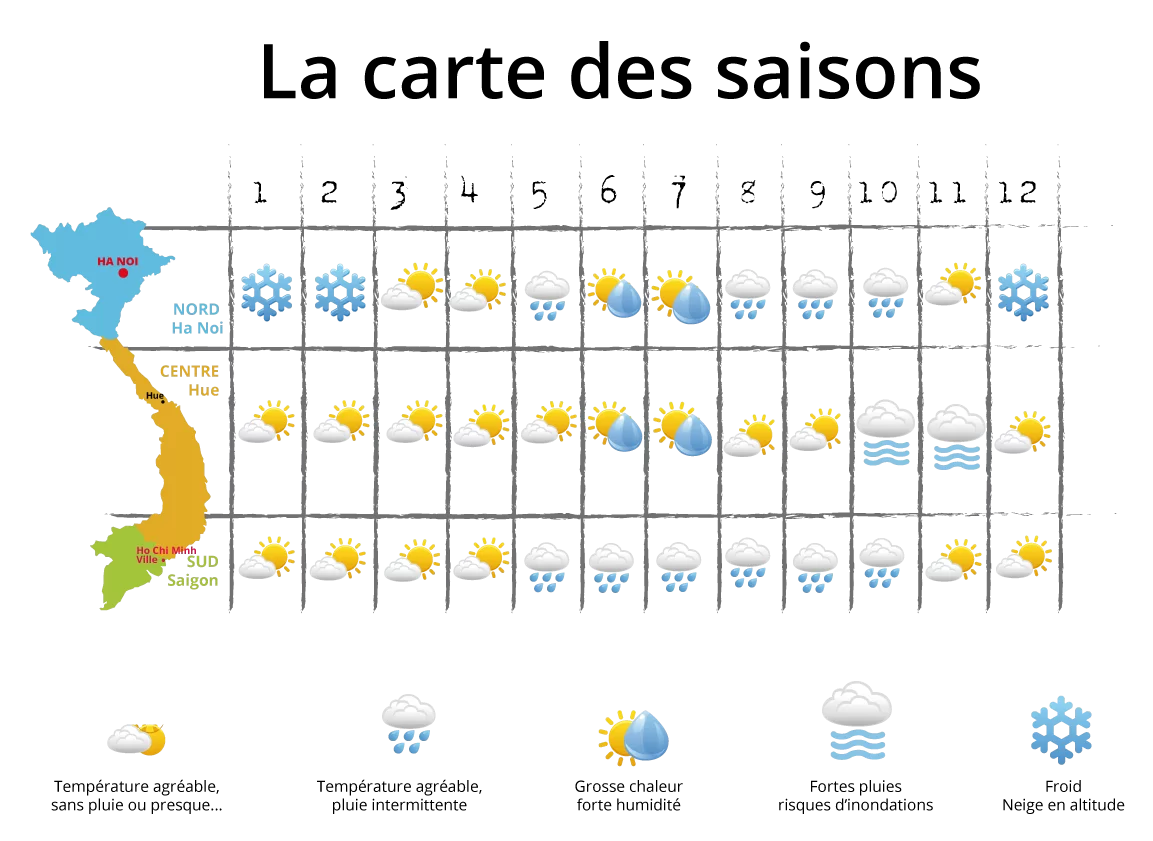
Vietnam's climate is divided into two regions according to the Köppen climate classification: the Northern region has a humid subtropical climate, while the Central and Southern regions have a tropical climate. The Northern region experiences four seasons, including two short autumn and spring seasons, which are transitional seasons. The Central and South-Central regions have a tropical monsoon climate with two dry seasons and a rainy season.
Summary table
| Purpose of the trip | The best time for the trip | Reason |
| Exploration of all Vietnam (North-Central-South) | March, April, October, November | The weather is pleasant throughout the country, with little rain. |
| Trekking and observing ripe rice (Sapa, Ha Giang) | September, October | The rice season is golden, the weather is dry and cool. |
| Beach relaxation (Phu Quoc, Nha Trang) | From November to April | Dry season in the South, beautiful sunshine, calm sea. |
| Cheaper and less touristy trips | May, June, September | Low season, good service prices, avoid crowds. |
Overview of unmissable tourist destinations in 2026
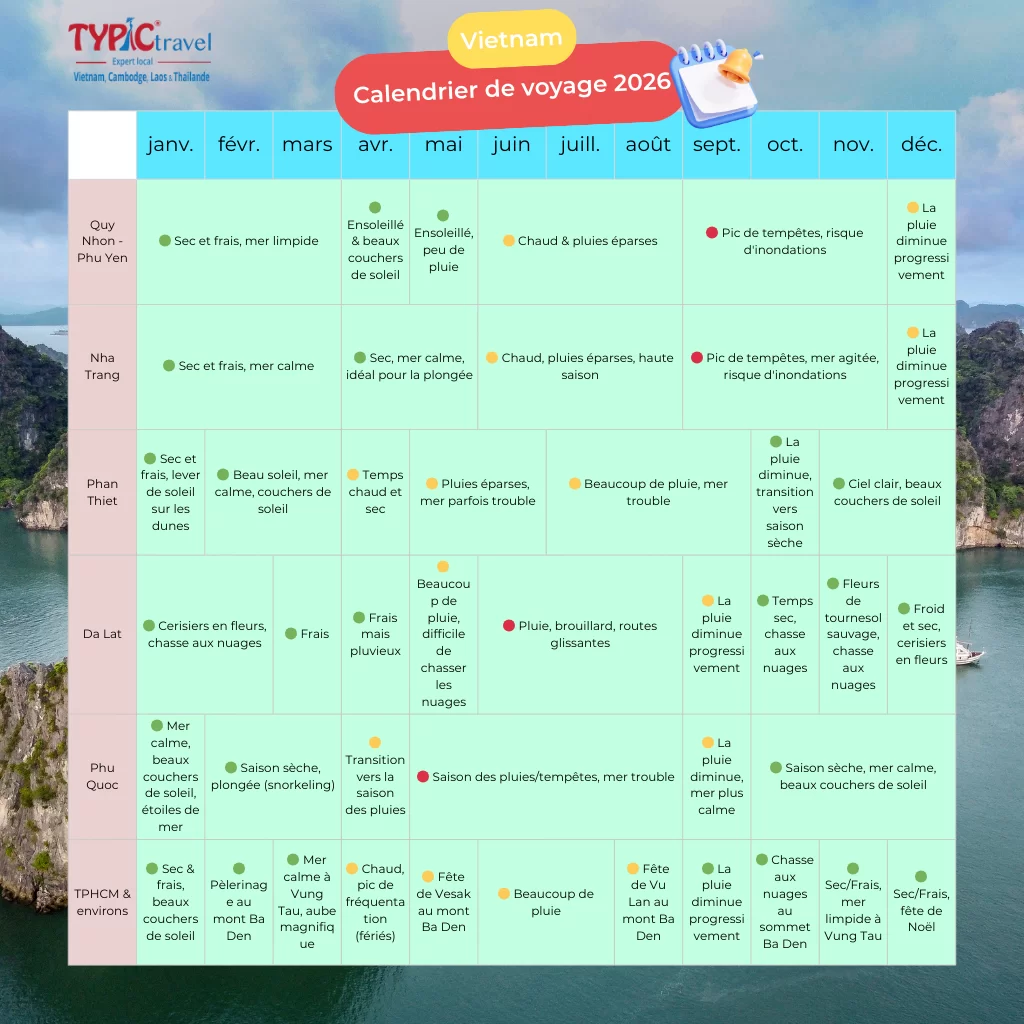
1. What are the best times to travel to Vietnam?
The high tourist season: from November to April
The period from November to April corresponds to the high tourist season in Vietnam. It's the ideal time to visit the entire country, from north to south, with a generally mild and sunny climate:
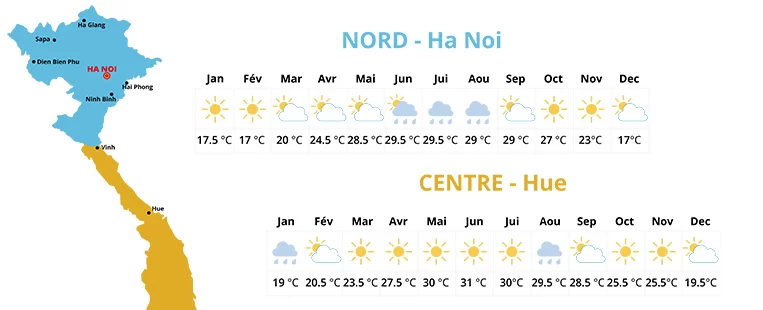
- In the North (Hanoi, Ha Long Bay, Sapa), temperatures range between 15 and 25°C, with little rain. It's very pleasant for exploring bustling cities, discovering the majestic landscapes of Ha Long Bay, or meeting ethnic minorities in the mountains.
- In the Center (Hue, Hoi An, Da Nang), the thermometer climbs up to 30°C, with good sunshine. Perfect for combining cultural visits and relaxing on the superb beaches.
- In the South (Ho Chi Minh City, Mekong Delta, Phu Quoc), it's summer all year round with temperatures around 30°C. An opportunity to explore the lush Mekong Delta and finish with a beach holiday on the paradisiacal islands.
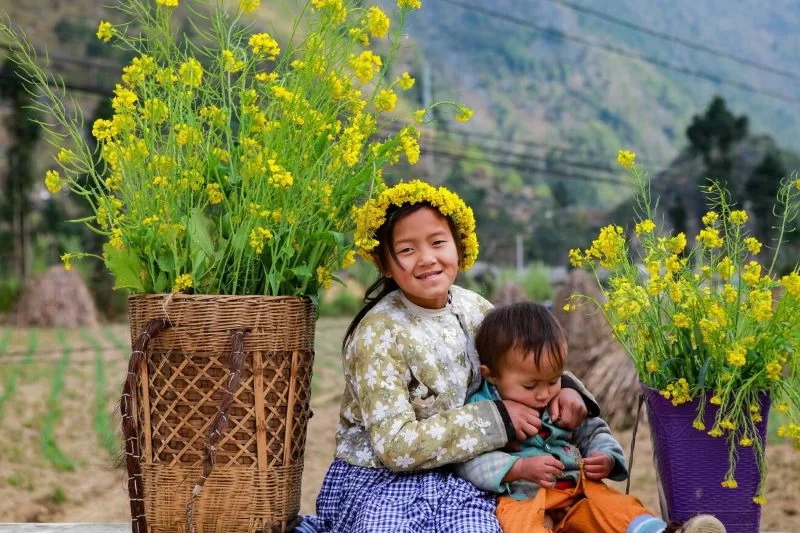
| Our recommendation : To comfortably discover the diversity of Vietnam's landscapes and cultures, opt for a private tour from north to south during this period. You will enjoy optimal climatic conditions and a festive atmosphere during the end-of-year holidays. |
The low season: from May to October
From May to October, it's the low tourist season. Temperatures are higher throughout the country, with heat peaks in June-July. It's also the monsoon season, with frequent rains, especially in the Center.
However, this season has significant advantages:
- There are fewer people at the sites, for quieter visits
- Flight and accommodation prices are more affordable
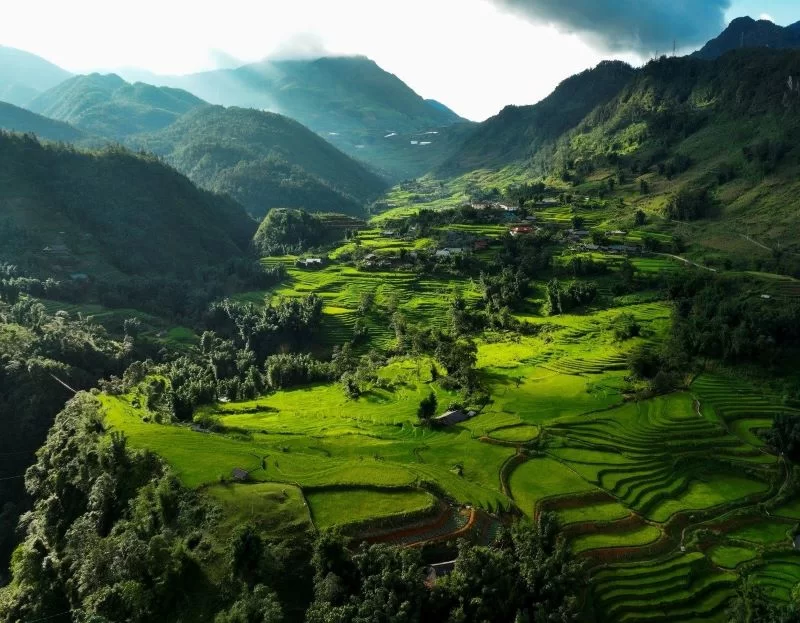
- Nature is lush, with the magnificent terraced rice fields of the northwest during the rice transplanting period from May to July
- The southern beaches like Mui Ne or Phu Quoc are ideal with little rain and temperatures around 30°C
| Our advice: If you travel during this period, prioritize the South and the central coast, avoiding the Center and the North which can be subject to typhoons or floods. A combination of Ho Chi Minh City, the Mekong Delta, and an island like Phu Quoc will be perfect. |
In summary, the period from October to March is ideal for a trip to Vietnam, thanks to a predominantly dry climate and pleasant temperatures.
2. Traveling to Vietnam through the seasons
Spring (from February to April)
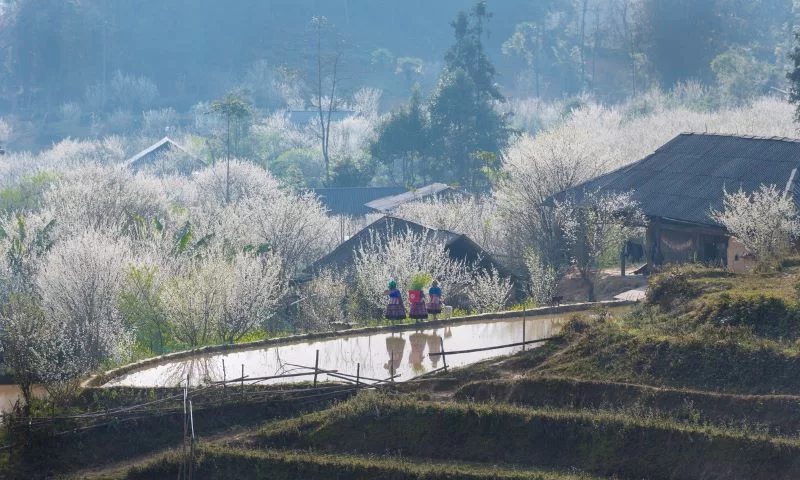
Spring is a very pleasant time to travel to Vietnam. Temperatures are mild, with still a little coolness in the North, ideal for discovering cities like Hanoi, Ninh Binh or for a cruise in Ha Long Bay. It's also the time when delicate plum blossoms bloom in the mountains of the Northwest.
In the Center, around Hue and Hoi An, you will enjoy sunny weather with temperatures around 25-30°C. This allows for a harmonious alternation of visits to cultural must-sees like the Imperial City of Hue or the old quarter of Hoi An, and relaxation on the magnificent, still uncrowded beaches.
| Good to know : The period from April 27 to May 1, which includes two public holidays, is very popular with Vietnamese who take advantage of it to travel. It's best to book your accommodation and transport in advance to avoid unpleasant surprises! |
We love: Attending the colorful processions of the Buddhist festival of Vesak (Buddha's birth, enlightenment, and death) in temples during the full moon of May.
Discover the budget needed for a trip to Vietnam: Vietnam trip price: From 15 days to 3 weeks
Summer (May to July)
Summer corresponds to the international high tourist season. Temperatures are high throughout the country, often above 30°C, and humidity is at its peak. This is the monsoon season, with frequent but generally short-lived downpours.
While the North can be subject to typhoons during this period, the Center and South remain good destinations. It's the ideal time to enjoy the beautiful fine sandy beaches of Nha Trang, Mui Ne, or Phu Quoc. The water is warm, the seabed wonderful for snorkeling or diving, and the sunsets flamboyant.
| Our tip : For hiking enthusiasts, head to the magnificent terraced rice fields of the Northwest like Mu Cang Chai, Ha Giang or Sapa. From late July to August, they offer a dazzling spectacle with their shades of green under the monsoon light. |
Autumn (August to October)
Autumn is undoubtedly our favorite season to travel to Vietnam! After the summer monsoons, the weather softens, with very pleasant temperatures around 25°C and moderate humidity.
This is the ideal period to travel across the entire country, from North to South. In Hanoi, stroll through the maze of old quarter streets and savor a delicious iced coffee on a terrace. In Halong Bay, enjoy the crystal-clear light for a magical cruise. In the Center, visit the jewels of Hoi An and Hue under the rediscovered sun. And finish with a stay in the South, between the dynamism of Ho Chi Minh City, the gentleness of the Mekong Delta, and relaxation on dream beaches.
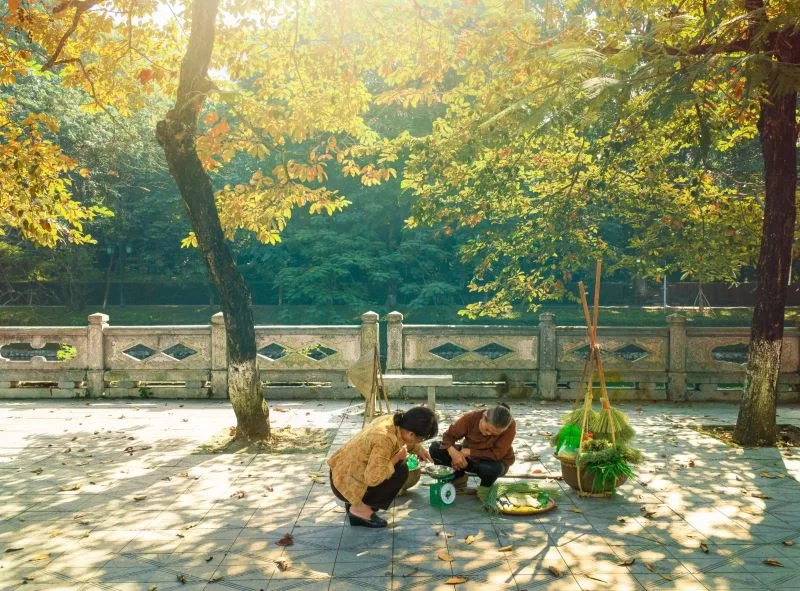
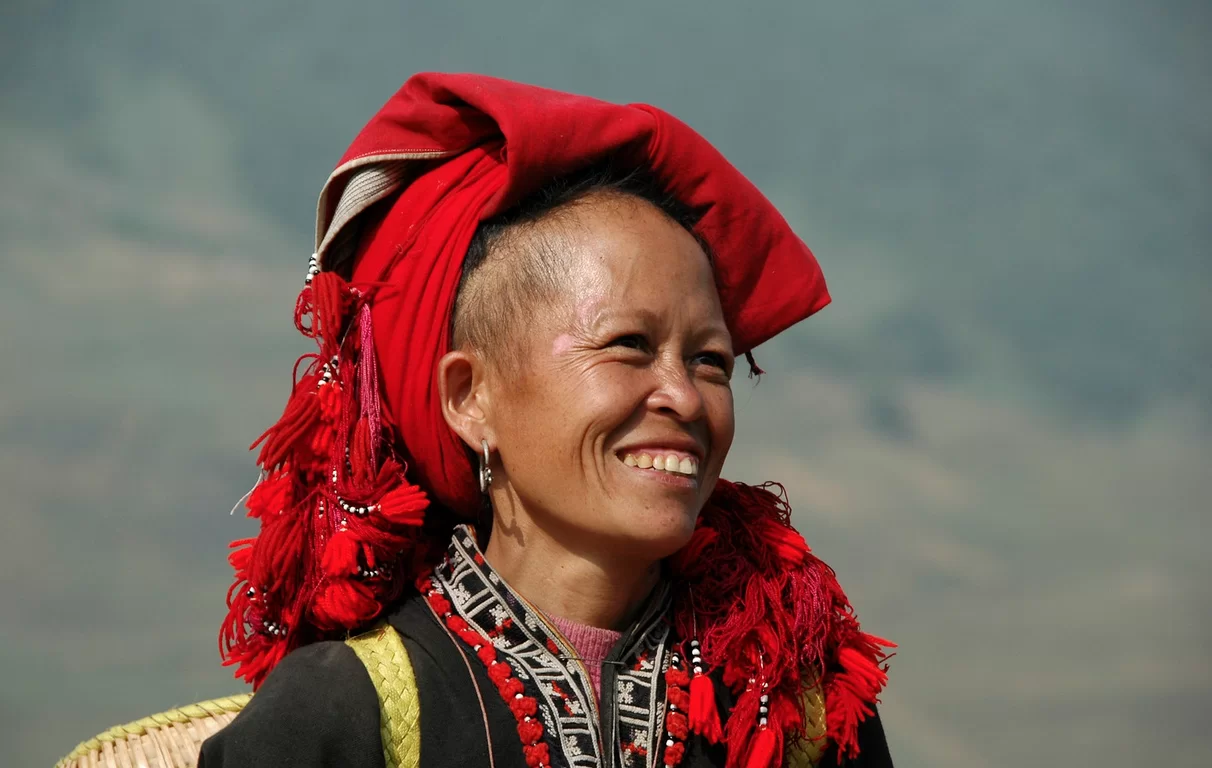
Our favorite: Discover the mountain ethnic groups of Northern Vietnam and their ancestral traditions. In late September-early October, the valleys of Sapa, Mu Cang Chai, or Ha Giang offer a sumptuous spectacle with the golden yellows of the rice fields ready to be harvested contrasting with the delicate pink of the flowering buckwheat fields.
| Not to be missed : The Mid-Autumn Festival (Tết Trung Thu) on the 15th day of the 8th lunar month. The streets come alive with joyful lantern processions and children enjoy delicious mooncakes. |
Winter (November to February)
Winter in Vietnam holds many surprises! While the North experiences cool, even cold temperatures in the mountains (it can even snow in Sapa!), the South enjoys a warm and dry climate, ideal for beach holidays.
In the North, it's time to immerse yourself in the warm atmosphere of Hanoi, with its many cafes and historic districts. Don't miss the fascinating water puppet show. Then opt for an intimate cruise in Halong Bay, to enjoy the winter mildness and the enchanting lights on the karst sugarloaf mountains.
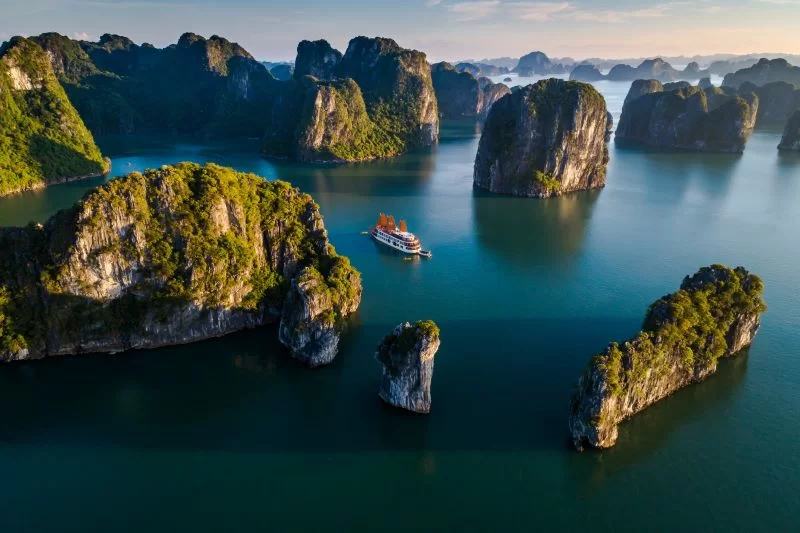
In the South, head to the idyllic beaches of Phu Quoc or Con Dao, for a breath of fresh air between coconut trees, turquoise waters, and white sand. It's also the best time to cycle through the Mekong Delta, along lush orchards and authentic villages.
| Good to know: Every year in late January-early February, Tết, the Lunar New Year, the most important holiday for Vietnamese people, takes place. For a week, the country is bustling with many colorful traditions. But many shops and tourist sites also close during this period. Find out in advance! |
Learn more about: Con Dao, complete guide to the best hotels and activities
3. Travel to Vietnam by month
With a limited time of 3 weeks to 1 month to explore Vietnam, choosing the right period is a crucial factor. To help you have a perfect stay, we offer ideal destinations and activities for each month of the year.
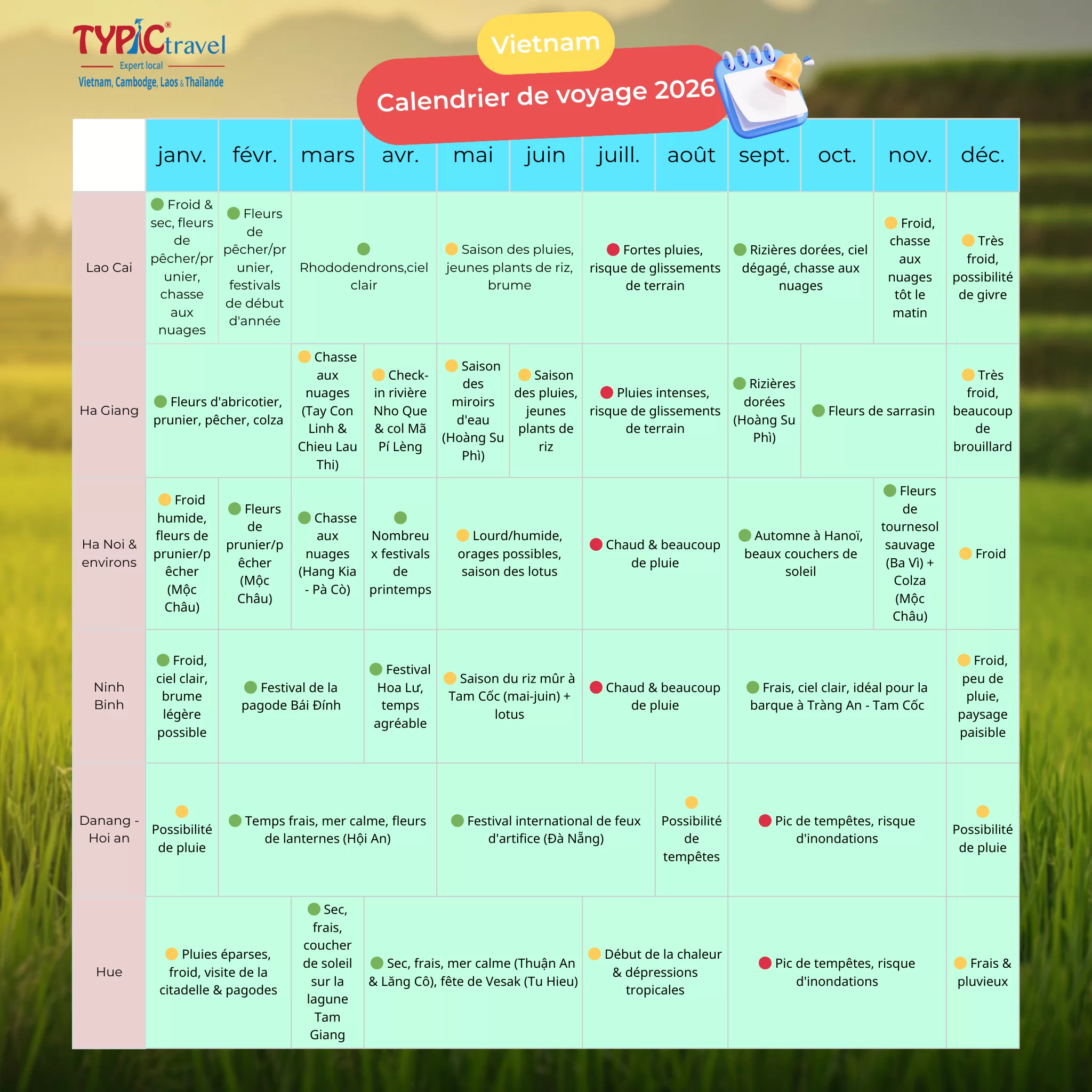
Vietnam in January
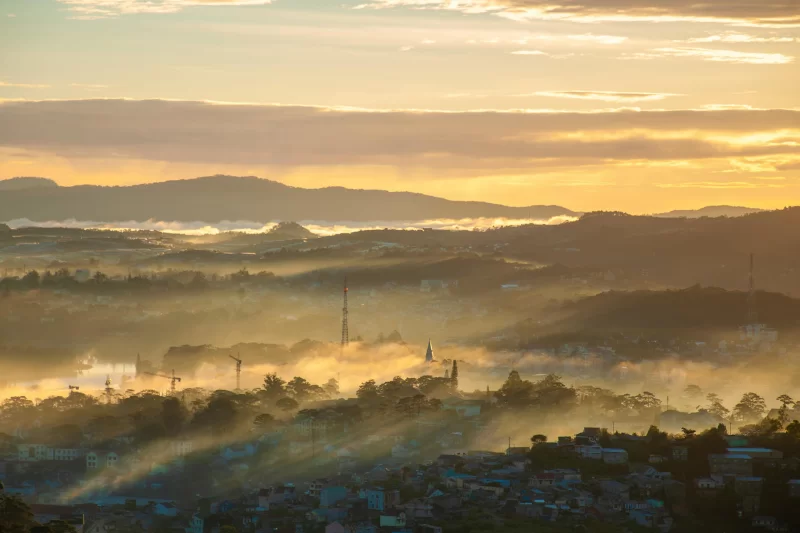
Where to travel in January? The weather is pleasant throughout the country and colder in the north. The ideal destination during this period is the charming city of Da Lat. Why visit Da Lat in January? It is the only time of year when you can admire the cherry blossoms that tint this misty city pink. Dalat tourism offers unique and romantic attractions at any time of the year. However, if you want to admire the highland city at its best, this is the ideal time.
Besides Dalat, other ideal tourist destinations in January include Sa Pa, Dien Bien, Moc Chau, Nghe An, Phu Quoc, etc.
Vietnam in February
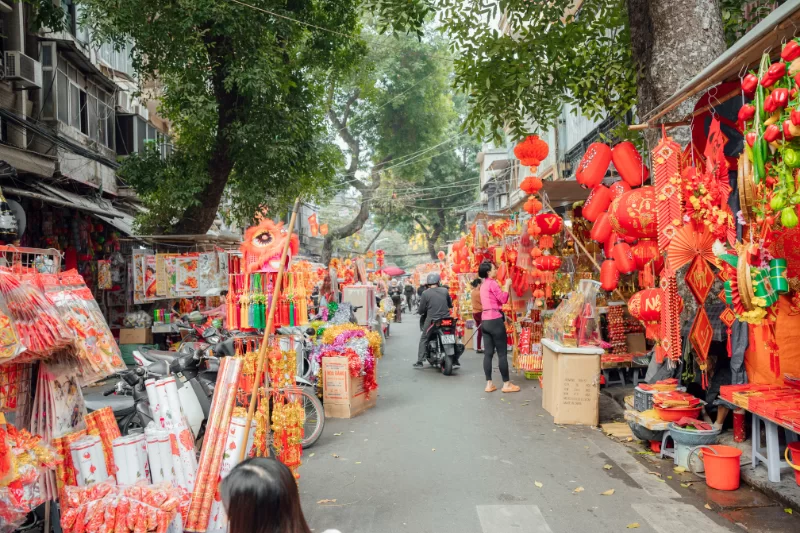
Late January and early February also mark the Lunar New Year or Tet. Hanoi and Hue are cities rich in traditional culture and history, ideal for immersing yourself in the festive atmosphere.
Moc Chau (Son La) is often cited as the ideal tourist destination in January, but February is the perfect time to visit this region.
Moc Chau is one of the most perfect choices for traveling to Vietnam in February, especially late February - early March, when apricot blossoms, plum blossoms, and buckwheat flowers bloom and whiten the winding mountain slopes, creating a scene that is both majestic and poetic.
Vietnam in March
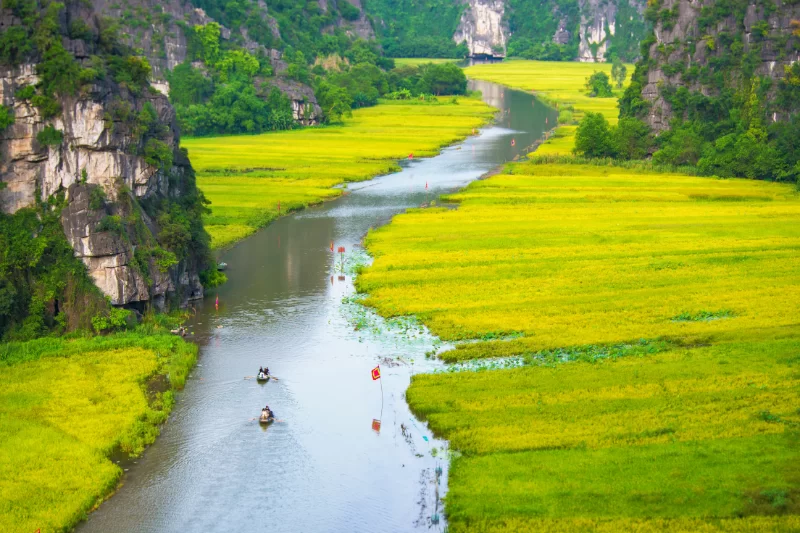
In March, in our opinion, the best destination is Ninh Binh. Enjoy the green mountains and turquoise waters, where nature blends with architectural wonders.
By visiting the temples, you will have the opportunity to admire hundreds of Buddha statues, the largest and most numerous in Southeast Asia. Going to the temple at the beginning of the year to pray for peace and happiness is a Vietnamese cultural tradition. This is why Ninh Binh is an ideal destination for a trip to Vietnam in March.
If you like the beach, places like Phu Quoc and Nha Trang are perfect during the dry season in southern Vietnam, where temperatures begin to warm up, suitable for underwater activities. Mui Ne is the ideal place for surf lovers.
Vietnam in April
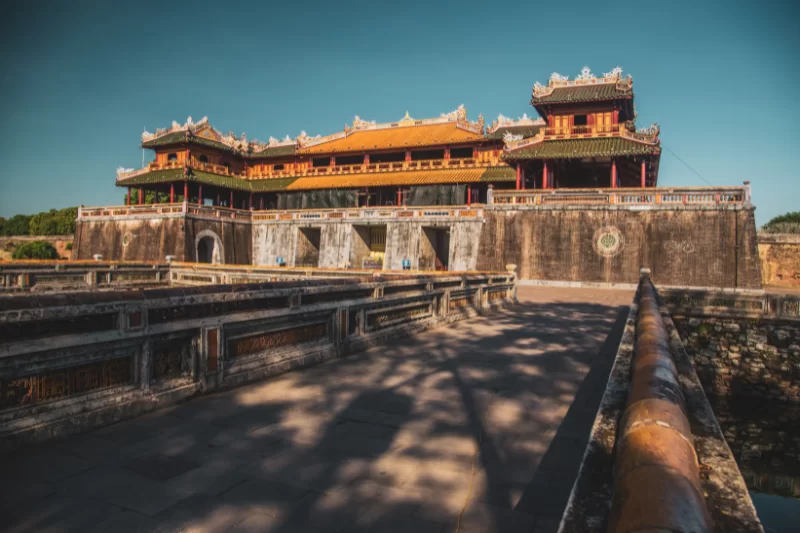
April is still considered the best season to visit Vietnam and enjoys warm but pleasant temperatures. However, a transitional period (weather) is fast approaching, which means an increase in rainfall and humidity, especially in the south.
High season crowds also begin to decrease in April, making it the ideal time to visit popular temples such as Tran Quoc Pagoda in Hanoi and Thien Mu Pagoda in Hue.
Vietnam in May
When summer is clearer and the sun shines more, it is also the period when the northern islands adorn themselves in their most beautiful attire.
Co To is a small island located off the famous Ha Long Bay. It offers magnificent beaches, rocks with powerful waves. The landscape is grandiose facing majestic nature. By the sea, don't forget to taste fresh seafood.
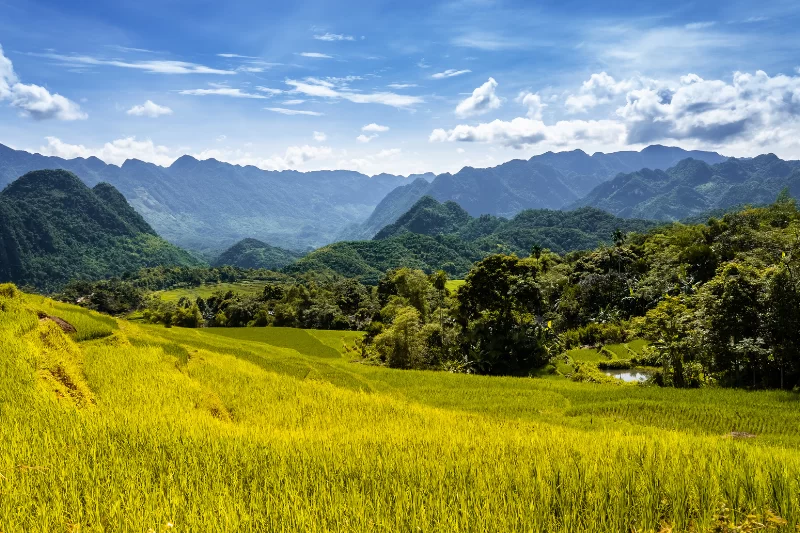
May is not only synonymous with golden rice in Ninh Binh. You can also discover the rain prayer festival in Mai Chau, find some calm in Hoi An or soak up the dynamism of Da Nang, Nha Trang and Phu Quoc.
Vietnam in June
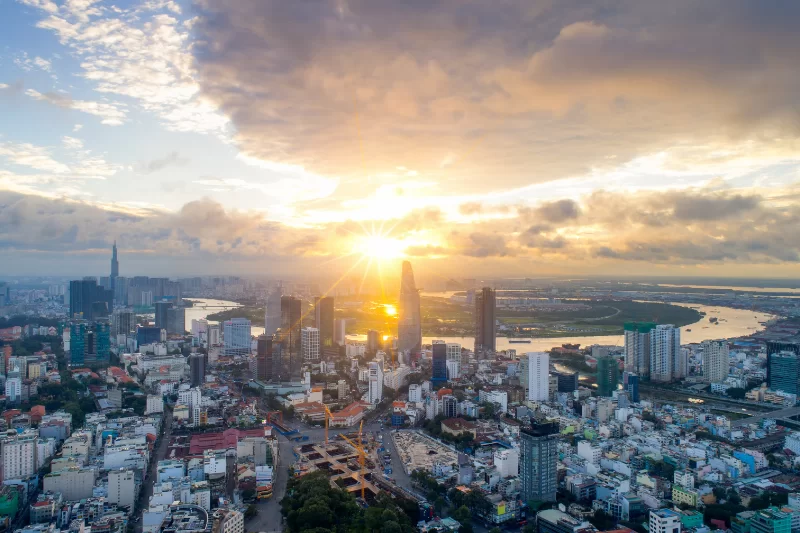
Despite its nickname "hottest month in Vietnam", June remains a relatively ideal period to visit the center of the country, with its sunny days, ideal for cycling and relaxing on the beaches of Da Nang and Nha Trang. In contrast, the south of the country is less favorable due to daily showers. The little extra, if you visit Ho Chi Minh City and Can Tho in June, is that daily showers, although heavy, are generally short and only last in the afternoon, leaving you time to enjoy the outdoors in the morning.
During rainy days, you can visit the fascinating museums of Ho Chi Minh City, such as the War Remnants Museum and the Reunification Palace, or go on a shopping spree while waiting for the rain to stop. June also marks the beginning of the nesting season for green turtles on the beaches of Con Dao. Besides visiting the turtles, you can also visit Con Dao Prison, one of the harshest prisons in human history.
Vietnam in July
July is considered the middle of the low season in Vietnam. Popular destinations like Ho Chi Minh City and Hanoi are therefore less crowded and accommodation prices are generally more affordable. However, high heat and humidity make the situation uncomfortable; so avoid going out in the middle of the day.
The weather in central Vietnam remains relatively similar to previous months. Hue and Hoi An are therefore good options if you like sunny and rain-free days. Northern regions, such as Halong Bay and Sa Pa, experience hot and stormy weather, with temperatures exceeding 30 °C most of the time, while the south is still in the rainy season, with weather often alternating between rain and sun.
It is also the season when beaches remain the best options. The beaches of Nha Trang, Da Nang, Phu Quoc, Cua Lo, Sam Son, and Quy Nhon are worth exploring.
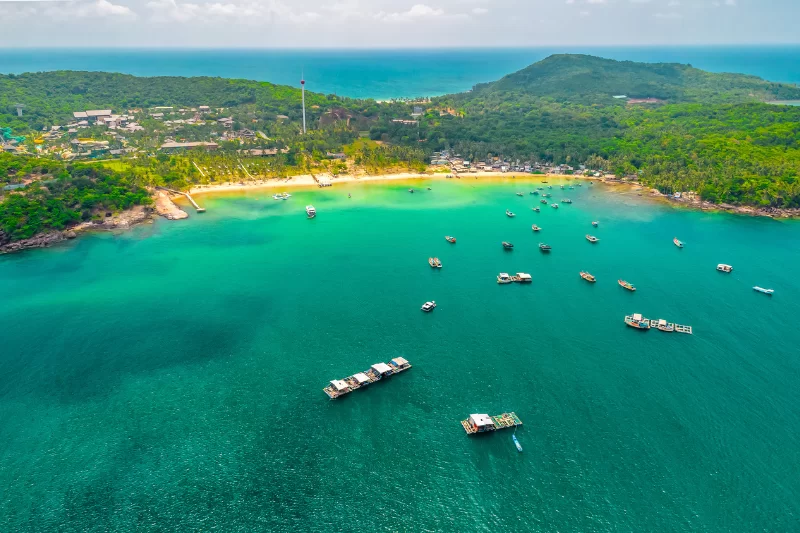
Vietnam in August
From August, the weather becomes milder, but summer generally lasts until October. Coastal or mountainous destinations therefore remain preferred to avoid the heat.
Nha Trang, in particular, is considered the ideal period in August, as it offers a crystal-clear blue sea, radiant sunshine, and a most dynamic tourist season. For tourists who like to explore the North, Cao Bang is a must-visit destination. It is during this period that Ban Gioc waterfall enters flood, creating a majestic and impressive natural landscape.
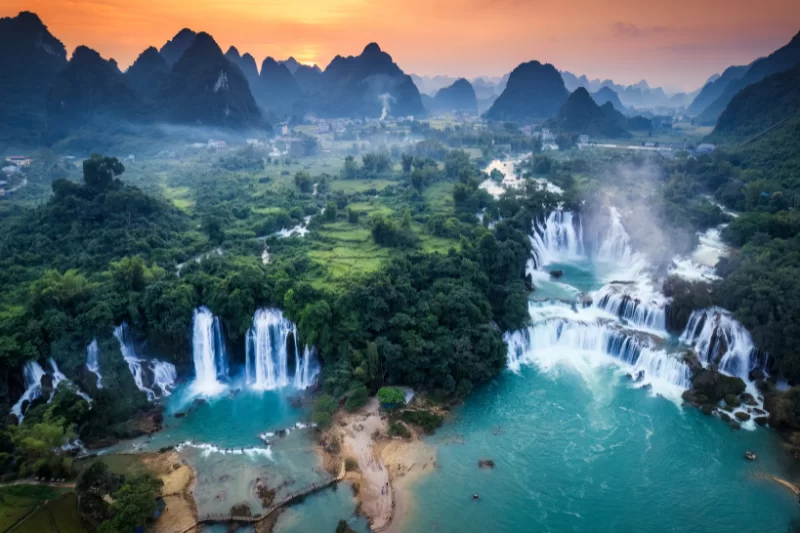
Vietnam in September
In September, the northern and southern regions emerge from their hot and humid seasons, while central Vietnam enters its monsoon. Although typhoon season began in June (and continues until November), it is more likely to occur in September. So be aware of changing weather conditions and stay informed of local advice.
Destinations like Hanoi and Phu Quoc experience 14 and 17 rainy days (excluding months) respectively, promising many sunny days and pleasant temperatures. The Mid-Autumn Festival and Vietnam's Independence Day, which take place in September, are also good for celebration.
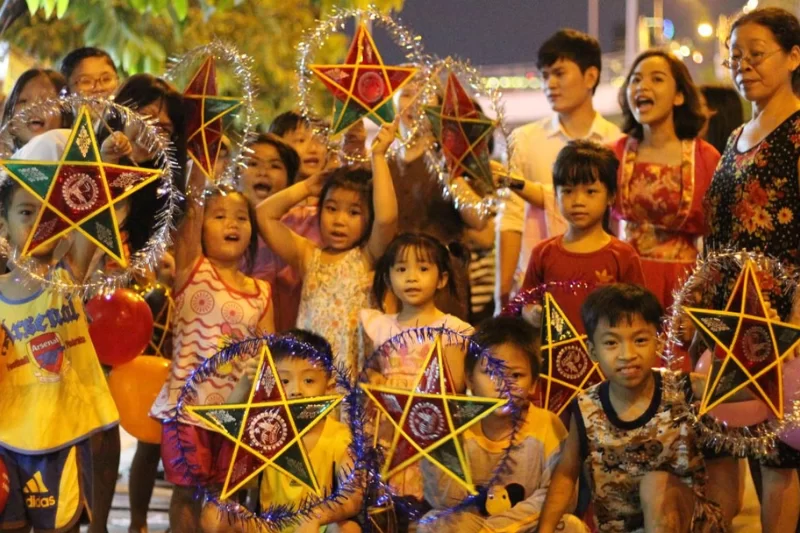
Vietnam in October
October is the season of buckwheat flowers in Ha Giang. It's time to discover the magnificent Ha Giang, enjoy the coolness of late autumn and be fascinated by the pink and white hues mixed with green that stretch across the slopes, hills and valleys.
Many itineraries are available to you, such as Dong Van - Meo Vac, Xin Man - Hoang Su Phi, with their majestic and wild mountainous landscapes. Coming to Ha Giang, you will also visit the terraced rice fields, the valleys of Dong Van or Sung La…
You can also visit Moc Chau to admire the rapeseed flowers, visit Hue, stroll in Da Nang, on Phan Thiet beach or admire the mist of Da Lat… to find the answer to the question: "Where to travel in October?"
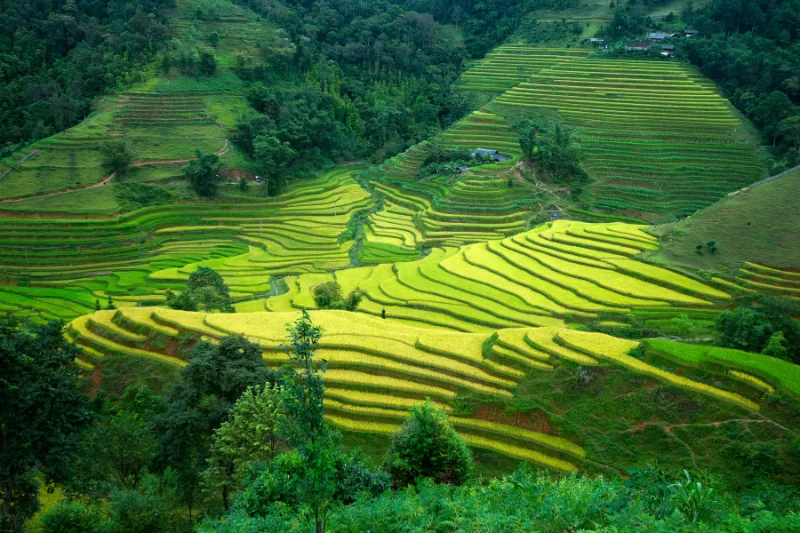
Vietnam in November
Forget central Vietnam; November is the season when the northern regions shine (literally). The rainy days of summer are finally over (mostly) and temperatures are no longer stifling. So it's the ideal time to explore the country's breathtaking mountains.
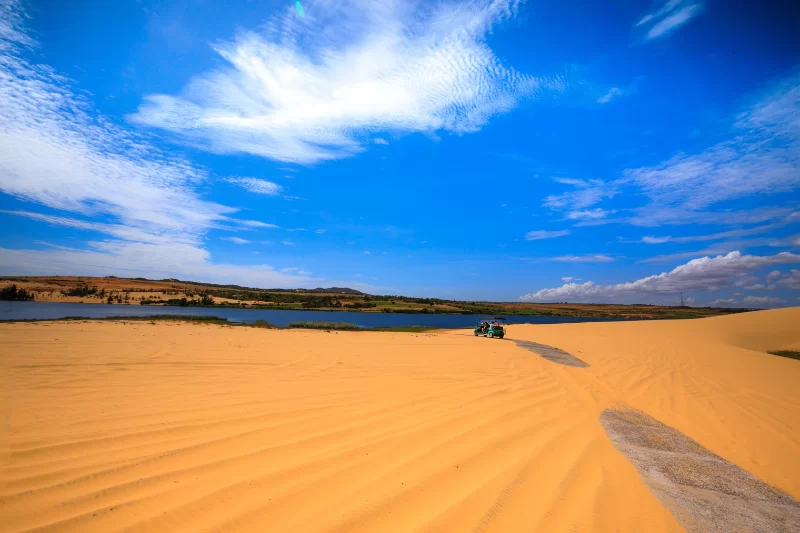
Beach destinations like Phan Thiet and Mui Ne, in southern Vietnam, are also ready to say goodbye to typhoon season and welcome enthusiastic travelers who want to enjoy the region's sunny and clear weather. Enjoy 27°C days and spend your time lounging on pristine beaches or swimming in crystal clear waters.
Vietnam in December
Exceptional weather is on the agenda in southern Vietnam in December, with almost perfect conditions and pleasant temperatures. Humidity is also low and rainfall is low to non-existent throughout the month. Enjoy your free time by strolling in parks, lounging on a beach or practicing tai chi.
Central Vietnam is to be avoided if you don't like thunderstorms; however, predicted rainfall decreases significantly, so it is entirely possible to have a few days of good weather if you travel to this region in September. Preparations for Christmas and New Year also intensify as the month progresses, with cities across the country getting into the festive spirit by decorating their shop windows and organizing markets.

4. Unmissable events in Vietnam
Throughout the year, many traditional festivals and celebrations punctuate the lives of Vietnamese people. Here are some unmissable ones:
- January/February (variable date): Tet, Lunar New Year, the most important festival of the year
- April (every 2 years): the Hue Festival, a major gathering of traditional arts
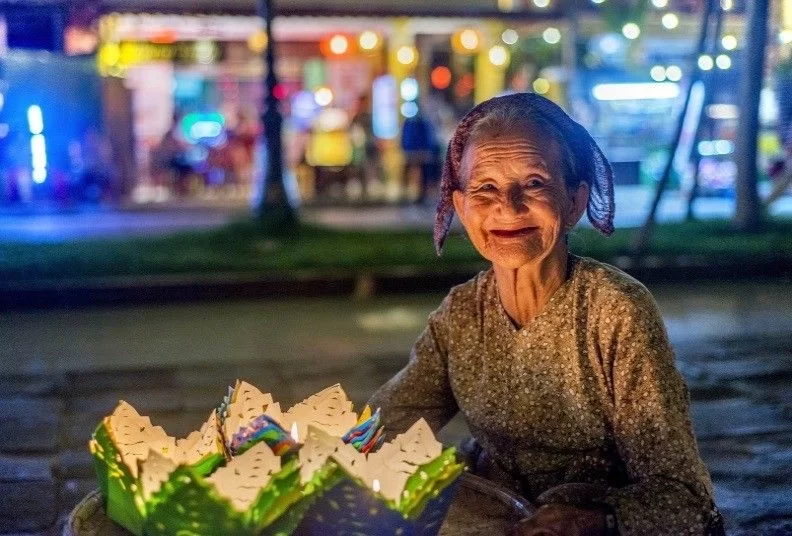
- 16th day of the 2nd lunar month: the Hoi An fishermen's festival with hundreds of lanterns on the river
- 15th day of the 4th lunar month: the Buddhist festival of Vesak celebrating the birth, enlightenment and death of Buddha
- September 2: Vietnam National Day commemorating the declaration of independence
- 15th day of the 8th lunar month: the Mid-Autumn Festival with its lantern parades
- December (every 2 years): the Dalat flower festival, a highlight of horticulture in Vietnam
| Typic Travel's tip: Integrate one or more of these events into your program to experience powerful moments of immersion in local culture. Our team of experts will advise you on the best options. |
In summary: choose your period and itinerary well to make your trip to Vietnam a success
Vietnam is suitable for stays all year round, with each season having its advantages depending on the regions:
- From November to April, the climate is mild and sunny, perfect for a North to South tour.
- From May to October, despite the monsoon, it's the time to enjoy the beaches, admire the terraced rice fields and travel at a lower cost.
The ideal is to build a tailor-made itinerary according to your desires and travel period: hikes in the Northern mountains, cruise in Halong Bay, discovery of historical cities, immersion in the Mekong Delta, relaxing on dream beaches...
In addition, many festivals punctuate the lives of Vietnamese people throughout the year, such as Tet or the Hoi An lantern festival. Attending them is an unforgettable experience.
So, ready to experience Vietnam in an authentic and responsible way? Specialists from Typic Travel will guide you for privileged moments at the heart of real Vietnamese life.
Vietnam awaits you, it's up to you to take the first step!

un bel article avec de bonnes informations pour notre préparation du voyage 2025, on est un groupe d'amis 14 personnes, retraité de 65-70 et on vous contacte déjà par émail on attend votre proposition.
Bonjour nous sommes 2 couples dont 3 personnes plus de 72 ans. Nous souhaiterions passer 15 jours dans le delta du mekong.( vietnam - cambodge) au mois d'avril. Que pourriez vous nous proposer?
Bonjour, Merci de vérifier votre mail ou bien de nous contacter si vite possible par WhatsApp: +84 9 12 34 98 51 SVP ! Typic Travel
Bonjour à vous, On vient de recevoir votre demande par le formulaire de votre site on vous contactera sous 12h00 pour une des propositions voyages. Merci de vérifier votre email SVP ! Cordialement. Équipe Typic Travel
Merci à vous et on vous attends tj pour les autres voyages avec nous. Bine à vous
on veut un circuit de 3 semaines en avril 2020 du nord au sud pour 5 personnes et 3 enfants de 6, 10 et 17 ans un devis compromis svp
bonjour, un bon article pour nous, on veut avoir un devis en juillet lors de vacances scolaires pour notre famille de 5 personnes 2adultes et 3 enfants adolescents 13, 16, 17 ans. Pouvez - vous vous occuper de nos billets d'avion pour la durée de 2 semaines ? merc
Bonjour Madame Justine, votre demande est transmit à notre équipe des Conseillères en voyage, qui vous contacteront tout de suite pour un devis détaillé. Belle journée à vous !
bonjour, je trouve que votre article est bien intéressant et vous contacte pour savoir si vous organisez des circuits vers la partie nord et centre vietnam et puis extension vers cambodge et birmanie en 3 semaines au mois d'octobre ? quel itinéraire à proposer et quel coût pour le groupe d'amis de 8 personnes ?
Bonjour Monsieur Théo, merci d'abord de votre appréciation pour cet article ! oui on est une Agence de Voyage locale pour faire des voyages sur mesure partout au Vietnam (Nord, Centre, Sud) et les Pays: Laos, cambodge, Birmanie et même Thaïlande. Notre conseillère vous contacte tout de suite pour savoir un peu de plsu vos souhaits avant de vous envoyer une proposition détaillé, merci de vérifier SVP votre boite de réception ou dans Spam SVP ! bonne et agréable journée. L'équipe Typic Travel
Bonjour, nous voulons faire un voyage un couple , arrivee Hanoi le 19.06.20, depart le 09.07.20 Pour vietnam. (bonne période ou pas?). le programm pourrait etre un peu comme öe programm de 12 jours nord au sud vietnam apercu, mais sans velo, sans le tunnel a Saigon, plutot une visite de la ville , alorrs avec quelques petit changement, que je pourrais encore precicer. de Saigon nous voulon visitez cambodge avec pnom pen, batambann et ankor. Si possible un ou deux jours de plage a un endroit pas trop touristique. Pour les hotels, propre, avec douche/wc prive. Merci et bien cordialement, Yolande
bonjour à vous, oui c'est aussi bien pour la péride et c'est prévu que c'est la haute saison scolaire et il fera chaud du Nord au Sud et par contre il fera toujours beau, avec beaucoup de soleil. Notre conseillère en voyage vous a envoyé un mail et merci de vérifier dans la boite de reception ou Spam SVP ! belle journée à vous !
bonjour, moi et ma copine, on veut un circuit de 12 jours partie nord vietnam, priori les contacts avec les gens, nuit chez habitant ou maison d'hôte si possible, période juin c'est bien, chaud ou pas? que nous conseillez vous ? on n'a pas encore nos billets d'avion mais on les achete ce week-end.
bonjour monsieur Paul, notre équipe vous a envoyé tout de suite un mail, merci de vérifer la boite de la réception ou en spam SVP !
bonjour, on veut avoir une idée d'un voyage de 4 semaines au Vietnam et Cambodge au mois de juin pour 3 personnes. merci
bonjour à vous, on vous a envoyé un mail et merci de vérifier votre boîte de réception svp !
bonjour, nous sommes un groupe des amis, 08 personnes, agés autour de 50 ans, et nous souhaitons partir au vietnam entre le 21 mai et le 10 juin 2020, pouvez vous nous faire un devis avec les hôtels simpls et de charme et parfois nuits chez habitant ? Cdl
Bonjour Madame, on vient de vous envoyer un e-mail et merci de vérifier dans votre boite de la réception SVP !